
Essential Tips for Choosing a Hydroponic Timer
- Match watering intervals to specific plant growth stages for better nutrient absorption.
- Choose digital timers for precise setups that require multiple short watering cycles each day.
- Select heavy duty timers that can safely handle the electrical wattage of the chosen water pump.
The Pulse of Your Indoor Garden
Automating an irrigation schedule is the first step toward building a truly self sustaining indoor garden. Your plants rely on a steady delivery of fresh water and vital nutrients to thrive. Manual watering can become inconsistent for serious growers aiming for reliable harvest yields. A reliable timer acts as the mechanical brain of the growing operation. It controls when nutrient solution flows and when delicate root systems receive time to breathe.
Why Automation Matters for Yields
Consistency remains one of the most important factors in successful indoor agriculture. Plants can experience stress when feeding schedules fluctuate throughout the week. A dedicated scheduling device reduces human error from the daily gardening routine.
This level of precision can support consistent vegetative growth and fruiting stages when growers adjust the schedule according to plant needs.
Understanding Pump Cycling Timers
Hydroponic water pump cycling timers control when electrical power reaches the irrigation motor. They allow growers to set specific on and off intervals throughout a 24 hour period. For example, a system can flood trays for 15 minutes and remain off for two hours. Understanding these settings also helps when selecting water pumps based on system size. Precise control can reduce unnecessary pump operation and help prevent equipment from running longer than the system requires.
Mechanical vs. Digital Timer Options
Growers generally choose between traditional mechanical timers and modern digital models. Mechanical timers use physical pins or tabs to establish a schedule. They remain simple to operate and can work well for basic irrigation systems. Digital timers provide more precise programming. Some models allow growers to set multiple schedules throughout the day.
Both options can work effectively when installed correctly and kept in a safe, dry location. Choosing the Right Timer Type, the best choice depends on the irrigation method, required precision, and pump specifications.
Timer Technology Comparison
Choosing the right timer technology depends on the specific hydroponic system and its scheduling requirements.
| Timer Category | Precision Level | Best System Use Case | Programming Method |
| Mechanical Dial | 15 minute intervals | Ebb and flow setups | Physical push pins |
| Digital Display | 1 second intervals | Aeroponics systems | LCD button interface |
| Smart WiFi | 1 minute intervals | Remote monitoring | Smartphone application |
Digital models generally suit systems that require frequent short cycles, while mechanical timers can provide a straightforward option for simpler irrigation schedules.
Overcoming Common Timing Mistakes
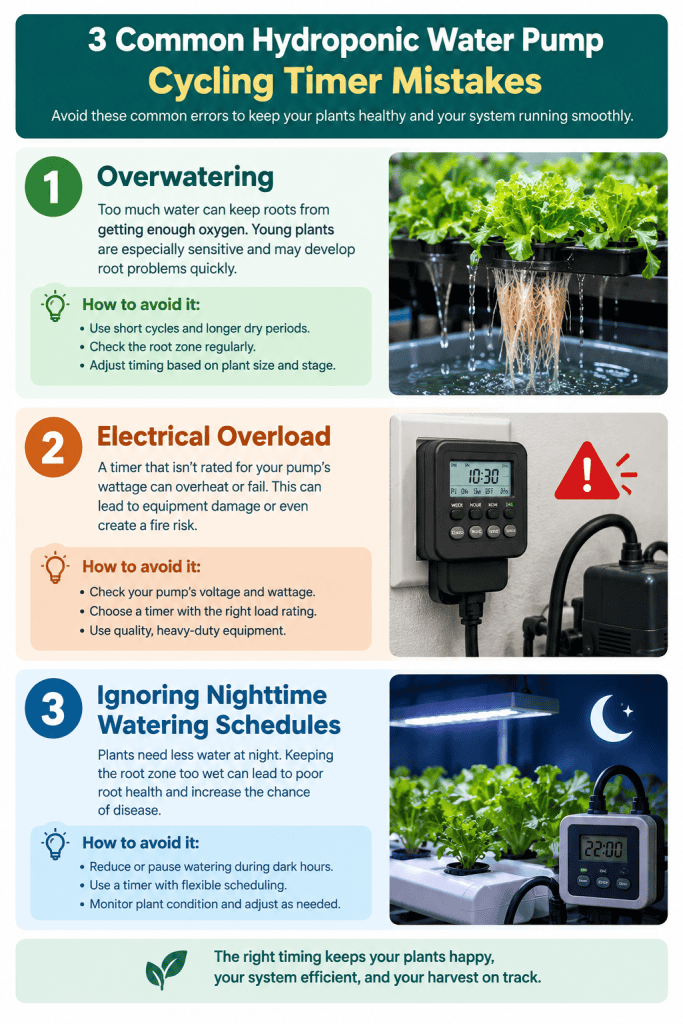

The most common timing mistake beginners make is overwatering young seedlings. Seedlings have small root systems that can become stressed when they remain in stagnant water for too long. Longer dry periods can help young plants receive enough oxygen between watering cycles.
Growers should monitor plants daily for signs of excessive moisture or dehydration.
- Avoid excessive watering during early growth.
- Check the root zone between cycles.
- Adjust the schedule when plant conditions change.
Careful observation allows growers to make small timing adjustments before scheduling problems affect the entire crop.
Ebb and Flow Timing Secrets
Ebb and flow systems require a rapid flood followed by a complete drain. Growers often flood the upper tray several times during the lights on period, depending on the growing medium and plant requirements. Clay pebbles drain quickly and may require more frequent cycles than materials that retain moisture for longer periods. The pump should run long enough to reach the required flood level without unnecessary operation.
Aeroponics and Short Cycle Needs
Aeroponic systems require highly precise timing because plant roots remain exposed to air. The roots depend on regular misting to receive moisture and nutrients. Digital timers can provide the precision required for very short cycles.
Some aeroponic systems use misting periods measured in seconds followed by several minutes without misting. Because the roots have little protection from drying, timer reliability becomes especially important.
Why Precision Matters a failed timer can interrupt the entire irrigation cycle. Growers should regularly test the timer, pump, and power connection.
Drip System Scheduling Basics
Drip irrigation delivers a controlled stream of nutrient solution directly to the plant base. Growers can adjust the system until a suitable amount of runoff appears from the growing container. This can help reduce the buildup of unwanted salts in the root zone.
Proper scheduling also matters when establishing water pumps for nutrient delivery. The required duration depends on container size, growing medium, pump flow, and plant demand.
Energy Efficiency and Cost Savings
Running irrigation equipment continuously can increase electricity use and unnecessary pump wear. Automated scheduling allows motors to operate only during required watering periods. This approach can reduce operating time while helping extend equipment life.
Modern growers can also consider energy saving water pumps for hydroponics when planning a more efficient system. A suitable timer can therefore support both irrigation control and long term operating efficiency.
Matching Timers to Pump Size
Every electrical timer has a maximum load rating that should never be exceeded. Before purchasing a timer, growers should check the pump’s voltage, amperage, and wattage requirements.
A timer designed for a light residential load may not be suitable for a larger pump motor. Heavy duty equipment may require a timer specifically rated for higher electrical loads.
Safety Features You Cannot Ignore
Water and electricity create a serious safety concern in any hydroponic environment. Growers should prioritize properly rated equipment, grounded plugs, protective housings, and suitable electrical protection.
According to the National Fire Protection Association (NFPA),
“properly rated electrical equipment and appropriate protection can reduce electrical fire hazards in damp environments.”
Many premium timers also include backup batteries that preserve programmed schedules during temporary power outages. Electrical Safety Basics, keep electrical connections away from water sources and follow the manufacturer’s load ratings. Never connect equipment beyond the timer’s stated capacity.
Waterproofing Your Electrical Setup
Electrical strips should never sit directly on the floor beside a water reservoir. Mount timers and power connections in a dry location above potential splash zones. A drip loop can also help prevent water from traveling along a power cord toward an electrical connection.
A protective cover can shield timer controls from accidental splashes during reservoir maintenance. Simple physical separation remains one of the easiest ways to improve hydroponic electrical safety.
Integrating Smart Home Technology
Smart timers allow growers to manage irrigation schedules through connected devices. WiFi enabled models can provide remote control and, depending on the model, notifications when a scheduled event occurs.
This can make monitoring easier when growers are away from the garden. Smart technology works best when the underlying pump, timer, electrical connection, and irrigation system remain properly configured.
Adjusting for Plant Growth Stages
Watering requirements change as plants mature. Young vegetative plants generally require less water than large flowering plants with greater foliage and root mass. Growers should gradually adjust irrigation frequency as plant demand increases.
Plant appearance, growing medium moisture, temperature, and humidity can all help determine whether a schedule needs adjustment. Signs of an Incorrect Schedule, watch for dry growing media, drooping leaves, excessive moisture, and poor root conditions. These signals can help growers determine whether the timer should run for longer or shorter periods.
Nighttime Watering Considerations
Plants generally transpire less when grow lights are turned off. For that reason, growers may reduce watering during the dark period depending on the hydroponic system and growing medium. Keeping the root zone excessively wet overnight can create conditions that encourage root problems.
Some digital systems include light sensors or programmable schedules that make nighttime adjustments easier. Allowing appropriate drying periods can support healthier root conditions.
Diagnosing Timer Failures Quickly
Even reliable equipment can eventually fail after long periods of use. If a tray remains dry, growers can test the timer with a simple electrical device such as a lamp, provided the device and test environment are safe.
This basic test can help determine whether the problem comes from the timer or another part of the irrigation system. Growers should also check manual override switches, electrical connections, and pump operation.
A Simple Troubleshooting Sequence. Check the timer, power connection, pump, tubing, and irrigation outlets in sequence. Testing each component separately can make the source of a failure easier to identify.
Maximizing Equipment Lifespan
Electrical components should remain free from dust, fertilizer residue, and moisture. Growers can gently clean the exterior of a timer with a dry microfiber cloth during routine maintenance.
Mechanical timers should also be handled according to the manufacturer’s instructions. Forcing a dial against its intended direction can damage internal components. Regular inspection and gentle handling can help equipment remain functional for multiple growing seasons.
Finding the Right Balance

Credits: HowToHydroponics
Mastering an indoor irrigation schedule requires technical knowledge and regular observation. Growers should adjust intervals when plants appear overly saturated or too dry. Every growing environment has different temperature, humidity, airflow, and evaporation conditions. The ideal schedule for one garden may not work for another.
Practical Adjustment Method
Start with a reasonable schedule, observe plant conditions, and make small changes rather than changing several variables at once. This approach makes it easier to understand how each timing adjustment affects the garden.
The Role of Temperature in Scheduling
Room temperature can influence how quickly water evaporates from a hydroponic system. During hotter periods, growers may need to review irrigation frequency to compensate for increased moisture loss.
Warm nutrient solution can also contain less dissolved oxygen than cooler water. Monitoring temperature alongside irrigation timing helps growers make better scheduling decisions.
Managing Algae with Proper Timing
Excessive moisture and light exposure can encourage algae growth in hydroponic systems. Algae can compete for nutrients and affect water quality when growth becomes excessive.
As highlighted by research from the The U.S. Environmental Protection Agency (EPA)
“explains that controlling environmental conditions can help manage unwanted algae growth in aquatic systems. Maintaining appropriate drying periods and limiting unnecessary light exposure can help keep the growing environment cleaner.”
Nutrient Absorption and Timer Intervals
Root nutrient uptake depends partly on the moisture conditions surrounding the root zone. Growing media such as rockwool and clay pebbles behave differently as they absorb and release water.
Keeping the root zone continuously saturated may reduce the balance between moisture and oxygen that roots need. Proper cycling provides periods of hydration and drainage while maintaining an environment suitable for healthy root activity.
Balancing Moisture and Oxygen
The goal is not simply to provide more water. The goal is to provide enough water while allowing sufficient oxygen to reach the root zone between cycles.
Calibrating Timers for Winter Months
Seasonal conditions can change irrigation requirements. Indoor heating can reduce humidity and increase moisture loss from plants and growing media.
Growers should monitor container weight, plant appearance, room temperature, and humidity before changing the watering schedule. Small seasonal adjustments can keep irrigation consistent throughout the year.
Automate Your Success with Hydroponic Water Pump Cycling Timers
The right timer can turn inconsistent manual watering into a more controlled irrigation routine. Growers can calculate suitable intervals, select a timer based on pump requirements, and monitor plant response over time.
A reliable scheduling device can help reduce unnecessary pump operation while supporting consistent nutrient delivery. Use the information in this guide to choose a timer that matches your hydroponic system, pump capacity, and daily watering needs.
FAQs
How often should I flood my clay pebble medium?
Clay pebble systems may require several flood cycles during the lights on period, but the exact schedule depends on plant size, environment, pump flow, and system design.
Can I use a cheap indoor lighting timer for my water pump?
Not always. Standard lighting timers may not be rated for the electrical load or motor startup requirements of a water pump. Always check the timer’s specifications.
Why does my digital timer randomly lose its saved memory?
A weak or failed backup battery can cause a digital timer to lose programmed settings. Check the manufacturer’s instructions before replacing the battery.
Should I water my plants while the grow lights are off?
The answer depends on the hydroponic method and growing medium. Some systems need nighttime cycles, while others can reduce watering during the dark period.
References
- https://www.nfpa.org/education-and-research/home-fire-safety/electrical
- https://www.epa.gov/nutrientpollution/harmful-algal-blooms
Related Articles
- https://tophydroponicgarden.com/selecting-water-pumps-based-on-system-size/
- https://tophydroponicgarden.com/water-pumps-for-nutrient-delivery/
- https://tophydroponicgarden.com/energy-saving-water-pumps-for-hydroponics/
Was this helpful?
