
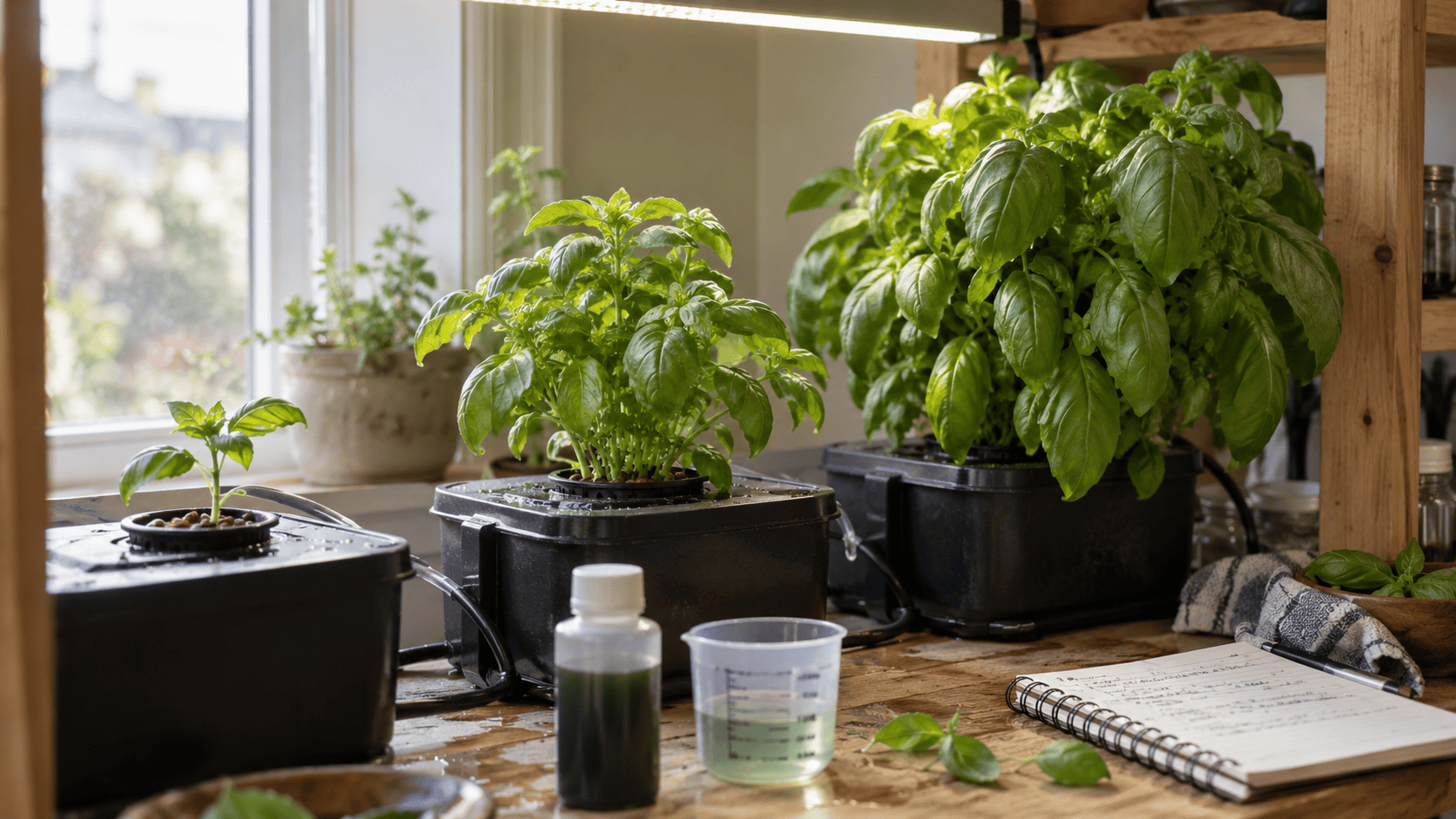
Hydroponic basil nutrient requirements change as the plant develops.
Established basil generally does well around 1.0 to 1.6 mS/cm EC with a pH close to 5.5 to 6.0, while young seedlings need a much gentler nutrient solution.
That difference matters more than trying to keep one feeding strength from germination to harvest.
At Top Hydroponic Garden, nutrient management is easier to understand when EC, pH, plant growth, and reservoir behavior are looked at together.
Below, you’ll find practical ranges for each stage, plus what to check when your basil starts looking off.
What Should You Remember First?
Basil doesn’t need complicated feeding, but a few numbers and habits make nutrient management much easier.
- Established basil: Start around 1.0 to 1.6 mS/cm EC.
- Young plants: Keep nutrient strength lower and raise it gradually as roots and true leaves develop.
- pH: Around 5.5 to 6.0 is a practical target for hydroponic basil.
- Yellow leaves don’t always mean more fertilizer: pH drift, nutrient imbalance, root stress, or excessive EC can create similar symptoms.
Your meter tells you what’s happening in the reservoir, while the basil itself tells you whether those conditions are actually working.
What Nutrient Range Does Hydroponic Basil Actually Need?
For established plants, 1.0 to 1.6 mS/cm EC gives home growers a useful baseline. Oklahoma State University Extension lists basil within that range with an optimum hydroponic pH of 5.5 to 6.0.
That doesn’t mean every basil plant has to sit at exactly the same number. Cultivar, lighting, temperature, water quality, plant size, and hydroponic system can all affect how quickly nutrients are used.
| Parameter | Practical Starting Point | What to Watch |
| EC, established basil | 1.0-1.6 mS/cm | Rapid upward or downward changes |
| pH | 5.5-6.0 | Repeated drift outside the target |
| Nutrient type | Complete vegetative formula | Avoid relying on bloom-heavy formulas |
| Main focus | Balanced N, K, Ca, Mg, Fe | Balance matters more than one nutrient |
As noted by Oklahoma State University Extension:
“This buffer is absent in soilless culture, so it is important to maintain an environment suitable for plant growth artificially.” – Oklahoma State University Extension
So instead of chasing one perfect number, pay attention to how the nutrient solution changes between checks.
Why Doesn’t Basil Feed Exactly Like Lettuce?
Basil and lettuce are both leafy crops, but they aren’t managed the same way. Lettuce is commonly grown toward one main harvest. Basil is cut, allowed to regrow, and harvested repeatedly.
That makes its feeding schedule much more open-ended.
Once basil reaches productive vegetative growth, the goal is to support new leaves and branching after each harvest rather than preparing the plant for one final cut. Nutrient strength should stay stable enough to support that regrowth without pushing the root zone too hard.
The hydroponic method matters too. Basil grown in DWC, for example, has constant access to an aerated nutrient reservoir. If that’s the system you’re using, Top Hydroponic Garden’s Deep Water Culture basil guide explains the setup, pH, nutrient management, and harvesting side in more detail.
For feeding, stick with a complete formula suited to vegetative growth. Bloom-heavy formulas don’t offer much benefit when leaves are what you’re trying to harvest.
How Should EC and pH Change as Basil Grows?
Giving a newly rooted basil seedling the same nutrient concentration as a mature, frequently harvested plant doesn’t make much sense. Nutrient demand rises as roots expand, leaf area increases, and growth speeds up.
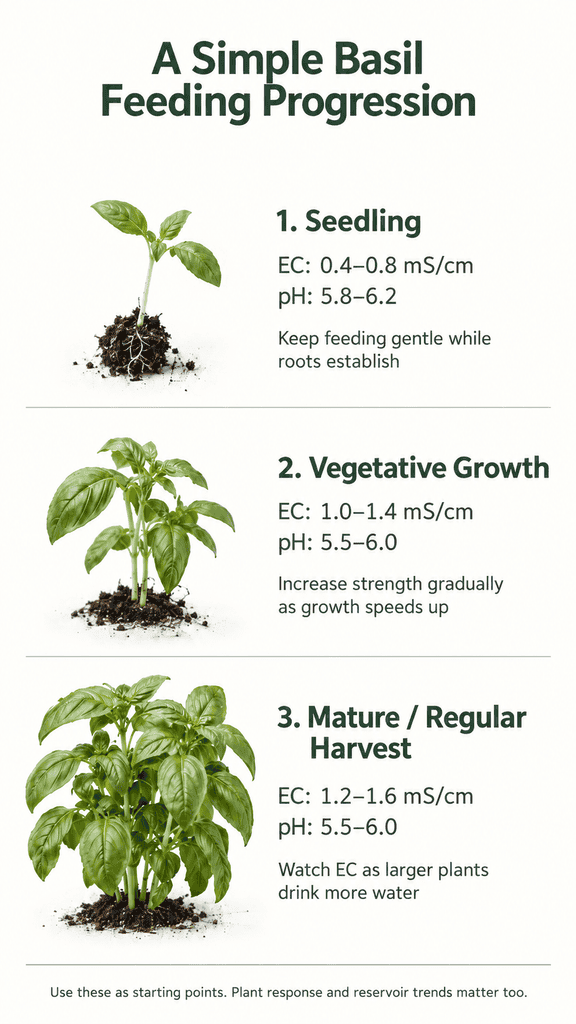
A practical progression looks something like this:
| Growth Stage | Approx. EC | pH Target | Main Goal |
| Seedling | 0.4-0.8 mS/cm | 5.8-6.2 | Gentle root establishment |
| Vegetative | 1.0-1.4 mS/cm | 5.5-6.0 | Leaf and branch growth |
| Mature / regular harvest | 1.2-1.6 mS/cm | 5.5-6.0 | Consistent regrowth |
These figures work better as starting points than hard rules.
A warm, brightly lit plant can use water differently from basil sitting under weaker indoor lighting. Source water also changes your starting EC before fertilizer is even added.
What Should Basil Seedlings Get?
Young basil has a small, sensitive root system, so start with a mild nutrient solution. An EC around 0.4 to 0.8 mS/cm is a practical range during early growth.
Wait until roots expand and several true leaves appear before increasing nutrient strength.
If seedlings look weak, don’t immediately assume they need more fertilizer. Poor oxygen, excess moisture, weak lighting, or root stress can cause similar problems.
Increase EC gradually and watch how the seedlings respond instead of jumping straight to full-strength nutrients.
What Changes During Vegetative Growth?
Once basil develops several true leaves and starts branching, nutrient demand increases. An EC around 1.0 to 1.4 mS/cm is a useful working range during this stage.
Watch how EC changes as the reservoir level falls.
If water drops while EC rises, the plant may be using more water than nutrients, so another full nutrient dose could make the solution too strong.
If both water level and EC fall, nutrient uptake may be higher.
Follow the trend instead of reacting to one isolated reading.
What Should Mature Basil Get?
Mature basil that’s harvested regularly can usually handle around 1.2 to 1.6 mS/cm, provided roots stay healthy and new growth remains strong.
Large plants may drink water quickly, especially under warm conditions or strong grow lights.
As the reservoir drops, the remaining nutrient solution can become more concentrated.
Check EC before adding more nutrients.
If roots look healthy and the plant keeps producing good leaves, small daily changes don’t always require correction.
A stable root zone is generally more useful than constantly adjusting the reservoir.
Which Nutrients Matter Most for Hydroponic Basil?
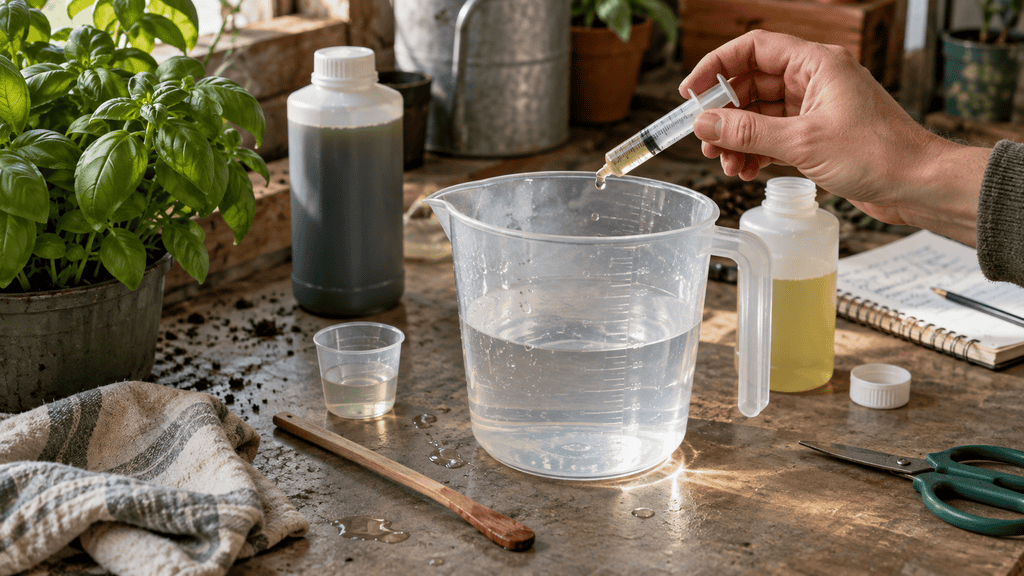
Basil does not require one specific nutrient brand or bottle.
What matters is choosing a complete hydroponic nutrient solution that supplies nitrogen, potassium, calcium, magnesium, iron, phosphorus, sulfur, and essential micronutrients in a form the roots can use.
Two-part, three-part, and suitable all-in-one formulas can all grow healthy basil when they are mixed to the correct EC for the plant’s growth stage.
The main difference is how much control and mixing each system requires.
With multi-part nutrients, never combine concentrated components directly before dilution.
Add each part to water in the order recommended by the manufacturer, mix thoroughly, then check EC.
Adjust pH only after the nutrient solution is fully mixed.
The best nutrient solution is the one you can keep balanced, measurable, and consistent through repeated basil harvests.
Why Does Nitrogen Matter So Much?
Nitrogen supports the vegetative growth that makes basil productive. When supply becomes inadequate, plants may grow slowly and older foliage can become broadly pale or yellow.
Still, yellow leaves don’t automatically mean nitrogen deficiency.
Check the reservoir before adding extra fertilizer. If EC is already high, another nutrient dose can increase salt concentration without correcting whatever is limiting uptake.
For most home growers, a complete hydroponic nutrient formulated for leafy or vegetative crops is easier to manage than adding nitrogen separately.
Basil isn’t asking for unlimited nitrogen. It needs enough nitrogen as part of a balanced nutrient profile.
What Do Potassium, Calcium, and Magnesium Do?
Potassium supports water regulation and several plant processes, calcium helps developing tissues, and magnesium is essential for chlorophyll production.
Having them in the reservoir isn’t enough.
They also need to remain available to the roots.
Magnesium problems often appear as chlorosis between leaf veins, while calcium issues can affect developing tissue and growing points more noticeably.
Symptoms can overlap, so avoid diagnosing a deficiency from one leaf alone.
Compare several leaves, then check EC, pH, nutrient balance, and root health before changing the formula.
Why Can Iron Become a Problem?
Iron deficiency often becomes visible in newer foliage because the plant can’t easily move iron from older tissues into fresh growth.
Young leaves may turn pale while their veins remain more noticeable.
Before adding an iron supplement, check the reservoir pH.
Iron can already be present in the nutrient solution but become harder for roots to access when conditions are unsuitable.
If new growth stays pale after EC and pH are stabilized, then look more closely at the nutrient formula, source water, and root condition before increasing fertilizer strength.
How Can You Spot Nutrient Problems Before They Spread?
Nutrient symptoms are clues, not lab results. Yellow leaves, slow growth, burned tips, and strange new growth can come from several different problems.
Use the visible symptom to narrow your options, then verify what’s happening in the reservoir.
| Possible Problem | Common Clue | Check First | Practical Response |
| Nitrogen shortage | Older leaves become broadly pale | EC and overall feeding strength | Restore balanced feeding if EC is genuinely low |
| Magnesium issue | Chlorosis between veins | pH and nutrient balance | Correct reservoir conditions first |
| Iron issue | New leaves become pale | pH | Bring root-zone pH into range |
| Calcium issue | Distorted or damaged new growth | Roots and environment | Stabilize root-zone conditions |
| Excess nutrient strength | Burned tips or stressed growth | EC | Dilute or refresh solution as needed |
Don’t change three things at once.
If you replace the nutrient solution, add supplements, adjust pH aggressively, and change the light on the same day, you won’t know which change actually helped.
Why Can Nutrient Lockout Look Like Underfeeding?
Nutrient lockout is one reason hydroponic troubleshooting can feel backwards.
A mineral can be present in the reservoir without being taken up effectively. pH outside the useful range can reduce availability, while imbalanced nutrient concentrations may interfere with how other ions are absorbed.
This creates the classic mistake: the plant looks deficient, so more fertilizer gets added, but the reservoir was already too concentrated.
Before feeding again, check:
- Current EC
- pH and recent pH drift
- Water level
- Root appearance
- Source-water EC
- Recent nutrient additions
- Whether symptoms appear on older or newer leaves
If you’re repeatedly replacing lost water, reservoir management becomes especially important. Top Hydroponic Garden’s guide on how to top off a hydroponic reservoir properly explains how EC and pH can help you decide whether the system needs plain water, nutrients, or a larger reset.
That check is much more useful than treating every falling water level as a feeding signal.
Which Nutrient Solution Works Best for Basil?
There’s no single brand or bottle that basil uniquely requires. What matters is that the formula supplies a complete mineral profile and can be adjusted to the EC needed at the plant’s current stage.
Two-part, three-part, and suitable all-in-one hydroponic nutrients can all work.
The practical differences are mostly in how they’re mixed and adjusted.
With multi-part fertilizers, avoid mixing concentrated components directly together before they’re diluted in water. Follow the manufacturer’s mixing order, then measure EC after everything is dissolved.
Adjust pH after the nutrient solution has been mixed rather than trying to perfect your source water first.
If you’re still figuring out how nutrient formulas, EC, pH, and water quality fit together, Top Hydroponic Garden’s hydroponic nutrient guide covers the basics of building and maintaining a balanced nutrient solution before you fine-tune it specifically for basil.
How Does the Hydroponic System Change Nutrient Management?

Credits: DIY : Hooked on Hydroponics
DWC, Kratky, and NFT can grow basil successfully, but their reservoirs don’t behave exactly the same way.
In DWC, the nutrient reservoir is aerated continuously and can be measured directly. Water level, EC, pH, temperature, and dissolved oxygen all interact around the submerged roots.
Kratky is passive. As the nutrient level falls, an air gap forms around part of the root system, so aggressively restoring the original water level can interfere with how the system is meant to operate.
NFT continuously moves a shallow nutrient film past the roots. A shared reservoir means one change can affect multiple plants quickly.
The same basil nutrient requirement may therefore need slightly different maintenance depending on the setup.
Don’t copy a feeding routine from another system without also looking at how its water level and reservoir are managed.
Can Nutrient Strength Change Basil Flavor and Quality?
Nutrient strength doesn’t only affect how large the basil becomes.
Higher EC in that specific controlled setup increased biomass up to a point, while lower EC treatments produced higher total phenolic content and antioxidant capacity.
As noted by Ren et al:
“The electrical conductivity (EC) of NSs influences the yield and quality of vegetables.” – Ren et al., Horticulturae, 2022
This doesn’t mean home growers should copy the study’s higher EC treatment. The experiment used controlled plant-factory conditions, and the ideal EC still depends on cultivar and environment.
The useful takeaway is that nutrient strength can affect more than leaf size.
For basil headed to the kitchen, quality, aroma, healthy growth, and repeat harvests matter just as much as pushing for maximum biomass.
FAQ
Can I Use Tap Water for Hydroponic Basil?
Usually, yes. Check its starting EC first, especially if your area has hard water, because dissolved minerals can change the final concentration after fertilizer is mixed.
Does Basil Need More Nutrients Than Mint or Parsley?
Not automatically. Basil mainly needs stable root-zone conditions and enough nutrition to support repeated leafy growth.
Can Too Much Nutrient Solution Damage Basil?
Yes. Excessive nutrient concentration can stress the roots and make water uptake harder. Stronger feeding doesn’t automatically mean faster growth.
Can Organic Hydroponic Nutrients Grow Basil?
They can, but organic nutrients behave differently from fully soluble mineral salts and may rely more on biological breakdown. Use products actually designed for hydroponic systems rather than adapting ordinary soil fertilizer.
How Can I Tell Nitrogen Deficiency From Magnesium Deficiency?
Nitrogen deficiency tends to cause broader yellowing, often starting on older foliage. Magnesium problems more commonly show chlorosis between veins, but confirm the pattern with EC, pH, and overall plant condition before treating it.
Final Take: Getting Hydroponic Basil Nutrient Requirements Right
Hydroponic basil nutrient requirements change as the plant grows. Seedlings need a mild nutrient solution, while established basil generally performs well around 1.0 to 1.6 mS/cm EC with a pH of 5.5 to 6.0.
Check EC, pH, root health, water level, and new growth together. This makes it easier to catch nutrient deficiency, overfeeding, or nutrient lockout before they affect plant quality.
Top Hydroponic Garden connects these nutrient targets with practical reservoir care and everyday hydroponic growing.
Explore Top Hydroponic Garden for more guides on hydroponic nutrients, reservoir management, and healthy herbs.
References
- https://extension.okstate.edu/fact-sheets/electrical-conductivity-and-ph-guide-for-hydroponics
- https://www.mdpi.com/1523714
Related Articles
- https://tophydroponicgarden.com/deep-water-culture-basil/
- https://tophydroponicgarden.com/how-to-top-off-your-hydroponic-reservoir/
- https://tophydroponicgarden.com/hydroponic-nutrient-guide/
Was this helpful?
I’m Barrie L., a passionate hydroponic gardening enthusiast dedicated to cultivating thriving, soil-less gardens. With a focus on all things hydroponic, I share my expertise on innovative growing techniques and sustainable practices through my blog, tophydroponicgarden.com. As a seasoned hydroponics specialist, my goal is to inspire and guide fellow gardeners in harnessing the power of water-based cultivation for bountiful and eco-friendly harvests. I’m also an author of the book “Hydroponics For Absolute Beginners: Your Step By Step Guide For How To Create An Hydroponics System At Home Without Soil, For Growing Vegetable, Fruit And Herbs.” which is sold on Amazon. Join me on a journey of redefining the way we cultivate plants, one nutrient-rich solution at a time. Happy growing!