

The second set of true leaves is usually a good sign that a seedling is ready for a DWC system. By then, it should also have a healthy root system, which often takes about 2 to 3 weeks. Move it too early, and growth can slow.
Wait too long, and the roots become harder to handle. A steady setup also helps reduce transplant stress. Keep reading to learn the right timing, how to prepare your system, and the steps Tophydroponicgarden recommends for a smooth transplant.
Quick Steps Before Moving Seedlings
- Transplant seedlings into a fully set-up DWC system once they have their second set of true leaves, after checking pH and water temperature.
- Secure each seedling in its net pot with air stones running for oxygen.
- Monitor plants closely during the first week post-transplant.
Why Does Transplant Timing Matter?
Timing is important when moving the seedlings. If you move them too early, young roots may have issues with too much moisture, changing nutrient levels and low oxygen. If left too long in starter plugs or rockwool cubes, the roots can become pot bound and this makes transplanting more difficult.
The best time to transplant is after seedlings develop their second set of true leaves, usually about 2 to 3 weeks after the seed cracks open. However, the 2–3 week timeframe is merely a guideline. Use root development and the plant’s condition as the primary indicators.
At this point, the stem is sturdy enough, and the roots have had time to develop. They can handle the move much better. In a DWC setup, that matters because the roots will need to adjust to sitting in a new growing environment.
The timing can vary a little. Some seedlings grow faster than others, so look at the plant as a whole. Healthy leaves, a sturdy stem, and developing roots are good signs that it is ready.
Not too early. Not too late. The idea is to move the seedling when it is big enough to cope with the transplant, but before the roots become too tight or knotted.
How Do You Know Seedlings Are Ready?
Check for two sets of healthy true leaves, steady new growth, and a strong, upright stem. The roots should be white and beginning to grow through the starter plug. Weak stems or limited roots can make transplanting harder and increase the risk of transplant shock.
| Sign | What you want to see |
| Leaves | Two sets of healthy true leaves |
| Roots | White roots reaching through the plug |
| Stem | Thick, upright, and sturdy |
| Growth | Fresh new growth appearing |
If the seedling still looks small or weak, waiting a few more days can help. The aim is a healthy transition rather than moving the plant too early.
What Happens If You Transplant Too Early?
If the seedlings are still small and poorly rooted, they may struggle. They simply may not be ready for the change to a hydroponic setup yet.
Common problems include:
- Little growth above the soil or water
- Roots that take longer to settle in
- Yellowing leaves that may signal a problem
- Difficulty taking in nutrients
- A greater risk of root rot
And that last one matters. Small or weak roots can have a harder time getting used to the new setup.
Perhaps it is better to wait a few more days before transplanting than to move the plant too early. Those extra days allow the roots to grow and prepare. It may seem like you are doing nothing, but the roots are still getting stronger.
Sometimes, waiting is the better move.
How Should You Prepare Your DWC System Before Transplanting?

Getting the Deep Water Culture system ready before transplanting gives seedlings a much better start. The reservoir, air pump, air stones, net cups, and grow lights should all be cleaned, assembled, and running properly before the seedling goes into the net pot.
Thus the roots are able to penetrate into stable conditions immediately instead of having to adjust to fluctuating water levels or low oxygen. This helps the plant be in a better position to begin in its new setup.
Water quality is another thing to watch out for. Use clean source water and check its TDS or EC before mixing nutrients. The ideal starting-water quality depends on the crop and nutrient program.
And it is worth checking everything before transplanting. A quick test of the water, pump, and air stones can prevent problems later. Small details matter here.
Which Growing Media Works Best for DWC?
Hydroponic seedlings can get their start in several different growing media:
- Rockwool cubes
- Starter plugs
- Rapid Rooters
- Neoprene collars
- Expanded clay aggregate (Hydroton)
- Clay pebbles
Whatever you choose, be careful not to bury the stem too deeply. This helps keep the stem from staying too wet while the roots grow down toward the nutrient solution. Before transplanting, make sure your Deep Water Culture setup is ready for the seedling and that the root zone has enough room to develop.
It may seem like a small thing, but it can make a difference. Give the seedling enough room to settle in and get used to the new setup.
What Should You Check Before Adding Seedlings?
Before placing seedlings in the DWC system, make sure that:
- The air pump is on
- The air stones are bubbling nicely
- Water is just under the net pots
- The initial water level is close enough to keep the growing media moist
- The water level is set to lower gradually as roots grow into the solution
- Nutrient solution level is consistent
- pH is in the optimal range
- the reservoir is not producing algae
- LED grow lights are at the proper height and angle
Checking now can save problems later. Good oxygen levels, stable water conditions and proper lighting give the seedlings a better chance during that first week after transplanting. Check the pH in your hydroponic garden before the seedlings go in, because an unsuitable pH can affect nutrient uptake and root development.
How Do You Transplant Seedlings into a DWC System Step by Step?
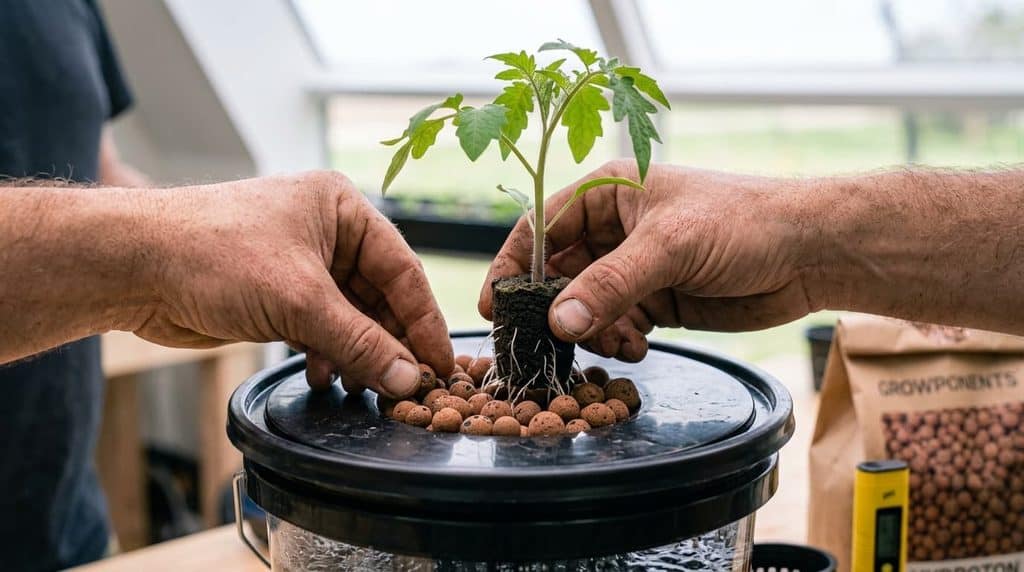
If you pull too fast or push too hard into the net pot, you can rip the seedling. Handle them with care and take your time.
After placing the seedling in the net pot, let the roots hang below it. They should sit in the moist space above the nutrient solution, where they can get both moisture and oxygen.
That is really all there is to it. Handle the roots carefully, give them room to grow, and let the seedling settle into the DWC system.
How Do You Move Seedlings Safely?
Here’s a simple way to handle the transplant:
- Wash your hands and clean your tools first
- Keep the starter plug (rockwool/Rapid Rooter) intact
- Place the entire plug directly on a base layer of clay pebbles inside the net pot
- Set the seedling in the middle of the net pot
- Add clay pebbles or expanded clay aggregate around the base to hold it in place
- Let the roots hang down on their own
- Put the net pot into the DWC system
Go slowly and handle the seedling with care. Young roots are easy to damage, and rough handling can make it harder for the plant to settle in.
And once everything is in place, leave the seedling alone to settle. A gentle start can make the transition much easier.
Where Should The Water Level Sit?
After transplanting, keep the hydroponic solution just below the bottom of the net pot. This lets the air stone bubbles keep the growing media damp while encouraging roots to grow downward.
When first transplanting, set the water level so it touches the bottom 1/4 to 1/2 inch of the net pot. Once primary roots extend 2+ inches into the solution, lower the water level to 1 to 2 inches below the net pot bottom to create an air gap.
This gives roots room to breathe and supports good oxygen flow. It is a small detail, but it matters. Keep an eye on the water level during those first few days.
How Can You Prevent Transplant Shock in DWC?
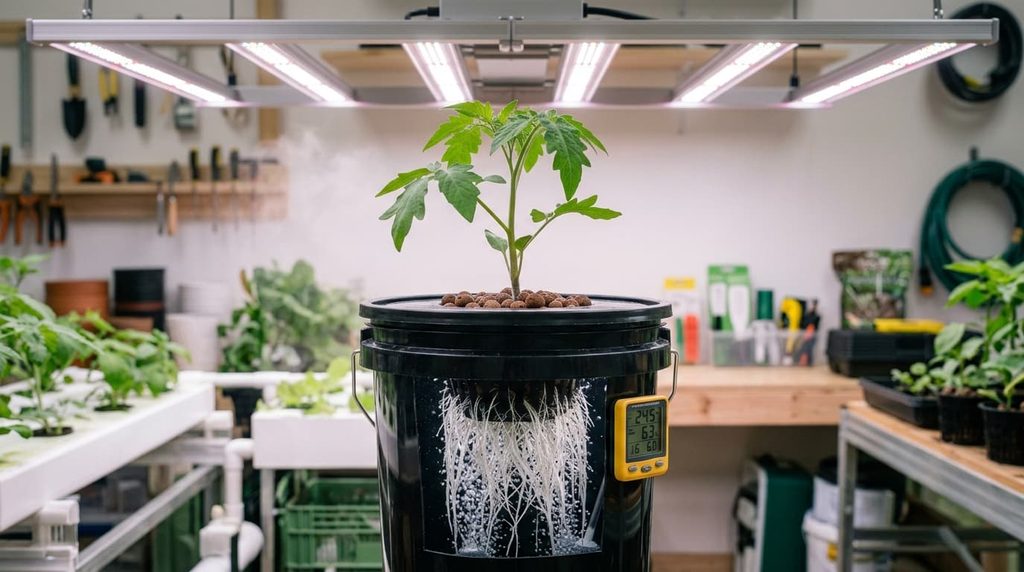
When transplanted into a DWC system, the seedlings require stable conditions and tender care. Sudden changes in moisture, nutrients, temperature, or light can slow growth and make transplant shock worse.
Keep things stable, and most seedlings recover well. Some seedlings may take several days to resume steady growth after transplanting. During this time, make changes slowly and give the roots time to settle.
Patience helps.
What Causes Transplant Shock?
Seedlings can run into a few problems during transplanting. Common ones include:
- Roots getting damaged
- Nutrient solution with high EC, or electrical conductivity
- pH that is out of balance
- Reservoir water that is too warm
- Not enough oxygen reaching the roots
- Air that is too dry
- Grow lights that are too bright
Making several changes at the same time can make things harder for the plant. Try to keep the conditions steady while the roots adjust and new growth gets going.
How Can You Help Seedlings Recover Faster?
The first few days after transplanting are critical for root health. Use a mild nutrient solution while the seedlings adjust. Keep the reservoir temperature steady, and leave the air pump running so the roots keep getting oxygen.
Check pH and EC with a meter each day. That makes it easier to spot changes early. Try not to move or shake the net pots after transplanting. Roots need some peace while they settle in.
Damaged leaves can usually stay unless removing them is truly necessary. And with steady conditions, healthy seedlings may start producing fresh white roots within a few days.
How Do You Maintain Healthy Roots After Transplanting?
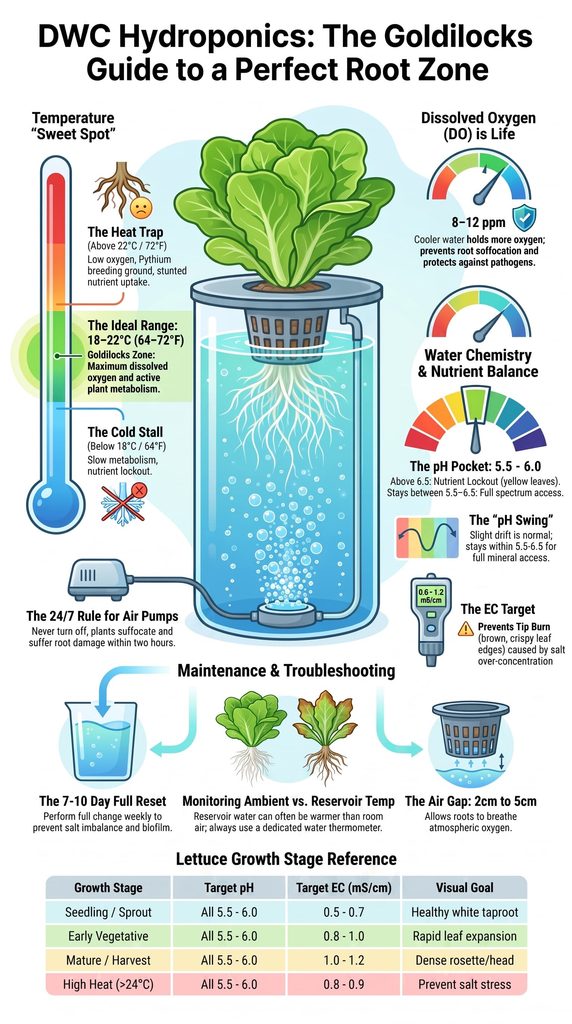
Roots in a DWC system need a constant supply of oxygen to stay healthy. As long as they have plenty of oxygen they can absorb water and nutrients and fuel new growth above the surface.
The reservoir needs clean water and good aeration. One study found improved lettuce growth under elevated DO conditions of 20–30 mg/L, but those results came from specific experimental conditions and should not be treated as a universal DWC target.
Warm water holds less oxygen, so rising temperatures can quickly put extra stress on the roots. Avoid changing several variables at once during the first few days. Good aeration and stable water conditions give young roots a much better chance to grow.
Why Is Dissolved Oxygen So Important?
Roots need oxygen to stay healthy. In DWC, air stones keep bubbles moving through the water and help maintain oxygen around the roots. Good aeration can support nutrient uptake, root growth, and vegetative growth while reducing root stress.
Data from Suyantohadi et al. (2010)
“This result suggests that the high concentrated dissolved oxygen of 20–30 mg/l is effective to promote the lettuce plants grown in a deep hydroponic system. A and B of lettuces plant growth under hydroponic conditions is caused by the dissolved oxygen.” (Suyantohadi et al., 2010)
However, these levels were produced under specific experimental conditions and should not be treated as a universal DWC target.
The air pump also matters. Choose one suited to your setup so the water stays well aerated.
How Do You Prevent Root Diseases?
Cleaning a hydroponic system can help prevent common problems. Key habits include:
- Clean the nutrient reservoir regularly.
- Control algae and remove dead plant material.
- Check the reservoir weekly.
- Keep the water from getting too warm.
- Use beneficial bacteria when appropriate.
Warmer nutrient solutions can increase stress and may favor some root pathogens.
Gillespie et al. (2020) found that
“Expt. 2 was conducted in a 9-m2 Conviron walk-in growth chamber (GR96; Conviron). The experiment used a randomized complete block design with four treatments consisting of pH (4.0 or 5.5) combined with the presence/absence of P. aphanidermatum inoculation of the nutrient solution.” (Gillespie et al., 2020)
This experiment indicates that maintaining nutrient solution pH at 4.0 effectively suppresses the severity of root rot caused by Pythium aphanidermatum without affecting plant growth.
Remember, these findings came from specific experimental conditions and should not be treated as a universal DWC target.
A clean reservoir and steady water temperature make a difference. Simple, but important.
How Should You Monitor Seedlings During the First Week?
The first week after transplanting is an important time for seedlings. It gives you a chance to spot problems early while the roots settle into the DWC system.
Growth above the surface may slow down at first. That’s normal. The plant is putting energy into its roots. Give it a little time and watch what happens next. Healthy leaves and white roots usually mean the seedling is settling in well. If both still look good, there’s no need to worry over a few quiet days.
Check the system every day, but don’t start changing things too quickly. Small adjustments to pH, nutrients, or water level are usually easier on young plants. Sudden changes can cause more stress.
Keep things steady. That’s the goal.
Which Signs Show A Healthy Transplant?
It’s better to look for steady progress than sudden bursts of growth. In hydroponics, slow and steady usually wins.
Watch for these signs:
- New white root tips appearing
- Stems staying upright
- Leaves looking firm and green
- New leaves growing normally
- Roots reaching deeper into the nutrient solution
- No bad smell coming from the reservoir
And don’t worry if the roots seem to lead the way at first. Seedlings often develop fresh roots before putting much energy into new leaves. Once that foundation is stronger, above-ground growth usually follows.
What Warning Signs Need Immediate Attention?
Early problem detection can be very helpful. Look for anything that seems wrong:
- Yellowing leaves
- Wilting despite plenty of water
- Brown or slimy roots
- Roots that don’t seem to grow at all
- Cloudy nutrient solution
- The beginning of algae in the reservoir
Start with the easy things. Look at the pH, water temperature, dissolved oxygen, and overall cleanliness of the system.
And don’t rush to change the nutrients. Check what’s causing the problem first. Changing nutrients too soon might only hide the issue for a while.
What Common DWC Transplant Mistakes Should You Avoid?

Credits: Taproot Hydroponics
Even if you have a good DWC setup, transplanting too early can be a problem. Rough handling or unstable water conditions can leave young seedlings stressed.
Many beginner mistakes happen when things move too quickly. A little preparation and regular checking can prevent most of them.
Take your time. It may feel slow, but giving seedlings a careful start helps them build stronger roots and healthier growth.
What Are The Most Common Transplanting Mistakes?
Avoid these common mistakes to help seedlings adjust after transplanting:
- Moving seedlings before the second set of true leaves appears.
- Damaging roots when removing them from starter plugs.
- Keeping water too high in the net pots.
- Using nutrient solution that is too strong for young plants.
- Ignoring pH and electrical conductivity (EC).
- Skipping regular reservoir cleaning.
- Providing too little oxygen to the roots.
Keep the DWC system clean, check water conditions regularly, and avoid sudden changes. Give seedlings time to adjust after transplanting. Consistent care can reduce stress, support healthy roots, and encourage steady growth.
FAQ
When should you transplant seedlings into a DWC system?
The best transplant timing depends on root development rather than plant size alone. Wait until the hydroponic seedlings have several healthy roots and the starter plug holds together. Hardening the seedlings before the move can also reduce transplant stress.
How can you protect seedling roots during a DWC transplant?
Handle seedling roots carefully and avoid unnecessary root pruning during a hydroponic seedling transplant. Place the root zone securely inside the net pot, then add clay pebbles around the stem to provide support. Adequate root oxygenation, moisture, and clean equipment help the roots establish after transplanting.
How should you adjust nutrients after transplanting seedlings?
Use a mild nutrient solution while seedlings adjust to the DWC setup. Check the pH balance and EC regularly because young plants can respond poorly to sudden changes in nutrient strength. Healthy nutrient uptake also depends on adequate dissolved oxygen, stable reservoir conditions, and healthy roots during early vegetative growth.
What should you check if seedlings struggle after a DWC transplant?
Check the water level, reservoir temperature, pH balance, and dissolved oxygen first. Yellowing leaves or slow growth can indicate problems with nutrient uptake or root health. Inspect the root zone for signs of algae or root disease as well. Proper airflow and suitable light intensity can also support healthy growth during post-transplant care.
How can you improve root health after transplanting seedlings?
Keep the nutrient reservoir clean and provide consistent root oxygenation through adequate aeration. Avoid making large changes to water conditions while the roots are establishing. Good hydroponic hygiene, suitable water temperature, and regular reservoir maintenance can reduce root problems and support healthy hydroponic roots as the plants enter active growth.
Transplanting Seedlings into a DWC System Starts with Healthy Roots
Successful DWC transplanting starts with the roots, not the calendar. Wait until seedlings have enough healthy root development to handle the move, rather than relying only on their age or size.
After transplanting, keep the system stable. Consistent water levels, good oxygenation, and steady pH and EC give young roots the conditions they need to establish without unnecessary stress.
Once the seedlings are settled, regular checks can help you catch problems early. For growers who want practical help with hydroponic growing, Tophydroponicgarden can be a useful place to explore next steps for your setup.
References
- https://journals.ashs.org/view/journals/hortsci/55/8/article-p1251.xml?tab_body=pdf
- www.sciencedirect.com/science/article/pii/S1474667015310727/pdf?md5=f24cbd923776c4469426fe875640e18a&pid=1-s2.0-S1474667015310727-main.pdf
Related Articles
- https://tophydroponicgarden.com/balancing-ph-in-your-hydroponic-garden/
- https://tophydroponicgarden.com/deep-water-culture/
- https://tophydroponicgarden.com/what-hydroponic-solution-for-beginners/
Was this helpful?
