

Tomato vines need support early. It keeps stems from snapping once the fruit starts getting heavy, improves airflow, and keeps tomatoes off the ground where they’re more likely to rot or pick up disease.
The right support also makes watering, pruning, and harvesting a lot easier. It doesn’t matter if you’re growing tomatoes in raised beds, containers, or a greenhouse, the right setup pays off all season. Keep reading to see how to support heavy tomato vines from planting through harvest.
Build a Strong Foundation for Heavy Tomato Vines
- Install stakes, cages, or trellis end-posts on planting day or within the first week after transplanting to prevent driving supports through established, sensitive root systems.
- Secure stems approximately every 8 – 12 inches using a loose Figure-8 knot, looping once around the support and once around the stem, to create a friction buffer.
- Inspect supports weekly as tomato fruit weight increases.
Why Heavy Tomato Vines Need Reliable Support
Tomato plants can become surprisingly heavy once fruit starts forming. Without support, stems bend under the weight until branches touch the soil. That creates several problems.
Fruit resting on damp soil is more likely to rot or develop diseases. It also becomes easier for insects and slugs to reach the tomatoes. Keeping fruit off the ground helps it stay cleaner and reduces damage throughout the season.
Supporting vines also improves airflow around the leaves. After rain or watering, leaves dry faster when plants are upright instead of packed together. Less moisture around the foliage means fungal diseases have a harder time spreading.
Harvesting is easier too. Instead of searching through tangled vines, ripe tomatoes are easier to spot and pick without accidentally snapping branches.
Supporting tomato plants also helps:
- Prevent broken stems
- Keep fruit cleaner
- Improve airflow
- Make harvesting easier
- Increase sunlight exposure
Small effort. Big payoff. Healthy plants spend less energy recovering from broken branches and more energy producing fruit.
Research from Indian Journal of Horticulture shows:
“Keeping heirloom tomato plants off the ground through staking or trellising enhances fruit yield and quality.” – Indian Journal of Horticulture
The research found that using a trellis support system resulted in a significantly higher yield per plant and also reduced the amount of fruit that was unmarketable.
Determinate and Indeterminate Tomatoes Need Different Support
Not every tomato grows the same way. Knowing which type you’re planting makes choosing the right support much easier.
Determinate tomatoes grow to a certain height, produce most of their fruit over a shorter period, and then stop growing. Since they stay fairly compact, they usually don’t need extremely tall supports.
Indeterminate tomatoes are different. They continue growing throughout the season and can easily reach 6 to 10 feet tall, depending on the variety and growing conditions. They also keep producing new flower clusters, making the vines much heavier over time.
The table below shows the difference.
| Tomato Type | Growth Habit | Support Needed | Good Options |
| Determinate | Stops at mature size | Moderate | Heavy-duty cage, short stake |
| Indeterminate | Keeps growing all season | Heavy | Tall stake, trellis, Florida Weave, string support |
Choosing the right support from the beginning saves work later. A sturdy cage may be enough for compact plants, while taller varieties benefit from stronger systems that can handle months of growth.
Most gardeners regret choosing supports that are too small. Very few wish they’d gone bigger.
Choosing the Best Tomato Support System

There isn’t one support system that’s best for every garden. The right choice depends on how many tomatoes you’re growing, how much space you have, and how much pruning you’re willing to do.
Here are some of the most common options.
Tomato Stakes
Wooden, bamboo, or metal stakes are affordable and take up very little space. Plants are tied to the stake as they grow, making pruning and harvesting easier. They’re a great choice for gardeners who regularly remove extra side shoots.
Heavy-Duty Tomato Cages
Strong cages are one of the easiest options because the plant grows through the cage with little training. Choose cages made from thick welded wire instead of lightweight versions. Thin cages often bend once fruit becomes heavy.
Trellises
A trellis works well for taller tomatoes, especially in raised beds. Vines can be tied to the structure as they climb, keeping growth neat and organized. Trellises also improve airflow because plants grow upward instead of spreading across the ground.
String Support
This method is common in greenhouses. Each plant grows along a hanging string that’s attached above the row. The vine is clipped or wrapped around the string as it gets taller. It saves space and makes pruning easier.
Support Netting
Support netting is another option for gardeners growing several plants together. It helps keep vines upright while allowing fruit to hang naturally. Whatever system you choose, make sure it’s strong enough for mature plants. Tomato vines can become much heavier than they first appear.
Staking Heavy Tomato Vines the Right Way
Staking is one of the oldest and most reliable ways to support tomatoes. Done correctly, it keeps plants upright while allowing enough movement to handle wind without breaking.
Drive 6 to 7 foot stakes 12 – 18 inches deep on planting day, positioning them 3 – 4 inches away from the stem base on the side opposite the first flower cluster.
Place the stake about 2 to 4 inches away from the main stem. Push it deep enough that it won’t lean once the plant becomes loaded with fruit. Then secure the stem using soft ties.
Follow these steps:
- Install a sturdy stake.
- Position it close to the stem.
- Tie the stem loosely.
- Add new ties as the plant grows.
- Replace tight or worn ties.
- Check the stake after storms.
Don’t pull the ties too tight. Tomato stems continue getting thicker throughout the season, and tight ties can damage the plant.
Florida Weave Provides Excellent Row Support
If you’re growing several tomato plants in rows, the Florida Weave is one of the most efficient support methods. Anchor the row using heavy steel T-posts at both ends and wooden or metal stakes every 2 – 3 plants, keeping lines tight with high-tension polypropylene twine.
Garden twine is then woven between the plants on both sides, creating a fence that supports the stems as they grow. This system uses fewer materials than individual cages and works especially well for larger vegetable gardens.
The Florida Weave is a good choice when you:
- Grow tomatoes in rows
- Have several plants
- Want lower material costs
- Prune plants regularly
It may not be the best option if you’re growing only one or two tomatoes in containers or if your plants are spaced far apart. With regular adjustments, the woven twine continues supporting new growth as the season goes on.
Prevent Heavy Tomato Branches From Breaking
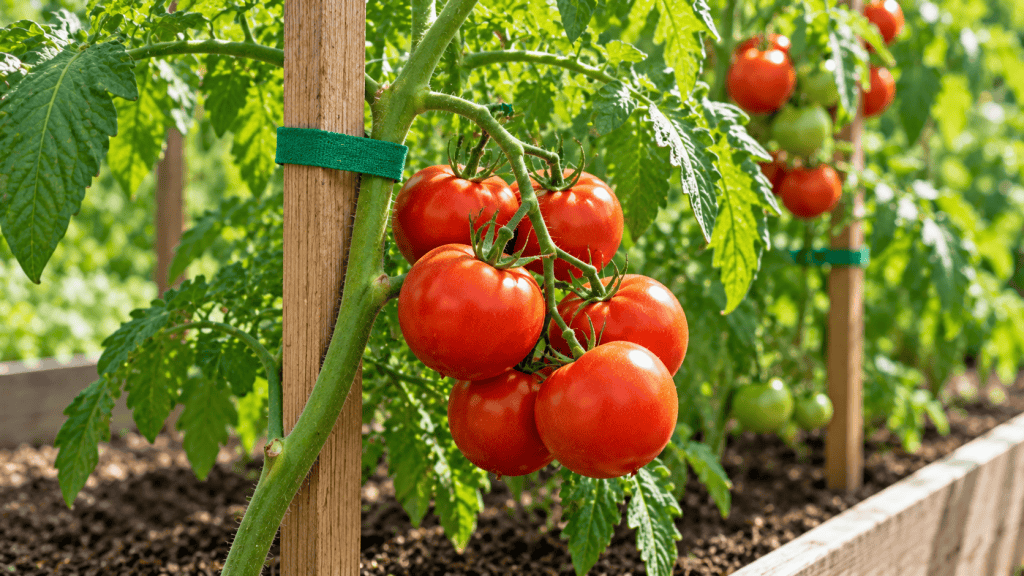
Even with a sturdy support system, individual branches can still snap under the weight of ripening tomatoes. This is especially common with large varieties like beefsteak tomatoes, where one fruit cluster can become surprisingly heavy.
As noted by University of Maryland Extension:
“A heavy load of fruit can sometimes tear the un-supported branches of tomato plants” – University of Maryland Extension
The good news? A few simple habits can prevent most breakage. If a branch starts bending sharply, give it extra support before it reaches the breaking point. A soft tie, tomato clip, or small stake placed beneath the branch can take some of the weight off the stem.
Pruning also helps. Prune excess suckers on indeterminate varieties to 1–2 main stems. In high-UV or scorching climates, leave a sufficient leaf canopy intact to protect ripening fruit from sunscald.
Don’t wait. Harvest ripe tomatoes as soon as they’re ready. Leaving fully ripe fruit on the vine adds unnecessary weight and increases the chance of branches splitting after strong winds or heavy rain.
These habits help reduce damage throughout the season:
- Support heavy fruit clusters
- Remove excess suckers
- Pick ripe tomatoes promptly
- Replace damaged ties
- Check branches after storms
- Loosen tight clips
Spending a few minutes each week is usually enough to catch problems before they become bigger ones.
Avoid Common Tomato Support Mistakes
Many tomato support problems aren’t caused by weak plants. They’re caused by small mistakes made early in the season. The most common one is waiting too long.
Once tomatoes have grown several feet tall, installing cages or stakes becomes much more difficult. It’s also easier to damage the roots while pushing supports into the soil. Another mistake is choosing lightweight cages. They may look sturdy when plants are small, but many fold or lean once vines become loaded with fruit.
Tying stems too tightly is another issue. Tomato stems expand as they grow, and tight ties can cut into the plant, slowing growth or even causing stems to split. Check your support system regularly throughout the season.
Use this checklist:
- Install supports early
- Choose sturdy materials
- Tie stems loosely
- Replace worn ties
- Straighten leaning stakes
- Inspect after heavy wind
Small fixes now can save a lot of trouble later.
Supporting Tomatoes in Containers
How to Grow Tomatoes in Containers or Grow Bags – Trellis Ideas for Indeterminates
Credit: Next Level Gardening
Container tomatoes need support just as much as plants growing in the ground. In some cases, they need even more. As the plant grows taller and fruit begins to ripen, the container can become top-heavy. Strong winds may cause the entire pot to tip over if it isn’t stable.
Choose a large container whenever possible. Bigger pots are heavier, making them less likely to fall over. They also give roots more room to grow.
Several support systems work well in containers. Heavy-duty cages are one of the easiest options because they support the plant from multiple sides. Bamboo teepees also provide good stability while taking up very little space.
Spiral stakes are another popular choice for compact growing areas. Whatever support you choose, install it when planting or while the tomato is still young. Trying to force a cage into a container later can damage the roots. Check ties often because container-grown tomatoes usually grow quickly during warm weather.
Maintain Supported Tomato Vines Throughout the Season
Installing supports is only the first step. Regular maintenance keeps everything working as the plants continue growing. Tomatoes can grow several inches in a week during warm summer weather. New stems need fresh ties, and older ones may need to be adjusted as they thicken.
Set aside a few minutes once a week to inspect each plant. Look for loose stakes, leaning cages, damaged ties, or branches carrying heavy fruit. Fixing these small problems early helps prevent larger failures later.
A weekly routine might include:
- Check all ties
- Tighten loose supports
- Replace broken clips
- Remove damaged leaves
- Support heavy branches
- Harvest ripe tomatoes
- Inspect cages and trellises
It’s time well spent. Regular harvesting also encourages plants to keep producing. As ripe fruit is removed, the weight on the vine decreases, lowering the risk of broken stems.
Choosing the Best Tomato Support
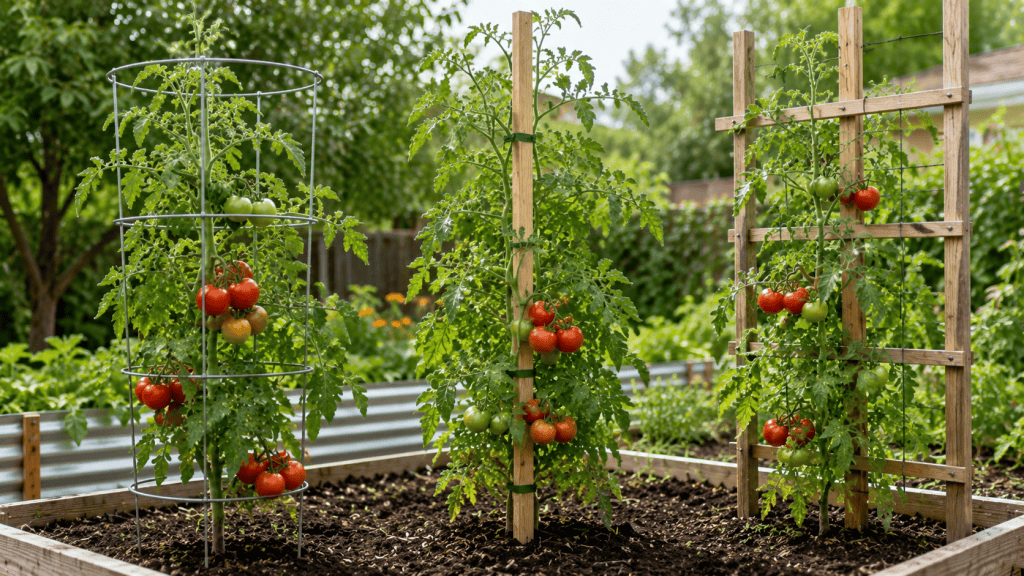
The best support depends on your garden and the type of tomatoes you’re growing. If you only have a few compact plants, heavy-duty cages are hard to beat. They’re easy to install and require very little maintenance.
For tall indeterminate tomatoes, stakes and trellises provide stronger long-term support. They’re also a better choice if you prune regularly because they keep vines organized and easy to reach.
Growing long rows? The Florida Weave saves both time and materials while providing reliable support for multiple plants.
No matter which method you choose, the goal stays the same: keep vines upright, reduce stress on the stems, and make harvesting easier.
FAQ
Can I use a DIY tomato trellis instead of buying a support system?
Yes. A DIY tomato trellis can support tomato plants just as well as many store-bought options if it is sturdy and properly secured. Wood, metal, or strong wire all work well. A solid trellis supports growing vines, improves airflow, and gives plants enough strength to carry heavy fruit throughout the season.
Which tomato support works best for greenhouse tomatoes?
The best greenhouse tomato support depends on the variety and available space. Many gardeners use overhead tomato support with tomato support strings because the system keeps vines growing upward and saves valuable space. This method also makes pruning, watering, and harvesting easier while keeping plants neat and well organized.
Can support netting replace tomato cages?
Yes. Tomato support netting is a practical alternative to wire tomato cages, especially when growing several plants in a row. The netting supports stems as they grow while allowing good airflow around the foliage. It also keeps plants upright without taking up as much space as individual cages, making maintenance much easier.
Do large tomato varieties need extra branch support?
Yes. Large tomatoes produce greater tomato fruit weight, which places extra stress on the stems. Adding heavy fruit support with tomato branch clips or extra tomato stem support helps protect the plant from damage. Checking plants every week allows you to support heavy clusters before branches bend or break.
Grow Stronger Tomatoes With the Right Support
Supporting tomato plants early saves you from dealing with bent stems and fruit sitting on the ground later. You’ll spend less time fixing problems because healthy plants are easier to manage. It’s worth it. Choosing the right support and checking it each week helps your tomatoes grow stronger and produce more throughout the season.
If you want an easier way to grow healthy tomatoes, Tophydroponicgarden is a helpful place to start. You’ll find practical tips that are simple to follow, so you can avoid common mistakes and enjoy a better harvest with less guesswork.
References
- https://journal.iahs.org.in/index.php/ijh/article/view/2908
- https://www.extension.umd.edu/resource/vegetableplantsfalloverorstemsarebroken/
Related Articles
- https://tophydroponicgarden.com/best-tomato-varieties-for-hydroponics/
- https://tophydroponicgarden.com/growing-cherry-tomatoes-in-dwc-system/
- https://tophydroponicgarden.com/cultivating-hydroponic-tomatoes/
Was this helpful?
