

Supporting fruiting plants early helps stop broken stems, keeps fruit off the ground, improves airflow, and makes harvesting easier.
Waiting until plants are already loaded with fruit often leads to damage that’s hard to fix.
The right support depends on what you’re growing, but giving plants a sturdy structure before they need it usually pays off with healthier growth and cleaner harvests.
Keep reading to find the best support methods for tomatoes, cucumbers, squash, peppers, melons, and other heavy-producing plants.
Quick Support Wins for Heavy Fruiting Plants
Strong plant support starts before problems appear. Installing the right structure early, matching it to each crop’s growth, and checking it regularly will keep plants upright, reduce stem damage, and help them produce healthy, heavy harvests.
- Install supports when planting instead of waiting until plants begin leaning.
- Match the support structure to the crop’s mature size, growth habit, and expected fruit weight.
- Inspect and reinforce supports weekly as fruit develops to prevent structural failure.
Why Do Heavy Fruiting Plants Need Support?
Heavy fruit doesn’t just happen quietly; it pulls and strains branches and stems, sometimes to the breaking point. Giving plants proper support helps spread out that weight, keeps fruit off the damp ground, and lets air flow freely around leaves and stems.
This simple step can lower the chances of disease all season long.
Think about vegetables like tomatoes, cucumbers, winter squash, melons, and eggplants. Each branch can hold several pounds of fruit as they grow.
The 2026 Southeastern U.S. Vegetable Crop Handbook points out that plants with good support usually face fewer diseases. That’s because fruit stays lifted above wet soil, and leaves dry faster after watering. The bonus? The harvest looks better, too.
Plants left to their own devices often lean awkwardly before the fruit is even ripe.
Add in wind, rain, and watering, and branches have to deal with more than just steady weight, this is what pros call dynamic loading: supports need to handle movement as well as heaviness. Greenhouse growers design trellises with this in mind to keep everything steady.
When support is missing or weak, gardeners often find themselves facing cracked stems, snapped branches, fruit rotting from touching soil, more insect attacks, fungal diseases, and just plain trouble during harvest.
But proper support isn’t just about preventing damage. Training plants onto supports improves sunlight reaching the leaves and fruit.
That makes it easier to spot problems, trim away dead growth, and pick ripe vegetables. Plus, plants tend to grow healthier when they’re given this kind of help.
When plants don’t get solid support, problems rarely come alone. As fruit clusters grow heavier, weight doesn’t spread evenly, making branches crack and vines collapse under the strain. It’s a slow unraveling, happening right before your eyes.
Experienced growers often point out that cheap cages don’t hold up past the first big wave of fruit, especially with indeterminate tomatoes that keep producing.
Support shouldn’t just be about sticking a stake in the ground and hoping for the best. It’s more about balancing the load and anchoring the plant firmly so it can carry its harvest without falling apart.
Proper support does more than keep plants upright, it lifts the whole growing game. Air circulates better through the leaves, which helps keep fungal diseases in check. Fruits stay clean, not smeared with soil or dampness.
Pruning becomes less of a chore when branches are accessible, and sunlight can reach every leaf and fruit evenly. This all means less sickness, easier care, and better harvests.
In fact, research from the International Journal of Horticulture backs this up. They found that combining fungicide sprays with staking bumped up marketable fruit yields by more than 65% and 25%, compared to no sprays or support.
At the same time, rejected fruit dropped by nearly a third. Support isn’t just a tool, it’s a game-changer for anyone serious about growing healthy, productive plants.
When Should You Install Plant Supports?
There’s something about putting in plant supports right when you plant that just feels… right.
Waiting until plants are established can end up hurting the roots, and nobody likes that. Starting early means stems get coached to grow upward naturally, which saves a lot of trouble later on.
Think about it: setting stakes, trellises, or cages after the plant has settled often means digging around roots that have already claimed their space.
That digging can shock the plant and slow growth. Research from commercial growers agrees, support goes in with the first planting, not as an afterthought.
When supports are there from the start, training vines becomes almost second nature. Young stems don’t resist growing straight up. Less bending and twisting means fewer broken branches and less emergency pruning during fruiting season.
That sturdy setup holds up better through wind gusts, heavy rains, and the added weight of growing fruit.
Starting early means:
- Roots stay safe and undisturbed
- Plants learn to grow upright
- Training vines is easy, not a fight
- Less pruning to fix mistakes
- Fewer last-minute fixes during storms
These perks matter a lot for plants that keep producing for months at a time.
On the flip side, waiting too long to add support complicates things. You risk damaging roots when inserting stakes, and by then, stems are often drooping or crooked.
Straightening out these established vines without crack or snap? Not easy. Plants need more pruning to balance weight, and tying things up last minute rarely matches the steadiness of well-planned support.
As growers say, supports aren’t tools for repairs, they belong in the planting process, guiding plants from day one.
Which Plant Support System Works Best?
I’ve noticed how the right support can really make or break a garden’s success. The catch? There’s no one-size-fits-all, it all depends on the crop’s shape, height, fruit weight, and how much space you have to work with.
It also helps to match the system to the plant’s growth habit so the support remains effective throughout the growing season.
Take peppers and tomatoes, for example. Compact peppers often do just fine with simple stakes.
Tomatoes, though, especially the vigorous kinds, usually need something tougher, heavy-duty trellises, sturdy cages, or even overhead greenhouse supports to hold their weight.
As noted by Mendeley
“All vertical staking methods provided smaller severity of late blight, early blight and bacterial spot in leaves and attack of insects than crossed fence method.” – Mendeley
| Support System | Best For | Advantages | Limitations |
| Stakes | Tomatoes, peppers, eggplants | Space efficient and affordable | Requires regular tying |
| Cages | Bush tomatoes | Low maintenance | May reduce airflow if overcrowded |
| Trellis | Cucumbers, squash, melons | Excellent vertical growth and airflow | Needs sturdy framework |
| A-Frame | Beans, peas, small melons | Highly stable and productive | Longer setup time |
Vertical gardening has surged in popularity lately, prompting gardeners to opt for stronger materials, like mesh netting and rail systems, that support heavier crops over longer seasons.
Before settling on a structure, consider these factors carefully: how tall the plant gets, how heavy the fruit becomes, how windy your garden is, how it’s laid out, and how often you harvest.
Picking the right support early isn’t just about ease, it’s also about building something durable that won’t need constant babysitting. In other words, build smart, and your plants will thank you.
How Should You Stake Heavy Fruiting Plants?

There’s a delicate balance in supporting fruiting vegetables, the stakes have to be deep and sturdy, but the ties need to be gentle enough not to choke the stem.
Early staking, especially for tomatoes, does more than just keep stems upright, it eases the constant pull from heavy fruit and shifting wind.
Heavy-duty stakes, driven 12 to 18 inches deep before planting, anchor plants solidly as they bulk up over the season. Greenhouse professionals warn that shallower stakes tend to fail.
They can hold steady weight but don’t stand up to the constant swaying wind and the tug from harvesters moving through the crop.
Choosing ties is just as crucial. Thin wire or string might sound tough, but they often squeeze the cambium, the living tissue that moves water and nutrients through the plant, causing damage over time.
That’s why commercial growers prefer softer choices: plant tie tape, gardening twine, soft fabric strips, or reusable garden ties that stretch as the plant grows.
Here are some go-to materials that get the job done without harm:
- Garden Velcro
- Cotton fabric strips
- Pantyhose (yes, really)
- Soft cloth ties
- Flexible plant support wire with padding
The Figure-8 tie method is one of the smartest moves you can make here. By looping the tie around the stake first, then the stem, it creates a cushion that keeps the stem from rubbing directly against the stake.
This little gap lets the stem breathe and move slightly, which helps protect delicate tissue, especially important when the wind picks up. It’s no wonder growers rely on this technique for tomatoes and peppers.
Are Tomato Cages Strong Enough?
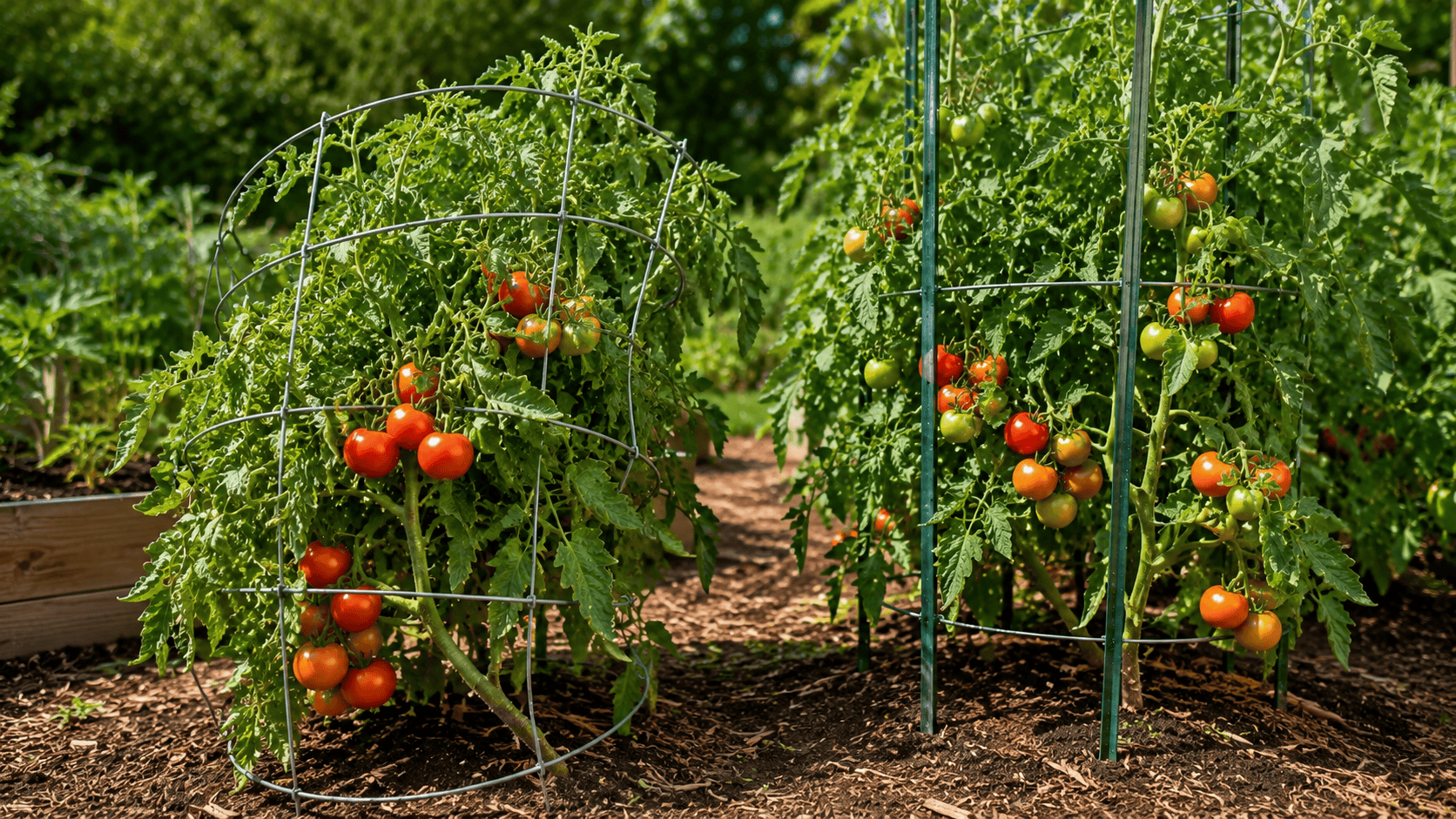
Heavy-duty cages can carry the load for many gardens, but those flimsy, lightweight cages you see in stores?
They often buckle once indeterminate tomatoes start pushing out multiple fruit clusters. It’s a familiar story, the thin wire bends, branches crowd too close, airflow drops, and fungal diseases find a welcome home.
Growers with experience often talk about these cages giving out by the second round of fruiting, especially when wind gets involved. That’s no surprise, considering the stresses those plants endure.
Pros tend to skip the cheap cages in favor of DIY tomato supports made from heavy-gauge steel fencing or reinforced commercial options built to hold up under real pressure.
If you want to boost a cage that’s already in the garden, there’s a simple fix:
- Drive a sturdy steel stake right next to the cage
- Use zip ties to fasten the two together
- Make sure the plant sits centered inside
- Do this early, before fruit gets too large
Even the strongest cages aren’t invincible though. Adding plant support clips for tomatoes and checking the setup regularly once fruiting kicks in helps keep everything balanced through the season. It’s a bit of extra work, but it saves you from a collapsing mess later on.
Why Are Trellises Better for Vining Crops?
Trellises feel like the unsung heroes of the garden, stretching plants upward, clearing the air, and making harvest time less of a wrestling match.
They work especially well for climbers like cucumbers, pole beans, winter squash, and certain melons.
When plants grow vertically, their leaves soak in sunlight better, and moisture that usually hides under thick foliage is less likely to linger, cutting down on disease.
As these vines bulk up and fruit grows heavy, simple vertical support won’t always cut it. Commercial growers often turn to heavy-duty netting or mesh stretched tight across multiple anchor points.
This way, the weight spreads out rather than pressing down on one vulnerable vine.
Data from International Journal of Horticulture
“Fungicide-spray schedules and staking increased the marketable fruit yield by 65.4 and 25.4% compared with the unsprayed control and no staking respectively. Both these operations decreased the yield of discarded fruit by 27.1 and 31.5% respectively.” – International Journal of Horticulture
Here’s a quick list of common trellis favorites:
- Cucumbers
- Pole beans
- Winter squash
- Melons
- Small pumpkins
When fruits get larger but still grow vertically, they call for their own gentle support. Fruit hammocks or tomato slings, made from soft mesh, shade cloth, or even repurposed old cotton shirts, cradle the developing produce without blocking air flow.
The magic here is simple: a well-supported vine carries its harvest through the trellis, not just by its stem. This relief means less tearing, fewer broken branches, and a healthier plant ready to keep producing.
Some Support Materials Should You Avoid
Choosing the right materials to support your plants is more important than many gardeners realize. Thin wire is one of the biggest mistakes people make at home. It might look strong, but as the plant stems grow, the wire cuts into them.
This harms the cambium, the layer that moves water and nutrients up the plant. Growers call this girdling, and it can seriously damage the plant.
Instead, professionals use strong materials that last all season. Heavy steel stakes, soft ties that you can use again, galvanized supports, sturdy hooks, and good quality garden hardware all work well.
To keep things simple, here’s what you want and what you don’t:
Use:
- Heavy-duty steel stakes
- Soft, reusable ties
- Galvanized supports
- Reinforced garden hooks
- Quality hardware for gardens
Avoid:
- Thin wire
- Weak plastic clips
- Bamboo stakes that aren’t strong enough for big plants
- Fancy but flimsy decorative supports
Spending a little extra on good materials at the start saves you headaches later. It’s easier to set up right once than to fix broken supports in the middle of growing season. Strong support means healthier plants with less chance of damage.
Why Do Plant Supports Suddenly Fail?
It’s easy to overlook how much a moving plant really weighs. Gardeners often think only about the fruit’s weight, that’s the static load, but plants don’t sit still.
Wind blows, stems grow, water moves inside, and hands twist branches during harvest. This dynamic loading adds up.
Greenhouse engineers separate these two loads for a reason. Static load is just the fruit itself. Dynamic loading includes all the forces that cause constant motion, making support needs much greater than they appear.
That’s why commercial growers build support systems that spread weight across strong anchor points and overhead rails, not just stakes stuck in the soil. Soil can only hold so much.
To keep your structures from failing, try these steps:
- Drive anchors deep into the ground
- Strengthen supports before fruit reaches its heaviest
- Check everything after strong winds or storms
- Swap out any ties that look worn or weak
- Upgrade any support that seems borderline before it breaks
Looking at your garden through an engineer’s lens, rather than just the gardener’s, can make all the difference. Supporting a plant through a whole season calls for structures built to handle movement, not just stillness.
How to Maintain Plant Supports During the Season
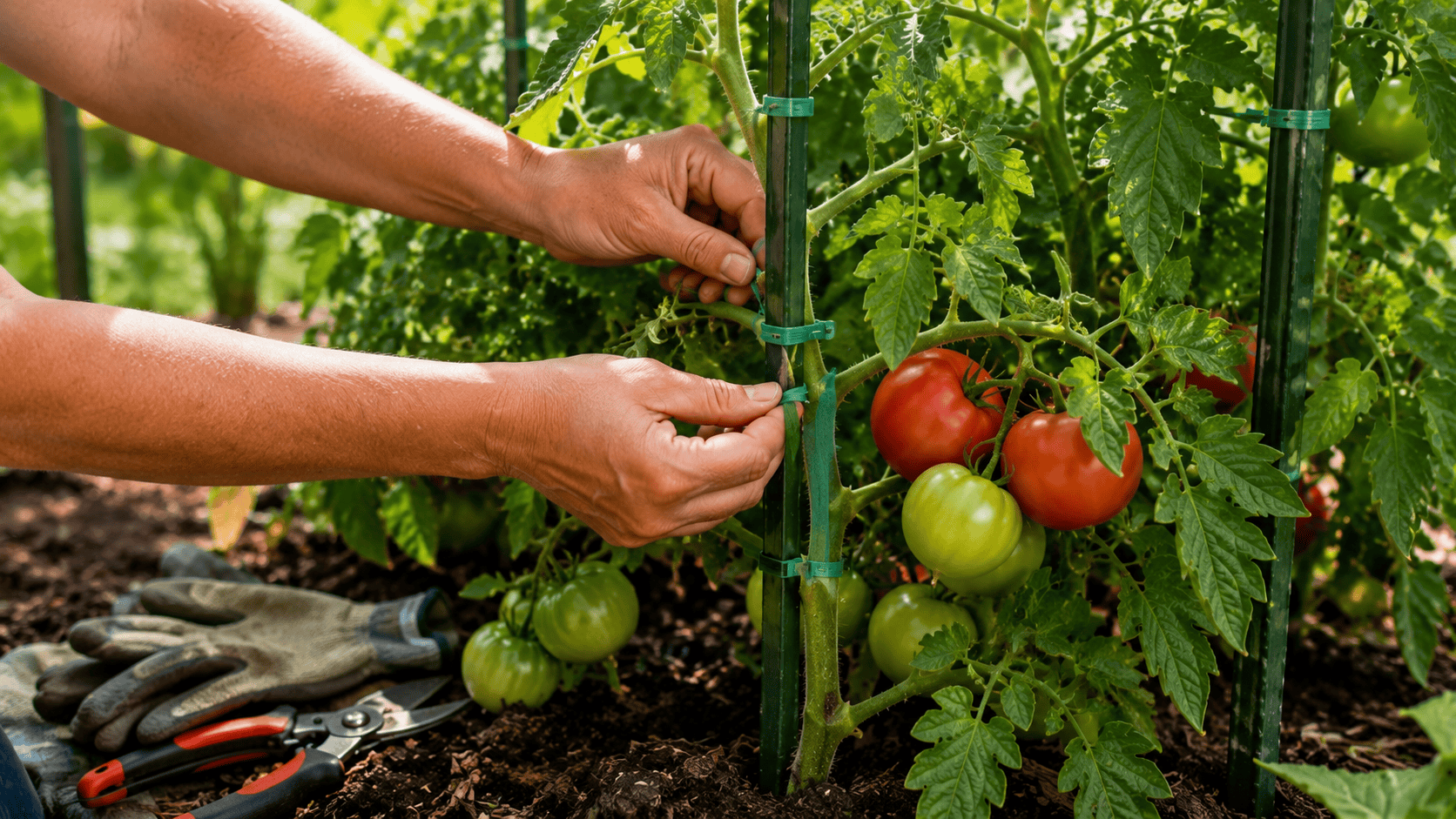
Small problems rarely stay small in a garden. As fruits grow heavier, ties loosen, stems swell, and supports can shift just enough to invite trouble. Weekly inspections aren’t just a chore, they’re the way to catch these issues before they turn into bigger losses.
Keeping up with maintenance every week helps plants bear their weight better and stretches the life of your supports too.
Healthy airflow, regular pruning, and selecting suitable companion plants can also make the growing environment easier to manage throughout the season.
Here’s a simple checklist for your weekly rounds:
- Tighten any loose ties
- Swap out damaged clips
- Add support for new fruit clusters
- Remove leaves or branches that crowd too much
- Give slings a good look for wear
- Check all supports after storms
Pruning plays its own role here. Beyond shaping the plant, it opens up airflow, balances where the weight sits, and lets sunlight reach inner leaves. Together, these steps keep plants healthier and easier to manage from start to finish.
How Can You Save a Plant That’s Already Breaking?

Credits : Self Sufficient Me
Stems that suffer partial damage don’t always mean a lost plant. If you catch the problem early and lighten the load, those cracks can heal. When a stem is still hanging on, quick support can be the difference between recovery and collapse.
The key moves? Take off some heavy fruit to ease stress. Then, splint the cracked part carefully and tie it gently with soft materials to avoid squeezing the stem. Strengthening the whole support system around the plant helps keep everything steady while it heals.
Here’s the emergency game plan:
- Remove extra fruit weighing down the stem
- Splint the damaged area to stabilize it
- Retie the stem using soft, flexible ties
- Reinforce the main support structure nearby
- Keep a close eye for signs of disease
Growers who act fast often manage to save prized plants. The sooner you intervene, before stems snap completely, the better the chances for a strong comeback.
How Can Hydroponic Gardens Support Heavy Fruiting Crops?
Hydroponic gardening is a whole different animal when it comes to plant support. Since the growing media, whether it’s water or a soilless mix, can’t hold plants steady on its own, overhead support becomes essential.
Choosing stable growing containers such as net pots also helps create a more reliable foundation before installing overhead supports. Without it, mature plants risk toppling or damage, no matter how carefully they’re nurtured.
Commercial hydroponic farms rely on clever tools like tomato lowering hooks, roller hooks, overhead cables, and sturdy rail systems that can slide up and down as plants grow.
These setups keep plant heights manageable, cut down on the hassle of pruning, and stretch out the harvest season longer than you might expect.
The benefits here are clear:
- Distributes weight more evenly, easing stress on stems
- Anchors plants with real strength
- Makes pruning less of a balancing act
- Keeps air flowing around leaves and fruit, lowering disease risk
- Keeps plants productive, well past typical timelines
If you’re hunting for proven strategies in greenhouse plant support or vertical farming, resources like TopHydroponicGarden offer a solid starting place, covering everything from heavy-duty trellising to clips and commercial-grade netting.
Getting these supports right in hydroponics isn’t just about keeping plants upright, it’s about building a system that helps plants thrive through every stage.
FAQ
How do I choose between garden stakes and a vertical gardening trellis?
Choose the support system based on the plant’s growth habit and expected fruit weight. Garden stakes for vegetables work well for peppers and determinate tomatoes because they provide upright support. A vertical gardening trellis is a better choice for climbing crops. Proper crop weight distribution and sturdy plant supports improve airflow, reduce disease risk, and make harvesting easier.
How can I support tomatoes without damaging the stems?
Use soft plant tie tape, garden plant ties, or gardening twine because these materials hold stems securely without cutting into them. Add plant support clips for tomatoes or reusable plant support clips to guide new growth. Proper plant stem support and plant stem protection reduce the chance of broken stems as tomatoes become heavier.
Which support system works best for climbing vegetables?
A strong frame with bean trellis netting, garden mesh netting, or plant support mesh provides reliable support for climbing vegetables. Cucumber vertical support and vertical crop support help vines grow upward instead of spreading across the ground. Correct trellis netting installation and adequate heavy vine support keep plants stable throughout the growing season.
What extra support helps plants carry very heavy fruit?
Large fruits often require additional support beyond standard staking. A plant cradle for fruit, fruit support hammock, or tomato slings helps reduce stress on stems by supporting the fruit’s weight. Combine these tools with heavy duty plant support, secure plant anchor points, and a heavy duty trellis to improve overall plant weight support.
How can I make my plant support system last longer?
Build the structure with durable garden support materials and reliable gardening hardware that can withstand outdoor conditions. Inspect garden structure durability regularly by checking for loose fasteners, damaged garden support hooks, or bent plant support wire. Consistent vegetable garden maintenance keeps the vegetable garden structure stable and ready to support future crops.
Build Better Support for Heavy Fruiting Plants
Heavy fruiting plants put a lot of pressure on stems, and weak support often leads to broken branches or damaged crops.
That’s why it’s worth setting up strong supports early and checking them as plants grow. A little effort now pays off.
If you want a simple way to keep plants growing strong, TopHydroponicGarden offers reliable support solutions along with practical growing guides that can help you get better results.
The right setup makes harvesting easier, and it helps your plants stay healthy through the whole season.
References
- https://journal.iahs.org.in/index.php/ijh/article/view/2908?articlesBySimilarityPage=94#articlesBySimilarity
- https://journal.iahs.org.in/index.php/ijh/article/view/2908?articlesBySimilarityPage=94#articlesBySimilarity
Related Article
- https://tophydroponicgarden.com/why-use-net-pots-for-your-plants/
- https://tophydroponicgarden.com/what-are-companion-plants-for-hydroponics/
- https://tophydroponicgarden.com/how-to-match-a-system-to-your-chosen-plants/
Was this helpful?

I’m Barrie L., a passionate hydroponic gardening enthusiast dedicated to cultivating thriving, soil-less gardens. With a focus on all things hydroponic, I share my expertise on innovative growing techniques and sustainable practices through my blog, tophydroponicgarden.com. As a seasoned hydroponics specialist, my goal is to inspire and guide fellow gardeners in harnessing the power of water-based cultivation for bountiful and eco-friendly harvests. I’m also an author of the book “Hydroponics For Absolute Beginners: Your Step By Step Guide For How To Create An Hydroponics System At Home Without Soil, For Growing Vegetable, Fruit And Herbs.” which is sold on Amazon. Join me on a journey of redefining the way we cultivate plants, one nutrient-rich solution at a time. Happy growing!