
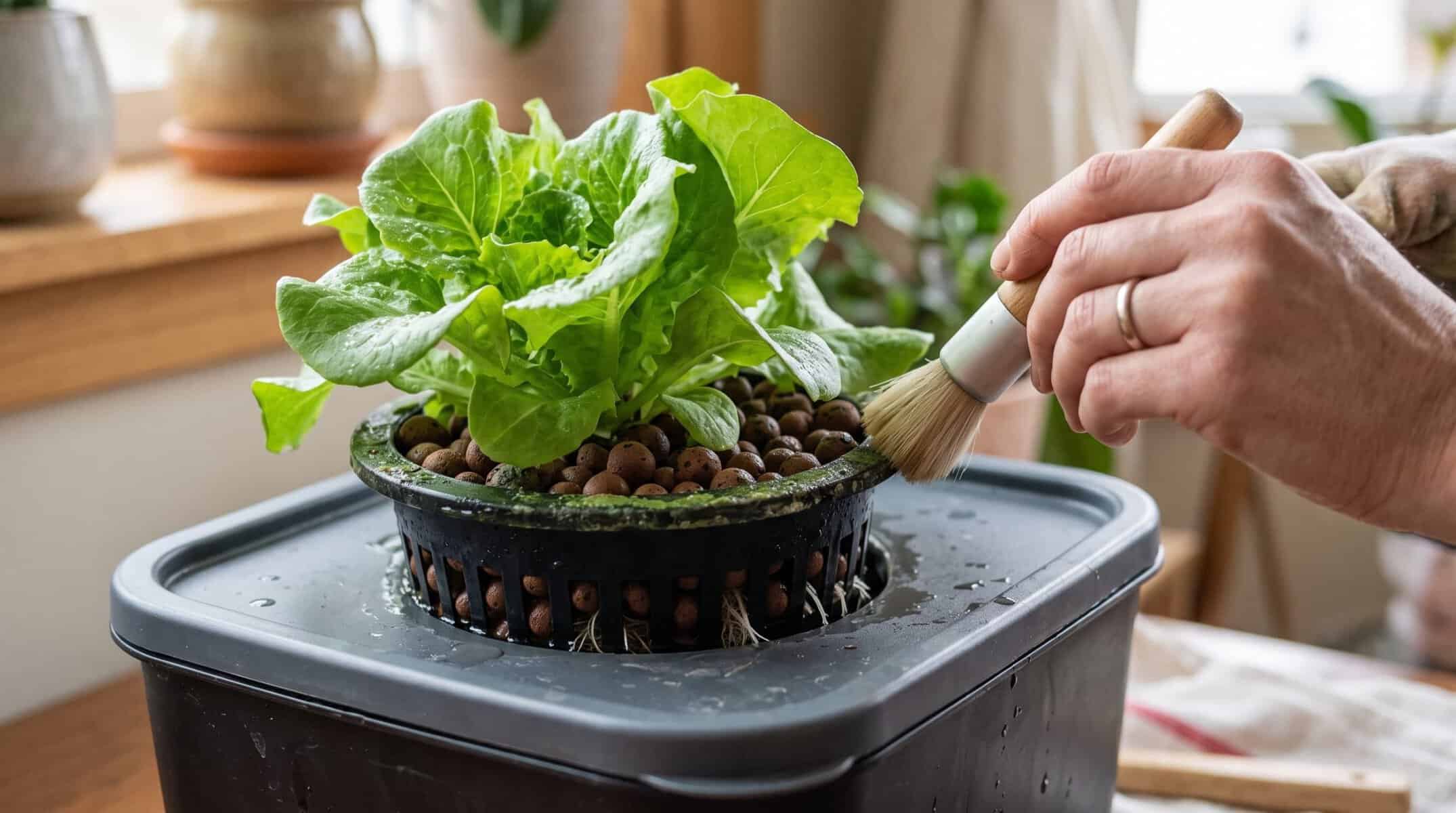
Algae on net pots usually develops when light reaches nutrient-rich water, so blocking light is the first control step. Oklahoma State University Extension recommends covering hydroponic tanks with lids or black plastic to keep light away from the nutrient solution.
The same idea applies around net pots, tubing, and exposed root zones. Tophydroponicgarden can help guide you through practical ways to stop algae without unnecessarily disturbing your plants.
Simple Ways to Keep Net Pots Algae-Free
- Block light completely: Cover reservoirs, seal net-pot gaps, and protect exposed tubing and wet surfaces.
- Clean existing algae: Scrub net pots and system surfaces, sanitize appropriately, rinse when required, and dry equipment between crops.
- Keep conditions stable: Good aeration, circulation, appropriate temperature, pH, and nutrient management can reduce conditions that support algae.
Why Does Algae Keep Growing on Net Pots?
Algae keeps returning when light, moisture, and nutrients remain around the net pot or nutrient reservoir. So, removing visible algae once may not solve the problem for long. The conditions that support its growth can still be there.
A reservoir may look dark while small areas around the net pot still receive light. Common trouble spots include gaps around plant stems, unused lid holes, translucent tubing, and wet surfaces above the nutrient solution.
Oklahoma State University Extension notes that shallow or stagnant water and high nutrient levels can encourage algae growth. Covering hydroponic tanks can also keep light from reaching the nutrient solution.
Check these areas regularly:
- Gaps around plant stems
- Unused holes in the lid
- Translucent tubing
- Wet surfaces above the solution
Look closely after moving plants, adjusting net pots, or opening the reservoir. Small gaps can appear without being obvious, especially under strong grow lights.
Replacing nutrients alone may not stop recurring algae. The system design matters too. Block light from exposed wet areas, keep the reservoir covered, and check that water isn’t sitting stagnant.
Where Does Light Usually Enter?
Small openings around the net pot can expose wet surfaces to grow lights or sunlight. Check these areas before changing your nutrient routine.
- Net-pot rims
- Stem gaps
- Unused planting holes
- Loose reservoir lids
- Clear tubing
- Translucent containers
- Wet splash zones
The key is to inspect the whole root zone, not only the reservoir walls. A small exposed area can still get enough light for algae growth.
How Do You Block Light Around Net Pots?
The most practical way to prevent algae is to create a continuous light barrier around the reservoir, net pots, and exposed root zone. Don’t leave small wet areas open to grow lights or sunlight.
Use opaque net pots, reservoir covers, collars, or other light-blocking materials. Oklahoma State University uses an opaque tank lid in its vertical hydroponic tower design to help avoid algae growth.
Research from Crop Protection shows
“Although these photosynthetic algae can be controlled by shading the root zone with a light-proof film, the utilization of algicidal compounds would be more effective in reducing costs and labor requirements.” – Crop Protection
And you don’t need to rebuild the whole system. A foam collar can cover gaps around stems, while opaque material can block unused planting holes.
Check these areas too:
- Net-pot openings
- Gaps around stems
- Unused planting holes
- Reservoir edges
- Exposed tubing
- Wet root zones
Clear tubing and exposed joints can let light reach nutrient-rich water, even with a covered reservoir.
So inspect the system with the grow lights on. Small gaps aren’t always obvious. Keep nutrient-rich wet surfaces dark, and algae will have fewer places to grow.
Which Materials Can Block Light?
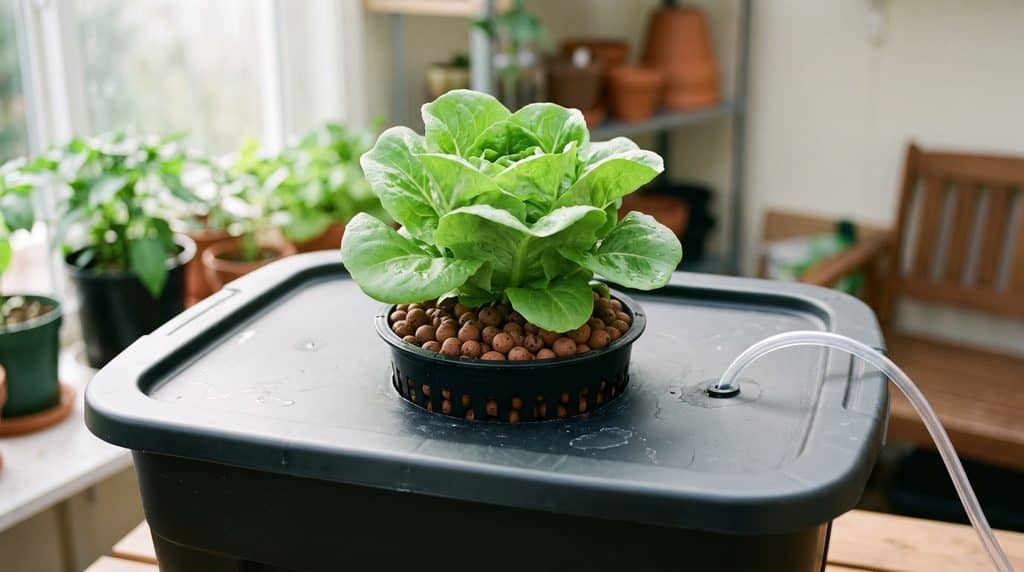
Different materials can block light leaks around a hydroponic system. Foam collars work well around plant stems, while neoprene collars can cover gaps around net pots. Opaque clay can block light from exposed growing media.
Black tape works for small gaps around tubing and joints. An opaque lid can protect the reservoir, while black plastic can cover larger exposed surfaces.
The material does not have to be black. It only needs to block light effectively. Opaque white plastic, for example, can also prevent light from reaching areas where algae may grow.
How Do You Clean Algae From Net Pots?
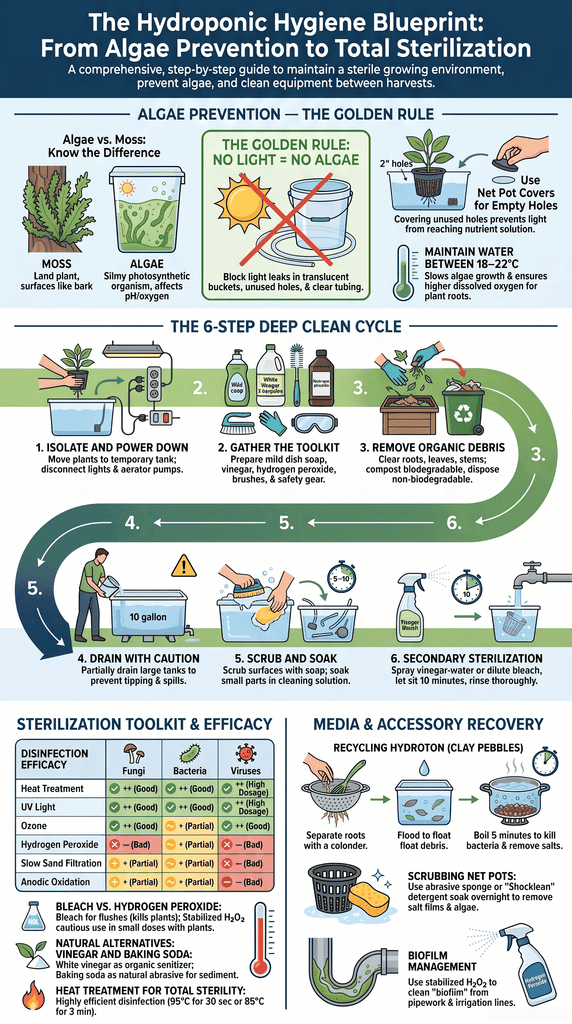
Remove visible algae by hand, then sanitize reusable equipment according to the product label. Don’t stop after removing the green coating. Algae can stay inside the small openings of mesh net pots, where it’s easy to miss.
Clean the pot, mesh, lid, tray, reservoir, and other wet surfaces. Oklahoma State University Extension recommends cleaning hydroponic surfaces between crops. Physical removal followed by proper sanitation can help control algae.
Use this basic process:
- Remove visible algae.
- Scrub the net-pot mesh.
- Clean reservoir walls and lids.
- Sanitize as the label directs.
- Rinse if required.
- Let equipment dry fully.
After cleaning, inspect the system again. If a light leak remains, algae can return. Check gaps around the net pot, loose lids, clear tubing, and other wet areas that receive light.
Also check under the lid and around the reservoir edges. These spots can stay damp and receive enough light for algae to grow.
So, remove the algae and fix the condition that lets it grow. Otherwise, the same problem may return.
Why Does Drying Matter?
Drying reusable equipment between crops reduces the chance of carrying wet residue and algae growth into the next cycle.
After cleaning, allow air to reach both the inside and outside of the net pot. Do not immediately stack wet pots together.
Oklahoma State University Extension recommends allowing equipment to dry as part of algae prevention.
This step is especially useful for reusable net pots, trays, growing media, and hydroponic accessories.
What Water Conditions Should You Maintain?
Stable water conditions can help reduce algae growth, but they shouldn’t replace proper light control. Keeping wet areas dark is still the main physical barrier.
Oklahoma State University Extension notes that stagnant water and high nutrient levels can support algae growth. Aeration and water movement can help reduce these conditions.
For the supplied SERP guidance, a practical reference range is 65–70°F (18–21°C), with pH around 5.8–6.0 for many crops. These values aren’t universal. Crop type and nutrient needs can change the ideal range.
| Condition | Practical guidance |
| Temperature | 65–70°F (18–21°C) |
| pH | 5.8–6.0 for many crops |
| Aeration | Air stones and circulation |
| Nutrient solution | Replace regularly |
| Light exposure | Keep wet areas dark |
Avoid relying on pH or nutrient changes alone to remove algae. Keep the water moving, maintain suitable nutrient levels, and replace old solution as needed.
Also, check the reservoir and net pot for light leaks. A small exposed area can still support algae if it stays wet.
How Do You Treat an Existing Algae Bloom?
Treat an established algae bloom by removing the growth, cleaning the system, replacing contaminated nutrient solution when needed, and blocking the light that caused it to return.
For a larger algae problem, a full cleaning cycle is usually more useful than wiping the same spot again and again. Check the net pot, reservoir, lid, tubing, and other wet areas while cleaning.
Data from Journal of Cleaner Production demonstrates
“Recirculation of nutrient solution in hydroponics systems provides a favorable condition for algal growth. Microalgae were easily found in hydroponics containers and had an adverse effect on the water supply system and nutrient uptake by plants, leading to a remarkable reduction in crop yield.” – Cleaner Production
Use this sequence:
- Drain the reservoir when needed.
- Scrub visible algae.
- Clean net pots and system surfaces.
- Sanitize as the product label directs.
- Rinse thoroughly when required.
- Refill with fresh nutrient solution.
- Seal remaining light leaks.
Oklahoma State University Extension notes that many algicides aren’t well tested in hydroponic systems. Some may change pH or damage crops.
So, don’t depend on chemicals alone. Clean the system and block light first. If algae returns, check for missed light leaks or exposed wet surfaces before using another treatment.
What Should You Avoid?

Credit: Joshua Rudd
Avoid repeatedly treating algae while leaving the light leak, stagnant area, or sanitation problem unchanged.
Common mistakes include:
- Treating algae without covering the reservoir.
- Leaving unused net-pot holes open.
- Reusing dirty net pots.
- Storing equipment while wet.
- Ignoring clear or translucent tubing.
- Overlooking splash zones.
The objective is not simply to make the algae disappear for a few days. The system should become less favorable to repeated growth.
How Can You Prevent Algae From Returning?
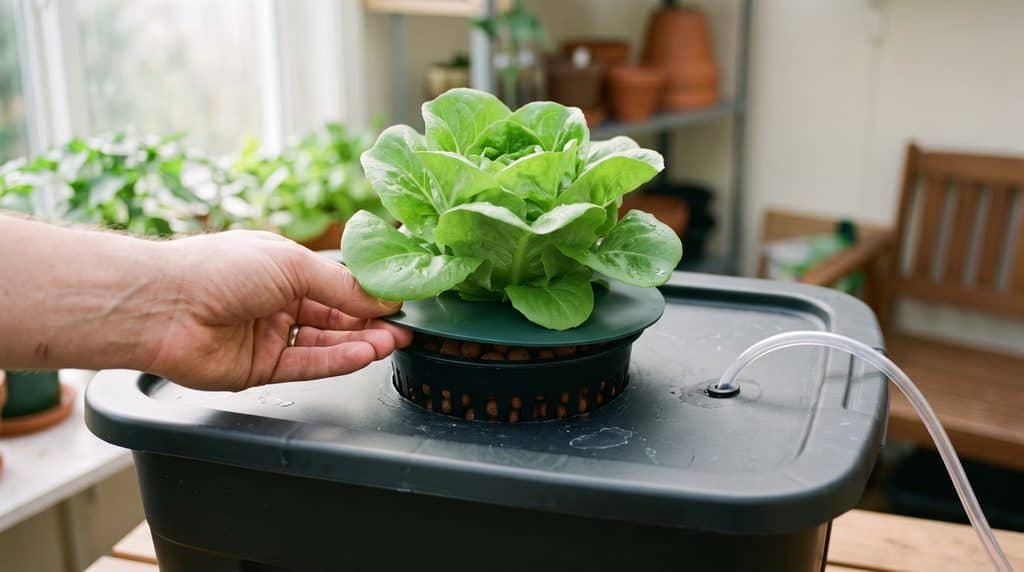
To prevent algae long term, follow a few regular habits: block light, clean equipment, let surfaces dry, keep water moving, and inspect the system often.
A basic maintenance routine can catch algae early, before it spreads through the reservoir or growing media. Check the net-pot openings regularly, especially after moving plants or changing the water level.
Clean splash zones as soon as you notice buildup. Don’t wait until green growth has spread across the system.
Between growing cycles, clean and sanitize reusable equipment. Let everything dry fully before storing or using it again. During active growth, monitor water temperature, pH, EC, aeration, and circulation based on the crop and nutrient plan.
Keep these areas on your checklist:
- Net-pot openings
- Reservoir walls
- Lid gaps
- Splash zones
- Clear tubing
- Wet growing media
Oklahoma State University Extension states that no prevention method is 100% effective, but several steps can lower the chance of algae growth.
Regular checks take less time than dealing with a large bloom later. That’s worth remembering.
What Should Your Maintenance Routine Include?
A useful routine for maintaining your hydroponic garden separates regular checks during growing from deeper cleaning between crops.
- Regularly: Inspect light leaks and splash zones.
- During growing: Monitor water conditions and visible algae.
- Between cycles: Clean, sanitize, rinse, and dry equipment.
- After modifications: Recheck every opening around the reservoir.
This routine is easier to maintain than repeatedly dismantling a system after algae becomes widespread.
FAQ
Can lightproof net pots help prevent algae on net pots?
Yes. Lightproof net pots can reduce algae growth by keeping light away from the nutrient solution and roots.
You can also use opaque net pot covers, net pot blackout covers, or neoprene net pot collars to cover openings. These methods support net pot algae prevention by blocking light from reaching the nutrient solution.
How do you remove algae from net pots without damaging plant roots?
To remove algae from net pots, gently scrub the affected areas without disturbing the plant roots.
If algae has formed a biofilm, algae biofilm removal may require thorough hydroponic system cleaning. Remove dead roots when necessary, then rinse the cleaned parts thoroughly before returning them to the system.
How can you prevent algae in deep water culture systems?
For algae in deep water culture, focus on DWC algae prevention by keeping the reservoir dark and sealing hydroponic light leaks.
Use an opaque reservoir lid or lightproof reservoir cover, seal net pot gaps, and cover exposed growing medium. These steps help keep roots in darkness and protect the nutrient solution from light.
What should you clean when algae keeps returning in a hydroponic system?
If algae keeps returning, clean the hydroponic reservoir, net pots, tubing, and growing media.
Scrub algae from net pots, sanitize net pots, and flush hydroponic lines during regular hydroponic system cleaning. Also, check for transparent tubing, uncovered openings, and other hydroponic light leaks that allow light to reach the nutrient solution.
How do you stop green slime from growing around hydroponic plant roots?
To stop green slime hydroponics problems, reduce light exposure, improve water circulation, and prevent stagnant hydroponic water.
Keep roots in darkness and cover exposed growing medium. Maintaining a suitable hydroponic water temperature, stable pH, and proper EC can also support algae-free hydroponic roots and long-term algae prevention.
How to Stop Algae on Net Pots Long Term
If algae keeps showing up around your net pots, the real problem is usually exposed light reaching the nutrient solution. Fix that first. Use an opaque reservoir, secure the net pots, cover exposed areas, and check for small light leaks before relying on repeated cleaning.
Once the light is blocked, regular cleaning and stable water conditions make prevention much easier. Tophydroponicgarden can be a useful next step if you want practical hydroponic guidance that helps you maintain a cleaner setup long term.
References
- https://www.sciencedirect.com/science/article/abs/pii/S0261219401000485#1
- https://www.sciencedirect.com/science/article/abs/pii/S0959652617307886
Related Articles
- https://tophydroponicgarden.com/net-pots/
- https://tophydroponicgarden.com/how-to-prevent-algae-growth-in-hydroponics/
- https://tophydroponicgarden.com/category/hydroponics-for-beginners/hydroponic-garden-maintenance/maintaining-your-hydroponic-garden/
Was this helpful?

I’m Barrie L., a passionate hydroponic gardening enthusiast dedicated to cultivating thriving, soil-less gardens. With a focus on all things hydroponic, I share my expertise on innovative growing techniques and sustainable practices through my blog, tophydroponicgarden.com. As a seasoned hydroponics specialist, my goal is to inspire and guide fellow gardeners in harnessing the power of water-based cultivation for bountiful and eco-friendly harvests. I’m also an author of the book “Hydroponics For Absolute Beginners: Your Step By Step Guide For How To Create An Hydroponics System At Home Without Soil, For Growing Vegetable, Fruit And Herbs.” which is sold on Amazon. Join me on a journey of redefining the way we cultivate plants, one nutrient-rich solution at a time. Happy growing!