
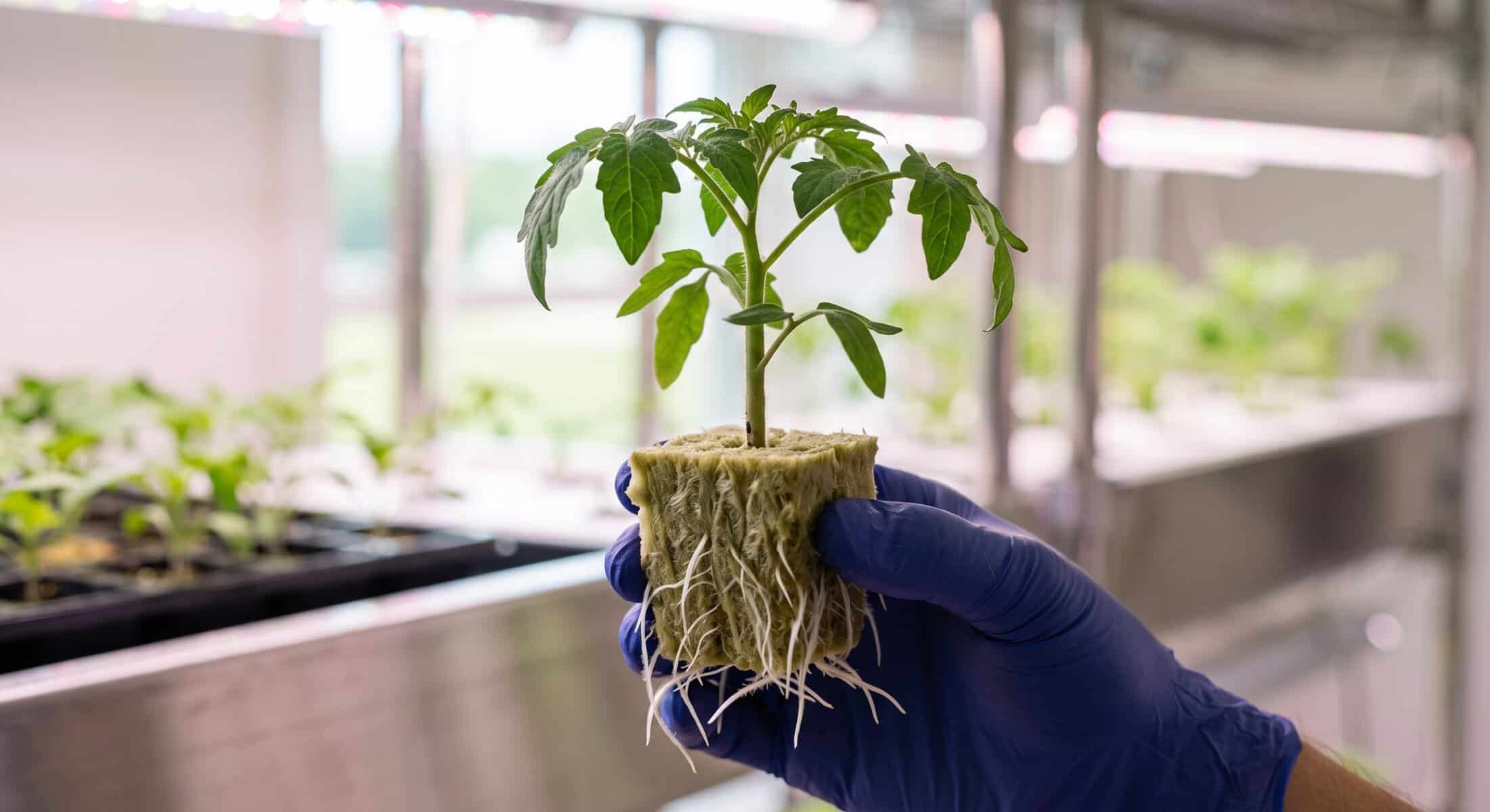
Starting seeds correctly is one of the most important steps in hydroponic gardening. A healthy seedling develops the roots and structure it needs to adapt successfully when moved into a larger hydroponic system.
One popular method is using rockwool cubes.
Rockwool is a lightweight growing medium that can hold water while maintaining air spaces around developing roots. These properties make it useful for starting hydroponic seeds before transferring the seedlings into systems such as DWC, NFT, ebb and flow, or other hydroponic setups.
However, starting seeds in rockwool is not simply a matter of placing a seed into a dry cube and adding water. The cube needs to be prepared properly, moisture needs to be controlled, and seedlings need appropriate light and environmental conditions.
Understanding how to start seeds using rockwool cubes can help you avoid common problems such as dried-out cubes, overwatering, poor germination, weak seedlings, and damaged roots during transplanting.
UNDERSTANDING HOW TO START SEEDS USING ROCKWOOL CUBES
Starting seeds in rockwool requires attention to three main areas.
- Prepare the Rockwool. Rockwool should be properly moistened before seeds are planted. Depending on the product, soaking or pH adjustment may be recommended because new rockwool can be relatively alkaline.
- Create the Right Germination Environment. Seeds need adequate moisture, suitable temperature, oxygen, and appropriate light conditions once they emerge.
- Protect Developing Roots. The goal is to keep the cube moist without leaving it excessively saturated. Once roots develop and the seedling is established, the entire cube can be transferred into the hydroponic system.
What Are Rockwool Cubes?
Rockwool is a fibrous growing medium produced from mineral materials that are heated and formed into fibers. These fibers are then compressed into cubes or larger blocks for growing plants.
Rockwool is useful for seed starting because it can hold moisture while maintaining air spaces around the developing roots.
Purdue University describes rockwool as an inert growing medium with good water-holding capacity, making it useful for starting seeds in hydroponic systems.
“Rockwool is an inert media and has good water holding capacity which makes it useful for starting seeds.” — Purdue University
However, rockwool can initially have a relatively high pH. The University of Florida notes that rockwool can have a pH around 7–8.5 and that soaking may be needed to lower the pH depending on the product.
This is why preparation matters before planting.
Why Use Rockwool Cubes for Starting Seeds?
Rockwool cubes are commonly used in hydroponic propagation because they provide a consistent medium for developing seedlings.
Some advantages include:
- Good water retention
- Air space around developing roots
- Easy handling during transplanting
- Compatibility with many hydroponic systems
- Available in different cube sizes
- The seedling can be transplanted together with the cube
Starting seeds in a separate propagation area can also make hydroponic production more efficient. University of New Hampshire Extension explains that seedlings are often started in plugs or cubes for one to three weeks before being moved into the main hydroponic system.
For growers comparing different propagation materials, this guide on the best grow medium for hydroponic herbs can help explain how rockwool compares with other starter media.
How Do Rockwool Cubes Help Seeds Germinate?
Rockwool provides both moisture and air around the seed.
The seed needs enough moisture to begin the germination process, but the developing root also needs access to oxygen.
This creates an important balance.
If the cube becomes too dry, the seed may not receive enough moisture to germinate.
If the cube stays excessively saturated, oxygen availability around the developing root can become a problem.
The University of Minnesota Extension recommends soaking starter cubes before using them and keeping them partially, rather than completely, submerged when they are used in a hydroponic setup.
“Starter cubes should be soaked in water before using them.” — University of Minnesota Extension
This simple preparation step helps the rockwool become evenly moist before the seed is planted.
Benefits of Starting Seeds Using Rockwool Cubes
Starting seeds in rockwool can provide several practical advantages for hydroponic growers.
However, the results still depend on proper preparation and environmental management.
1. Provides Consistent Moisture
Rockwool can retain water around the seed while also providing air spaces.
This can make it easier to maintain the consistent moisture that seeds need during germination.
The goal is not to keep the cube dripping wet.
Instead, the cube should remain adequately moist while allowing air to reach the developing roots.
2. Makes Transplanting Easier
One major advantage of rockwool is that the seedling can remain inside the cube when it is moved.
This reduces the need to remove soil or disturb the developing root system.
University of Minnesota Extension notes that starter cubes can be placed directly into a larger hydroponic system once seeds have germinated and roots have developed.
Once seedlings have enough roots and are ready to move, handling the cube rather than pulling on the plant can reduce unnecessary root disturbance.
3. Works With Different Hydroponic Systems
Rockwool cubes can be used to start seedlings that will eventually grow in several types of hydroponic systems.
These include:
- DWC
- NFT
- Ebb and flow
- Drip systems
- Vertical hydroponics
The cube provides the initial support while the plant develops roots.
4. Helps Standardize Seed Starting
Using cubes of similar size can make it easier to organize seedlings in propagation trays.
This is particularly useful when starting multiple plants at once.
Uniform cubes also make it easier to move seedlings into larger blocks or hydroponic systems as they develop.
Rockwool vs Other Seed-Starting Media
Rockwool is not the only option for starting hydroponic seeds.
| Feature | Rockwool | Coco Coir | Starter Plugs |
| Water retention | High | High | Depends on material |
| Air space | Good | Good | Depends on product |
| Hydroponic use | Common | Common | Common |
| Transplanting | Easy | Easy | Easy |
| pH preparation | May be required | Depends on product | Depends on product |
| Biodegradable | No | Generally more biodegradable | Depends on material |
| Reusable | Generally no | Generally no | Usually no |
The best choice depends on your hydroponic system, crop, availability, and preference.
How to Start Seeds Using Rockwool Cubes
Starting seeds in rockwool is relatively simple when the preparation is done correctly.
1. Choose the Right Rockwool Cube
Choose a cube size appropriate for the type of plant you are growing.
Smaller cubes are commonly used for seedlings and leafy greens, while larger cubes or blocks can be used as plants develop.
Purdue’s home hydroponics guide describes smaller rockwool cubes for crops such as lettuce and larger cubes for vine crops.
2. Soak the Rockwool
Before planting, thoroughly wet the cube.
Depending on the product, growers may need to use water adjusted to an appropriate pH because new rockwool can be alkaline.
Purdue University notes that rockwool can initially have a pH around 7–8.5 and recommends reducing the pH before sowing when necessary.
Do not squeeze the cube aggressively after soaking.
Squeezing can compress the internal structure and change the balance between water and air.
3. Prepare the Seed Hole
Many rockwool cubes already contain a small hole designed for seed placement.
If there is no suitable hole, create a small opening using a clean tool.
The hole does not need to be excessively deep.
Seed depth depends on the crop, so follow the seed packet or crop-specific instructions.
4. Place the Seed in the Cube
Place the seed into the prepared opening.
For small seeds, avoid pushing them too deeply into the rockwool.
Some seeds require light to germinate, while others need to be covered.
Always consider the specific seed’s germination requirements.
5. Maintain Moisture
Keep the rockwool moist while the seed germinates.
Avoid allowing the cube to completely dry out.
At the same time, avoid keeping the cube continuously saturated.
A good approach is to check the cube regularly rather than automatically adding water according to a fixed schedule.
6. Provide Suitable Temperature
Seeds germinate best when temperature requirements are appropriate for the crop.
Different plants have different germination temperature ranges.
Warm-season crops such as tomatoes, peppers, and cucumbers generally require warmer conditions than many cool-season leafy greens.
For example, TopHydroponicGarden’s guide to growing cucumbers hydroponically discusses starting cucumber seeds in rockwool and maintaining warm conditions during germination.
7. Provide Light After Germination
Once seedlings emerge, they need adequate light to continue developing.
Insufficient light can cause seedlings to become:
- Tall
- Thin
- Pale
- Weak
Place the grow light at an appropriate distance according to the light’s specifications.
Avoid placing a powerful light extremely close to young seedlings because excessive intensity can also cause stress.
8. Allow Roots to Develop
Do not rush to transplant immediately after the seed emerges.
Allow the seedling to develop a stronger root system.
University of Minnesota Extension recommends transplanting starter cubes into the larger hydroponic system when roots have pushed through the bottom of the cube.
Visible roots are therefore a useful transplant indicator.
How Much Water Do Rockwool Cubes Need?
There is no single amount of water that every rockwool cube requires.
Water needs depend on:
- Cube size
- Plant species
- Seedling age
- Temperature
- Humidity
- Airflow
- Root development
- Growing environment
The objective is to maintain adequate moisture without creating a permanently waterlogged environment.
A common mistake is watering the cube repeatedly simply because the surface looks slightly dry.
Instead, assess the cube and environmental conditions before adding more water.
Can Rockwool Be Too Wet?
Yes.
Although rockwool holds water effectively, roots still require oxygen.
Keeping the cube saturated for long periods can reduce the amount of air available around developing roots.
This is especially important during the early stages when the root system is still small.
Virginia Cooperative Extension explains that maintaining the right balance of saturation and drainage is important while young root systems are developing in rockwool.
Therefore, the goal is moist, not waterlogged.
How Long Does It Take for Seeds to Germinate in Rockwool?
Germination time depends primarily on the plant species and growing conditions.
Factors include:
- Seed quality
- Temperature
- Moisture
- Oxygen
- Seed depth
- Light requirements
Some lettuce and herb seeds can emerge within several days, while peppers and other crops may take longer.
Do not assume that every seed should germinate on the same schedule.
If seeds have not germinated, check temperature, moisture, seed viability, and the crop’s normal germination period before changing the growing medium.
When Should You Transplant Rockwool Seedlings?
A seedling is generally ready to move when it has developed enough roots and above-ground growth to tolerate the transition.
Useful indicators include:
- Visible roots emerging from the cube
- Healthy stem
- Established leaves
- Active growth
- Cube remaining intact
University of Minnesota Extension specifically notes that seedlings can be transplanted when roots have pushed through the bottom of the starter cube.
The exact timing varies by crop.
For DWC systems, TopHydroponicGarden’s guide recommends looking for a developed root system and a second set of true leaves before transplanting seedlings into the system. You can read the full guide on how to transplant seedlings into a DWC system for the next stage.
Can You Put Rockwool Directly Into Hydroponics?
Yes.
Rockwool cubes are designed to be transferred into larger hydroponic systems.
The cube can be placed into:
- Net pots
- Larger rockwool blocks
- NFT channels
- DWC systems
- Other compatible hydroponic supports
The important consideration is that the cube should be positioned so the seedling receives adequate moisture while the developing roots have access to oxygen.
Do not bury the stem deeply into wet growing media.
How to Start Different Seeds in Rockwool
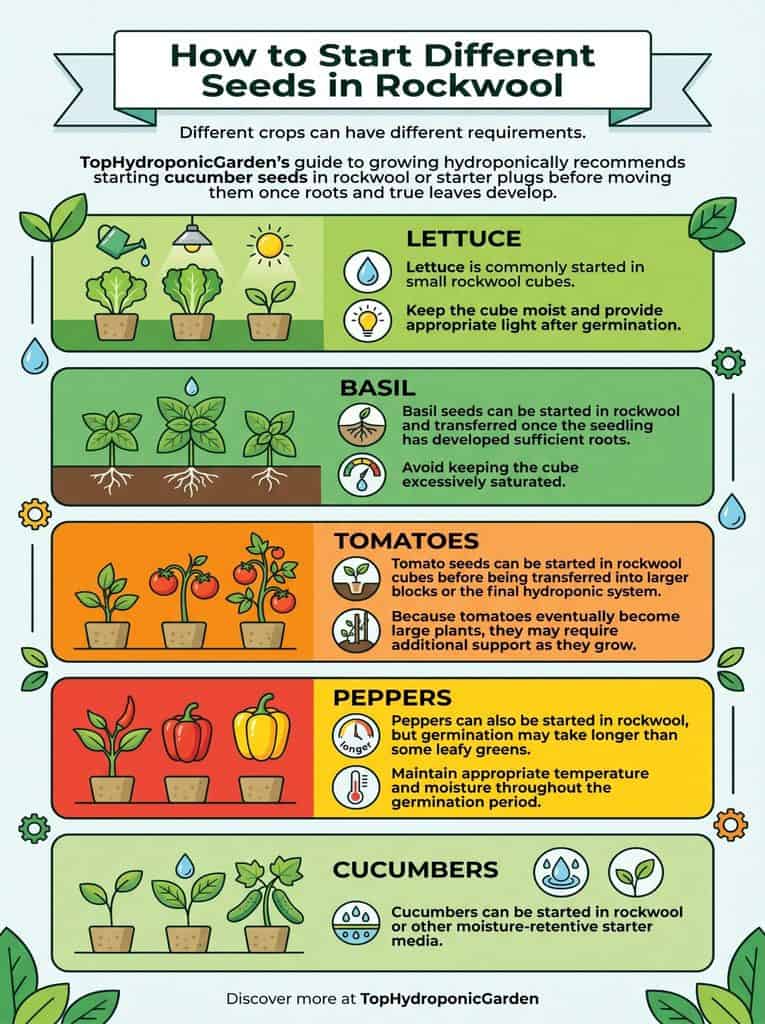
Different crops can have different requirements.
- Lettuce
Lettuce is commonly started in small rockwool cubes.
Keep the cube moist and provide appropriate light after germination.
- Basil
Basil seeds can be started in rockwool and transferred once the seedling has developed sufficient roots.
Avoid keeping the cube excessively saturated.
- Tomatoes
Tomato seeds can be started in rockwool cubes before being transferred into larger blocks or the final hydroponic system.
Because tomatoes eventually become large plants, they may require additional support as they grow.
- Peppers
Peppers can also be started in rockwool, but germination may take longer than some leafy greens.
Maintain appropriate temperature and moisture throughout the germination period.
- Cucumbers
Cucumbers can be started in rockwool or other moisture-retentive starter media.
TopHydroponicGarden’s guide to growing cucumbers hydroponically recommends starting cucumber seeds in rockwool or starter plugs before moving them once roots and true leaves develop.
Using Rockwool in Different Hydroponic Systems
- Deep Water Culture
DWC systems can use rockwool cubes placed inside net pots.
The cube supports the seedling while the developing roots grow downward toward the nutrient solution.
Once roots extend into the solution, the water level should be managed to maintain both moisture and oxygen around the root zone.
- Nutrient Film Technique
NFT systems commonly use seedlings started in cubes or plugs.
The cube can be positioned in the channel while nutrient solution flows past the roots.
The seedling should be well established before moving it into the NFT channel.
- Ebb and Flow
Ebb-and-flow systems periodically wet and drain the growing area.
Rockwool can work well in this type of system because it can retain moisture between irrigation events.
However, the timing and frequency of flooding should prevent prolonged saturation.
- Kratky
Kratky systems use passive oxygen availability rather than continuous aeration.
The rockwool cube should not remain completely submerged.
As roots develop, they should be able to access both moisture and air.
Common Mistakes When Starting Seeds in Rockwool
1. Planting Into Dry Rockwool
Dry rockwool does not provide the moisture necessary for immediate germination.
Soak the cube before planting.
2. Keeping the Cube Completely Saturated
Seeds need moisture, but roots also need oxygen.
Avoid leaving the cube permanently waterlogged.
3. Ignoring pH
New rockwool can be relatively alkaline.
Check the product instructions and prepare the cube appropriately before planting.
4. Planting Seeds Too Deeply
Seeds should be planted according to the requirements of the specific crop.
A seed that is buried too deeply may have difficulty emerging.
5. Giving Seedlings Too Little Light
Once seedlings emerge, insufficient light can result in weak, elongated growth.
6. Transplanting Too Early
A newly germinated seedling may not have enough root development to handle transplantation.
Look for visible root development and healthy plant growth.
7. Pulling Seedlings by the Stem
The stem is delicate.
When moving a seedling, handle the cube rather than pulling on the plant.
Safety Tips When Handling Rockwool
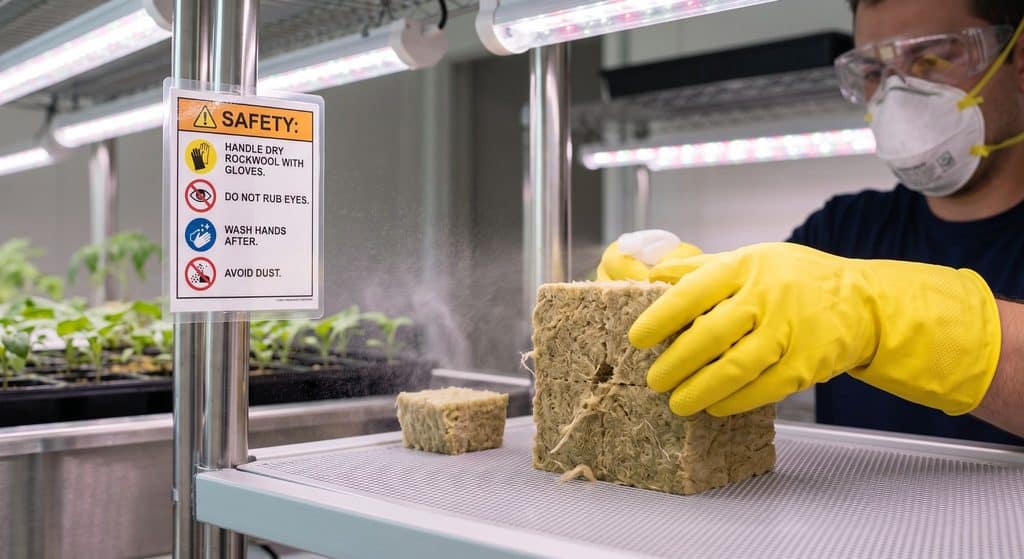
Rockwool fibers can irritate the skin, eyes, and respiratory system.
When handling dry rockwool:
- Avoid rubbing your eyes.
- Wash your hands after handling.
- Consider wearing gloves.
- Avoid creating unnecessary dust.
- Follow the manufacturer’s handling recommendations.
- Keep dry rockwool away from children and pets.
Wetting the material before handling can also reduce airborne fibers.
Frequently Asked Questions About Starting Seeds in Rockwool
1. Should rockwool cubes be soaked before planting seeds?
Yes. Starter cubes should be moistened before seeds are planted. Depending on the rockwool product, pH adjustment may also be necessary because new rockwool can be relatively alkaline.
2. How deep should seeds be planted in rockwool?
Seed depth depends on the crop. Follow the seed packet’s recommended planting depth and avoid pushing small seeds unnecessarily deep into the cube.
3. How wet should rockwool cubes be for seeds?
Rockwool should remain adequately moist but should not be kept permanently waterlogged. Young roots need both moisture and oxygen.
4. When should rockwool seedlings be transplanted into hydroponics?
Look for visible roots emerging from the cube along with healthy seedling development. The exact timing varies by crop and hydroponic system.
5. Can you put rockwool cubes directly into a hydroponic system?
Yes. Rockwool cubes can be transferred into systems such as DWC, NFT, and ebb and flow once the seedling has developed sufficiently.
Final Thoughts on Starting Seeds Using Rockwool Cubes
Learning how to start seeds using rockwool cubes is mainly about creating the right balance between moisture, oxygen, temperature, and light.
Start by properly soaking the cube and checking whether its pH needs adjustment. Place the seed at the appropriate depth for the crop, keep the cube consistently moist without saturating it, and provide suitable environmental conditions for germination.
Once the seedling emerges, focus on light and root development rather than rushing it into the main hydroponic system.
Visible roots are one of the most useful signs that a seedling is becoming ready for transplantation. When the time comes, move the intact rockwool cube carefully and avoid pulling the seedling by its stem.
Rockwool provides a convenient starting medium for many hydroponic crops, but successful seed starting ultimately depends on consistent environmental management.
By controlling moisture, pH, temperature, light, and root development, you can give young seedlings a much stronger start before they enter the main hydroponic system.
Explore more hydroponic seed-starting guides, growing medium information, and practical cultivation tips through TopHydroponic to build a stronger foundation for healthy plant growth.
REFERENCES
- https://extension.umn.edu/garden-and-home/yard-and-garden/gardening-in-minnesota/small-scale-hydroponics
- https://www.purdue.edu/hla/sites/master-gardener/wp-content/uploads/sites/9/2022/10/Guide-To-Home-Hydroponics-For-Leafy-Greens-Ronzoni-and-Mattson-2020.pdf
RELATED ARTICLES
- https://tophydroponicgarden.com/how-to-manage-a-plants-life-cycle-hydroponically
- https://tophydroponicgarden.com/grow-media-alternatives-for-hydroponics/
- https://tophydroponicgarden.com/best-grow-medium-for-hydroponic-herbs/
Was this helpful?
