

Yes, you can absolutely grow fresh herbs right on your windowsill. With enough sunlight, the right pots, and a little water, you can keep a thriving patch of green inside your home all year round.
From my years of helping people set up indoor gardens, I’ve learned that success boils down to finding that one perfect spot, usually a south-facing window and picking herbs that don’t mind a tighter space.
It takes a bit more planning than just slapping a grocery-store basil pot on a ledge, but done right, your kitchen corner will quickly turn into a fresh-flavor factory. Want to know how to build a setup that actually works? Let’s dive in.
Three Things That Separate a Thriving Herb Garden From a Struggling One
Growing herbs indoors comes down to getting light, drainage, and harvesting habits right, everything else is secondary.
- A sunny window with at least 6 hours of direct light is the foundation of a successful herb garden.
- Containers with drainage holes and well-draining potting soil prevent root rot and other common problems.
- Consistent harvesting encourages fuller growth and higher yields throughout the year.
Essential Supplies You Need Before Planting a Window Garden
You don’t need a massive backyard or a fancy greenhouse to grow your own food. Gather your containers, a bag of quality potting mix, some herb seeds or seedlings, and find a bright window before you plant.
A beginner setup doesn’t require expensive equipment; most successful indoor gardeners start small with just three to five herb varieties, a few basic pots, and a sunny spot.
Your main goal is simply to give these herbs a cozy environment where they can grow healthy roots and soak up plenty of light from day one. Starting with a smaller collection also takes the pressure off, making it much easier to learn how different herbs behave and what kind of attention they need.
In the end, indoor herb gardening rewards consistency far more than complexity. Many first-time gardeners are shocked by just how much a few well-maintained pots can actually produce.
A single sunny windowsill can keep you in fresh cooking herbs all year round, even if you live in a tight city apartment with zero outdoor space.
Your Pre-Planting Shopping List
Before you get your hands dirty, collect these basic supplies:
- Terracotta pots or containers (make sure they have drainage holes at the bottom!)
- Quality potting soil (look for mixes containing perlite, vermiculite, or coco coir to keep it fluffy)
- Herb seeds or nursery seedlings
- Watering trays or saucers to catch excess runoff
- Small pruning shears for harvesting and trimming
- Organic fertilizer like compost tea, fish emulsion, or kelp fertilizer
Pro-Tip: Keep a spray bottle nearby to lightly mist the soil while seeds are germinating, and use plant labels so you don’t confuse your basil with your oregano.
If you want a head start, buy young seedlings instead of seeds. Germination can take anywhere from 7 to 21 days, which can test your patience! Seedlings give you a much faster harvest and cut down on beginner frustration. Herbs like basil, parsley, and chives are incredibly easy to find at local nurseries and adapt beautifully to indoor life.
Which Window Direction Gives Indoor Herbs the Best Sunlight?
If you want your herbs to thrive, placement is everything. A south-facing window is typically your best bet because it receives the longest period of direct sunlight throughout the day.
Light determines your success more than any other single factor. When indoor herbs struggle, it’s usually not because of a watering mistake, it’s because they are starving for sunlight. Without enough direct light, even the healthiest plants grow weak, pale, and “leggy” (stretching out long and thin as they hunt for the sun).
When you are choosing the perfect spot, spend a day observing exactly how the sunlight moves through your home to find the absolute brightest windowsill.
A window that appears bright may receive only a short period of direct sun. Tracking sunlight for a few days can help you identify the strongest location before setting up your herb garden.
Window options include:
| Window Direction | Light Level | Best For |
| South-facing | Highest | Basil, rosemary, thyme, oregano |
| West-facing | Strong afternoon sun | Most culinary herbs |
| East-facing | Gentle morning sun | Parsley, chives, mint |
| North-facing | Lowest light | Only with grow lights |
Most herbs perform best with 6–8 hours of direct sunlight daily.
A common mistake is believing any kitchen window will work. In northern climates, including Lithuania during winter, herbs often become weak and stretched due to limited daylight. Seasonal changes can significantly affect indoor growing conditions, so a location that performs well in summer may provide far less light during winter.
If your home lacks a suitable sunny window, LED grow lights can help bridge the gap. Modern grow lights are energy-efficient and can provide the consistent light levels that herbs need for steady growth. Many indoor gardeners use supplemental lighting during darker months to maintain healthy plants year-round.
Compare Window Directions for Herb Growth
The difference between a south and north facing window can determine whether herbs thrive or merely survive.
A south-facing window usually produces the strongest growth. Where you place your pots changes how your herbs grow.
Plants in south-facing locations often develop fuller foliage, stronger stems, and faster growth rates because they receive more direct sunlight throughout the day.
However, you aren’t completely out of luck if you don’t have a south-facing view:
- East-Facing Windows: These spots can still support plenty of herbs, especially the ones that prefer gentler light.
Morning sunlight packs less of an intense punch than afternoon sun, which actually helps herbs that are sensitive to extreme heat.
- North-facing windows : typically receive fewer than 3 hours of usable light daily during winter in northern climates. At that level, most culinary herbs fail to photosynthesize enough to sustain active growth.
Supplementing with a full-spectrum LED grow light running for 14 to 16 hours daily compensates effectively and keeps herbs productive through the darker months
Without that extra boost, your herbs will grow sluggishly and push out fewer leaves. If a north window is your absolute only option, just combine that weak natural light with an inexpensive grow light to instantly boost plant health and harvest quality.
What Are the Easiest Beginner Herbs to Grow Indoors?
Don’t overwhelm yourself right out of the gate. Start with easy herbs that adapt well to containers and indoor conditions.
Some herbs are naturally more forgiving than others, and picking these beginner-friendly varieties will dramatically boost your success rate.
While you might want to plant a massive, diverse garden immediately, sticking to a handful of reliable plants makes the learning curve a whole lot smoother.
Fortunately, most culinary herbs adapt beautifully to container life as long as you give them enough light and proper drainage.
Fast-growing herbs also hand you quicker results, which is a great confidence booster when you’re just starting out. Once you get a feel for the basics, you can gradually introduce more demanding varieties to your windowsill collection.
Best Beginner Herbs
| Herb | Difficulty | Special Note |
| Basil | Moderate | Loves warmth and sunlight |
| Mint | Easy | Keep in its own pot |
| Parsley | Easy | Tolerates partial sun |
| Chives | Easy | Reliable indoor performer |
| Cilantro | Moderate | Can bolt quickly |
| Thyme | Easy | Drought tolerant |
Many herbs germinate within 7–21 days, depending on temperature and moisture.
Mint propagation is particularly simple because cuttings root easily in water within 7 to 14 days. Take a cutting of at least 10 cm just below a leaf node, remove the lower leaves, and place the stem in a glass of clean water near a bright window.
Change the water every two days to prevent bacterial buildup Thyme, oregano, and marjoram tolerate occasional neglect.
Rosemary,This plant brings incredible flavor to the kitchen, but it can be sensitive to overwatering because of its woody stems. Always let the soil dry out a bit between waterings so the roots don’t rot.
For gardeners who want even more variety, herbs like sage, lemon balm, tarragon, lavender, and chamomile also do great indoors if you give them strong light.
Many of these varieties also rank among the best herbs to grow in a hydroponic garden if you decide to transition away from soil entirely. They might grow a little slower than speedsters like basil or mint, but they reward your patience with amazing flavors and aromas.
Mixing up your plants gives you another huge advantage: it stretches out your harvest. Some herbs thrive during the cooler months, while others hit their stride when it gets warm. By growing a diverse collection, you can keep fresh herbs on your counter all year round.
The Right Way to Prepare Your Pots and Soil Mix

Use containers with drainage holes and a lightweight potting mix designed for container gardening.
Herbs dislike waterlogged roots. Poor drainage is responsible for many indoor gardening failures. Even healthy seedlings can decline quickly when excess water remains trapped around the roots for long periods.
Research from the University of Illinois Extension confirms
“Since poor drainage usually goes hand in hand with root rot, proper site preparation to provide good water drainage away from roots is imperative.” –University of Illinois Extension.
The right container and soil combination creates a stable environment where roots can access both moisture and oxygen.
This exact balance of aeration and moisture is what makes a passive wick system so effective at feeding roots without drowning them. Maintaining this balance is one of the most important factors in long-term plant health.
Follow these steps:
- Choose containers at least 6–8 inches deep
- Confirm the presence of drainage holes
- Place a tray beneath containers
- Fill with potting soil rather than garden soil
- Mix in perlite for additional drainage
- Leave about one inch between soil and container rim
For added fertility, many gardeners blend worm castings into their potting mix at a ratio of roughly 10 to 20 percent by volume, about one part castings to five parts potting soil.
This provides a slow-release nutrient source that feeds plants gently for up to 3 months without the risk of fertilizer burn. This provides a gentle source of nutrients without overwhelming young plants.
Essential Setup Checklist
Proper setup includes:
- Container size appropriate for root growth
- Excellent drainage
- Lightweight soil structure
- Water collection tray
- Adequate spacing between plants
If multiple herbs share one planter, group plants with similar moisture needs. Basil and parsley work well together. Mint should remain separate because it spreads aggressively.
Giving plants enough space also improves airflow around leaves. Better airflow helps reduce excess moisture and lowers the chance of fungal problems developing indoors.
How Do You Know When Window Herbs Need Water?
Water when the top layer of soil feels dry, avoiding constantly wet conditions.
According to Montana State University Extension
“Overwatering is the most common issue with houseplants, and can lead to increased disease issues, most commonly root rot.” –Montana State University.
Many gardeners water on a schedule rather than checking the soil, which often leads to roots sitting in moisture longer than necessary.
Instead of following a fixed routine, allow the soil to guide your decisions. Environmental conditions such as room temperature, sunlight exposure, and humidity can significantly affect how quickly containers dry out.
Insert a finger about one inch into the soil. If the surface layer feels dry, water thoroughly until moisture exits the drainage holes. Then empty any standing water from the saucer.
Different herbs have different preferences.
- Basil prefers consistently moist soil.
- Mint enjoys moderate moisture.
- Parsley tolerates slight dryness.
- Rosemary prefers drying between waterings.
- Thyme dislikes wet roots.
Signs of Overwatering vs Underwatering
| Symptom | Likely Cause |
| Yellow leaves | Overwatering |
| Soggy soil | Overwatering |
| Root rot smell | Overwatering |
| Crispy leaf edges | Underwatering |
| Drooping dry leaves | Underwatering |
| Slow growth during heat | Underwatering |
Indoor humidity also matters. During winter, homes may experience humidity levels as low as 10–20%, which can stress herbs.
A pebble tray filled with water to just below the surface of the stones raises local humidity by 10 to 15 percent around the plant. Keep the water level below the bottom of the pot at all times so roots never sit in standing water, which causes root rot even when the topsoil appears dry.
Low humidity can cause leaf tips to dry out even when watering is adequate. Grouping several plants together often helps retain moisture in the surrounding air and creates more stable growing conditions. Monitoring both soil moisture and humidity gives herbs the best chance to remain productive indoors throughout the year.
Using Supplemental Grow Lights for Low Light Rooms
Yes, supplemental grow lights can help herbs thrive when natural light is limited.
Many gardeners underestimate how much light herbs need. Herbs are not typical houseplants. They evolved in bright outdoor environments and often struggle in dim rooms. Even a healthy herb can begin producing smaller leaves and weaker stems when light levels drop below what it naturally requires.
The good news is that a lack of sunlight does not automatically mean indoor herb gardening is impossible. Modern grow lights have made it much easier to grow herbs successfully in apartments, offices, and homes with limited window space.
You can easily pair these lights with a setup tailored to your space, especially when figuring out which hydroponic system is best for beginners looking for low-maintenance yields. A simple lighting setup can often provide enough energy to support steady growth throughout the year.
A simple setup can include:
- LED plant lights
- Clamp-on grow lights
- Self-watering planters
- Reflective surfaces near plants
Grow lights are commonly used for 12–16 hours daily when sunlight is insufficient. Most LED grow lights perform best when positioned 15 to 30 cm above the plant canopy.
At that distance, they deliver strong illumination without generating enough heat to burn leaf tips or dry out soil too quickly. Following the manufacturer’s recommendations can help prevent weak growth and maximize plant health.
When to Consider Supplemental Lighting
Supplemental lighting becomes especially useful:
- During winter
- In shaded apartments
- For north-facing windows
- During prolonged cloudy weather
Gardeners frequently report dramatic improvements after installing a basic full-spectrum LED light. Leggy growth often disappears within weeks when lighting improves.
You may also notice stronger leaf color, more compact growth, and faster recovery after harvesting. Herbs that previously struggled to produce new leaves often become much more productive once they receive consistent light each day.
What Crucial Mistakes Are Killing Your Windowsill Herb Garden?
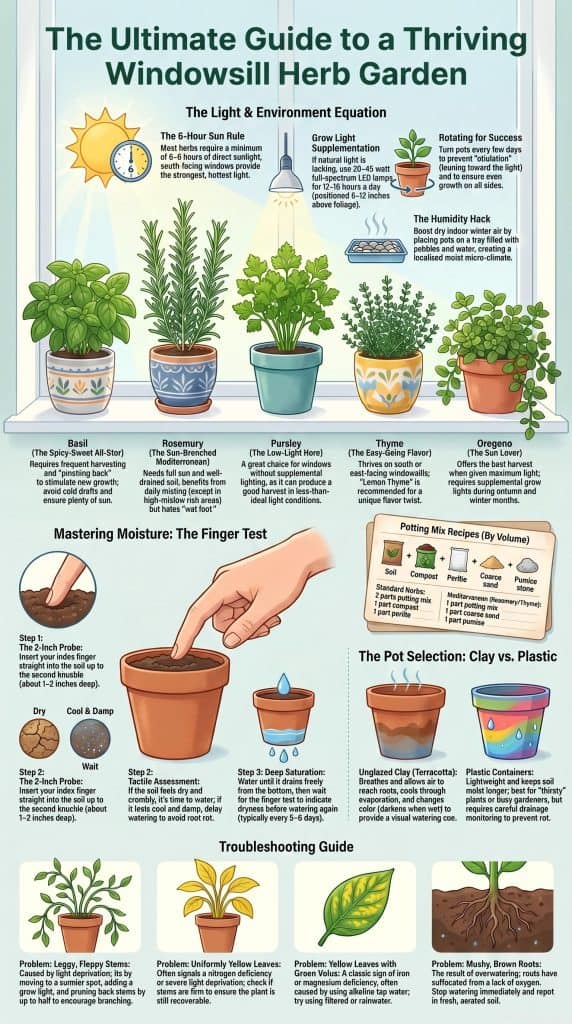
Most failures come from poor light, overwatering, overcrowding, or inadequate drainage.
Many online photos showcase crowded containers filled with lush herbs. In practice, overcrowding creates competition for water, nutrients, and root space. Plants may look attractive at first, but they often become harder to maintain as they mature.
Indoor herb gardening is usually more successful when each plant has enough room to grow naturally. Proper spacing allows roots to develop, improves airflow, and makes watering easier to manage.
Common mistakes include:
- Using garden soil indoors
- Ignoring drainage holes
- Planting mint with other herbs
- Excessive fertilization
- Poor air circulation
- Allowing water to collect in trays
Research and gardening communities consistently identify light limitations as a leading cause of indoor herb problems.
Another overlooked mistake is placing herbs near heating vents or air conditioners. Constant blasts of hot or cold air can stress plants and dry out soil more quickly than expected. Paying attention to location can prevent many common growing issues.
Quick Fixes for Common Problems
- Yellow leaves: Reduce watering and improve drainage.
- Leggy growth: Increase light and practice pinching back.
- Slow growth: Improve lighting and consider light fertilization.
- Root rot: Repot into fresh soil immediately.
- Aphids or whiteflies: Use neem oil or insecticidal soap.
- Powdery mildew: Remove visibly affected leaves immediately, then wipe remaining leaves with a cloth dampened in diluted neem oil at a ratio of 5ml per liter of water. Increase spacing between pots to at least 10 cm apart to restore airflow and reduce the humidity that powdery mildew thrives in.
A helpful rule is to treat herbs differently from decorative houseplants. They generally need more light, more harvesting, and faster-draining soil.
Regular observation often catches problems before they become serious. Checking leaves, soil moisture, and overall growth a few times each week makes it easier to spot changes early and respond quickly.
Why Freezing Winter Windows Stress Tender Plant Roots
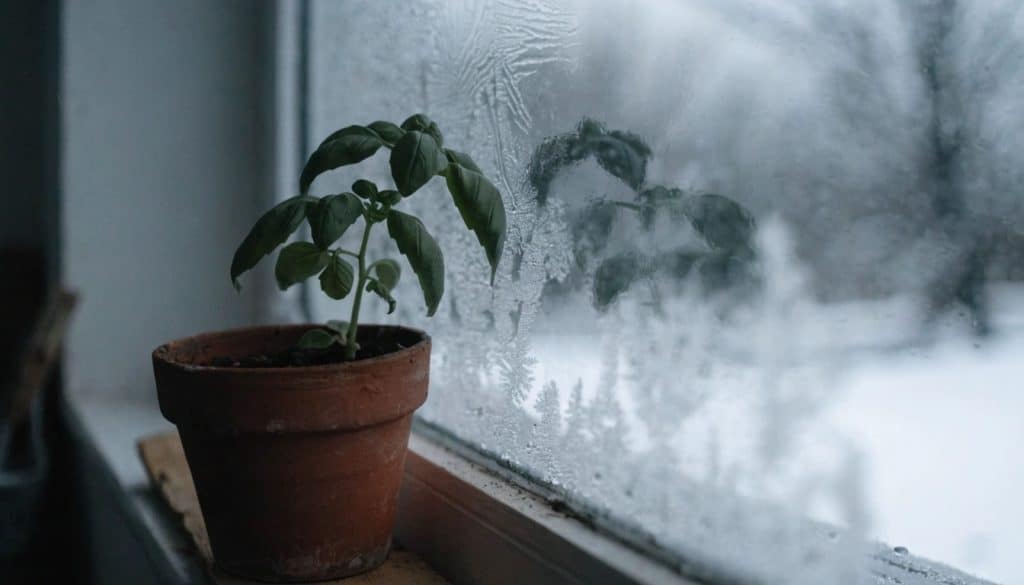
Cold glass, fluctuating temperatures, and dry indoor air can stress herbs even when sunlight appears adequate.
The windowsill is often colder than the rest of the room. Tender herbs such as basil may struggle when leaves touch cold glass during winter. While sunlight remains important, temperature can become an equally important factor during colder months.
Many gardeners assume their herbs are receiving enough light because the window appears bright. In reality, winter days are shorter, sunlight is weaker, and indoor conditions can become less stable than during spring or summer.
Several factors contribute to winter stress:
- Temperature swings near windows
- Low humidity
- Reduced daylight hours
- Drafts from older windows
A small gap between containers and the glass can reduce temperature stress. Pairing herbs with a grow light often produces better results than relying solely on winter sunlight.
Moving containers slightly away from the window at night can also help protect roots from sudden temperature drops. Small adjustments like these often improve plant health without requiring additional equipment.
Herbs Are Not Houseplants
Many failures occur because gardeners use the same care routine for herbs and decorative plants.
Herbs generally require:
- Stronger light
- Better drainage
- More frequent pruning
- Faster harvest cycles
Recognizing these differences can transform results quickly.
Unlike many common houseplants, herbs are grown for continuous production. Regular harvesting encourages fresh growth and helps plants remain compact. With the right balance of light, watering, and pruning, indoor herbs can remain productive for many months rather than serving only as temporary decorative plants.
How Should You Trim Herbs to Encourage Bushier Growth?

Credits : Gardening at 58 North
Harvest regularly and avoid removing too much foliage at one time. Frequent harvesting encourages branching and fuller plants. Many herbs respond to pruning by producing additional stems, which leads to a denser and more productive plant over time.
This is one reason home gardeners often find that regularly harvested herbs outperform plants that are left untouched for long periods.
Timing also matters. Harvesting in the morning, after any moisture has evaporated but before the heat of the day builds, can help preserve flavor and aroma. At this point, many herbs contain high concentrations of the essential oils responsible for their distinctive taste.
Follow these guidelines:
- Harvest only established plants
- Remove no more than one-third of growth at a time
- Cut basil above a leaf node
- Harvest outer parsley stems first
- Trim chives near the base
Regular harvesting often improves production because it stimulates new growth. It also helps prevent plants from becoming tall, sparse, or woody. Herbs that receive light, consistent trimming generally remain healthier and more attractive throughout the growing season.
Pay attention to flower formation as well. Once many culinary herbs begin flowering, leaf production may slow and flavors can become less intense. Removing flower buds early can help extend the harvesting period.
Preserving Your Harvest
Fresh herbs can also be preserved.
- Hang herb bundles upside down in a cool, dark space with temperatures between 20 and 35°C and good airflow.
- Most woody herbs like thyme, oregano, and rosemary dry fully within 1 to 2 weeks depending on stem thickness and humidity levels.
- Freeze chopped herbs in ice cube trays
- Freeze whole leaves for soups and sauces
Different preservation methods work better for different herbs. Woody herbs such as thyme, oregano, and rosemary often retain their flavor well when dried. Tender herbs like basil, parsley, and chives usually preserve their color and taste more effectively when frozen.
Labeling stored herbs with the date can help you keep track of freshness. While preserved herbs remain useful for months, they generally deliver the best flavor when used within the first year.
A steady harvesting routine keeps plants productive and prevents flowering that can reduce flavor quality. With regular trimming and proper storage, even a small windowsill herb garden can provide a dependable supply of fresh herbs for everyday cooking.
FAQ
How do you prevent cilantro from bolting too quickly in a windowsill herb garden?
Cilantro bolts when temperatures exceed 75°F or when it receives too many hours of direct sun without a cooler period at night. Pulling the pot slightly back from south-facing glass reduces heat buildup while keeping light levels adequate for healthy growth.
Harvesting outer leaves every five to seven days redirects the plant’s energy away from flower production. Succession planting new herb seeds every three weeks maintains a continuous harvest as individual plants complete their cycle.
What is the best watering schedule for mixed herbs growing in the same container?
Group drought-tolerant herbs like thyme and rosemary separately from moisture-loving herbs like basil and chives to prevent chronic overwatering of one plant while underwatering another in the same pot.
Press a finger two centimeters into the potting soil before each watering session and water only when that layer feels completely dry rather than following a fixed daily schedule. Self-watering planters with built-in reservoirs regulate moisture delivery more reliably than manual watering and reduce root rot risk significantly.
How do you deal with whitefly and spider mites on indoor windowsill herbs?
Move the affected plant away from all other containers immediately to stop the infestation from spreading before treatment begins. Wipe both sides of every leaf with a damp cloth to remove visible insects and egg clusters, then spray insecticidal soap mixed at 5ml per liter of water across all leaf surfaces.
Repeat the application every five to seven days for two to three full cycles. Apply neem oil in the evening for persistent infestations since it disrupts the reproductive cycle rather than only killing visible adults.
Can you grow lemongrass and lavender together in the same window box liner?
Lemongrass and lavender have incompatible care requirements that make sharing a container impractical regardless of pot size. Lemongrass requires consistent moisture and indoor temperatures above 20°C to grow actively, while lavender needs the soil to dry out completely between waterings to prevent stem rot at the base.
Placing both plants in the same window box liner forces one to deteriorate no matter which watering schedule is applied. Both herbs perform significantly better in individual terracotta pots where soil moisture levels can dry at different rates independently.
How do you know when windowsill herbs need repotting versus just more fertilizer?
Roots pushing through drainage holes or visibly circling the inside walls of the container confirm the plant has outgrown its current pot and needs moving into the next size up.
If growth is slow and leaves appear pale but roots still fit comfortably within the container, applying diluted fish emulsion or compost tea every two weeks typically resolves the nutrient deficiency within one growing cycle.
Adding a monthly kelp fertilizer application during active spring and summer growth supports steady leaf production without encouraging the root system to expand beyond what the container can support.
Start Small and Keep It Simple
Here’s nothing more frustrating than watching herbs struggle after weeks of care. The good news is that most indoor herb garden problems come down to a few basics.
Get enough light, water carefully, and use containers with proper drainage. That’s what matters most.
If you want an easier way to support healthy growth, TopHydroponicGarden can help you get started with practical solutions that fit small spaces.
A simple setup makes it easier to enjoy fresh herbs for months without turning gardening into extra work.
Reference
- https://hyg.ipm.illinois.edu/article.php?id=87
- https://www.montana.edu/extension/lila_extn/fall_25/herbsthatthriveindoors.html
Related Articles
- https://tophydroponicgarden.com/best-herbs-to-grow-in-a-hydroponic-garden/
- https://tophydroponicgarden.com/which-hydroponic-system-is-best-for-beginners/
- https://tophydroponicgarden.com/wick-system/
Was this helpful?

I’m Barrie L., a passionate hydroponic gardening enthusiast dedicated to cultivating thriving, soil-less gardens. With a focus on all things hydroponic, I share my expertise on innovative growing techniques and sustainable practices through my blog, tophydroponicgarden.com. As a seasoned hydroponics specialist, my goal is to inspire and guide fellow gardeners in harnessing the power of water-based cultivation for bountiful and eco-friendly harvests. I’m also an author of the book “Hydroponics For Absolute Beginners: Your Step By Step Guide For How To Create An Hydroponics System At Home Without Soil, For Growing Vegetable, Fruit And Herbs.” which is sold on Amazon. Join me on a journey of redefining the way we cultivate plants, one nutrient-rich solution at a time. Happy growing!