

To save a dying hydroponic plant before you lose your entire investment, you must focus on the root zone first. As someone who has managed commercial indoor crops through major system failures, I know the urge to throw more nutrients at a sick plant is strong, but it’s usually fatal. This guide outlines the field-tested, step-by-step rescue process to stabilize your water, rescue your roots, and protect your wallet.
Hydroponic Recovery Rescue Checklist
This section summarizes the correct order to revive a struggling hydroponic plant by fixing water, roots, oxygen, nutrients, and stress factors step by step.
- Start with a fresh reservoir and inspect root health first
- Restore balance with clean equipment, proper nutrients, oxygen, and stable pH/EC levels
- Track recovery signs like new growth while avoiding sudden changes that add more stress
Why Hydroponic Plants Crash Quickly
In a soil setup, the dirt acts like a sponge and a shield, slowing down environmental changes before they reach the plant.
Hydroponics completely removes this buffer, meaning your root zone takes a direct hit from every single chemical fluctuation, temperature spike, or equipment failure. When a mistake happens in water, your plants experience the shock instantly.
Common triggers:
- Low oxygen
- Wrong pH
- Bad nutrient mix
- Warm water
- Dirty tank
- Root disease
And yeah… adding more fertilizer is often the wrong move.
That surprises a lot of beginners.
Stressed roots can’t absorb more food. They just struggle harder.
Research from Frontiers in Plant Science shows
“dissolved oxygen depletion dynamics” and “exceptional susceptibility to Pythium spp. root rot” are “coupled rather than independent, sharing a common pathway through root-zone oxygen status.” The review explains that hypoxic conditions “impair root membrane integrity, alter rhizosphere exudate profiles, and facilitate Pythium zoospore encystment and necrotrophic transition.” –
Frontiers in Plant Science
Why The System Feels Fragile
Hydroponics is controlled, not forgiving.
Everything is connected:
pump → water → roots → plant
One weak link matters.
- Pump slows → oxygen drops
- Heat rises → oxygen falls
- pH shifts → nutrients lock out
Small issue. Big reaction.
No drama needed. That’s just how it works.
First 24 Hours: Don’t Overthink It
When a system begins to fail, the immediate goal is stabilization, not growth. Last year, one grower nearly lost an entire batch of beefsteak tomatoes to a massive nutrient lockout. The immediate save, and a good rule to follow now, is to completely flush the system.
The reservoir was instantly drained, the salt crust scrubbed away, and it was refilled with pure, pH-balanced water. Giving the roots a 12-to-24-hour break from all fertilizers stops the chemical stress and allows the plant tissues to clear out built-up mineral blocks.
Fresh nutrients too early can push the plant deeper into stress.
Get control first. Growth comes later.
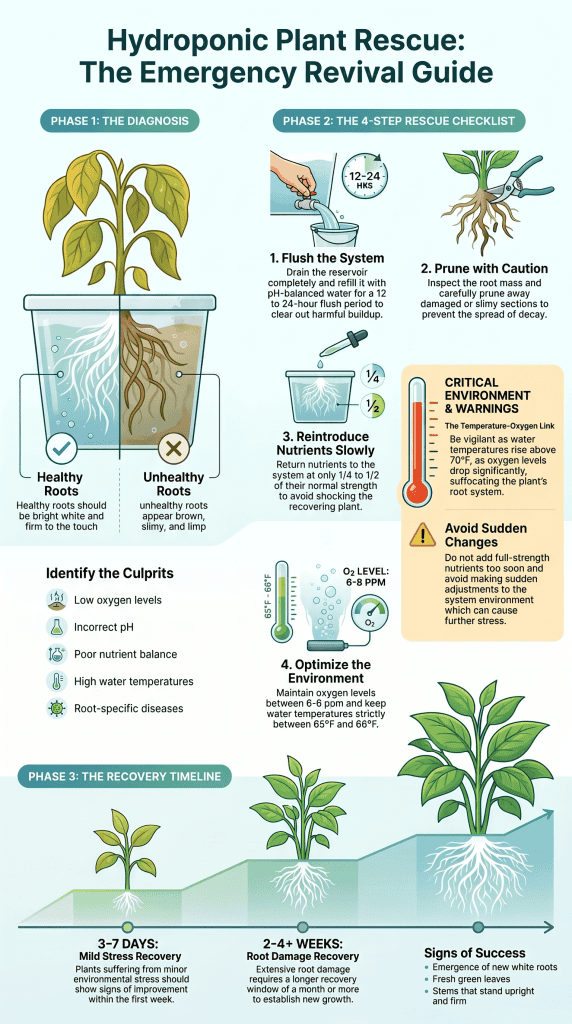
Step 1: Reset The Water
Old water carries buildup. Salts. Waste. Sometimes hidden issues.
Process:
- Drain everything
- Refill with clean pH-balanced water
Run the system with pure, pH-balanced water for 12–24 hours to flush built-up mineral salts from the plant tissue.
Just clean flow.
Step 2: Look At The Roots
Roots tell the truth faster than leaves.
Healthy vs unhealthy:
| Healthy | Unhealthy |
| White or light cream | Brown or black |
| Firm | Soft |
| Clean smell | Bad smell |
| Strong structure | Slimy texture |
If it feels slimy, that’s a warning sign.
If it smells off, even more so.
Quick check
Roots first. Always first.
Step 3: Fix Damaged Roots
Gently rinse the compromised root mass with lukewarm, pH-balanced water to clear away decaying organic debris.
Using scissors sanitized with 70% isopropyl alcohol between every single cut, carefully snip away only the soft, brown, or foul-smelling tissue while leaving the firm, white structural roots intact.
Removing damaged areas early is important because root rot can spread quickly when unhealthy roots stay trapped in the system.
If you are forced to remove more than 30% of the root zone, you must immediately prune away a matching proportion of the upper leaf canopy to prevent the plant from wilting and collapsing under extreme transpirational stress.
Step 4: Bring Nutrients Back Slowly
Weak nutrients work better at first.
Go slow:
- Severe stress → ¼ strength
- Moderate stress → ½ strength
Full strength too early? That can stall recovery.
Let roots rebuild first.
Then feed.
Root Rot Vs Simple Staining

Rot smells and feels bad. Staining doesn’t.
Rot signs:
- Soft roots
- Brown decay
- Bad smell
- Slime layer
Staining:
- Firm roots
- No smell
- Just color change
Big difference. Easy to miss if you rush.
One Simple Truth
New growth matters more than old damage.
Old leaves don’t always recover.
New leaves show progress.
Why Water Changes Sometimes Fail
Many indoor growers get frustrated when a fresh water change fails to stop the decline. This happens because pathogens and algae hide inside the tubes, inside porous air stones, and along the ribbed walls of net pots.
These hidden issues are common causes behind hydroponic problems that continue even after replacing the water.
If you don’t sanitize the physical hardware, your pristine new water will be contaminated within hours.
When battling an outbreak, the grower should pull the plants entirely and run a diluted food-grade hydrogen peroxide solution through the empty plumbing to ensure the entire loop is sterile before restarting.
Sterile Vs Beneficial Approach
Two ways to handle recovery.
Sterile = remove everything
Beneficial = add good microbes
Simple breakdown
| Method | Best use |
| Sterile reset | Root rot outbreak |
| Beneficial system | Long-term health |
| Mixed approach | Mild stress |
Sterile is fast. The benefit is steady.
Pick one and commit. Do not mix chemical sterilizers (like H₂O₂ or Chlorine) with beneficial microbes, as the oxidizer will instantly wipe out your beneficial investment.
PH and EC Problems
Numbers can lie if tools are off.
A plant can look sick even when readings seem fine.
Or worse, readings look fine but roots can’t absorb nutrients.
Common issues:
- Bad calibration
- Old meters
- Hard water
- Salt buildup
Recheck everything.
Don’t trust one reading.
Oxygen Is Everything
No oxygen, no recovery.
Roots need it to:
- absorb nutrients
- grow new tissue
- stay healthy
Target:
6–8 ppm dissolved oxygen
Low oxygen often looks invisible… until plants suddenly collapse.
Insights from Sustainability (MDPI) indicate
“insufficient levels of dissolved oxygen (DO) can hinder microbial activity, lead to the accumulation of harmful compounds, and cause stress to the plants.” Critically, the study emphasized that low DO is “a common challenge in hydroponics … where enclosed and recirculating water for irrigation can create hypoxic root zones,” which “reduces plant growth, limits beneficial microbial activity, and increases the risk of root-borne diseases.” –
Sustainability (MDPI)
How To Raise Oxygen Fast
To push oxygen back into a crashing system, don’t just rely on a bigger air pump. Prioritize cleaning the hardware.
Over a single growing cycle, mineral salts and slimy biological films clog the microscopic pores of air stones, cutting their air output by nearly a third. Make it a habit to swap in fresh stones and scrub the old ones with a stiff brush between every single reservoir changeout.
Temperature Problems
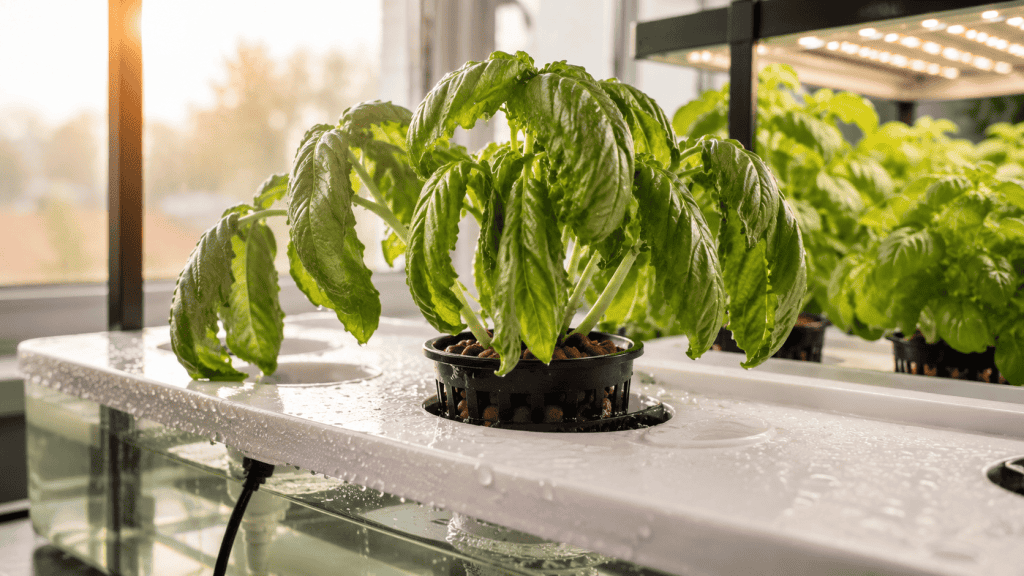
Water temperature is the ultimate balancing act in hydroponics because warm water physically cannot hold onto dissolved oxygen. The target is to lock reservoirs between 65°F and 68°F.
The moment the water creeps past 70°F, you create a double disaster: the available oxygen plunges right when predatory bacteria are multiplying at their fastest rate. This imbalance is one reason hydroponics fail even when growers think they are providing enough water and nutrients.
Frozen bottles can help short-term. Not perfect. Just useful.
Light Can Slow Recovery
Too much light + weak roots = stress.
Why:
roots can’t supply enough water fast enough.
Fix it:
- raise lights
- reduce intensity
- shorten exposure
Let the plant recover before pushing growth again.
Signs Recovery Is Working
Look for new growth, not old leaves.
Good signs:
- new white roots
- fresh leaves
- stronger stems
- upright shape
Old damage stays. Don’t wait for it to heal.
Short reality check
Recovery starts slow. Then suddenly it shows.
What Damage Doesn’t Fully Fix
Some leaves won’t recover:
- severe rot damage
- nutrient burn
- long stress exposure
Leave them unless fully dead. They still help a bit.
How Long Recovery Takes
- Mild stress: 3–7 days
- Nutrient issues: 1–2 weeks
- Root damage: 2–4+ weeks
No shortcuts here. Time matters.
Preventing Future Problems
Once stable, don’t relax too much.
Daily:
- pH check
- water level
- pump check
Weekly:
- EC check
- root inspection
- system cleaning
Small habits prevent big failures.
What Most People Get Wrong
They fix symptoms, not causes.
Yellow leaves → add nutrients
Drooping → change water
Rot → trim roots
But the root zone is where everything starts.
Always.
Examples of Content They Can Create

Credits: Khang Starr
Root rot is a serious problem in hydroponic gardening because it can damage plant roots and slow growth. It often starts when water has too little oxygen, becomes dirty, or stays too warm for too long.
Plants with root rot may look weak, wilted, or yellow even when they are getting enough water. To help save them, growers should check the roots early and remove any soft, brown, or bad-smelling parts.
Clean the system, replace old water, and make sure the roots have more oxygen. In some cases, lowering the nutrient strength can reduce stress on the plant. Good airflow and proper temperature also help prevent the problem from coming back.
The best way to manage root rot is to act fast and keep the hydroponic system clean, balanced, and well-aerated.
FAQ
If I have to cut away 50% of the rotten roots, will my plant survive?
Yes, your plant can survive a 50% root reduction, provided you have balanced the upper foliage as outlined in Step 3. Once the canopy demand matches the remaining root capacity, maintain a low-strength nutrient solution (around 25% strength) and maximize dissolved oxygen levels to give the root system the stress-free environment it needs to regenerate.
How do I fix root problems in a dying hydroponic plant?
Root problems can stop plants from absorbing enough oxygen and nutrients, which slows recovery. Inspect the roots for brown color, slimy texture, or unpleasant odors that may indicate root damage or rot. Hydroponic root rot treatment includes removing damaged roots, improving root oxygenation, cleaning the system, and maintaining healthy root zone conditions.
Why are my hydroponic plants wilting even when they have enough water?
Hydroponic plants can wilt when the roots cannot absorb water properly due to oxygen deficiency, nutrient imbalance, poor water circulation, or root damage. Hydroponic plant wilting treatment starts with checking the nutrient solution, water temperature, and oxygen levels. Improving aeration, correcting water issues, and restoring root health can help revive wilted hydroponic plants.
My leaves are turning yellow at the tips after a water reset, is it a deficiency or burn?
Look closely at the pattern of the yellowing. If the very tips are crisping up and turning white or brown right after you reintroduce fertilizer, you are witnessing nutrient burn from an EC (electrical conductivity) level that is too high for a recovering root system. If the yellowing starts uniformly from the bottom leaves upward, the plant is hungry and experiencing a nitrogen deficiency. When reviving a sick crop, it’s best to err on the side of under-feeding, starting at 25% strength and slowly stepping it up over two weeks.
How long does it take for a hydroponic plant to recover?
The hydroponic plant recovery timeline depends on the cause of stress and the level of damage. Plants with minor issues may improve within a few days after fixing water or nutrient problems, while plants with root damage need more time. A hydroponic plant recovery checklist can help track improvements and support long-term plant growth restoration.
Hydroponic Plants Rarely Fail Without Warning
Hydroponic plants don’t just fail out of nowhere. You usually notice it first in the roots and overall system stability as growth slows and the setup starts feeling off. It builds quietly before it becomes obvious enough to react to.
The fix starts in the root zone. Keep the water clean, maintain steady pH, and make sure oxygen levels stay consistent. Avoid pushing nutrients too hard or rushing recovery. Consistency is what brings plants back. Improve your root-zone monitoring and tighten your hydroponic care routine today.
References
- https://www.frontiersin.org/journals/plant-science/articles/10.3389/fpls.2026.1829367/full#B97
- https://www.mdpi.com/2071-1050/17/12/5275
Related Articles
- https://tophydroponicgarden.com/roots-rot-in-hydroponics/
- https://tophydroponicgarden.com/what-are-some-problems-with-hydroponics/
- https://tophydroponicgarden.com/why-does-hydroponics-fail/
Was this helpful?

I’m Barrie L., a passionate hydroponic gardening enthusiast dedicated to cultivating thriving, soil-less gardens. With a focus on all things hydroponic, I share my expertise on innovative growing techniques and sustainable practices through my blog, tophydroponicgarden.com. As a seasoned hydroponics specialist, my goal is to inspire and guide fellow gardeners in harnessing the power of water-based cultivation for bountiful and eco-friendly harvests. I’m also an author of the book “Hydroponics For Absolute Beginners: Your Step By Step Guide For How To Create An Hydroponics System At Home Without Soil, For Growing Vegetable, Fruit And Herbs.” which is sold on Amazon. Join me on a journey of redefining the way we cultivate plants, one nutrient-rich solution at a time. Happy growing!