

Hydroponic systems overflow when water flows in faster than it can drain or when a drain, pump, or fitting stops doing its job.
Most of the time, the problem comes down to poor system design or skipped maintenance.
The University of Arizona Controlled Environment Agriculture Center notes that good hydraulic planning and regular upkeep can cut the risk of water management failures in controlled growing systems.
Keep reading Tophydroponicgarden for practical ways to improve reliability, protect crops, and avoid costly indoor flooding.
Overflow Prevention at a Glance
A reliable hydroponic system depends on proper water management, regular maintenance, and safeguards that prevent small issues from turning into costly overflows. Here are the key points from this guide:
- Identify the main causes of hydroponic overflows and understand how proper water level control reduces flooding risks.
- Optimize your system setup by improving flood and drain hydroponics, DWC water level control, and drainage design.
- Prevent future failures through routine inspections, regular maintenance, and safety features that keep your hydroponic system running smoothly.
Why Do Hydroponic Systems Overflow?
Most hydroponic overflows happen because the drain cannot remove water as quickly as the pump delivers it. In some cases, a drain becomes partially blocked.
In others, the pump pushes more water through the system than the plumbing was designed to handle. Either situation can cause the water level to rise until it spills over.
The problem often starts long before you notice standing water. Roots slowly grow into drain openings, algae forms inside the plumbing, or mineral deposits begin to narrow the return line.
Since these changes happen over time, they are easy to miss during everyday use.
Equipment selection also plays an important role. Installing a larger pump without checking the drain capacity can create an imbalance between incoming and outgoing water.
Even if every component is working properly, the drain may not be able to keep up with the increased flow.
The good news is that most overflows are preventable. A simple inspection routine can help you find small issues before they become major problems.
What Happens When Drainage Becomes Blocked?
A blocked drain is one of the most common causes of hydroponic overflows. Water can only leave the grow tray as fast as the drain allows. When that pathway becomes restricted, water starts building up inside the system.
Several materials can reduce drainage over time. Plant roots naturally spread as crops mature, and some eventually reach the drain opening.
Plant roots naturally spread as crops mature, and this can be especially noticeable when growing hydroponic strawberries, as dense roots may eventually reach the drain opening. As these materials build up, less water can pass through the drain.
Meanwhile, the pump continues moving water at the same rate. Since water enters the tray faster than it can leave, the water level gradually rises until it reaches the edge.
Cleaning drain lines regularly helps prevent this problem. It’s also a good idea to check for root growth around drain openings and remove any buildup before it becomes severe.
How Can Pump Flow Exceed Drain Capacity?
The pump and drain should always be balanced. If the pump sends more water into the system than the drain can return to the reservoir, overflow becomes much more likely.
This often happens when growers upgrade to a more powerful pump without changing the plumbing.
A higher flow rate may improve circulation, but it also puts more pressure on the drain. Long pipe runs, narrow tubing, and several sharp elbows can slow drainage even further.
Instead of choosing the largest pump available, choose one that matches the size and design of your hydroponic system. Adjustable pumps are also useful because they allow you to fine-tune water flow as your system changes over time.
How Do You Choose the Right Reservoir Size?
The reservoir acts as the main water supply for the entire system. Choosing the right size helps keep water levels stable during normal operation and provides extra room if drainage slows down for a short time.
A small reservoir fills and empties quickly, which means water levels change more during each watering cycle. A larger reservoir provides a buffer against these changes and makes the system more stable.
When selecting a reservoir, consider the total nutrient solution your plants require, the amount of water used during each flood cycle, expected evaporation, and enough extra space to handle temporary increases in water volume.
Leaving some unused space near the top of the reservoir is a simple way to reduce the risk of overflow. This extra capacity gives water somewhere to go if the drain slows briefly or the pump runs slightly longer than expected.
Keep in mind that larger isn’t always better. Very large reservoirs require more nutrient solution, take longer to clean, and can increase maintenance time.
As noted by Transactions of The Japanese Society of Irrigation, Drainage and Rural Engineering,
“Research on tank design in recirculating hydroponic systems found that by using the maximum overflow depth in the tank and the drain pipe volume, hydroponic growers can very easily calculate the minimum required tank capacity. Further investigation showed that a gross capacity of approximately 10 m³ per 10 ares was most suitable, and the cylindrical shape was the most economical.” – Transactions of The Japanese Society of Irrigation, Drainage and Rural Engineering
Why Is Maintaining the Right Water Level Important?
Keeping a steady water level helps both your plants and your equipment.
In deep water culture systems, consistent water levels help maintain healthy root conditions while reducing stress on the pump.
Large swings in water depth can affect circulation and make it harder for the system to perform as expected.
Checking the reservoir level during routine maintenance is one of the easiest ways to catch developing problems before they lead to an overflow.
Which Pump Setup Helps Prevent Overflow?
Choosing the right pump isn’t about moving the most water. It’s about matching the pump’s output to what your drainage system can safely handle.
An adjustable pump offers the most flexibility because you can increase or decrease the flow without replacing the equipment. A properly matched pump also helps maintain steady circulation while reducing unnecessary strain on the drain system.
| Pump Setup | Benefit | Overflow Risk |
| Oversized Pump | Fast water movement | High |
| Properly matched pump | Balanced waterflow | Low |
| Adjustable pump | Flexible Flow Control | Lowest |
Before upgrading your pump, inspect the return plumbing first. Make sure the drain is clear, the pipe size is appropriate, and water returns to the reservoir without slowing down. In many cases, improving drainage solves the problem without needing a larger pump.
Data from ELTIKOM Journal demonstrates
“A study on an intelligent hydroponic nutrient control system using fuzzy logic and IoT reported that the control system achieved stable regulation with zero overshoot, a settling time of 840 seconds, and effective recovery from nutrient disturbances. This proves that precise flow control is crucial for preventing overflow.” – ELTIKOM Journal
Should You Install a Flow Control Valve?
A flow control valve makes it easier to adjust how much water moves through the system. Instead of replacing the pump, you can fine-tune the flow until it matches the drain capacity.
This is especially useful if your system changes over time. As plants grow or you expand your setup, the amount of water needed may also change. Being able to adjust the flow helps keep everything balanced.
The valve should be installed where it can control water effectively without creating unnecessary restrictions. Even with a flow control valve, the plumbing layout still matters.
A drain line with too many sharp bends or narrow sections can slow water down and increase the chance of an overflow.
How Can Backup Safety Devices Help?
Even a well-designed hydroponic system can run into unexpected problems. That’s why many growers add backup safety features. These devices help reduce the risk of flooding if the main drain becomes blocked or a pump continues running longer than expected.
One common option is a float switch. When the water reaches a set level, the switch turns the pump off before the reservoir or grow tray overflows.
Another useful feature is an overflow drain. If the main drain cannot keep up, the overflow line gives excess water another path to leave the system safely.
Larger systems often use several safety devices together. For example, a float switch may work alongside a water level sensor and an overflow drain.
Using more than one layer of protection helps limit damage if one part stops working.
Whatever safety devices you choose, test them after installation and during routine maintenance. A backup system only helps if it works when you need it.
What Maintenance Helps Prevent Overflow?

Regular maintenance is one of the best ways to avoid unexpected flooding. Most overflow problems begin with small issues that are easy to fix if they are found early.
Set aside time each week to inspect the system. Look at the pump, drain lines, reservoir, tubing, filters, and fittings.
Make sure water is flowing smoothly and check for signs of algae, salt buildup, or loose connections. Cleaning these parts before they become heavily clogged helps keep the system running properly.
Drain lines deserve extra attention because they collect roots, biofilm, and other debris over time. If you notice that water is draining more slowly than usual, clean the line before the restriction becomes severe.
Keeping a simple maintenance log can also help. Recording when you cleaned the system or replaced a part makes it easier to spot recurring problems and plan future maintenance.
What Warning Signs Should You Watch For?
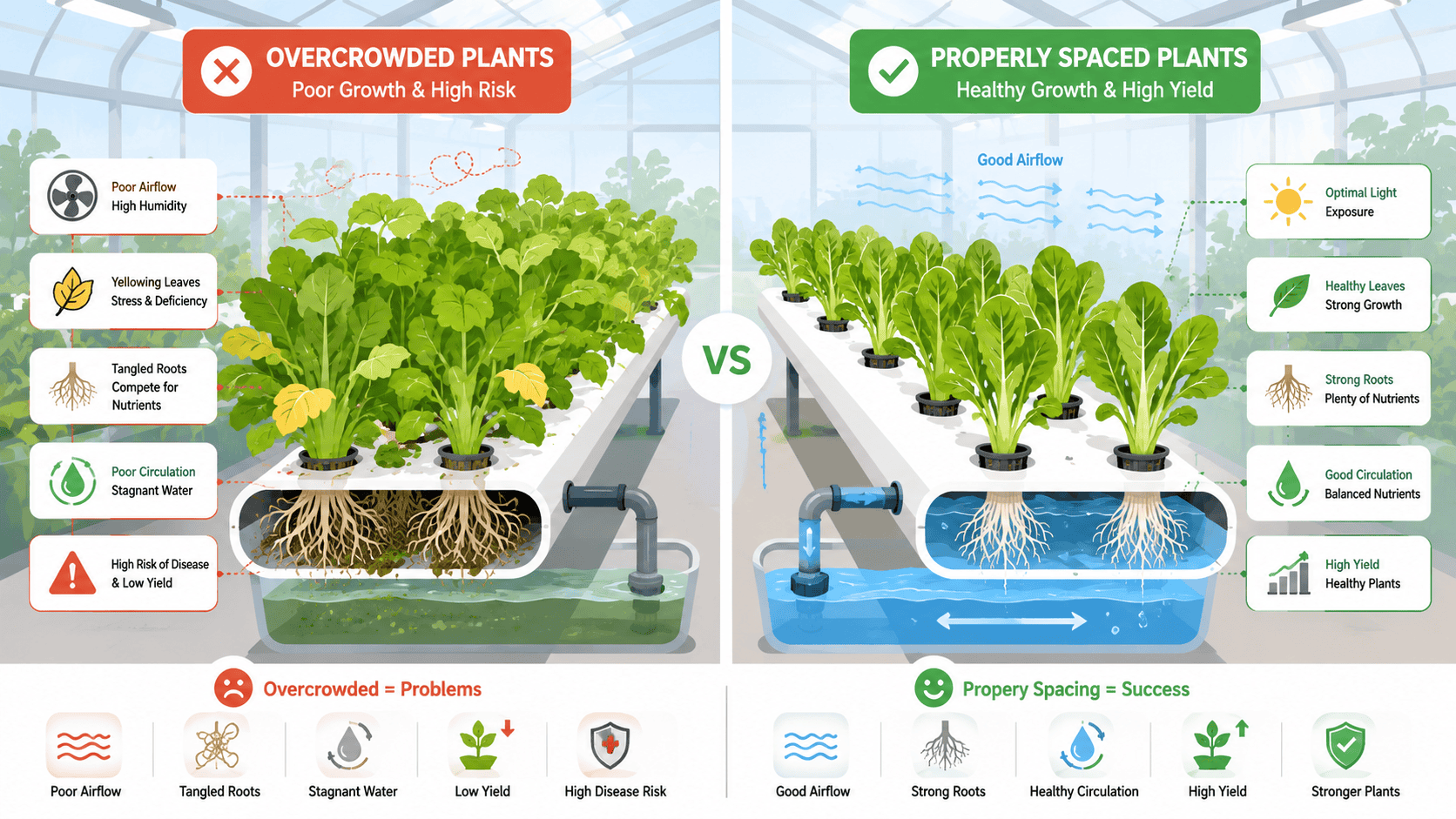
Hydroponic systems often give warning signs before an overflow happens. Paying attention to these changes can help you fix a problem before it causes water damage.
A rising water level is one of the clearest signs that drainage is slowing down.
You may also notice the pump making unusual noises, water taking longer to drain, or small puddles forming around the system. These changes usually mean something needs to be inspected.
Water level sensors and high-water alarms provide another layer of protection. These devices monitor the reservoir and alert you when the water reaches a higher-than-normal level. They are especially useful in automated systems that operate for long periods without supervision.
What Mistakes Increase the Risk of Overflow?

Credits : Everything Hydroponics
Many overflows happen because of small installation mistakes instead of broken equipment.
One common mistake is allowing roots to grow unchecked until they block the drain. Another is using the right size of net pots for the system and installing plumbing that has too many tight bends, which slows the return flow.
Loose fittings, missing backflow protection, and skipped cleaning can create problems over time as well. Taking a little extra time during installation and keeping up with routine maintenance helps avoid many of these issues.
How Should You Troubleshoot an Overflow?
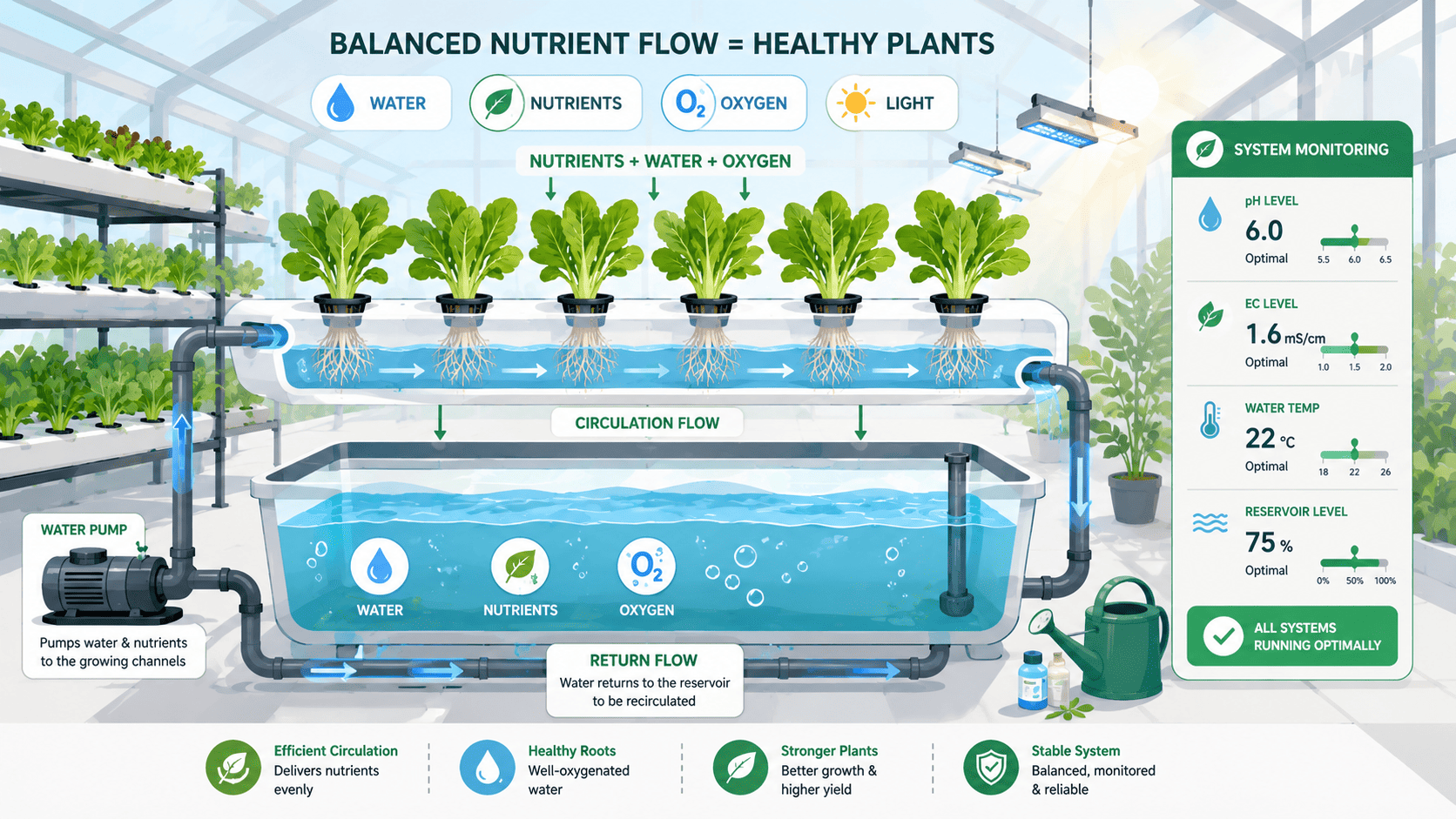
If your system starts overflowing, turn off the pump before inspecting anything else. Stopping the flow prevents more water from entering the system while you look for the cause.
Next, check the drain line for roots, algae, or debris that may be blocking the flow. Then inspect the reservoir level and look for damaged fittings or leaking connections.
If the plumbing appears clear, compare the pump output with the drain capacity to make sure they are properly matched.
After making any repairs, restart the system slowly and watch a complete watering cycle. This gives you a chance to confirm that water drains normally before leaving the system unattended.
If a pump, sensor, or fitting continues to leak or fails repeatedly, replacing the part is usually a better long-term solution than trying to repair it again.
What Are the Best Long-Term Ways to Prevent Overflow?
Reliable hydroponic systems are built on consistent care rather than expensive upgrades. A simple maintenance routine often does more to prevent flooding than buying larger pumps or adding extra equipment.
Inspect the system every week, clean it regularly, and replace worn tubing or seals before they fail. Test backup safety devices from time to time, and check that the pump timer and water level controls still operate as expected.
It’s also a good idea to keep a few spare parts on hand. Having replacement tubing, fittings, seals, or a backup pump available can reduce downtime if something stops working unexpectedly.
FAQ
Can a float switch stop hydroponic overflow before it starts?
Yes, a float switch hydroponics setup can detect rising water and trigger an automatic pump shutoff before the reservoir overfills. Pairing it with a water level sensor or dual stage sensor adds another layer of protection. Test the switch regularly because dirt, algae, or mechanical wear can affect how accurately it responds.
How do I know if my nutrient reservoir is too small?
A reservoir that fills too quickly or runs dry often may have insufficient nutrient reservoir capacity. Use reservoir volume calculation to match water storage with your system size and plant demand. Leave extra space for water displacement caused by growing roots and monitor nutrient reservoir overflow during peak irrigation cycles.
Why does my ebb and flow system keep flooding?
An ebb and flow system may flood because of poor pump timer calibration, incorrect ebb and flow timing, net pot blockage, or root mass clogging. Check the overflow standpipe, inspect the gravity return line, and confirm water drains completely before the next cycle to prevent repeated overflow problems.
What is the best way to prevent hydroponic plumbing leaks?
Start by checking bulkhead fitting installation, tightening loose connections, and replacing damaged seals with aquarium silicone sealant when appropriate. Secure every slip joint and inspect for hydroponic plumbing leaks after maintenance. Routine inspections help catch small leaks before they become larger flooding issues.
Should I add backup protection to my hydroponic system?
Yes. A layered approach to hydroponic overflow prevention offers better protection if one component fails. Consider an emergency overflow drain, secondary drain installation, secondary containment tray, or hydroponic safety basin. These backups help reduce indoor garden flooding and limit damage caused by unexpected hydroponic system failure.
Keep Your Hydroponic System Running Without Costly Overflows
Nothing is more frustrating than finding water where it shouldn’t be, because even a small overflow can damage your setup fast.
The good news is that regular checks, clean plumbing, and a well balanced system can help you avoid most problems before they get worse.
If you want simple advice that helps you grow with more confidence, Tophydroponicgarden is a helpful place to start.
You’ll find practical hydroponic guides, maintenance tips, and easy solutions that can help keep your garden running smoothly throughout the growing season.
References
- https://eltikom.poliban.ac.id/index.php/eltikom/article/view/1494?articlesBySimilarityPage=3
- https://periodicos.ufrb.edu.br/index.php/wrim/article/view/3467/2546/20402#3#3
Related Articles
- https://tophydroponicgarden.com/hydroponic-strawberries/
- https://tophydroponicgarden.com/how-to-choose-the-right-size-of-net-pots/
- https://tophydroponicgarden.com/nutrient-solution-recipe-for-leafy-herbs/
Was this helpful?

I’m Barrie L., a passionate hydroponic gardening enthusiast dedicated to cultivating thriving, soil-less gardens. With a focus on all things hydroponic, I share my expertise on innovative growing techniques and sustainable practices through my blog, tophydroponicgarden.com. As a seasoned hydroponics specialist, my goal is to inspire and guide fellow gardeners in harnessing the power of water-based cultivation for bountiful and eco-friendly harvests. I’m also an author of the book “Hydroponics For Absolute Beginners: Your Step By Step Guide For How To Create An Hydroponics System At Home Without Soil, For Growing Vegetable, Fruit And Herbs.” which is sold on Amazon. Join me on a journey of redefining the way we cultivate plants, one nutrient-rich solution at a time. Happy growing!