

Salt buildup in hydroponics manifests as stubborn crusts around irrigation lines and a sudden, unexpected spike in reservoir EC levels. When fertilizer minerals accumulate faster than plants can absorb them, root lock-out becomes inevitable. Addressing this early is crucial for maintaining a healthy harvest.
This guide will mainly cover how to spot and fix salt problems in hydroponic gardens. We’ll also touch on the other meanings so you can pick the right fix for your situation. Keep reading to get started.
Hydroponic Salt Buildup Prevention at a Glance
- Monitor EC and pH every day to catch rising nutrient concentrations early.
- Flush your system and replace the balanced nutrient solution on a regular schedule.
- Maintain clean reservoirs, quality water, and accurate nutrient mixing to improve nutrient uptake efficiency.
Understanding Different Types of Salt Buildup
The phrase “salt buildup” has multiple meanings, and each requires a different solution.
| System | What Salt Buildup Means | Primary Prevention |
| Hydroponics | Fertilizer salts accumulate around roots and equipment | Flush your system, monitor EC levels, maintain pH |
| Human body | Excess sodium retention and fluid balance | Hydration, potassium-rich foods, lower sodium intake |
| Plumbing | Calcium and magnesium mineral scaling | Routine flushing and hard-water maintenance |
Because this guide is written for hydroponic growers, the remaining sections focus on hydroponic salt buildup, nutrient salt management, and long-term reservoir maintenance.
How Salt Accumulates in Hydroponic Systems
Salt buildup in hydroponics happens when minerals from fertilizer stick around. This can occur when plants drink water faster than they take up the food, or when water evaporates and leaves the minerals behind.
The nutrients you add to the water are actually mineral salts. Things like nitrogen, potassium, and calcium dissolve so the plant roots can grab them. Cornell University points out that keeping this nutrient mix balanced is key, because how much food the plant gets depends on both the strength of the solution and its pH level.
Plants almost never absorb water and nutrients at the same perfect speed. On a hot day, for instance, water can vanish quickly through evaporation. What’s left behind is a stronger, more concentrated soup of fertilizer salts. You’ll see this as a higher reading on your electrical conductivity (EC) meter, even if you haven’t added any extra nutrients.
Overfeeding makes everything worse. Putting in more fertilizer than the plants can possibly use just adds to the pile of unused salts. These excess salts can end up coating everything, your growing medium, the inside of pipes, and the walls of your reservoir tank.
Recognizing a salt imbalance requires monitoring specific thresholds. If a reservoir starts the week at 1.5 EC and suddenly spikes to 2.2 EC while the water level drops, evaporation has concentrated the fertilizer salts.
This exact data point is the clearest signal to dilute the reservoir with fresh RO water immediately. It’s a slow creep. Most growers spot the rising EC numbers on their meter long before their plants start to look sick, which makes checking EC one of the best ways to catch trouble early.
The Effects of Salt Buildup on Hydroponic Plants

When too much salt builds up in your hydroponic system, it starts to cause real problems for your plants. It messes with how they drink water and absorb food, which can lead to something called nutrient lockout, stressed roots, and slower growth.
Here’s how it works. Plant roots normally pull in nutrients using osmotic pressure. But when the water is packed with an overly high concentration of dissolved salts, it actually gets harder for the roots to take in water. The plant ends up fighting against the very solution that’s supposed to feed it.
Researchers at the University of Florida point out that you’ll often see signs of a nutrient imbalance long before you see a true deficiency. The nutrients are still there in the water, but the plant can’t access them anymore.
This puts the roots under serious stress. Those nice, healthy white roots can turn brown or slimy. You might notice the edges of leaves starting to look burnt, and the whole plant’s growth just stalls, even though you’re feeding it. In the end, the plant becomes much less efficient at getting what it needs.
Here’s a quick look at the difference between a healthy system and one with salt issues:
Healthy Root Zone
- Balanced nutrient uptake
- Stable EC reading
- Healthy white roots
- Consistent growth
- Efficient nutrient absorption
Salt-Affected Root Zone
- Nutrient lockout occurs
- EC readings keep rising
- Roots show stress and discoloration
- Growth slows down
- Nutrient absorption drops
A useful tip: Don’t wait for the leaf tips to turn brown. By tracking your EC meter readings, you can usually spot a salt buildup trend several days before any visible damage shows up on the plant.
Keeping your reservoir conditions stable isn’t just about avoiding trouble. It reduces stress on the plants over their entire life cycle, which is a straightforward way to get healthier results.
Daily Monitoring for Early Salt Buildup Detection
The best way to stop salt buildup from hurting your plants is to check on your system every single day. This means looking at your EC meter and keeping an eye on the reservoir.
Big commercial growers depend on managing electrical conductivity (EC). The EC number tells you how concentrated the dissolved fertilizer salts are in the water. If the reading stays steady, it usually means your plants are getting a balanced amount of food.
As noted by University of Missouri Extension:
“Fertilizers are salts… When a fertilizer is correctly mixed in water, the water molecules break the ionic bonds of the fertilizers and the salts dissolve into ions. Dissolving fertilizers will increase ion concentration, increasing the water’s ability to conduct electricity. Measuring EC will indicate if a solution is properly mixed and the nutrients are available to the plants.” – University of Missouri Extension
Here’s a simple daily routine. Take an EC reading first, before you change anything. Then, look at how much water is left in your tank. If the water level has gone down but the EC reading has gone up, that’s a clear signal. Your plants are drinking water faster than they’re eating nutrients, and the leftover salts are getting more concentrated.
Don’t forget to check the pH, too. If the acidity is off, it can lock nutrients away so the plant can’t use them. Also, feel the water temperature. Warmer water evaporates faster and can hold less oxygen for the roots.
Make a quick list to check each day:
- EC level
- pH level
- Reservoir water level
- Water temperature
- What the roots look like
When you see that pattern, water level down, EC up, your first move should be to dilute the nutrient solution with some fresh, clean water. Don’t just add more fertilizer. Adding water brings the salt concentration back down and helps keep things balanced.
All these numbers are only useful if you write them down. Keeping a daily log lets you see trends. You’ll spot a problem like rising EC long before your plants get stressed enough to show it.
How pH Drifts Cause Mineral Scaling
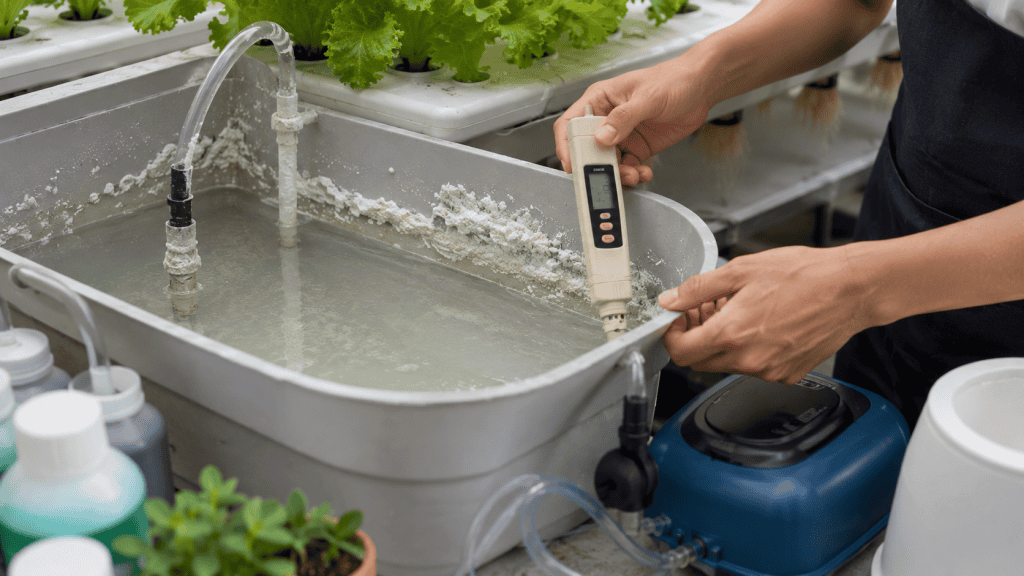
Keeping reservoir pH between 5.5 and 6.2 prevents heavy elements like calcium and magnesium from falling out of solution. According to controlled environment agriculture studies on mineral solubility, letting pH drift above 6.5 causes these exact nutrients to bond, forming hard, chalky scales inside pumps and micro-tubing. The nutrients stay soluble, which means the roots can actually grab them.
If the pH creeps up too high, some minerals stop being available and can start to form a crust or scale. If it drops too low, other nutrients get locked up, even though they’re still floating around in the water.
A stable pH does more than just prevent problems. It lets you fine-tune your nutrient solution with confidence. You spend less time chasing after mysterious deficiencies and more time providing a steady supply of food from start to finish.
It’s important to remember that pH and EC are a team. You can have your EC perfectly adjusted, but if the pH is off, your plants still won’t be able to absorb the nutrients properly.
Here’s a general guideline for pH:
- Most vegetables: Aim for 5.5 to 6.5
When pH wanders outside of this range, you’re more likely to run into trouble:
- Nutrient lockout
- Chalky mineral deposits
- Less efficient nutrient uptake
- More salt residue
- Stressed roots
By keeping the pH stable, you’re not just preventing salt from building up. You’re also helping your entire reservoir system stay healthier for longer.
Creating a Consistent Hydroponic Flushing Routine
A regular flushing routine is a must for keeping salt buildup under control in hydroponics. For most systems, giving everything a good rinse every one to two weeks works well. But the best schedule really depends on what you’re growing, how strong your nutrients are, the temperature and humidity, and what your EC meter is telling you.
Flushing washes away the leftover fertilizer salts before they can throw your nutrients out of balance. Instead of letting those salts just sit in the root zone, you swap out the old nutrient water for a fresh batch. You can use clean, pH-balanced water or a hydroponic cleaning solution. University extension guides and grower research all agree, regularly changing your reservoir and rinsing your growing media is just basic, necessary maintenance.
Your flushing schedule should be based on your measurements, not just the date on the calendar. If you see your EC numbers climbing while the water level in your tank keeps falling, that’s your cue to start flushing right away, no matter what day it is.
A proper flush does more than just remove salts. It gives the roots a healthier environment, lets more oxygen get to them, and helps the plant absorb nutrients consistently.
Here’s what a good flush accomplishes:
- It clears out excess fertilizer salts.
- It refreshes the environment around the roots.
- It helps stop nutrient lockout before it starts.
- It makes maintaining your nutrient solution easier.
- It reduces stress on the root system.
After you flush, refill your reservoir with a fresh, balanced nutrient solution. Mix it according to the directions on the bottle. Don’t be tempted to make it stronger to “make up” for the flush; that just starts the salt cycle all over again.
The key is to let your EC readings guide your flushing schedule, not a rigid calendar. Your plants will show you what they need through the numbers long before they start looking sick.
Preventing Salt Buildup from Excess Fertilizer
Using too much fertilizer is a major reason for salt buildup. When you add more nutrients than your plants can use, the leftovers don’t just vanish. They stay dissolved in the water, getting more and more concentrated until they cause damage.
Research from Scientific Reports shows:
“Significantly reduced the uptake of essential macronutrients nitrogen (N), phosphorus (P), potassium (K), calcium (Ca), magnesium (Mg), and sulfur (S).” – Scientific Reports
Every scoop of fertilizer you add should have a job to do. If the plants get more than they can handle, the extra minerals pile up with every watering. Over time, this leads to a salty reservoir, throws your nutrients out of balance, and makes it much more likely you’ll damage the roots.
Feeding your plants a balanced amount improves how well they absorb food and cuts down on waste. Trying to force faster growth by making the nutrient solution super strong usually backfires. Making small, gradual changes based on how the plants actually look tends to give you healthier results.
The simplest ways to stop fertilizer salts from building up are:
- Stick to the recommended feeding schedule.
- Increase nutrient strength slowly, not all at once.
- Use your EC meter to measure, don’t just guess.
- Watch how the plants react before you raise nutrient levels.
- Change out your nutrient solution on a regular basis.
Research on commercial hydroponic farms shows the same thing: overfertilizing makes salt stress and nutrient lockout more common, and it’s a waste of money.
A plant’s needs change as it grows. Young seedlings need a much weaker nutrient solution (a lower EC) compared to plants that are flowering or fruiting. Adjusting your feeding for each growth stage is a smart way to manage your fertilizer.
Flushing Bottom-Fed Hydroponic Systems Effectively
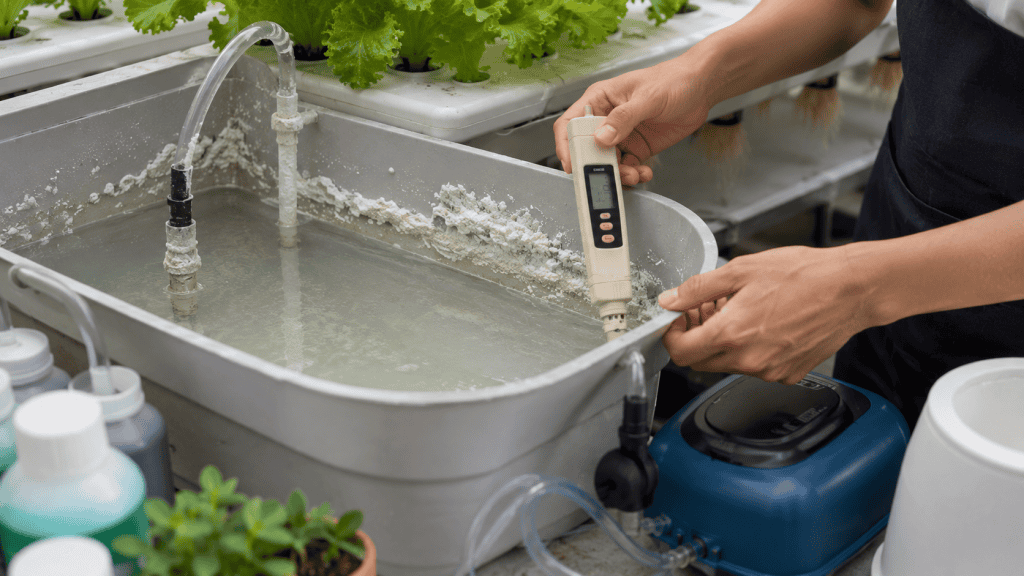
Bottom-fed systems like AutoPots need a different approach to maintenance than top-watered systems. Growers using these systems often notice salts collecting on the top layer of their growing media. This happens because water is drawn upward and then evaporates, leaving the salts behind.
A common piece of advice from grower communities is to be careful with top-watering in these setups. Pouring water on the surface might just wash those concentrated salts down into the root zone instead of getting rid of them.
Managing bottom-fed setups requires a specific approach since surface watering pushes accumulated top-salts directly into the root zone. Instead of top-flushing, isolate the affected module, shut off the main reservoir valve, and run a mild flushing solution directly through the system’s supply lines to dissolve precipitates without harming the delicate root mass.
Some safer, long-term practices include:
- Checking your EC readings before making big changes.
- Cleaning your reservoir on a schedule.
- Replacing the nutrient solution routinely.
- Only flushing the growing media when it’s right for your type of system.
Instead of depending on one big, dramatic flush now and then, you’ll get better results from consistent reservoir care, mixing nutrients accurately, and keeping your EC stable.
Finally, every hydroponic setup is a little different. Materials like coco coir, rockwool, or clay pebbles all hold onto nutrients in their own way. Your maintenance routine should fit what you’re actually using, not some one-size-fits-all rule.
Growing Habits That Reduce Salt Buildup
The best way to deal with salt buildup is to stop it from happening in the first place. Sticking to a regular maintenance habit is far more effective than trying to fix a big problem after your plants are already struggling.
A healthy hydroponic system comes from paying attention, often. Making small tweaks every few days can stop a major nutrient imbalance from ruining your grow later on.
Don’t overlook your water source. Starting with filtered or reverse osmosis (RO) water means fewer extra minerals are getting into your tank before you even add fertilizer. If you have hard water, you’ll probably see more issues with calcium and magnesium deposits, and your EC will start higher from day one.
A straightforward weekly checklist can keep things on track:
- Check your EC.
- Monitor the pH.
- Look at the roots for any discoloration or slime.
- Clean out the irrigation lines to prevent clogs.
- Make sure the water is circulating well.
- Keep the nutrient solution oxygenated.
- Give the nutrient tank a cleaning.
- Replace the reservoir solution when it’s time.
Keeping your reservoir clean does more than fight salt. It also stops algae, helps oxygen levels, and supports the good microbes around your roots.
Making little corrections often is always better than one big, panicked fix after your plants have already locked out.
Sustainable Hydroponic Salt Management
YouTube: John Campbell
The most reliable way to manage salts for the long haul is to combine a few key practices: balanced feeding, regular flushing, stable pH, daily EC checks, and consistent reservoir care.
Growers who succeed don’t depend on just one trick. They build a complete routine that constantly stops nutrients from piling up to dangerous levels. Mixing nutrients accurately, using good water, setting up your irrigation right, and checking on things frequently all work together for healthier roots and better harvests.
A practical framework for prevention looks like this:
- Feed accurately: Use a balanced nutrient solution as directed.
- Monitor daily: Check your EC levels every single day.
- Control pH: Keep it steady between 5.5 and 6.5.
- Flush routinely: Give your system a fresh start on a schedule.
- Clean everything: Reservoirs, irrigation lines, and tanks.
- Replace on schedule: Don’t let old nutrient solution sit for too long.
- Adjust based on plants: Let how your plants look guide your feeding, not a rigid calendar.
Over time, these habits will help your plants absorb food better, reduce salt stress, prevent root damage, and make your whole growing process more sustainable from seedling to harvest.
As Cornell University points out, good nutrient management is about keeping the right balance of concentration, pH, and environment, not about using the strongest fertilizer possible. For broader public health guidelines on sodium intake, you can refer to the World Health Organization, while detailed hydroponic principles are covered by Cornell’s Controlled Environment Agriculture program.
FAQ
Can Poor Nutrient Mixing Cause Salt Buildup?
Yes. Poor nutrient mixing accuracy can create uneven nutrient concentrations, which increases the risk of excess fertilizer salts in the reservoir. Always add nutrients in the recommended order and mix each one completely before adding the next. Accurate mixing supports balanced fertilization, improves nutrient availability, and helps plants grow more consistently.
Can Better Watering Practices Reduce Salt Accumulation?
Yes. Proper watering helps reduce salt accumulation by moving nutrients evenly through the root zone. Optimize watering frequency according to your plants, growing medium, and growing conditions instead of following a fixed schedule. Good proper irrigation practices also improve drainage, help prevent soil salinity, and reduce stress caused by excess dissolved salts.
How Can I Prevent Algae While Maintaining My Reservoir?
Algae can reduce oxygen levels and compete with plants for nutrients. To prevent algae growth, keep the reservoir covered, block sunlight from reaching the nutrient solution, and remove plant debris regularly. Good reservoir hygiene, routine clean nutrient tank maintenance, and consistent nutrient solution maintenance help keep the water cleaner and the roots healthier.
Does Cleaning Irrigation Equipment Help Prevent Salt Deposits?
Yes. Cleaning irrigation equipment removes fertilizer residue before it becomes hard salt deposits. Regularly clean irrigation lines as part of your hydroponic maintenance tips to prevent scaling and improve water flow. This routine supports mineral scaling prevention, helps prevent clogging, and contributes to long-term system health by keeping nutrients flowing efficiently.
Keep Your Hydroponic System Performing at Its Best
Salt buildup can slow plant growth before you even notice the signs. When you keep an eye on EC, pH, and your reservoir, it’s much easier to avoid nutrient lockout and keep roots healthy. That’s what makes the biggest difference.
A steady routine beats fixing problems later. If you want simple tips that help you grow with more confidence, tophydroponicgarden is a good place to start. Their expert guides can help you keep your hydroponic system running smoothly, so your plants stay healthy from one growing cycle to the next.
References
- https://extension.missouri.edu/publications/g6984
- https://www.researchgate.net/publication/403082517_Interactive_effects_of_electrical_conductivity_and_light_intensity_on_growth_yield_and_nutrient_dynamics_of_hydroponic_lettuce
Related Articles
- https://tophydroponicgarden.com/why-is-my-hydroponic-water-cloudy/
- https://tophydroponicgarden.com/how-to-revive-a-dying-hydroponic-plant/
- https://tophydroponicgarden.com/how-to-grow-from-cuttings-in-hydroponics/
Was this helpful?

I’m Barrie L., a passionate hydroponic gardening enthusiast dedicated to cultivating thriving, soil-less gardens. With a focus on all things hydroponic, I share my expertise on innovative growing techniques and sustainable practices through my blog, tophydroponicgarden.com. As a seasoned hydroponics specialist, my goal is to inspire and guide fellow gardeners in harnessing the power of water-based cultivation for bountiful and eco-friendly harvests. I’m also an author of the book “Hydroponics For Absolute Beginners: Your Step By Step Guide For How To Create An Hydroponics System At Home Without Soil, For Growing Vegetable, Fruit And Herbs.” which is sold on Amazon. Join me on a journey of redefining the way we cultivate plants, one nutrient-rich solution at a time. Happy growing!