
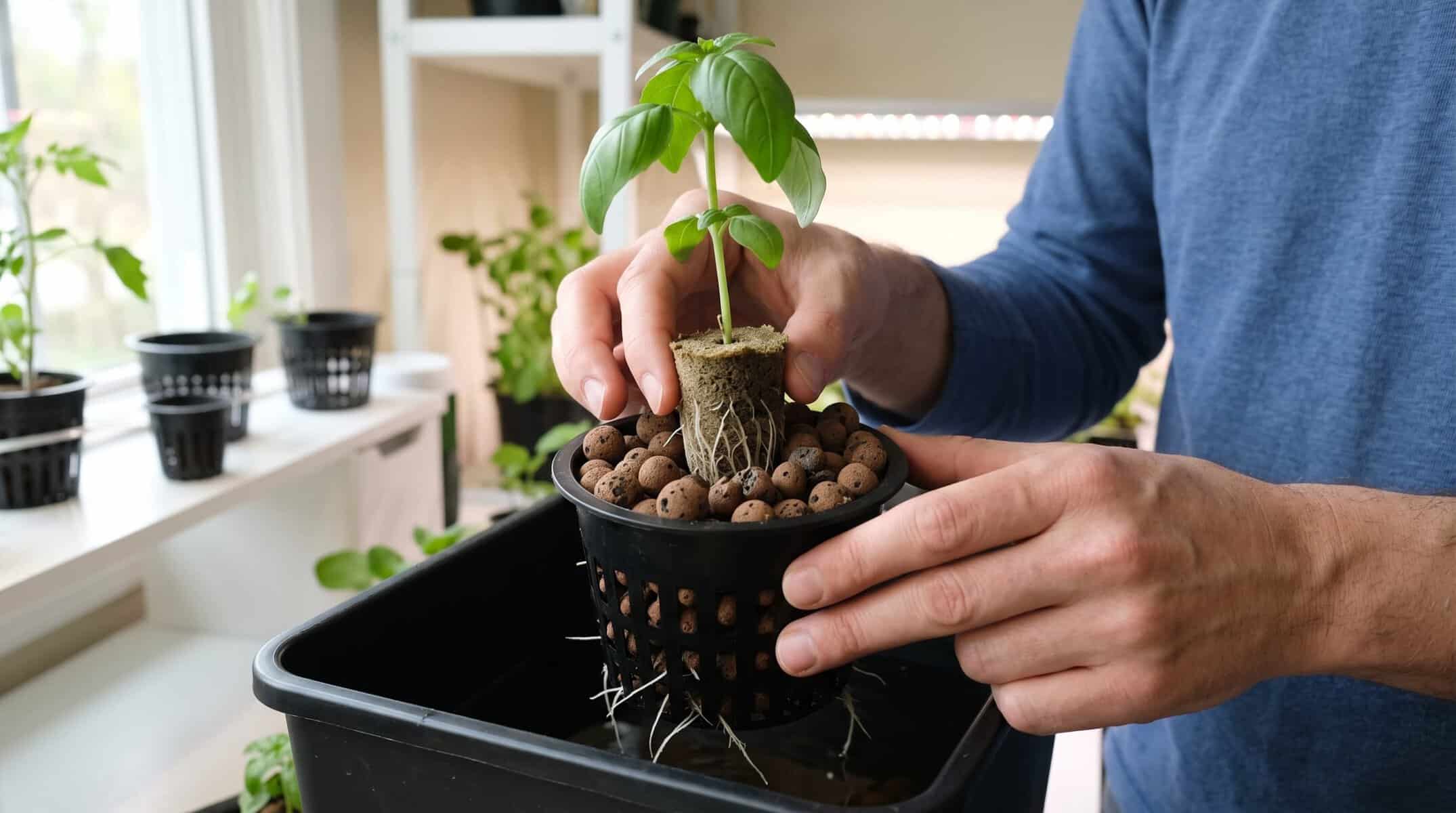
Healthy seedlings are ready for a net pot when they have true leaves, a firm stem, and enough visible roots to hold the starter plug together.
The key is simple: move the intact plug, support it loosely with clean clay pebbles, and keep the stem base above the wet zone. Tophydroponicgarden can help you follow these steps with confidence, without creating a waterlogged root zone.
Quick Tips for Growing Seedlings in Net Pots
- Choose a healthy seedling: Select one with several true leaves, a firm stem, and visible, well-developed roots before transplanting.
- Position the seedling properly: Keep the starter plug intact and centered in the net pot, then add rinsed clay pebbles loosely around it for support.
- Balance moisture and oxygen: Keep the stem base dry while allowing the plug and developing roots to access enough moisture and oxygen.
When Is a Seedling Ready for a Net Pot?
A seedling is usually ready for a net pot when it has true leaves, a firm stem, and visible roots growing from its starter plug or cube.
Penn State Extension says seedlings can be transplanted when the first pair of true leaves appears. But for hydroponics, root growth matters too. The plug needs enough structure to handle the move.
Utah State University Extension also recommends potting up when healthy roots are visible, before they form a dense mat. So, judge a net pot seedling by plant growth and root condition, not age alone.
This applies to rockwool cubes, coco coir plugs, rapid rooters, and other starter plugs. A well-rooted plug is easier to handle and support.
Look for these signs:
- Several healthy true leaves
- Roots showing from the plug
- A firm, upright stem
- A plug that stays intact
Plant type matters, too. Lettuce and herbs can move at a smaller stage than tomatoes, peppers, or cucumbers. The hydroponic system matters as well.
Why root development matters more than seedling age
Visible roots are a better transplant signal than a fixed number of days. Light, temperature, cultivar, and growing medium can affect growth.
Oklahoma State University describes systems where seedlings start in rockwool, media cubes, pellets, or net pots before moving to production.
For seedling true leaves transplant hydroponics:
- Let true leaves develop.
- Check for roots from the plug.
- Handle the plug, not the stem.
- Transplant before roots tangle.
Good timing can reduce seedling shock after net pot transplanting. A healthy root system can resume water uptake faster.
How Do You Place the Seedling?
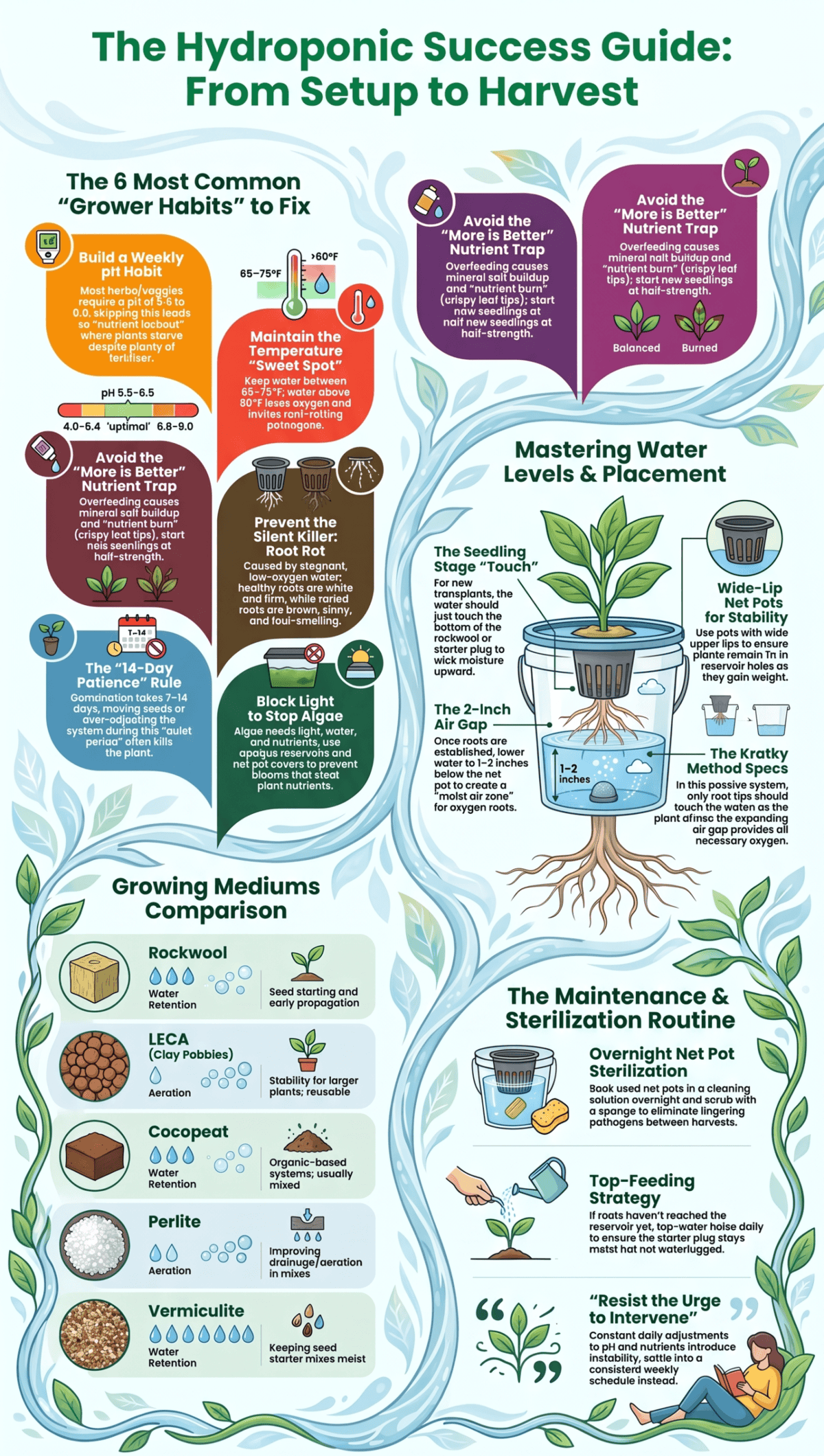
Place the intact starter plug in the center of the net pot. Then, add rinsed clay pebbles or another suitable medium around it. Keep the plug loose and avoid squeezing it.
Oklahoma State University describes hydroponic systems that use seedlings started in media cubes or pellets, including rockwool and clay-based media. Net pots can also use expanded clay balls to support plants.
For a rockwool cube net pot, place the cube in the center. Don’t bury it deep in the clay pebbles. Keep the top level with, or slightly above, the surrounding medium.
The same method works for a coco coir plug net pot or rapid rooter net pot. Keep the starter plug intact and avoid disturbing new roots.
Use this sequence:
- Clean the net pot and medium.
- Place the plug in the center.
- Add rinsed clay pebbles around it.
- Keep the medium loose.
- Keep the stem base above the wet zone.
- Check that the pot is stable.
Support should come from the medium, not the stem. Evenly placed clay pebbles can improve net pot stability without compressing the root zone.
How to handle the plug without damaging roots
Handle the plug or root ball, not the exposed stem. Penn State Extension warns that deep planting and excess moisture can damage delicate stem tissue.
Don’t pull plants upward once roots grow through net pot openings. Keep roots intact. Avoid squeezing rockwool, breaking coir plugs, or washing healthy roots.
For soil-grown seedlings, remove soil carefully before moving them to hydroponic media. Seedling handling by plug can reduce stem damage and root exposure net pot.
As noted by PLOS ONE
“Fine roots grow into porous substrates used for germination, and they cannot be removed without damaging these roots.” – PLOS ONE
How High Should the Water Reach?
The nutrient solution should reach the lower plug or root zone without keeping the full plug or stem base submerged. Young plants need water, but their roots also need oxygen.
This matters for net pot water level seedlings. Utah State University Extension notes that roots kept too wet can lack oxygen. So, avoid setting the reservoir as high as possible.
For DWC net pot seedlings, keep the plug moist while allowing air around developing roots. The same applies to Kratky method net pot seedlings. The plug shouldn’t stay fully submerged.
| System | Seedling placement principle | Main moisture concern |
| DWC | Net pot holds the plug above the reservoir | Avoid saturating the stem base |
| Kratky | Plug sits above or near the moist zone | Maintain an accessible air gap as roots develop |
| NFT | Plug sits in a channel while solution flows past roots | Prevent unstable or poorly supported plugs |
| Ebb and flow | Plug receives periodic wetting | Avoid prolonged saturation |
| Vertical hydroponics | Net pot supports the plant in the tower | Control continuous wetting and drainage |
Oklahoma State University notes that NFT moves nutrient solution past roots, while DWC keeps plants above a water-based growing area. So, system design affects plug placement.
What Should You Do After Transplanting?
Give the seedling clean water, enough light, airflow, and mild nutrients while it adjusts to its new root environment.
The first few days after you transplant seedlings are about stable conditions. Don’t make several major changes at once. A young plant is already adjusting to a new moisture and oxygen environment.
Oklahoma State University notes that hydroponic plants depend on managed water, nutrients, oxygen, light, and growing conditions. So, focus on steady care rather than heavy feeding.
Use this checklist:
- Keep roots moist, not saturated.
- Provide enough light without excess heat.
- Maintain airflow around leaves and stems.
- Check that the net pot stays stable.
- Watch new roots and leaves for stress.
For seedling nutrient strength hydroponics, don’t treat a new transplant like a mature plant. Research recommends starting with about half-strength nutrients instead of full-strength feed.
This also suits mild EC seedlings hydroponics. Young roots are still developing, so a mild nutrient solution gives them time to adjust.
Research published in Plants shows
“Research on sweet pepper seedlings in hydroponic culture showed that high electrical conductivity (EC) treatments significantly decreased root activity, plant height, stem diameter, and leaf net photosynthetic rate, while increasing stress indicators such as malondialdehyde (MDA) content.” – Plants
How should light and airflow be managed?

Credit: Everest Fernandez
Light should support growth without causing excess heat around the young plant. A seedling light requirements net pot setup can stay simple.
Keep light consistent and watch for stretching or light stress. Gentle airflow also helps keep leaves from staying too humid.
If you used a humidity dome net pot seedlings setup, don’t leave the dome on after transplanting. Gradually expose seedlings to normal room or greenhouse conditions for better hardening off seedlings net pot care.
What Are the Main Mistakes to Avoid?
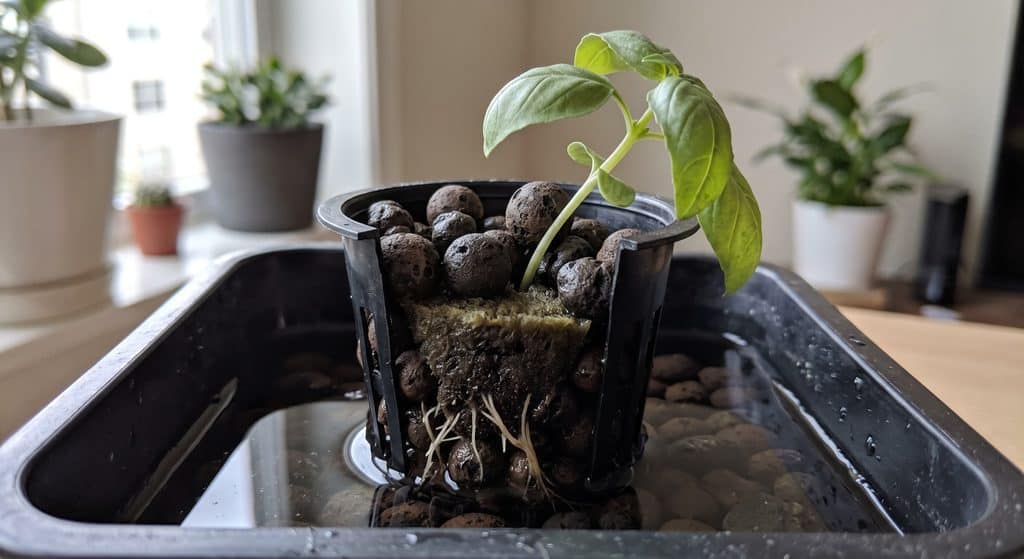
The main mistakes are disturbing established roots, compressing the starter plug, keeping the stem base wet, and transplanting before the seedling has developed enough roots.
The supplied research also points to an important practical issue: seedling growth stage net pot decisions should not be based on calendar age alone. Root development is a better indicator of whether the plant can tolerate the move.
Penn State Extension recommends careful handling during transplanting because damaged roots can slow establishment. Its guidance also supports avoiding excessive moisture around young plants.
A few mistakes deserve special attention:
- Do: keep the starter plug intact whenever possible.
- Do: use clean, rinsed support media.
- Do: leave enough space for roots to access oxygen.
- Don’t: pull the seedling upward by its stem.
- Don’t: compress clay pebbles tightly around the plug.
- Don’t: fully submerge a small starter plug.
- Don’t: increase nutrient strength simply because the plant has entered a larger net pot.
Why can a large net pot create problems?
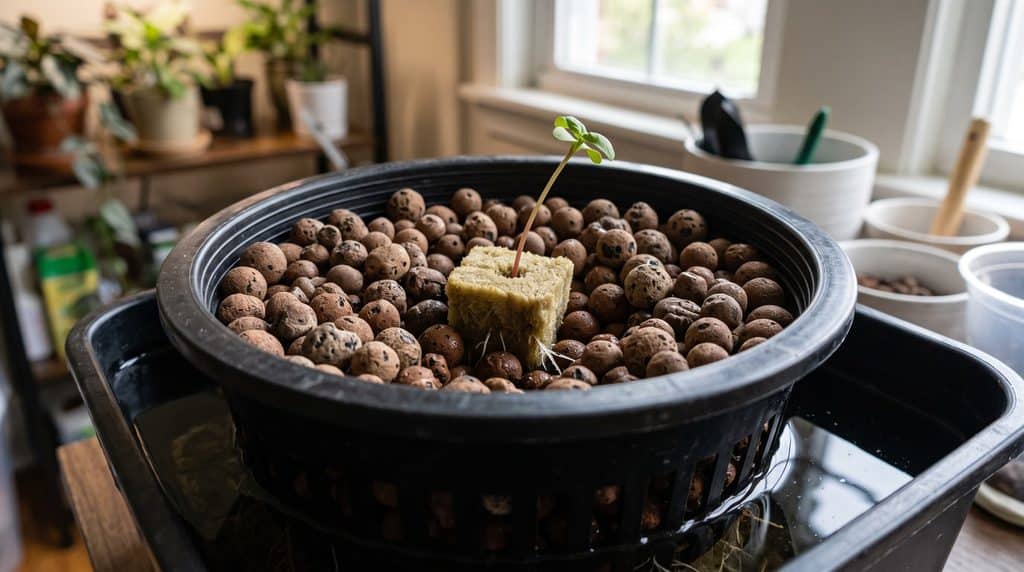
A larger net pot isn’t always better. The right size of net pot should match the plant and root system. Too much space can make moisture harder to control around small roots.
For seedlings:
- 2 inch net pots may work well for small plugs.
- 3 inch net pots may suit larger plants or developed starter media.
- Choose based on the plug, crop, and hydroponic system.
With LECA net pot seedlings, avoid adding too many clay pebbles before roots fill the space. Proper sizing also helps prevent overly wet roots.
How can algae, clogging, and root problems be prevented?
Clean equipment, controlled moisture, and limited light can reduce common net-pot problems. Algae can grow when wet, nutrient-rich areas receive light.
With a net pot lid hydroponic system, cover openings to keep light away from wet surfaces. Wash reusable net pots between crops, and don’t leave old plant debris attached.
For net pot clogging prevention, check openings and media often. Roots may block drainage, while debris can collect in reservoirs or channels.
A clean system also supports seedling disease prevention net pot practices. No specific chemical or additive is required.
FAQ
What net pot size works best for different seedlings?
The right net pot size for seedlings depends on the plant’s size and root development. 2 inch net pot seedlings work well for smaller leafy greens and herbs, while 3 inch net pot seedlings provide more room for larger plants.
Choose a pot that gives the roots enough space to develop without leaving the seedling unstable.
How wet should the seedling plug stay after transplanting?
The seedling plug should stay moist without becoming waterlogged. Good seedling plug moisture wicking keeps the roots hydrated while allowing air to reach the root zone.
Check the wet zone seedling net pot regularly, especially during the first few days. Excess moisture can limit oxygen around the roots and increase transplant stress.
When should seedlings be moved into a hydroponic net pot?
The best transplant timing for hydroponic seedlings depends on root and leaf development. Seedlings with several healthy true leaves and a stable root system are generally easier to transplant.
During a seedling tray to net pot transfer, hold the seedling by its plug instead of the stem to prevent damage and support healthy seedling root development net pot.
How can I prevent transplant shock in net pot seedlings?
For seedling shock prevention net pot, handle seedlings gently and avoid sudden changes in water, light, and nutrient strength.
Keep the seedling nutrient strength hydroponics mild at first and provide stable growing conditions. Avoid exposing the roots to air for longer than necessary, and keep the seedling stem dry net pot to reduce moisture-related problems.
How to Plant Seedlings in Net Pots: Final Tips
Planting seedlings in net pots is easier when the roots are ready and the plug can be supported without being packed too tightly. Handle the roots gently, keep the stem base from sitting in constant moisture, and give the plant enough water without keeping the entire plug submerged.
Once the seedling is settled, focus on steady conditions while new roots develop. Tophydroponicgarden can help if you need practical guidance for choosing the right support medium or managing seedlings as they move into a hydroponic system.
References
- https://journals.plos.org/plosone/article?id=10.1371/journal.pone.0275710
- https://www.mdpi.com/2223-7747/11/8/1098
Related Articles
- https://tophydroponicgarden.com/net-pots/
- https://tophydroponicgarden.com/how-to-transplant-seedlings-into-a-dwc-system/
- https://tophydroponicgarden.com/how-to-choose-the-right-size-of-net-pots/
Was this helpful?

I’m Barrie L., a passionate hydroponic gardening enthusiast dedicated to cultivating thriving, soil-less gardens. With a focus on all things hydroponic, I share my expertise on innovative growing techniques and sustainable practices through my blog, tophydroponicgarden.com. As a seasoned hydroponics specialist, my goal is to inspire and guide fellow gardeners in harnessing the power of water-based cultivation for bountiful and eco-friendly harvests. I’m also an author of the book “Hydroponics For Absolute Beginners: Your Step By Step Guide For How To Create An Hydroponics System At Home Without Soil, For Growing Vegetable, Fruit And Herbs.” which is sold on Amazon. Join me on a journey of redefining the way we cultivate plants, one nutrient-rich solution at a time. Happy growing!