

You mix the two parts together at the same time and your plants suffer. It’s a common error, one that turns a clear nutrient solution into a cloudy, ineffective mess. The secret to mixing A and B nutrient solutions lies in keeping them separate until they are fully diluted.
This two-part system exists for a reason: to prevent calcium from reacting with sulfates and locking up essential micronutrients. When you follow the correct sequence, you provide every element your plants need in a form they can actually use.
The process is straightforward once you understand the chemistry behind it. Keep reading to learn the step-by-step method that ensures your nutrient solution is perfectly balanced and bioavailable.
Key Takeaways
- Always dilute Solutions A and B in separate containers of water before combining them in the main reservoir.
- Adjust the pH of the final, fully mixed solution to the optimal range of 5.5 to 6.5 for proper nutrient uptake.
- Mix nutrients in the correct order, starting with silica if used, then adding the diluted A and B solutions to the water.

You stand there with two bottles, one labeled A, the other B. They contain the entire nutritional world for your plants, but it’s a world that can easily collapse into chaos. The primary reason for the A&B system is solubility. Some nutrients simply don’t play well together in high concentrations.
Calcium and magnesium, for instance, can form insoluble precipitates with sulfates and phosphates if they meet while still concentrated. You see a white, cloudy sludge at the bottom of your reservoir. That’s locked-up nutrition, completely useless to your plants.
The process isn’t difficult, it just requires a little patience. You need clean water, a couple of buckets, and your trusty pH meter. The goal is to give each component its own space to dissolve fully before introducing it to the group. Think of it like a careful introduction at a party, you don’t just throw everyone into the room at once.
This approach embodies the philosophy of passive hydroponics, emphasizing simplicity and harnessing natural processes like capillary action without complex pumps or timers, making it ideal for beginners and low-maintenance gardeners.
The Essential Tools for the Job
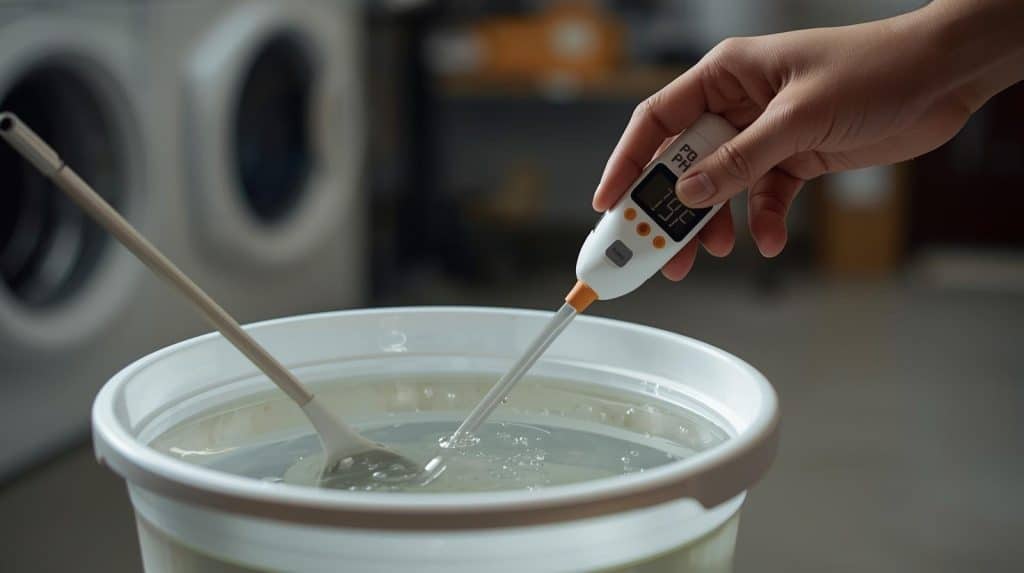
You can’t wing it with nutrient mixing. Precision is the difference between vibrant growth and deficiency. Your toolkit is simple but non-negotiable. You need a clean reservoir or bucket for the final mix. You also need two smaller containers, one for pre-diluting Solution A and another for Solution B. A set of syringes or graduated cylinders for measuring is crucial.
Eyeballing it leads to trouble. Choosing the right growing medium plays a foundational role in hydroponics, providing crucial support and aeration to roots, which impacts nutrient uptake and overall plant health.
A reliable pH meter and a bottle of pH Up and Down are your best friends. The nutrients will change the water’s chemistry, and you’ll always need to make a final adjustment. An EC or CF meter is also highly recommended. It tells you the overall strength of the solution, so you know you’re in the right ballpark for your plants’ stage of growth. Without these tools, you’re gardening in the dark.
- Clean water source (Reverse Osmosis or dechlorinated tap water)
- Two separate mixing containers
- Accurate measuring tools (syringes or measuring cups)
- pH and EC meters
- pH adjustment solutions
Some growers add silica to their regimen for stronger plant cell walls. If you use a silica supplement, it always goes first. You add it to the main reservoir of water and let it mix thoroughly for several minutes. Silica can raise the pH significantly, so letting it stabilize before adding the main nutrients makes the final pH adjustment easier. This is the first step in a sequence that prevents chemical conflicts [1].
The Step-by-Step Mixing Process
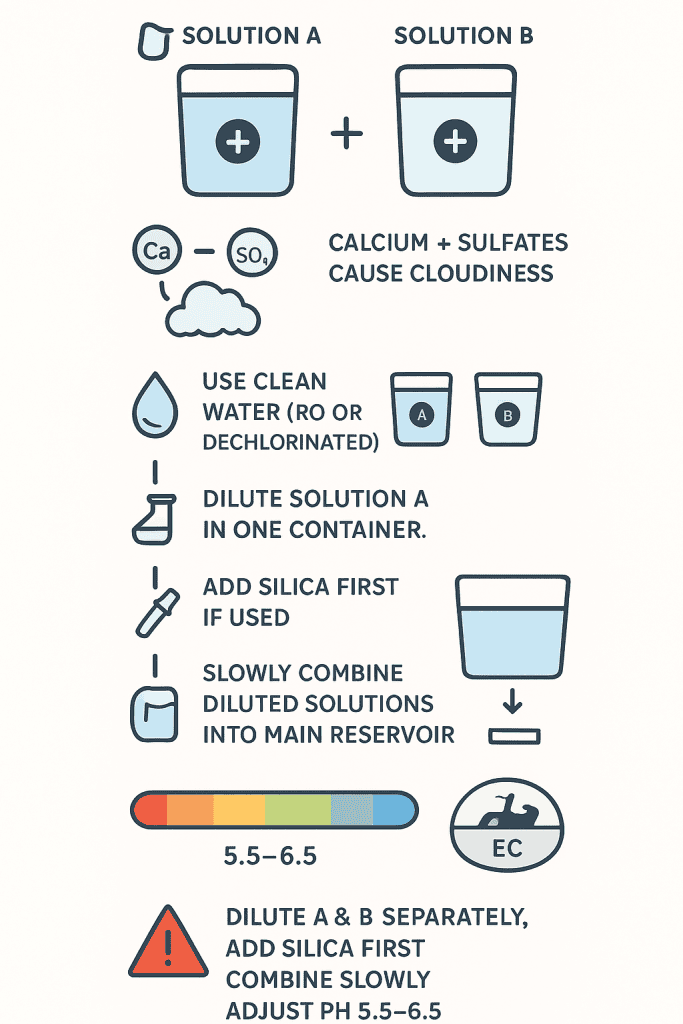
Start with your water. If you’re using tap water, let it sit out for 24 hours to allow the chlorine to evaporate. Better yet, use filtered or Reverse Osmosis water. It gives you a blank slate, free of minerals that could throw off your calculations.
Fill your main reservoir with the total volume of water you need. Then, fill your two smaller containers with a portion of that water, perhaps a gallon each, taken from the main reservoir.
Now, take your syringe and measure out the recommended amount of Solution A. The bottle’s feed chart is your guide here. Add Solution A to the first container of water. Stir it vigorously until it’s completely clear.
In the second container, do the same with Solution B. Stir it until fully dissolved. They are now safely diluted. You can slowly pour each container back into the main reservoir, stirring the main tank as you go. This ensures an even distribution throughout the solution.
Once both solutions are combined, it’s time to check the pH. The nutrient mix will likely have altered the water’s pH. Dip your calibrated pH meter into the reservoir. You’re aiming for a range between 5.5 and 6.5.
This slightly acidic environment is where all the nutrients are most available to your plants. If the pH is too high, add a small amount of pH Down. If it’s too low, use pH Up. Add these adjusters drop by drop, mixing well and retesting after each addition.
Rushing this step leads to over-correction. Mastering nutrient concentration management and understanding terms like EC and pH are essential for maintaining a balanced solution and healthy hydroponic plants.
Finally, check the Electrical Conductivity with your EC meter. This tells you the total concentration of dissolved salts, which correlates to nutrient strength. Compare the reading to your feed chart. If it’s too high, add a little more water.
If it’s too low, you may need to add a small, proportional amount of both A and B solutions, again diluting them separately first. Your solution is now ready to feed your plants.
Troubleshooting Common Mixing Problems

Credit : ZipGrow
Even with care, issues can pop up. The most common sign of a problem is precipitation. You see a fine, white powder settling at the bottom of your reservoir. This is often caused by mixing the concentrated A and B solutions directly, using very hard water, or a pH that has drifted too high. If this happens, the best move is to drain the reservoir, clean it thoroughly, and mix a fresh batch, paying close attention to the mixing order and your water source.
Another issue is nutrient burn, where leaf tips turn brown and crispy. This usually means your EC is too high. The solution is too strong. You need to dilute it with plain, pH-balanced water. Conversely, if your plants are yellowing and growth is stunted, the EC might be too low.
They’re hungry. You’ll need to carefully increase the strength. Always make changes gradually. Plants don’t like sudden shocks.
pH drift is a constant battle. The pH of your nutrient solution will naturally change over time as plants absorb different elements. You should check the pH and EC daily. It’s the only way to stay ahead of problems. Keeping a logbook can help you spot trends and understand how your specific system behaves. Some water sources are more stable than others [2].
FAQ
How does nutrient solution pH adjustment affect you when mixing nutrient solution A and B?
You keep the pH steady so plants absorb nutrients well. When you do nutrient solution pH adjustment, you keep your hydroponic nutrient mixing safe. You can use pH up/down for nutrients. You also check EC level hydroponics and nutrient concentration hydroponics to avoid nutrient lockout and keep the mix balanced.
How can you ensure A and B nutrient compatibility so the mix does not form solids?
You check the solubility of hydroponic nutrients before you mix nutrient solution A and B. You add water first, then add each part slowly. You use nutrient tank mixing methods that keep things even, which helps nutrient precipitation prevention. You keep hydroponic nutrient solution stability by stirring well.
Why does water quality matter when you prepare your hydroponic feed solution?
You use good nutrient solution water quality to keep hydroponic nutrient dosages accurate. Many people use reverse osmosis water hydroponics to keep hydroponics nutrient preparation clean. This helps nutrient solution contamination prevention. You also keep hydroponic nutrient testing regular to maintain a steady mix.
How can you stay on top of nutrient concentration monitoring when filling your mixing hydroponic nutrient tank?
You use tools for nutrient concentration monitoring to keep hydroponic solution EC monitoring steady. You follow your hydroponic nutrient solution steps from start to finish. You also follow clear hydroponic nutrient scheduling. This helps you track hydroponic nutrient balance and check nutrient solution dilution when plants need it.
What can you do each week to keep hydroponic nutrient maintenance simple?
You check your hydroponic reservoir management, then clean the tank the right way. You follow hydroponic nutrient tank cleaning so old mix does not build up. You follow a steady hydroponic nutrient solution testing frequency. You also use nutrient mixing best practices so hydroponic nutrient management tips stay easy and your mix stays safe for plants.
Conclusion
Mixing A and B nutrients is a fundamental skill in hydroponics. It’s a simple ritual of separation, dilution, and combination that respects the underlying chemistry. When you get it right, you provide a perfect meal for your plants.
The results are visible in the deep green leaves and vigorous growth. Start with good water, follow the sequence, and always measure twice. Your plants will thank you for the care.
References
- https://www.researchgate.net/publication/381100608_Dynamics_of_Micro_and_Macronutrients_in_a_Hydroponic_Nutrient_Film_Technique_System_under_Lettuce_Cultivation
- https://pmc.ncbi.nlm.nih.gov/articles/PMC10909207/
Related Articles
- https://tophydroponicgarden.com/what-is-the-role-of-a-growing-medium/
- https://tophydroponicgarden.com/basic-terminology-for-hydroponic-beginners/
- https://tophydroponicgarden.com/what-does-passive-hydroponics-mean/
Was this helpful?

I’m Barrie L., a passionate hydroponic gardening enthusiast dedicated to cultivating thriving, soil-less gardens. With a focus on all things hydroponic, I share my expertise on innovative growing techniques and sustainable practices through my blog, tophydroponicgarden.com. As a seasoned hydroponics specialist, my goal is to inspire and guide fellow gardeners in harnessing the power of water-based cultivation for bountiful and eco-friendly harvests. I’m also an author of the book “Hydroponics For Absolute Beginners: Your Step By Step Guide For How To Create An Hydroponics System At Home Without Soil, For Growing Vegetable, Fruit And Herbs.” which is sold on Amazon. Join me on a journey of redefining the way we cultivate plants, one nutrient-rich solution at a time. Happy growing!