

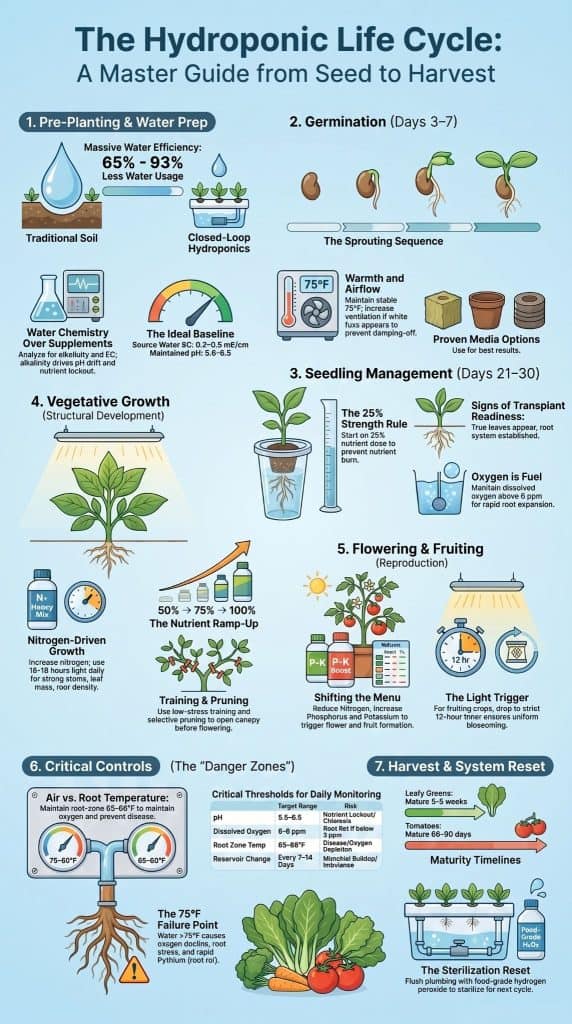
Hydroponic growers need to adjust nutrients, light, pH, temperature, and oxygen as plants move from germination to harvest. That’s one of the biggest advantages of growing without soil: conditions can be changed at each stage instead of relying on a fixed growing medium.
In my years running a commercial closed-loop setup, I’ve tracked our water meters down to the liter. We consistently save 65% more water compared to our traditional soil plots, without dropping a single pound in our seasonal tomato yields.
Keep reading for a stage-by-stage guide to supporting healthy growth, improving consistency, and harvesting higher-quality crops.
Hydroponic Growth Cycle Quick Guide
Successful hydroponic plant life cycle management comes down to making the right adjustments at each stage of growth. This quick summary highlights the key practices that help plants develop healthy roots, strong foliage, productive flowers, and quality harvests.
- How to manage every hydroponic plant growth stage from germination to harvest.
- The ideal hydroponic nutrient schedule by stage, including pH, EC, and lighting adjustments.
- Common mistakes that cause root rot, nutrient deficiencies, chlorosis, and poor yields.
Understanding the Hydroponic Plant Life Cycle
Successful hydroponic plant life cycle management begins with understanding that every stage requires different environmental conditions. For growers starting hydroponics at home, learning how environmental needs change from germination through harvest often prevents many early mistakes.
Many new growers focus heavily on nutrient formulas while overlooking water chemistry, dissolved oxygen, and reservoir stability. From our experience, growers who consistently monitor pH, EC, and water temperature often encounter fewer problems than those constantly changing nutrient products.
Data from Karimzadeh, Daccache, Rulli, & Ahamed demonstrates
“in India, specific water use decreased by 93%, from 1146 L/kg in open-field furrow systems to 85 L/kg in closed-loop hydroponics” – ScienceDirect
Before planting, keep these principles in mind:
- Maintain pH between 5.5 and 6.5 for most crops.
- Seedlings require weaker nutrients than mature plants.
- Root-zone temperature affects growth more than many growers realize.
- Dissolved oxygen supports hydroponic root development.
- Weekly monitoring prevents most hydroponic system failures.
The Importance of Water Quality Before Germination
Water quality determines nutrient availability, pH stability, and long-term reservoir performance before seeds even sprout.
As highlighted by Mattson & Peters
“In hydroponics, it’s absolutely essential to begin with a laboratory analysis of your water. The three main things to note are the alkalinity, the electrical conductivity (EC) and the concentration specific elements.” They further clarify the importance of alkalinity over pH, stating that “Alkalinity is a measure of water’s ability to neutralize acid… The greater your water’s alkalinity, the more the pH will tend to rise in your nutrient solution.” This distinction is critical for growers to understand, as managing alkalinity is key to maintaining a stable pH and preventing nutrient lockout. – Cornell Hydroponic Success Guide
Industry guidelines suggest source water EC should remain below 0.25-0.5 mS/cm to minimize salt accumulation to minimize unwanted salt accumulation.
| Factor | Target |
| pH | 5.5-6.5 |
| Source Water EC | 0.2-0.5 dS/m |
| Nutrient Solution EC | 0.8-5.0 dS/m (depending on crop stage) |
| Dissolved Oxygen | 6-8 ppm (optimal); 5 ppm minimum |
Choosing the Right Seeds for Hydroponic Growth
Choose varieties with strong germination rates and proven hydroponic performance.
- Use untreated seeds.
- Select disease-resistant cultivars.
- Match crops to your hydroponic system.
- Avoid mixing multiple crop types during your first cycle.
Selecting the Best Growing Media for Hydroponics
Several hydroponic grow plugs and media options perform well:
- Rockwool
- Coco coir
- Peat pellets
A single-crop approach often makes hydroponic seed to harvest management easier during the learning phase.
Hydroponic Seed Germination Process

Hydroponic germination stage success depends on moisture, warmth, oxygen, and patience.
Most seeds germinate within 3–7 days under proper conditions. Maintain a stable temperature of around 75°F during germination and ensure good airflow. If white fuzz appears on Rockwool cubes, increase ventilation to prevent excess moisture and improve oxygen availability around developing roots.
The Germination Process Explained
The hydroponic seed formation stage begins when the seed absorbs moisture.
The sequence typically follows:
- Seed coat softens.
- Radicle emerges.
- Root searches for moisture.
- Cotyledons appear.
What Mistake Causes Early Failure?
Overwatering is one of the most common causes of hydroponic disease prevention seedling failures.
Excess moisture reduces oxygen availability around developing roots. Many growers who report damping-off treatment issues later discover that saturated media was the original cause.
The Role of pH in Hydroponic Growth
Incorrect pH blocks nutrient uptake even when nutrients are present in the reservoir.
Proper pH management is essential in hydroponics because unstable pH levels can reduce nutrient availability and contribute to chlorosis. Most hydroponic crops perform well within a pH range of 5.5–6.5.
Maintaining Stable pH Levels
Daily monitoring creates predictable results. Hydroponics is not a set-and-forget system, and regular pH checks help identify changes before they begin affecting nutrient uptake.
Checklist:
✓ Calibrate meters regularly
✓ Check readings at the same time daily
✓ Record measurements
✓ Test after nutrient additions
What Happens When pH Drifts?
Several symptoms may appear:
- Nutrient lockout
- Hydroponic chlorosis prevention challenges
- Reduced growth
- Leaf discoloration
Stop wasting money on premium nutrient brands if your water chemistry is off. I have seen rookie growers dump hundreds of dollars into supplements, only to watch their crop wither because a drifted 7.2 pH completely locked out iron and caused widespread chlorosis.
Managing Seedlings After Sprouting
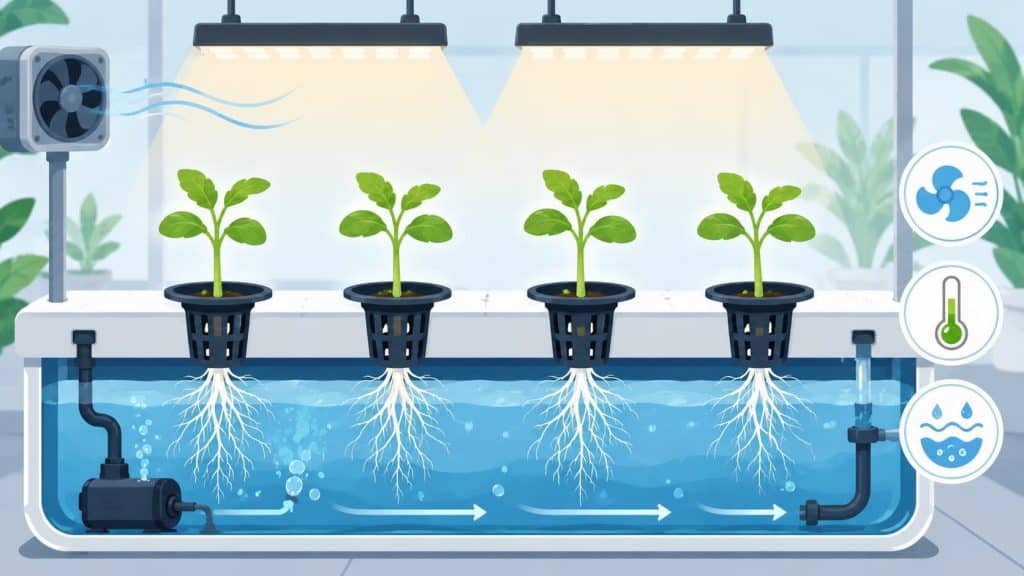
Hydroponic seedling care requires gentle conditions while roots establish.
Seedlings generally receive approximately 25% nutrient strength before transitioning toward full feeding schedules.
When Are Seedlings Ready to Advance?
Look for these signs:
- True leaves appear.
- Root development becomes visible.
- Stem growth accelerates.
Why Do Seedlings Burn Easily?
Young roots absorb nutrients rapidly.
Of course, stronger feeding sounds beneficial. That said, nutrient burn frequently appears when growers increase EC too quickly during hydroponic new seedling care.
Building Strong Roots Before Transplanting
Healthy root systems support every later stage of hydroponic plant development.
Maintaining dissolved oxygen levels above 6 ppm helps support healthy root development and overall plant growth. This is especially important in deep water culture systems, where roots remain in constant contact with the nutrient solution and rely heavily on adequate oxygen levels.
Several factors encourage root expansion:
- Consistent oxygenation root development
- Stable temperatures
- Clean reservoirs
- Balanced nutrient schedules
You can increase root density by gradually stepping up your LED light intensity over a few days.
The Importance of Oxygen for Root Development
Roots require oxygen for respiration and nutrient transport.
Many experienced growers report that water falling back into a reservoir can improve aeration significantly. In some systems, gravity-fed circulation contributes more dissolved oxygen than additional air stones.
Transplanting Seedlings Into the Main System
Hydroponic transplanting seedlings should occur after roots establish and several true leaves emerge.
Most crops become ready for transplanting within 21-30 days.
Common Hydroponic System Options
Common options include:
- Deep Water Culture (DWC)
- Nutrient Film Technique (NFT)
- Aeroponic systems
- Ebb-and-flow systems
- Drip irrigation systems
How Can You Avoid Transplant Shock?
Reduce stress during movement.
- Minimize root disturbance.
- Match nutrient concentrations.
- Keep temperatures stable.
- Transfer quickly.
Maintaining similar environmental conditions before and after transplanting often improves survival rates.
Nutrient Management During Vegetative Growth
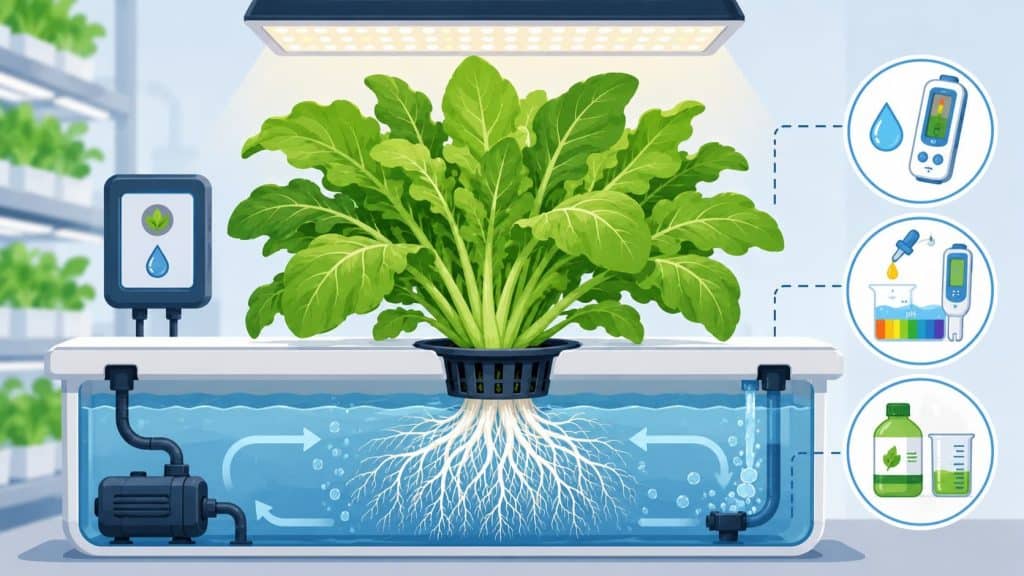
The hydroponic vegetative growth stage focuses on building leaves, stems, and roots.
Most growers use 16-18 hours of light daily during this period.
During vegetative growth, plants require higher nitrogen levels to support leaf and stem development.
The Purpose of Vegetative Growth
The objective is structural development.
Build:
- Stem strength
- Leaf mass
- Root expansion
How Strong Should Nutrients Be?
A typical hydroponic nutrient schedule by stage follows:
- Early vegetative: 50%
- Mid vegetative: 75%
- Mature vegetative: 100%
I highly recommend low-stress branch training and selective pruning during this phase to open up your canopy before shifting into flower.
The Impact of Root-Zone Temperature
Root temperature directly influences oxygen levels and disease pressure.
Advanced hydroponic growers frequently maintain air temperatures near 75-80°F while keeping root-zone temperatures around 68°F or below.
| Area | Target |
| Air | 75–80°F |
| Root zone | 65–68°F (ideal); avoid exceeding 72°F |
What Happens Above 75°F Water Temperature?
Several problems become more likely:
- Oxygen declines.
- Root stress increases.
- Disease pressure rises.
- Pythium development accelerates.
Ways to Maintain Proper Reservoir Temperature
Practical solutions include:
- Reservoir chillers
- Insulated tanks
- External pumps
- Shaded reservoirs
Cool water protects your plants from stress. Keep your reservoir below 68°F to ensure the roots can breathe and fight off disease.
Managing Flowering and Fruiting Stages
Hydroponic flowering stage management shifts nutrients toward reproductive growth.
While I keep my leafy greens under an 18-hour light schedule indefinitely, I drop my fruiting crops down to a strict 12-hour timer to trigger uniform blossoming.
Flowering and fruiting stages require increased phosphorus and potassium to support reproductive growth.
What Changes During Flowering?
Several developmental changes occur:
- Flower initiation
- Pollination
- Fruit formation
- Hydroponic plant reproductive growth
Balancing Nitrogen During Flowering
Excess nitrogen encourages foliage growth rather than fruit production.
For crops such as Tomato, balancing phosphorus and potassium often improves fruit quality and consistency.
Preventing Root Rot Throughout the Growth Cycle
Root rot prevention depends on oxygen, temperature control, and reservoir maintenance.
Many growers recommend complete reservoir changes every 7-14 days to reduce nutrient imbalances and microbial issues.
What Causes Root Rot?
Common causes include:
- Warm water
- Poor aeration
- Stagnant reservoirs
- Organic buildup
Root Rot Prevention Checklist
✓ Monitor pH
✓ Monitor EC
✓ Keep water cool
✓ Inspect roots weekly
✓ Replace nutrient solution regularly
I flush my entire plumbing network with a food-grade hydrogen peroxide solution between every single crop run to completely sterilize the system.
Identifying the Right Harvest Time
Hydroponic harvest timing depends on crop maturity rather than calendar dates alone.
Leafy greens (lettuce, basil) mature 3-5 weeks post-transplant; tomatoes 60-90 days under favorable conditions.
Identifying the Right Harvest Time
Post-harvest maintenance prepares the next cycle.
- Clean the hydroponic system.
- Perform reservoir flushing.
- Inspect pumps and tubing.
- Review growth logs.
Hydroponic flushing before harvest and thorough sanitation between crop cycles often reduce future disease pressure.
Practical Insights for Better Hydroponic Growing

Credits: New Agrarian
This video explores practical agricultural methods and highlights important steps for improving plant growth and cultivation efficiency. It discusses how proper growing techniques, environmental management, and careful monitoring can help plants develop more consistently.
The video also shows how growers can apply simple adjustments to improve results, from maintaining healthy growing conditions to understanding plant needs throughout the cultivation process.
FAQ
How do I create a hydroponic nutrient schedule by stage?
Match your reservoir strength to the plant’s age. Start your sprouts with a light 25% nutrient dose, ramp up the nitrogen for vegetative stretching, and shift heavily toward phosphorus and potassium once you see flowers forming.
Increase nitrogen during the hydroponic vegetative growth stage to support leaf and stem development. Increase phosphorus and potassium during flowering and fruiting to support flower formation and fruit production.
What pH and EC levels should be maintained during different growth stages?
Hydroponic pH by growth stage and hydroponic EC by plant stage should be adjusted according to plant age and nutrient demand. Seedlings generally perform well with lower EC levels because their roots are still developing. Mature plants require higher nutrient concentrations. Keeping a daily log of your pH, EC, and reservoir temperature is your best defense against system crashes. Tracking these three numbers allows you to catch slight drift before your plants show a single sign of stress.
How can I prevent root problems throughout the hydroponic growth cycle timeline?
To keep roots pristine, combine a reliable chiller with a high-output commercial air stone. If your water cannot hold dissolved oxygen, root diseases are inevitable. Keep nutrient solution temperatures within the recommended range for the crop and ensure roots receive sufficient dissolved oxygen.
Regular hydroponic reservoir management life cycle practices, including cleaning reservoirs and replacing nutrient solutions, help reduce the risk of root diseases and support healthy root development.
What environmental conditions matter most during hydroponic plant growth stages?
Perfecting your climate requires adjusting temperature, humidity, and light intensity to match your plants’ specific age. Targeted temperatures maintain a rapid plant metabolism, while strict humidity control prevents mold and mildew from taking hold.
Adjusting hydroponic light intensity by stage and hydroponic photoperiod length light cycles ensures plants receive the correct amount of energy for vegetative growth, flowering, and fruit production.
How can commercial growers improve hydroponic crop scheduling efficiency?
Commercial facilities improve their operational efficiency by logging data daily from seed to harvest. Recording growth rates, nutrient usage, and hydroponic harvest timing helps growers predict future production cycles more accurately.
Combining hydroponic smart system nutrient control, hydroponic IoT monitoring life cycle technology, and detailed production records can increase consistency, improve resource management, and enhance hydroponic water usage efficiency.
Build a Hydroponic System You Can Repeat With Confidence
When plants stall or yields vary, it’s usually because conditions aren’t keeping up with each growth stage. That’s the problem.
By tracking pH, EC, temperature, dissolved oxygen, and light as plants develop, you can spot small issues early and make adjustments before they affect growth.
A repeatable hydroponic system comes from consistent monitoring, not guesswork. As stage-specific changes become part of your routine, results become easier to predict.
That makes it simpler to improve performance, reduce setbacks, and scale production without constantly changing your approach.
References
- https://www.sciencedirect.com/science/article/pii/S2666154325003060
- http://hort.cornell.edu/greenhouse/crops/factsheets/hydroponic-recipes.pdf
Related Articles
- https://tophydroponicgarden.com/getting-started-with-hydroponics-at-home/
- https://tophydroponicgarden.com/is-deep-water-culture-the-best/
- https://tophydroponicgarden.com/is-hydroponics-a-set-it-and-forget-it-system/
Was this helpful?

I’m Barrie L., a passionate hydroponic gardening enthusiast dedicated to cultivating thriving, soil-less gardens. With a focus on all things hydroponic, I share my expertise on innovative growing techniques and sustainable practices through my blog, tophydroponicgarden.com. As a seasoned hydroponics specialist, my goal is to inspire and guide fellow gardeners in harnessing the power of water-based cultivation for bountiful and eco-friendly harvests. I’m also an author of the book “Hydroponics For Absolute Beginners: Your Step By Step Guide For How To Create An Hydroponics System At Home Without Soil, For Growing Vegetable, Fruit And Herbs.” which is sold on Amazon. Join me on a journey of redefining the way we cultivate plants, one nutrient-rich solution at a time. Happy growing!