

Dissolved oxygen (DO) increases when gas exchange improves, oxygen demand decreases, and water conditions stay within optimal ranges. According to the U.S. Geological Survey (USGS), temperature, turbulence, and biological activity are the biggest factors affecting dissolved oxygen in water.
Whether managing a hydroponic reservoir, aquarium, pond, or aquaculture system, the most effective solution depends on balancing the entire system rather than simply adding a larger air pump. Continue reading how to increase dissolved oxygen in water and what actually works and which common myths deserve to be left behind.
Dissolved Oxygen Essentials for Better Water Quality
- Keeping water at the right temperature isn’t about buying the biggest heater or the most powerful chiller.
- Keep the water moving. Reduce heat loss where possible. Then choose equipment that matches the size of the system.
- Measure temperature accurately. Keep water circulating. Insulate tanks and pipes. Match equipment to system size. Monitor conditions regularly.
Why Dissolved Oxygen Matters
Every healthy aquatic system depends on enough dissolved oxygen. Fish need oxygen to breathe. Plant roots need it to absorb nutrients efficiently. Beneficial bacteria also rely on oxygen to break down waste. When oxygen levels drop, the entire system starts feeling the effects.
In hydroponics, low dissolved oxygen slows root growth and reduces nutrient uptake. Roots may turn brown and become more vulnerable to diseases like root rot. Aquariums and ponds face different problems. Fish often become stressed first, especially during warm weather. If oxygen keeps falling, fish may gather near the surface where oxygen is usually highest.
Organic waste makes the problem worse. Uneaten food, dead leaves, fish waste, and dying roots all feed bacteria. As bacteria break down that material, they consume even more oxygen. That’s known as biological oxygen demand (BOD).
Look for these common warning signs:
- Fish gasping near the surface
- Slow plant growth
- Brown or unhealthy roots
- Cloudy water
- Less active fish
Different systems also have different priorities.
| System | Main Goal |
| Hydroponics | Healthy root growth |
| Aquarium | Support fish respiration |
| Pond | Prevent oxygen crashes |
| Aquaculture | Maximize animal health |
Research from Marcos Silva shows:
“Dissolved oxygen levels below 5-6 mg/L can affect salmon and trout, while warmwater fish like channel catfish are impacted at 3-4 mg/L.” – Marcos Silva
Keeping oxygen levels above these thresholds helps create a healthier environment over the long term.
How Oxygen Actually Enters Water

Many people think the bubbles coming from an air stone are adding oxygen directly into the water. But that’s only part of the story. Most dissolved oxygen enters through the water’s surface, not from the bubbles themselves.
As water touches the air, oxygen naturally moves into it through a process called atmospheric diffusion. Every ripple, splash, or wave refreshes that surface and improves gas exchange. That’s why surface movement is so important.
Air stones still help, but mainly because they move water upward. As bubbles rise, they stir the water and keep fresh water reaching the surface. Most bubbles don’t stay underwater long enough to dissolve much oxygen before popping.
It’s an easy mistake to make. Instead of thinking of an air stone as an oxygen injector, think of it as a circulation tool. The movement it creates allows the surface to do most of the work.
Good circulation also helps by:
- Breaking up stagnant areas.
- Mixing surface and deeper water.
- Keeping oxygen levels more even.
- Reducing low-oxygen pockets.
Aquatic plants add another source of oxygen during daylight through photosynthesis. Once the sun goes down, though, photosynthesis stops while respiration continues. Plants begin using oxygen instead of producing it. That’s why dissolved oxygen often reaches its lowest point just before sunrise.
Why Water Temperature Has Such a Big Impact
Temperature controls how much oxygen water can physically hold. It’s that simple. As water gets warmer, its ability to hold dissolved oxygen decreases. This follows Henry’s Law, which explains how gas solubility changes with temperature.
Here’s a quick comparison.
| Water Temperature | Approximate Saturation DO |
| 15°C (59°F) | ~10.1 mg/L |
| 20°C (68°F) | ~9.1 mg/L |
| 30°C (86°F) | ~7.5 mg/L |
Cooling water by about 15°C increases its oxygen-holding capacity by more than 25%. That’s a bigger improvement than many people get from installing a larger air pump.
Hydroponic growers often keep nutrient reservoirs below 21°C (70°F) for this reason. Cooler water supports healthier roots while helping dissolved oxygen stay higher.
Several practical changes can help lower water temperature:
- Add shade over ponds.
- Insulate reservoirs.
- Use a water chiller.
- Reduce afternoon sun exposure.
- Monitor temperature daily.
Still, cooling water isn’t a complete solution. If there’s too much organic waste or poor circulation, oxygen can still fall even in cool water.
The strongest systems combine good temperature control with steady circulation and regular maintenance.
Choosing the Right Aeration Method
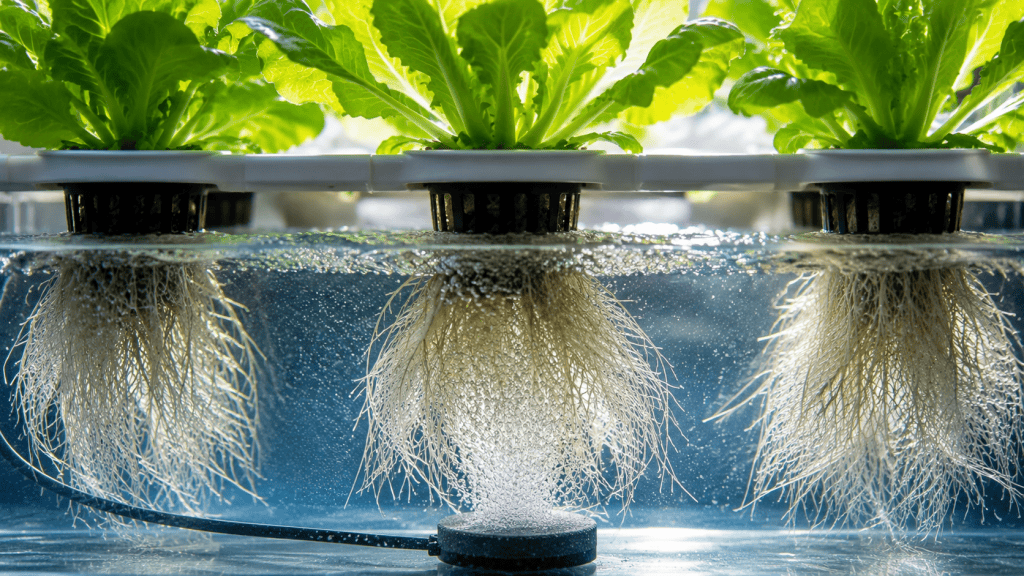
Every aeration system has the same goal, improve oxygen exchange. But not every system works the same way. For small aquariums or hydroponic reservoirs, a standard air pump connected to an air stone is usually enough. It keeps water moving, reduces stagnant areas, and supports healthy oxygen levels without adding much complexity.
Larger ponds need stronger circulation. Bottom diffusers move oxygen-poor water upward while bringing oxygen-rich surface water down. That constant mixing helps maintain more even oxygen levels throughout the pond.
Commercial systems often use different equipment altogether. Venturi injectors and mechanical surface aerators improve oxygen transfer more efficiently in larger operations where oxygen demand is much higher.
Choosing equipment depends on several factors:
- Water depth
- Water volume
- Fish or plant density
- Temperature
- Circulation needs
Bigger isn’t always better. In many cases, improving water movement delivers better results than buying a more powerful pump.
The Bubble Myth Bigger Bubbles Don’t Mean More Oxygen
It’s easy to assume that more bubbles mean more oxygen. But that isn’t how it works. Most bubbles rise to the surface before much oxygen has time to dissolve into the water. Their biggest job is creating movement. As they travel upward, they stir the water and keep refreshing the surface, where most gas exchange takes place.
That’s why surface agitation often matters more than the size of the air pump. Many experienced aquarium keepers have tested this with dissolved oxygen meters. They found that increasing surface movement often raises DO more than installing a larger pump that produces bigger bubbles but doesn’t improve circulation.
Devices like spray bars and wavemakers can sometimes outperform oversized air stones because they constantly disturb the water’s surface.
Here’s a quick comparison.
| Myth | Reality |
| Bigger bubbles add more oxygen. | Surface movement does most oxygen transfer. |
| A larger pump always fixes low DO. | Temperature and BOD often matter more. |
| Air stones directly oxygenate water. | They mainly improve circulation and gas exchange. |
Instead of focusing only on airflow, pay attention to the whole system.
- Improve surface agitation.
- Eliminate dead zones.
- Match equipment to water volume.
- Measure dissolved oxygen regularly.
Small adjustments often beat expensive upgrades.
Reduce Biological Oxygen Demand (BOD)
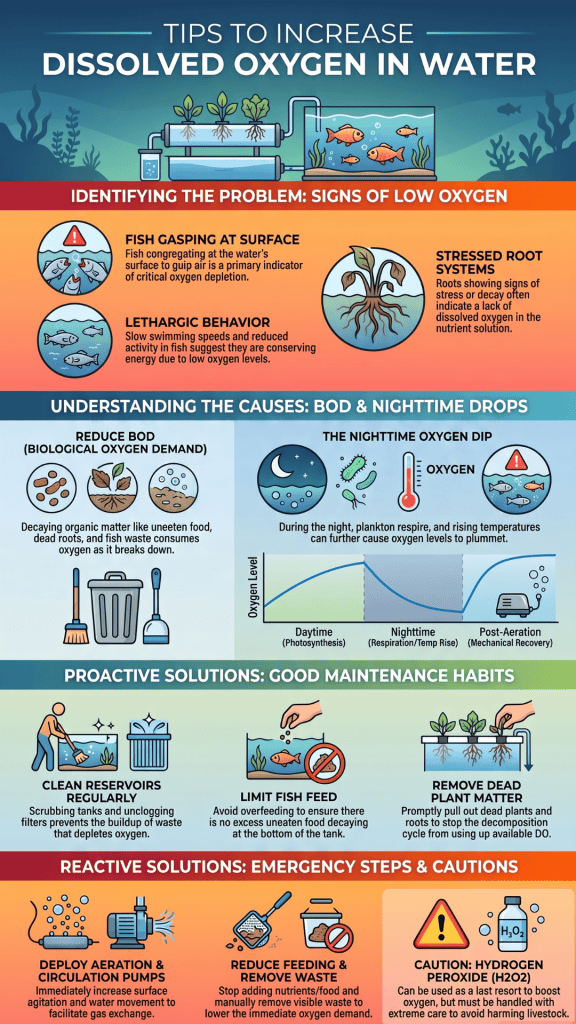
Adding oxygen is only half the equation. The other half is reducing how much oxygen the system uses. Every piece of decaying organic matter consumes oxygen as bacteria break it down.
This process is called biological oxygen demand (BOD). When BOD rises, less oxygen remains available for fish, plant roots, and beneficial microbes. Aquariums, ponds, and hydroponic systems all collect waste over time.
That includes:
- Uneaten fish food
- Dead roots
- Fallen leaves
- Fish waste
- Sludge
- Thick biofilm
Leaving that material in the water creates a constant drain on dissolved oxygen. Regular maintenance helps keep oxygen demand under control.
Good habits include:
- Remove dead plant material.
- Clean reservoirs regularly.
- Avoid overfeeding fish.
- Replace clogged filter media.
- Keep stocking levels reasonable.
None of these jobs are exciting. But they make a noticeable difference. A clean system usually needs less aeration because less oxygen is being consumed by decomposition. That’s something many beginners overlook when chasing equipment upgrades.
Watch for Nighttime Oxygen Drops
Plants produce oxygen during the day through photosynthesis. At night, the situation changes. Without sunlight, photosynthesis stops. Plants and algae continue to respire, meaning they begin using dissolved oxygen instead of producing it.
As noted by the Food and Agriculture Organization of the United Nations:
“Phytoplankton photosynthesis is the major source of oxygen during daylight hours, and during the night, the major cause of oxygen depletion is respiration.” – Food and Agriculture Organization of the United Nations
Research has estimated that plankton respiration alone can lower pond dissolved oxygen by 8-10 mg/L overnight .
That’s why oxygen levels are usually lowest just before sunrise. Heavily planted aquariums and ponds are especially prone to overnight oxygen drops. During warm weather, the problem can become even more noticeable because warmer water already holds less oxygen.
Watch for signs like:
- Fish gathering near the surface
- Slow swimming early in the morning
- Stressed plant roots
- Low DO meter readings before sunrise
Running an air pump or circulation pump overnight helps maintain water movement while improving gas exchange. Removing dead vegetation and keeping algae under control also reduces overnight oxygen demand.
Balance matters. A healthy amount of aquatic plants supports water quality, but excessive algae growth can create larger swings between daytime oxygen production and nighttime oxygen use.
Emergency Solutions for Critically Low Dissolved Oxygen
Sometimes oxygen levels drop fast enough that immediate action is necessary. Fish gasping at the surface is often the clearest warning sign. If dissolved oxygen falls below about 3–4 mg/L, aquatic life can experience severe stress. Waiting too long may lead to fish losses. The safest emergency response is improving water movement right away.
Try these steps:
- Increase aeration.
- Add temporary circulation.
- Remove visible organic waste.
- Reduce feeding until conditions improve.
Commercial aquaculture facilities sometimes use pure oxygen systems when stocking densities are very high. Some small systems also use carefully measured hydrogen peroxide as an emergency treatment because it breaks down into water and oxygen.
This approach should be used with caution. Incorrect dosing can damage fish gills, beneficial bacteria, and plant roots. For most home aquariums, ponds, and hydroponic systems, increasing aeration remains the safer option.
Emergency fixes should solve today’s problem. Good maintenance helps prevent tomorrow’s.
The Truth of Oxygenated Drinking Water Increase Human Oxygen
Aquaponics & Dissolved Oxygen: The Basics
Credit: ZipGrow
Products that claim oxygenated drinking water boosts energy or increases blood oxygen often sound convincing. The science says otherwise. Humans get oxygen through their lungs, not through the digestive system.
While tiny amounts of dissolved oxygen may be absorbed after drinking water, the amount is far too small to meaningfully affect blood oxygen levels or athletic performance. That doesn’t mean dissolved oxygen isn’t important.
It absolutely is, for fish, aquatic plants, hydroponic roots, and beneficial bacteria. But those benefits don’t translate to the human body in the same way. It’s worth separating marketing claims from established physiology.
FAQ
Can algae reduce dissolved oxygen in water?
Yes. Excess algae can lower dissolved oxygen in water, especially at night. During the day, algae produce oxygen through photosynthesis. After sunset, they consume oxygen while respiring. Large algae blooms also create more organic waste as they die, increasing biological oxygen demand. Good algae prevention helps maintain a healthier aquatic ecosystem and more stable oxygen levels.
Does reservoir size affect dissolved oxygen in hydroponics?
Yes. A larger nutrient reservoir usually changes temperature more slowly, which helps keep hydroponic dissolved oxygen more stable. Smaller reservoirs heat up faster, reducing oxygen availability for roots. Regular reservoir maintenance, proper water temperature control, and good circulation help maintain a healthy hydroponic nutrient solution and support strong plant growth.
Can a water filter increase dissolved oxygen?
A water filtration system does not add oxygen by itself, but it can improve water quality by removing debris that raises oxygen demand. Some filters also create extra water movement or surface disturbance as water returns to the tank or pond. Better circulation supports oxygen exchange and helps maintain healthier dissolved oxygen levels.
Should dissolved oxygen targets vary between ponds and hydroponics?
Yes. Different systems have different oxygen needs. Pond dissolved oxygen should remain high enough to support fish and other aquatic life, while dissolved oxygen in hydroponics should provide enough root oxygenation for healthy nutrient uptake. Checking oxygen regularly and adjusting water aeration based on the system helps maintain stable conditions and long-term performance.
Final Thoughts on Stable Oxygen Levels
When oxygen levels drop, you may notice stressed fish or a system that feels harder to manage. The water needs attention before problems spread. Keeping the water balanced with better flow can help you understand what is happening.
Tophydroponicgarden offers simple aeration solutions and reservoir products to support healthier oxygen levels without making the process feel complicated. It’s a practical next step when you want more control over your setup and better results over time.
References
- https://www.academia.edu/25475766/
- https://www.nzdl.org/cgi-bin/library
Related Articles
- https://tophydroponicgarden.com/why-is-oxygen-crucial-for-plant-roots/
- https://tophydroponicgarden.com/hydroponically-grown-food/
- https://tophydroponicgarden.com/what-temperature-should-deep-water-culture-be/
Was this helpful?
