

Hydroponic fruit flavor gets better when genetics, light, nutrition, root health, and ripening are managed as one system. Research on soilless strawberries found up to 10.6 °Brix under one potassium treatment, showing that nutrient management can affect soluble solids.
But Brix alone doesn’t define flavor. Cultivar choice matters too, along with stable growing conditions, harvest timing, and proper nutrient balance.
For growers looking to improve sweetness, aroma, and eating quality, Tophydroponicgarden can help guide a more complete approach to hydroponic fruit production. The focus is on the changes most likely to improve the final taste.
Simple Ways to Boost Fruit Flavor
- Choose flavor-focused cultivars before changing the nutrient solution.
- Optimize light, nitrogen, potassium, EC, pH, and root conditions gradually.
- Measure °Brix, yield, maturity, and taste together instead of chasing one number.
What Makes Hydroponic Fruit Taste Bland?
Hydroponic fruit can taste watery when flavor genetics are weak or when light, nutrition, roots, environmental conditions, or ripening are poorly managed.
The first factor is genetics. Cultivars selected for shipping, firmness, or yield may prioritize different traits from cultivars selected for fresh eating, so compare cultivar performance under the same growing conditions.
Light is another major factor. Adequate light supports photosynthesis and provides energy for plant growth; insufficient light can limit fruit development and soluble-solids accumulation. In indoor systems, DLI (Daily Light Integral), light intensity, photoperiod, and canopy coverage all matter.
Root conditions also affect flavor indirectly. Poor root-zone oxygenation, unstable temperature, and inconsistent water availability can reduce mineral absorption efficiency and
Common causes of weak flavor include:
- Flavor-poor cultivars
- Insufficient or uneven light
- Excessive nitrogen during fruiting
- Nutrient imbalance
- Root-zone stress
- Unstable temperature or humidity
- Harvesting before proper maturity
The key lesson is simple: growers should correct fundamental growing conditions before relying on flavor additives or aggressive stress techniques.
Does Variety Matter More Than Nutrients?
Cultivar genetics set the base for fruit flavor, so choosing the right variety should come before pushing nutrients hard. Genetics are the starting point for sweetness, acidity, aroma, and texture.
Two plants can receive the same nutrient mix and still produce very different fruit. This is especially important for hydroponic tomatoes and strawberries, where cultivar choice can strongly affect the eating experience.
Here are common cultivar types and what they mainly focus on:
- Flavor-focused: Sweetness and aroma
- Yield-focused: Production volume
- Shelf-life-focused: Storage durability
- Shipping-tolerant: Firmness and transport
A flavor-focused cultivar gives your growing setup a better chance of producing tasty fruit. Nutrient management can improve flavor, but it can’t overcome weak genetics alone. For local growers, heirloom or specialty cultivars may offer better flavor when long-distance shipping isn’t needed.
Commercial growers often need to balance flavor with yield, fruit firmness, and transport needs. The best cultivar depends on your growing conditions and market goals. Starting with strong flavor genetics gives you a better foundation before making changes to nutrients.
Why Flavor Genetics Matter
Flavor depends on more than sugar. Volatile compounds, organic acids, dry matter, texture, and aroma all contribute to how fruit tastes.
A tomato with moderate Brix can taste better than a higher-Brix tomato if it has a stronger aroma and better sugar-acid balance. The same factors can help growers improve strawberry flavor without focusing on sweetness alone.
That is why growers should record cultivar information whenever they compare nutrient treatments or environmental changes.
How Does Light Influence Fruit Flavor?
Adequate light supports photosynthesis and sugar production, making lighting one of the first variables to check when hydroponic fruit tastes bland.
As noted by Frontiers in Plant Science
“Supplemental lighting increases fruit soluble solids content and acidity by promoting photosynthetic activity and carbohydrate accumulation in growing fruits.” – Frontiers
The goal is not simply maximum light. The crop needs sufficient and reasonably uniform exposure across the productive canopy.
Growers should review:
- DLI and daily light exposure
- Horticultural light intensity
- Photoperiod
- Full-spectrum LED coverage
- Shading within the canopy
- Seasonal changes in natural light
Canopy management can improve light exposure as well. Dense foliage or poor stem support can leave fruiting areas shaded. Better plant spacing and support can help distribute light more evenly.
Winter greenhouse production deserves special attention because shorter days can reduce total daily light exposure. Increasing nutrient concentration cannot fully replace the carbohydrates generated through photosynthesis.
Of course, more light is not automatically better. Excessive light can increase plant and fruit temperature, creating additional environmental stress. Stable temperature and adequate airflow should therefore accompany lighting changes.
How Should Nitrogen and Potassium Be Balanced?
In one strawberry experiment, a lower nitrate-N treatment and a specific potassium treatment produced higher soluble-solids values. However, nitrogen and potassium responses vary by crop and treatment.
In our bench trials, cross-referencing recent strawberry research, reducing nitrate-N from 15 mol m⁻³, around 210 PPM N, to 9 mol m⁻³, or 126 PPM N, during fruit set raised Brix readings from 9.51 to 10.5. Potassium at 11 mol m⁻³, around 430 PPM K, reached 10.6 °Brix.
| Nutrient approach | Possible effect |
| Excess nitrogen | Can promote vegetative growth and may reduce soluble solids in some crops and conditions. |
| Balanced nitrogen | Supports productive foliage |
| Adequate potassium | Supports fruit development and quality |
| Excess potassium | May create nutrient antagonism |
The research also shows a potential trade-off between yield and flavor concentration. Higher nitrogen can support production while reducing soluble-solids concentration under particular conditions.
Reducing nitrogen means avoiding excess, not starving the plant. Healthy leaves are still needed for photosynthesis and sugar production.
Potassium should remain part of a complete nutrient plan, along with calcium, magnesium, phosphorus, sulfur, and micronutrients. Adjust nutrients gradually during fruiting while monitoring plant health and reservoir EC.
Does Higher EC Really Increase Sweetness?
Higher EC can increase soluble-solids concentration under some conditions, but excessive EC can create osmotic stress and reduce fruit size or yield.
Raising your reservoir EC makes it harder for the roots to drink water. This deliberate, mild water stress forces the plant to concentrate its internal sugars, making the harvested fruit taste sweeter rather than watered down.
Higher EC or salinity can increase soluble solids in some tomato and strawberry experiments, but the response may involve stress and can reduce performance at excessive levels.
However, EC should be treated as a crop-specific management variable rather than a universal sweetness setting.
| EC strategy | Potential result |
| Crop-specific target | Better nutrient control |
| Moderate adjustment | May increase soluble solids |
| Excessive EC | Greater stress and lower yield |
| Abrupt EC increase | Higher risk of crop damage |
The supplied grower observations reinforce this point. One Black Jade strawberry grower reported 15.1 °Brix at EC 0.8 and pH 5.8, while another reported 16.9 °Brix without publishing a complete nutrient recipe.
These observations do not establish a universal EC target. They demonstrate why EC management for sweetness should be tested alongside cultivar, pH, harvest maturity, and environmental conditions.
How to Manage EC Without Overstressing Plants

Credit: ZipGrow
Growers should monitor reservoir EC consistently rather than making large last-minute adjustments.
A reliable approach includes:
- Calibrate the EC meter regularly.
- Check EC and pH consistently.
- Record daily or routine readings.
- Watch for rapid EC increases caused by water loss.
- Compare EC changes with plant response.
- Avoid assuming higher EC always means higher quality.
A slight EC increase may help some fruiting crops, but excessive osmotic stress can reduce water uptake and yield.
How Do Root Conditions Affect Fruit Quality?
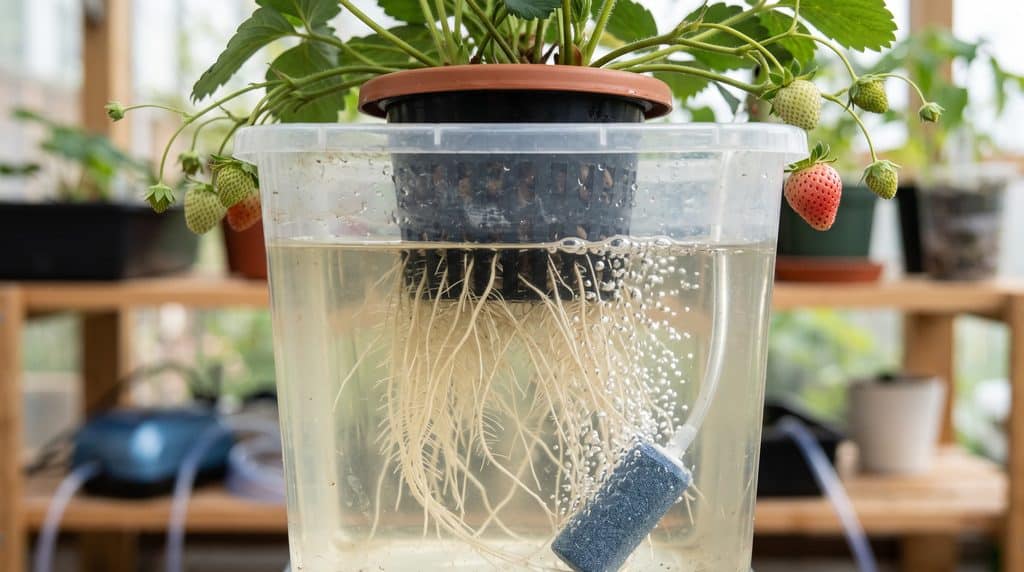
Healthy roots are the key to steady water and mineral uptake, which shapes fruit quality. Getting root-zone oxygenation, temperature, drainage, and moisture right is crucial.
For example, in Deep Water Culture, roots are constantly surrounded by nutrient solution, so strong, continuous aeration is a must. Other systems, like nutrient film technique or substrate growing, require different approaches to keep oxygen and moisture balanced.
Growers should zero in on:
- Strong aeration in water-based systems
- Stable root-zone temperature
- Proper drainage to prevent waterlogging
- Clean, uncontaminated nutrient solutions
- Appropriate dry cycles in growing media
- Consistent pH and electrical conductivity (EC)
Even when the reservoir has enough nutrients, poor root health lowers mineral absorption. Root systems are sensitive to their environment, high temperatures boost water demand, and poor airflow causes uneven humidity around the canopy.
Those who manage stable roots along with steady water conditions consistently see better fruit results. It’s clear: nutrient management hinges on healthy, balanced roots.
When Should You Harvest Hydroponic Fruit?
Harvesting at the right maturity can really boost flavor because sugars, acids, texture, and the fruit’s aroma keep evolving as it ripens.
Data from Frontiers in Plant Science demonstrates
“Volatile organic compound biosynthesis is regulated by ripening hormones, with most aroma-related volatiles accumulating at the onset of ripening and peaking at full maturity.” – Frontiers
Size isn’t the best way to judge ripeness. Instead, growers should look at:
- Mature color
- Aroma
- Firmness
- Cultivar-specific ripeness cues
- Intended use of the fruit
- Post-harvest handling plans
This matters a lot with tomatoes. For example, fruits meant for shipping get picked earlier to keep them firm, while home growers have more freedom to let them ripen fully before eating.
Strawberries follow a different rhythm. Their fully ripe fruit is delicate and spoils fast, so harvesting requires balancing maximum flavor with good texture and handling quality.
Research shows flavor compounds often develop late in ripening. That means watching for the turning-to-ripe stage, color shifts, and aroma gives valuable clues about the best harvest time.
After picking, how fruit is handled matters just as much. Rough treatment or unnecessary refrigeration can dull flavor and sensory quality, so careful post-harvest care keeps fruit tasting its best.
How Can Brix Testing Prove Flavor Improvements?
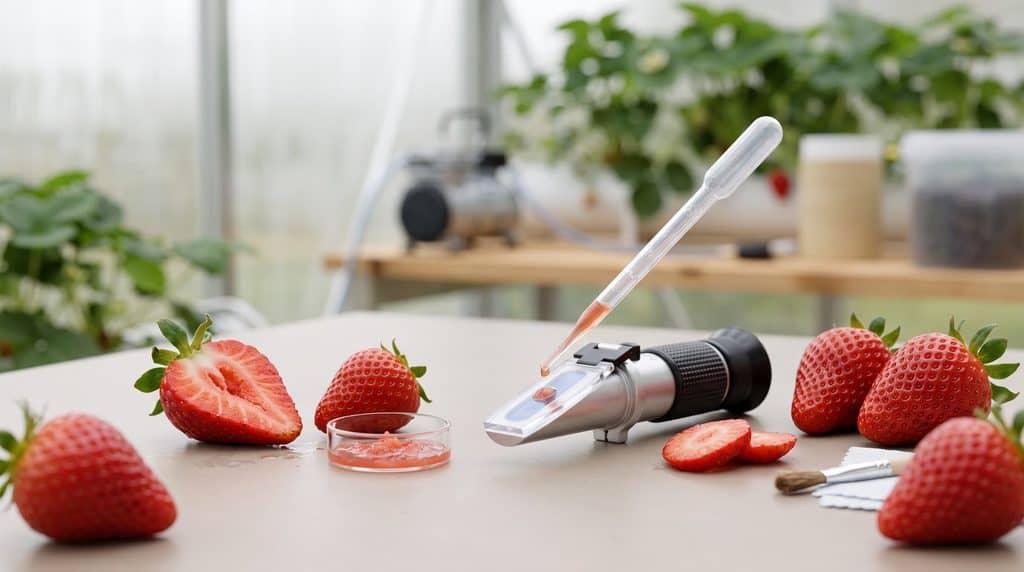
Brix is a practical measure of soluble solids in fruit. It can relate to sweetness, but it also includes dissolved compounds other than sucrose. So, °Brix alone can’t show the full flavor profile.
For a better assessment, combine Brix with taste testing. Keep records of EC, pH, yield, fruit size, cultivar, and harvest stage. These details help growers see how growing conditions affect fruit quality.
Sweetness is more complex than sugar content. It depends on the balance between sugar and acid, while volatile aroma compounds also shape the final taste.
A fruit with high Brix may contain more sugars but still lack strong overall flavor. On the other hand, fruit with slightly lower °Brix can taste richer because of its acid balance or aroma profile.
So, don’t rely on one number. Record the key measurements and taste the fruit as well. That gives growers a clearer view of how the crop performs on the palate.
How to Run a Simple Flavor Test
Growers can make Brix testing more useful by keeping comparisons consistent. Measure fruit from the same cultivar and similar maturity stages.
Record EC, pH, nutrient changes, temperature, lighting, and harvest date. Then compare the Brix result with taste observations and yield.
For example, if a higher EC treatment raises Brix but produces smaller fruit with weaker aroma, it may not be a worthwhile flavor improvement.
The best result is a combination of good taste, acceptable yield, healthy plants, and repeatable measurements.
What Is the Best Hydroponic Flavor Optimization Workflow?
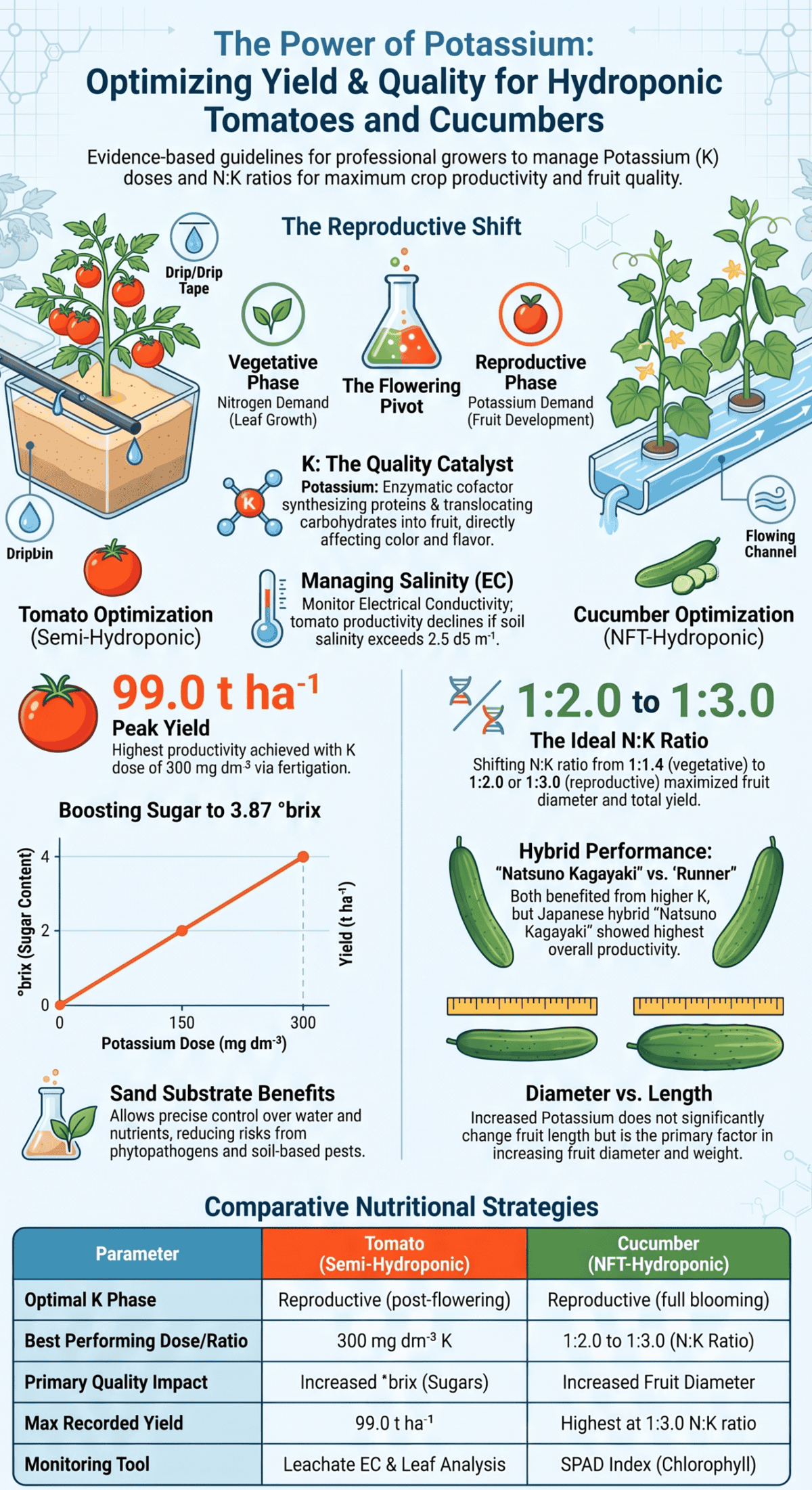
A solid flavor plan starts with genetics and growing conditions. Get these right first, or nutrient and environmental tweaks can feel like spinning your wheels.
Choose a flavor-focused cultivar with good taste potential. Give it enough light and a suitable daily light integral (DLI), because flavor compounds need energy to develop.
Healthy, oxygen-rich roots matter too. They support nutrient uptake and help keep the plant balanced.
Use complete nutrition made for the crop. Avoid excess nitrogen during fruiting, since too much can reduce flavor. Potassium matters as well, because it affects sugar movement and taste.
Keep an eye on electrical conductivity (EC) and pH. Fluctuations can affect nutrient uptake and root health, so troubleshooting hydroponic mistakes early can prevent small problems from affecting flavor. Keep temperature and humidity stable, too, so plant stress doesn’t disrupt flavor development.
Let the fruit reach the right maturity before harvest. Measure Brix and yield, but taste the fruit as well. Human senses still give the clearest read on flavor quality.
Some studies report higher soluble solids after controlled salinity or water-stress treatments, but these methods are experimental, crop-specific, and may cause defects; they should not be recommended as routine home practice.
FAQ
Which fruit varieties are best for improving flavor in a hydroponic system?
Start with heirloom variety selection or flavor-driven cultivars known for strong taste rather than high yield alone. A cultivar’s flavor reputation can have a greater effect than small changes to growing conditions.
Choose varieties based on your preferred sweetness, acidity, and aroma. Shipping-tolerant varieties may store better, but they do not always provide the strongest hydroponic fruit flavor enhancement.
Can sodium content affect the taste of hydroponic fruit?
Yes. High sodium content in hydroponics can interfere with water uptake and essential nutrient absorption when sodium accumulates in the root zone. It can also raise EC without providing useful nutrition.
Regular reservoir testing helps detect unwanted salt accumulation. Proper EC stress management and salt buildup prevention can help maintain more consistent fruit quality.
Does post-harvest handling change hydroponic fruit flavor?
Yes. Post-harvest handling can affect sweetness, texture, and aroma after fruit is picked. Harvesting too early, unsuitable temperatures, or rough handling can reduce eating quality.
To preserve volatile compound development, handle ripe fruit carefully and maintain suitable storage conditions. Proper handling helps retain the sugars, acids, and aroma compounds developed during ripening.
Can moisture stress improve sweetness in hydroponic fruit?
A controlled moisture stress technique can sometimes increase dry matter concentration and make fruit taste sweeter. However, excessive stress can reduce plant growth and yield.
Changes in water availability also affect osmotic potential in hydroponics and mineral absorption efficiency. If used, mild stress should be monitored closely and adjusted to the crop’s growth stage.
Why can hydroponic fruit smell different even when it tastes sweet?
Sweetness is only one part of flavor chemistry in hydroponics. Aroma depends on volatile compounds that can change during late ripening, making the aroma development window important for final flavor.
Temperature stability, adequate light, and correct harvest timing for peak flavor can affect aroma as well as sweetness. Fruit may continue developing flavor volatiles as it approaches full ripeness.
Better Flavor Comes From Controlled Growing
When hydroponic fruit tastes flat, the problem usually starts with how the crop was grown, not a quick fix at harvest. Start with a flavorful cultivar, provide enough light, keep the roots healthy, and manage nutrients based on crop stage, water quality, and reliable guidance.
°Brix can help track soluble solids, but taste still matters. Harvest timing also affects sweetness, acidity, aroma, and texture. For practical guidance, Tophydroponicgarden can be a useful shortcut.
Make one major change at a time, record what happens, then compare results across several harvests. That gives you clearer evidence about what actually improves flavor.
References
- https://www.frontiersin.org/journals/plant-science/articles/10.3389/fpls.2021.596927/full
- https://www.frontiersin.org/journals/plant-science/articles/10.3389/fpls.2021.765897/full
Related Articles
- https://tophydroponicgarden.com/hydroponic-mistakes-troubleshooting/
- https://tophydroponicgarden.com/how-to-improve-strawberry-flavor-profile/
- https://tophydroponicgarden.com/what-makes-hydroponic-tomatoes-taste-better/
Was this helpful?

I’m Barrie L., a passionate hydroponic gardening enthusiast dedicated to cultivating thriving, soil-less gardens. With a focus on all things hydroponic, I share my expertise on innovative growing techniques and sustainable practices through my blog, tophydroponicgarden.com. As a seasoned hydroponics specialist, my goal is to inspire and guide fellow gardeners in harnessing the power of water-based cultivation for bountiful and eco-friendly harvests. I’m also an author of the book “Hydroponics For Absolute Beginners: Your Step By Step Guide For How To Create An Hydroponics System At Home Without Soil, For Growing Vegetable, Fruit And Herbs.” which is sold on Amazon. Join me on a journey of redefining the way we cultivate plants, one nutrient-rich solution at a time. Happy growing!