

Hand pollinating cucumber flowers is the most dependable way to get cucumbers when bees are scarce, plants are growing indoors, or vines are covered with netting. Timing matters because each flower is only ready for pollination for a single day, so morning is the best time to do it. It only takes a few minutes, and it’s easier than most people expect. Keep reading to learn how to identify the right flowers, transfer pollen the right way, avoid common mistakes, and harvest more cucumbers with Tophydroponicgarden.
Hand Pollination Essentials for Healthy Cucumber Harvests
When growing cucumbers under protective netting or indoors, female blossoms often turn yellow and drop off due to lack of insects.
Before getting started, remember these key points:
- Learn to identify male and female flowers.
- Use fresh flowers that opened that morning.
- Skip hand pollination for most parthenocarpic varieties, such as many English and Beit Alpha cucumbers, because they produce fruit without pollination.
What You Need to Know Before Hand Pollinating
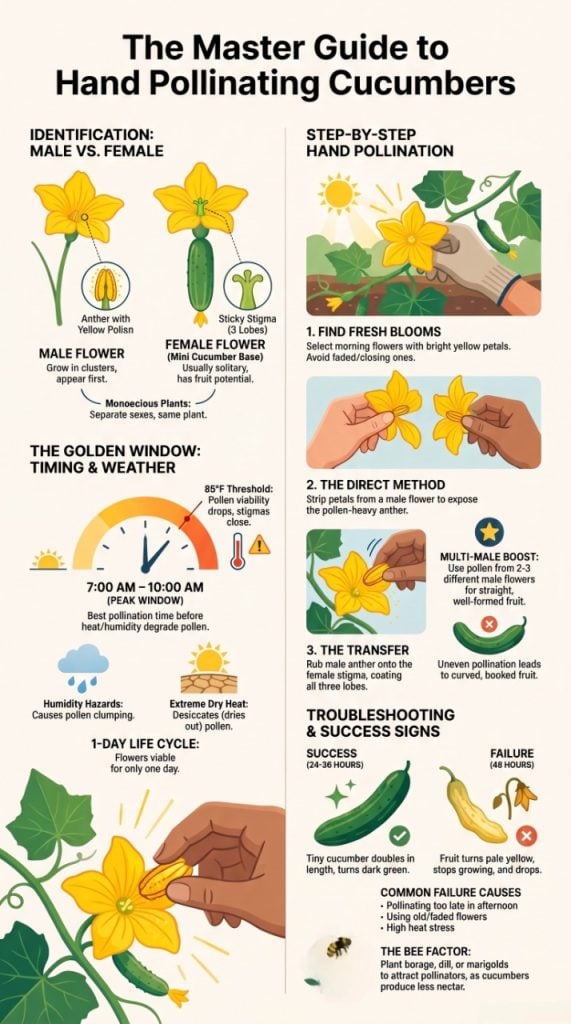
Most Cucumis sativus varieties are monoecious cucumber varieties, producing separate male and female flowers on the same vine that require pollen transfer for proper fruit development. According to Clemson Extension, each blossom typically stays open for only a single day, making timing critical.
The first blooms to appear are almost always male flowers. They often develop in male bloom clusters, producing generous amounts of yellow pollen before female blossoms begin opening along the vine.
Female flowers develop later and can be recognized by the swollen structure beneath the petals. That miniature cucumber is the cucumber ovary, which enlarges only after successful cucumber plant pollination.
Before attempting manual pollination cucumbers, learn these identifying features:
- Male cucumber flower: Thin stem with a pollen-covered cucumber anther
- Female cucumber flower: Tiny female flower mini fruit beneath the blossom and a sticky cucumber stigma
- Male flowers often bloom in groups of 3–5
- Female flowers usually appear individually along the vine
A quick comparison makes flower identification much easier.
| Feature | Male Flower | Female Flower |
| Base Structure | Thin stem | Swollen cucumber ovary behind flower |
| Center | Yellow pollen-covered anther | Sticky stigma lobes |
| Bloom Pattern | Clusters of 3–5 | Usually individual flowers |
| Produces Fruit | No | Yes |
Transitioning from flower identification to variety selection prevents one of the most common gardening mistakes.
How to Tell Male and Female Flowers Apart
The quickest way to avoid mistakes is to check the base of each flower before touching it.
FeatureMale FlowerFemale FlowerBaseThin stemTiny cucumber behind flowerCenterYellow pollen-covered antherSticky stigma with several lobesGrowth patternOften grows in small groupsUsually grows aloneProduces cucumbersNoYes
Spend a minute looking closely at a few flowers before you begin. Most gardeners find that identifying them becomes easy after a little practice.
Which Cucumber Varieties Should You Not Hand Pollinate?
Not every cucumber plant needs help.
Some modern varieties are parthenocarpic, meaning they produce fruit without pollination. Many greenhouse-grown English cucumbers and Beit Alpha cucumbers fall into this group.
If you grow seedless parthenocarpic varieties (like Beit Alpha or Corinto) alongside standard monoecious cucumbers, keep them separated. Introducing stray pollen to parthenocarpic female flowers triggers unwanted seed formation, resulting in bitter, misshapen, and tough cucumbers.
If you’re unsure which type you’re growing, check the seed packet or plant label before hand pollinating.
When Is the Best Time to Hand Pollinate Cucumber Flowers?
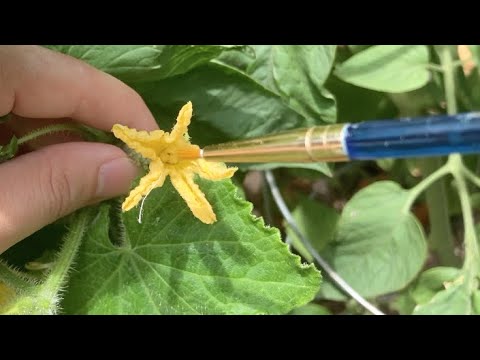
Credits: JessThings
The best time is early in the morning, shortly after sunrise.
Fresh flowers have the highest-quality pollen during the first few hours after opening. Female flowers are also most receptive during this time, making successful pollination much more likely.
Many gardeners aim for 7:00 AM to 10:00 AM, especially on warm summer days.
Weather also plays a part.
You’ll usually get the best results when:
- Temperatures stay between 68°F and 80°F (20–27°C).
- The flowers are fully open.
- Most of the morning dew has dried.
- The weather is calm.
- The day hasn’t become too hot yet.
Once temperatures climb above about 90°F (32°C), pollen becomes less effective and fruit set may drop.
Research from GrowingFruit Community shows
“High ambient humidity or morning dew causes heavy cucurbit pollen to clump together on male anthers, while dry heat above 85°F rapidly desiccates pollen grains, drastically reducing viability.” – GrowingFruit
Why Morning Pollination Works Better
Fresh pollen doesn’t stay viable for long.
Cucumbers operate on a strict biological clock: blooms open at dawn and pollen viability plummets rapidly as ambient temperatures cross 85°F. Waiting until afternoon means attempting to pollinate with dried, sterile grains on a stigma that has already begun to close.
Miss the morning window, and you may have to wait for another flower to open the next day.
How Heat and Humidity Affect Pollination
Weather can make a noticeable difference.
Very humid conditions cause pollen to stick together instead of dusting onto a brush or stigma. On the other hand, high temperatures dry pollen too quickly and reduce its ability to fertilize the flower.
If you garden in a hot or tropical climate, try pollinating once the dew has mostly disappeared but before the day heats up. That short window often produces the best results.
How to Hand Pollinate Cucumber Flowers Step by Step
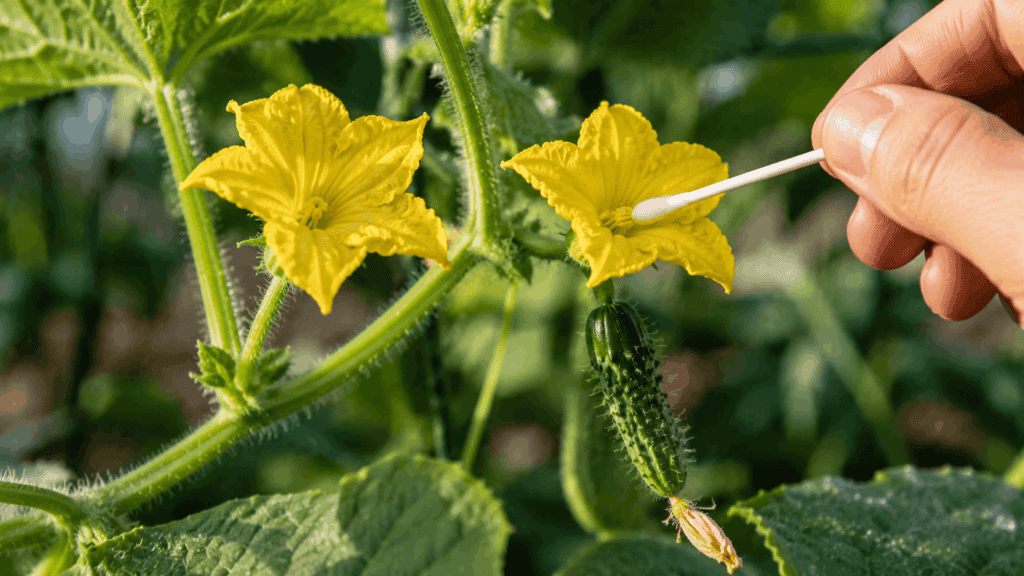
Hand pollination is easier than many gardeners expect. The goal is simple: move fresh pollen from a male flower to a female flower.
Begin by checking your plants early in the morning. Look for flowers that have opened that day. Fresh blooms have bright yellow petals, while older flowers often look faded or begin to close.
Step 1: Find Fresh Flowers
Walk along the vine and look for:
- Fully open flowers
- Bright yellow petals
- Fresh yellow pollen
- Healthy stems
- Female flowers with a tiny cucumber behind them
Older flowers rarely produce good results, so focus on fresh blooms.
Step 2: Collect the Pollen
There are two easy ways to collect pollen.
Method 1: Use the male flower
Pick a freshly opened male flower and gently remove its petals. This exposes the pollen-covered anther, making it easy to touch the female flower directly.
Method 2: Use a soft brush
A small artist’s brush, cotton swab, or soft paintbrush also works well. Gently dab the center of the male flower until yellow pollen sticks to the tip.
Both methods work. Many home gardeners prefer the first because it transfers more pollen in one step.
Step 3: Transfer the Pollen
Touch the pollen onto the center of the female flower.
Ensure every lobe of the female stigma receives thorough coverage. Touching only one side of the stigma results in uneven seed development and curved or bulbous ‘hooked’ cucumbers. For straight, well-formed fruit, transfer pollen from two or three different male flowers across all three lobes.
Take your time. This step usually has the biggest effect on the final harvest.
Why Do Some Gardeners Prefer the Direct Flower Method?
Direct contact between the anther and stigma usually transfers more pollen than brushes or cotton swabs.
Forum discussions among experienced growers consistently report that sticky cucurbit pollen does not always release well from brush bristles or cotton fibers. Because cucumber pollen is naturally heavy, some gardeners find that the direct flower rubbing method delivers more reliable results, especially during greenhouse cucumber pollination or high tunnel cucumber growing.
Each method still has advantages depending on the growing environment.
| Method | Advantages | Drawbacks |
| Direct flower rubbing | Maximum pollen transfer | Removes the male flower |
| Soft bristle watercolor brush | Gentle and reusable | May collect less pollen in humid weather |
| Cotton swab pollination | Convenient and inexpensive | Fibers can trap sticky pollen |
Transitioning between methods often depends on humidity, available flowers, and the number of plants needing pollination.
Should You Use More Than One Male Flower?
Sometimes, yes.
One healthy male flower may provide enough pollen, but using pollen from two or three male flowers can improve the chances of complete pollination. This is especially helpful if the weather has been hot or humid.
More complete pollination often produces straighter cucumbers because more seeds develop evenly inside the fruit.
Why Didn’t Your Hand Pollination Work?
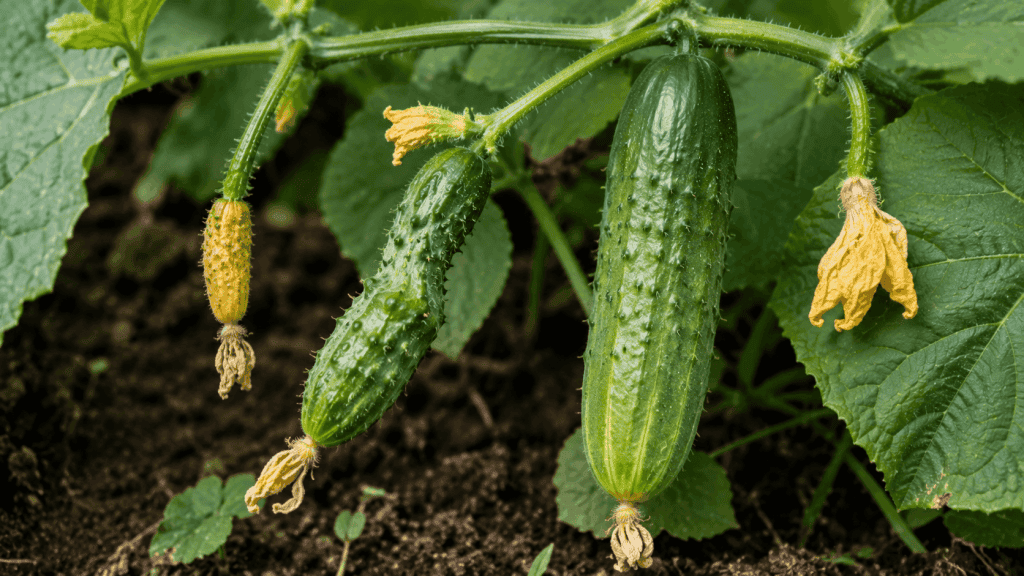
If a tiny cucumber turns pale yellow and drops 48 hours after pollination, the cause is rarely random failure. Fruit abortion is almost always tied to one of three fixable issues: pollinating too late in the afternoon, using an old male flower from the previous day, or failing to coat all three lobes of the female stigma.
Poor timing is one of the most common reasons. Flowers stay open for only one day, so waiting until the afternoon often means you’ve missed the opportunity.
Another common mistake is using the wrong flower. Only female flowers can grow into cucumbers. Male flowers supply pollen but never produce fruit.
Weather can also get in the way. High temperatures reduce pollen quality, while high humidity makes pollen clump together.
The table below shows a few common problems and their likely causes.
ProblemMost Likely CauseBaby cucumber turns yellowPoor pollinationFruit drops earlyHeat stress or failed pollinationCurved cucumberUneven pollen coverageFlower dropsOld bloom or no pollinationFew cucumbersPoor timing or lack of pollination
Don’t get discouraged. Most gardeners improve quickly after a few mornings of practice.
Could It Be Something Besides Pollination?
Sometimes.
If flowers are pollinated but the plant doesn’t receive enough water, fruit may still struggle to develop. Poor airflow inside a greenhouse can also affect pollen movement and flower health. Addressing common issues in hydroponic cucumbers early helps prevent early fruit drop and keeps vines productive.
Check for these conditions:
- Temperatures above 90°F (32°C)
- High humidity
- Dry soil
- Old flowers
- Poor airflow
- Incorrect flower identification
Fixing one or two of these problems is often enough to improve fruit production.
How Can You Tell If Pollination Was Successful?
The good news is that you won’t have to wait long.
You’ll know your hand pollination took within 24 to 36 hours: the miniature ovary behind the female bloom will noticeably swell, doubling in length and turning a rich, dark green. If the tiny fruit turns pale yellow or remains static after two days, pollination failed and the plant is preparing to drop it.
Watch for these signs:
- Petals begin drying naturally.
- The small cucumber grows longer.
- The fruit stays green.
- Growth continues each day.
If pollination failed, the tiny cucumber usually stops growing, turns yellow, shrivels, and drops from the vine.
Checking flowers every morning makes it easy to spot successful pollination early.
Why Do Bees Sometimes Ignore Cucumber Flowers?
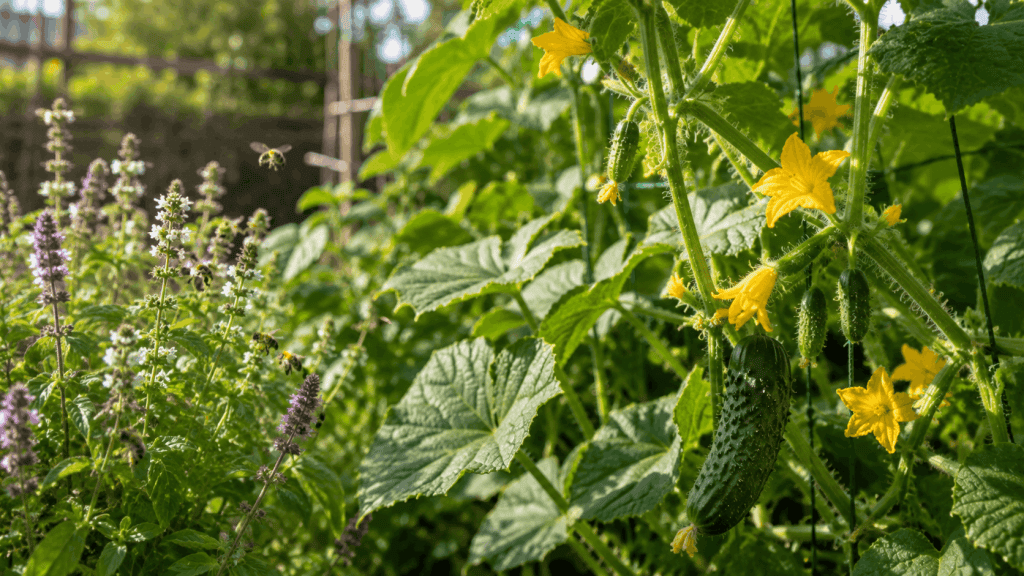
Many gardeners notice bees nearby but still get very few cucumbers.
That’s because cucumber flowers don’t always offer as much nectar as other blooming plants. Bees often visit flowers that provide a bigger food reward before moving on.
Insights from Houzz Garden Discussions indicate
“Cucumber flowers produce heavy, sticky pollen but negligible nectar compared to surrounding weeds and flowering herbs, causing bees to bypass cucumber blooms unless there is a severe regional nectar dearth.” – Houzz
Planting nectar-rich flowers nearby may encourage more visits throughout the season.
Good companion plants include:
- Borage
- Dill
- Basil
- Sweet alyssum
- Marigolds
If your cucumber plants grow under netting, row covers, or inside a greenhouse, insects may not reach the flowers at all. In those cases, hand pollination becomes part of regular plant care.
Can You Hand Pollinate Cucumbers Indoors or in a Greenhouse?
Yes. The process is exactly the same.
Indoor gardens, greenhouses, balconies, and grow tents usually don’t have enough bees to pollinate cucumber flowers. If you’re growing a standard cucumber variety, or growing cucumbers in a dwc system, you’ll need to transfer pollen manually to ensure fruit set.
Healthy indoor plants also benefit from:
- Good airflow
- Moderate humidity
- Morning pollination
- Even watering
- Enough space between plants
These simple habits help flowers stay healthy and improve fruit production throughout the season.
What Mistakes Should You Avoid?
Small mistakes can reduce your harvest, even when plants look healthy.
The biggest mistake is pollinating the wrong flower. Always check for the tiny cucumber behind the female flower before moving pollen.
Another common mistake is covering only part of the stigma. Try to coat every lobe with pollen for better fruit development.
Also avoid:
- Pollinating after flowers begin closing
- Using yesterday’s flowers
- Pollinating parthenocarpic varieties
- Working during the hottest part of the day
A short morning routine usually produces better results than rushing later in the afternoon.
How Can You Increase Your Cucumber Harvest Naturally?
Hand pollination helps, but healthy plants produce the best harvests.
Keep the soil evenly moist and harvest cucumbers often. Picking mature fruit encourages the plant to keep producing new flowers. Gardeners who want to grow cucumbers hydroponically can optimize nutrient delivery to maintain steady flowering.
Give plants plenty of sunlight and feed them with a balanced fertilizer if needed. Healthy vines have more energy to produce flowers and fruit.
If you’re planting a new garden, choose the right variety for your growing space. Standard cucumbers need pollination, while parthenocarpic varieties are a good choice for greenhouses and indoor gardens because they produce fruit without it.
FAQs
How do I know whether a cucumber flower needs hand pollination?
You need to hand pollinate whenever natural bees are missing or your plants are isolated under row covers, in grow tents, or on high balconies. Look closely at the base of the open flower: if there is a tiny, swollen green fruit behind the yellow petals, it’s a female flower that needs pollen from a male flower to set fruit.
A male cucumber flower grows on a thin stem without a swollen base. Learning the difference between male vs female cucumber blooms helps you pollinate the correct flowers and improve fruit set.
What is the best method for pollinating cucumbers by hand?
The most reliable method is stripping the petals off a freshly opened male flower and rubbing its pollen-laden anther directly onto the female stigma. While you can use a small watercolor brush or Q-tip, dry tool fibers often trap pollen rather than releasing it, making direct flower-to-flower contact far more effective.
When should I hand pollinate cucumber flowers for the best fruit set?
Pollinate first thing in the morning between 7:00 AM and 10:00 AM. Cucumber blooms open at sunrise, and pollen viability drops sharply as midday heat rises above 85°F (29°C) or afternoon humidity dries out the flower’s sticky stigma.
Can cucumbers growing indoors or under covers be hand pollinated?
Yes. Hand pollination is mandatory whenever plants are isolated from natural pollinators, including inside grow tents, greenhouses, high balconies, or under insect netting. Standard (monoecious) cucumber varieties in these protected spaces cannot set fruit without manual pollen transfer
Why are my cucumbers still small or misshapen after hand pollination?
Small or curved cucumbers are usually caused by incomplete pollination, meaning only one or two lobes of the female stigma received pollen. To ensure even, straight fruit growth, thoroughly coat all three stigma lobes using pollen from two or three separate male flowers.
Better Cucumber Harvests Come From Small, Consistent Steps
If your cucumber plants keep dropping fruit or growing uneven cucumbers, it’s easy to feel frustrated. Don’t give up. A few minutes of hand pollination each morning can make a real difference, especially when bees are hard to find or you’re growing indoors. Once you know which flowers to use, the process becomes quick and easy.
If you want more simple ways to grow healthy plants, Tophydroponicgarden is a helpful place to learn what works. You’ll find practical gardening tips and hydroponic guides that can help you get better results with every harvest, without making the process more complicated.
References
- https://www.jstage.jst.go.jp/article/jjshs1925/30/1/30_1_24/_article
- https://worldveg.tind.io/record/46896
Related Articles
- https://tophydroponicgarden.com/how-to-grow-cucumbers-hydroponically/
- https://tophydroponicgarden.com/common-issues-in-hydroponic-cucumbers/
- https://tophydroponicgarden.com/growing-cucumbers-in-a-dwc-system/
Was this helpful?

I’m Barrie L., a passionate hydroponic gardening enthusiast dedicated to cultivating thriving, soil-less gardens. With a focus on all things hydroponic, I share my expertise on innovative growing techniques and sustainable practices through my blog, tophydroponicgarden.com. As a seasoned hydroponics specialist, my goal is to inspire and guide fellow gardeners in harnessing the power of water-based cultivation for bountiful and eco-friendly harvests. I’m also an author of the book “Hydroponics For Absolute Beginners: Your Step By Step Guide For How To Create An Hydroponics System At Home Without Soil, For Growing Vegetable, Fruit And Herbs.” which is sold on Amazon. Join me on a journey of redefining the way we cultivate plants, one nutrient-rich solution at a time. Happy growing!