

Yes, you can grow hydroponic strawberries at home and harvest fresh fruit all year round. The right light, steady nutrients, and occasional hand pollination are all it takes no soil, no garden, no problem.
Hydroponics gives you full control over water quality, temperature, and feeding in a compact space like a kitchen counter or balcony shelf. Most home growers start picking fruit within two to three months.
Whether you use a simple water culture setup or a vertical tower, healthy roots and consistent care drive the results. Keep reading to find out how to set it up correctly.
Growing Hydroponic Strawberries Comes Down to These Three Things
Get the light, variety, and environment right, and hydroponic strawberries will produce reliably without much fuss.
- Hydroponic strawberries grow successfully indoors with 16 hours of light, balanced nutrients, and proper pollination.
- Day-neutral strawberries such as Albion, Seascape, and San Andreas provide the most reliable year-round harvests.
- Stable environmental conditions outperform constant adjustments and produce higher-quality berries with better flavor and fruit set.
Why Should You Grow Strawberries in Water Instead of Soil?
Hydroponics gives strawberries direct nutrient access, cleaner growing conditions, and more control over growth variables than traditional soil cultivation.
Growing strawberries in soil can be rewarding, but it also comes with challenges that are hard to control. Traditional soil gardens often suffer from unpredictable nutrient fluctuations (meaning fertilizer levels constantly swing up and down) because heavy rain easily washes critical minerals away from the roots.
While pests and soil-borne diseases can affect plant health. Hydroponic systems remove many of these variables by creating a more controlled growing environment.
One of the biggest advantages is space efficiency. Traditional strawberry plants spread out quickly, but maximizing the benefits of growing strawberries in vertical hydroponic setups allows you to stack multiple layers of plants in tight areas.
A vertical hydroponic tower can hold dozens of plants in the same area that might fit only a few potted strawberries. This makes hydroponics a practical choice for apartments, balconies, and small patios.
Another benefit is the ability to grow strawberries year-round. With proper lighting and stable indoor conditions, many growers continue harvesting fresh berries long after outdoor plants have stopped producing.
According to The Ohio State University’s,
“Fruit flavor drastically improves and tastes much sweeter when the fruit develops at a lower night temperature, specifically recommending dipping down to 50–54°F (10–12°C).” – The Ohio State University.
Key benefits include:
- Cleaner fruit with less soil contamination
- Better water efficiency
- Higher planting density
- Easier pest monitoring
- Year-round berry production
- Ideal solution for small-space gardening
Many commercial vertical farms use hydroponic systems because they help produce more consistent crops while reducing losses caused by weather and soil-related problems.
The Best Hydroponic Systems for Growing Home Strawberries
Most home growers succeed with simple drip systems, vertical towers, or NFT setups because they balance moisture, oxygen, and ease of maintenance.
Different hydroponic systems work well for strawberries, but the best option often depends on your experience level, available space, and how much maintenance you’re comfortable handling. While complex systems can be impressive, many beginners find that simpler setups are easier to manage.
| System | Best For | Advantages | Limitations |
| DWC Strawberry | Beginners | Simple setup, lower cost | Needs strong aeration |
| NFT Strawberry | Intermediate growers | Efficient nutrient flow | Sensitive to pump failures |
| Ebb and Flow Strawberry | Reliable production | Excellent root oxygenation | Requires more space |
| Vertical Hydroponic Tower | Small spaces | High planting density | Needs regular monitoring |
| Aeroponic Strawberry | Advanced growers | Excellent oxygen exposure | More expensive and complex |
Many home growers find that DWC buckets, drip systems, and vertical towers offer a good balance between simplicity and productivity. NFT systems can produce excellent results but usually require more careful setup and monitoring.
If you’re new to hydroponics, starting with a smaller system can make the learning process much easier.
What Equipment Do You Need to Setup Your Indoor Strawberry Garden?

A basic setup includes a reservoir, pump, growing system, grow lights, nutrients, net pots, and a growing medium.
You do not need commercial equipment to grow strawberries successfully at home. Many gardeners start with simple DIY systems and gradually upgrade as they gain experience.
Essential equipment includes:
- Reservoir sized according to plant count
- Water pump
- Air pump and air stone
- Net pots
- Clay pebbles, coco coir, or rockwool
- Full-spectrum LED grow lights
- pH meter
- EC meter
- Nutrient solution
- Light-proof reservoir
The following equipment can improve growing conditions:
- Root zone cooling equipment
- Small circulation fan
- Fruit support netting
- Strawberry trellis
- Water chiller system
A helpful guideline is to provide at least one gallon of reservoir capacity per strawberry plant. Larger reservoirs usually stay more stable and often require fewer adjustments.
Top Performing Strawberry Varieties That Love Hydroponic Setups
Day-neutral and everbearing strawberries generally produce more consistently indoors than June-bearing varieties.
Choosing the right variety can make a big difference in your success. Indoor growers prefer varieties with a Day Neutral Photoperiod Response, allowing plants to trigger continuous flowering regardless of daylight hours.
| Variety Type | Harvest Pattern | Suitable for Home Hydroponics |
| Day-Neutral Strawberry | Continuous | Excellent |
| Everbearing Strawberry | Multiple flushes | Very Good |
| June-Bearing Strawberry | Seasonal | Moderate |
Recommended cultivars include:
- Albion strawberry
- Seascape strawberry
- San Andreas strawberry
- Tristar strawberry
- Mara des Bois
Everbearing vs. June-Bearing
Day-neutral and everbearing varieties continue producing flowers under controlled indoor conditions. This gives home growers multiple harvest opportunities throughout the year.
June-bearing varieties usually focus their energy on producing one large crop during a specific season. While they can still grow hydroponically, they tend to be less predictable indoors.
For gardeners hoping to harvest fresh strawberries regularly, day neutral varieties are often the easiest and most rewarding choice.
How to Setup Your Home Hydroponic Strawberry System Step by Step
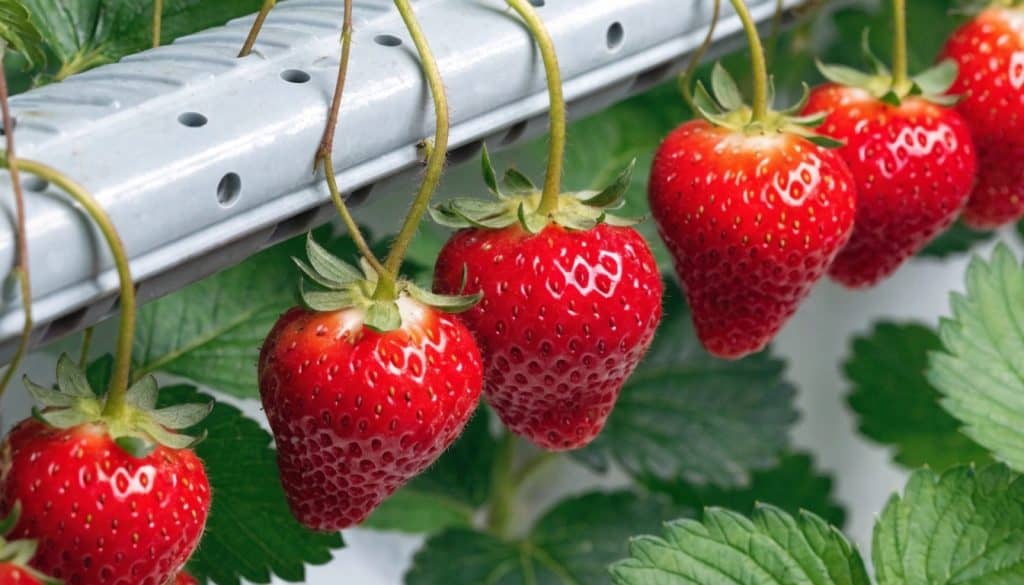
Assemble the system, prepare nutrients, plant seedlings, stabilize pH, and establish proper lighting before active growth begins.
Setting up a hydroponic strawberry system may seem complicated at first, but breaking the process into smaller steps makes it much easier to manage. Following fundamental hydroponic strawberries growing tips during assembly helps prevent frustrating system problems later on.
Prepare the System
Install the reservoir, plumbing, net pots, and growing media. Make sure the reservoir blocks light to help reduce algae growth and maintain water quality.
Add Nutrient Solution
Fill the reservoir with water and add a complete nutrient blend containing:
- Calcium nitrate
- Potassium sulfate
- Magnesium sulfate
- Chelated micronutrients
For young plants, you want to keep your fertilizer concentration at a weak seedling stage EC of around 1.0 to 1.2 mS/cm, and then slowly increase the strength as the plants establish themselves.
Plant Strawberries
Use bare-root strawberry crowns or healthy nursery starts. Spread the roots gently through the growing media while keeping the crown above the surface.
Avoid burying the crown because excess moisture around this area can increase the risk of crown rot.
Set Lighting Schedule
Provide about 16 hours of light each day using full-spectrum LED grow lights. Consistent lighting supports flowering and fruit production, especially during winter months.
Monitor Water Conditions
Maintain:
- pH near 5.8
- Water temperature near 68°F
- Weekly reservoir changes
- Strong aeration
Checking these conditions regularly helps support healthy roots and encourages better fruit development. Small adjustments made early are often easier than fixing larger problems later.
What Specific Nutrient Levels, pH, and Lighting Do Strawberries Need?
Strawberries need balanced nutrients, stable pH, and enough daily light to support healthy growth, flowering, and fruit production.
Unlike heavy-feeding crops like tomatoes, strawberries have a much lower maximum feeding capacity (their absolute limit for absorbing food) that caps right around 2.0 EC. Giving them anything stronger just creates massive leaves instead of actual berries. Consistent conditions usually produce better results than making frequent adjustments.
According to The Ohio State University Extension,
“Strawberries are highly sensitive to salt accumulation in the water. Running an excessively high EC level will injure the roots, stunt plant growth, and significantly reduce your overall berry yield.” –The Ohio State University.
| Factor | Recommended Range |
| pH | 5.5-6.2 |
| EC Seedlings | 1.0-1.2 |
| EC Fruiting | 1.6-2.0 |
| Light Duration | 12-16 hours |
| Day Temperature | 68-75°F |
| Night Temperature | 60-65°F |
| Humidity | 60-75% |
| Water Temperature | 68°F |
Phosphorus supports flower and bud development, while potassium plays an important role in fruit quality, sweetness, and overall berry flavor.
Many growers target a pH around 5.8 because it helps strawberries absorb nutrients efficiently. Since target hydroponic ph ranges for specific plants dictate how easily roots can drink up food, letting the water drift too high or too low can quickly trigger severe nutrient deficiencies.
Consistent monitoring often works better than constantly changing nutrient recipes.
Why Stability Matters More Than Perfection
Beginners sometimes chase exact numbers every day. In reality, strawberries tolerate small fluctuations much better than sudden corrections.
Check pH and EC regularly, but avoid making large adjustments unless readings move outside the recommended ranges. Stable growing conditions encourage stronger roots, healthier flowers, and more reliable harvests.
Easy Methods to Pollinate Your Hydroponic Strawberries Indoors
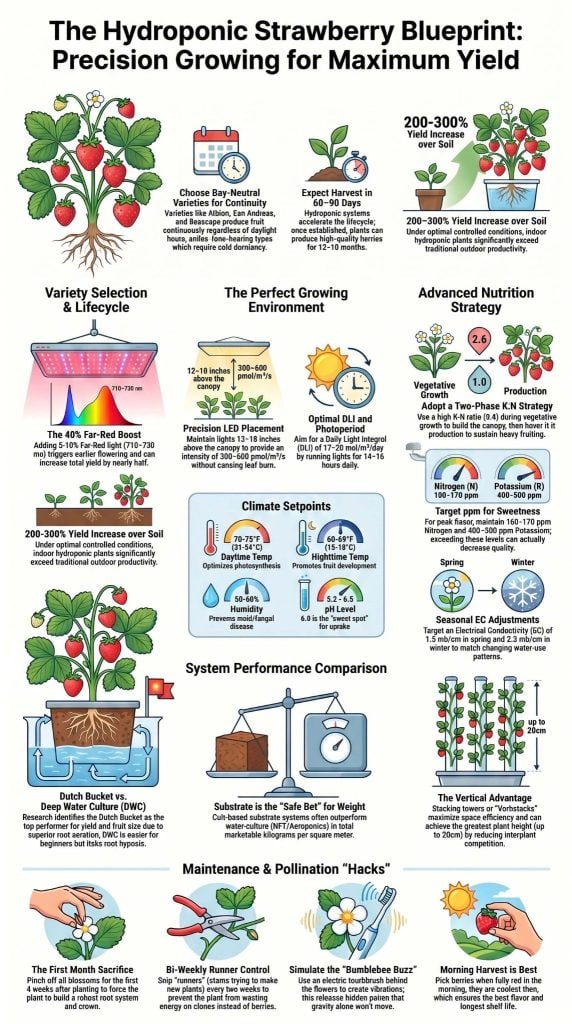
Indoor strawberries often need manual pollination because natural pollinators are usually absent.
Pollination has a direct effect on fruit shape, berry size, and overall yield. Outdoors, bees and wind handle most of the work. Indoors, growers usually need to help move pollen between flowers.
Common pollination methods include:
- Hand pollination
- Soft pollination brush
- Electric toothbrush vibration
- Gentle fan pollination
Signs of successful pollination include:
- Uniform berry development
- Full fruit set
- Fewer misshapen berries
Many home growers pollinate every two to three days while flowers remain open. This simple task takes only a few minutes and can significantly improve harvest quality.
An electric toothbrush is a popular option because the vibration closely mimics the movement created by visiting bees.
Tips for Better Pollination Success
Pollinate during the middle of the day when flowers are fully open. Use a soft brush to transfer pollen gently between blooms, or briefly hold an electric toothbrush against the flower stem to create vibration. Consistent pollination leads to fuller berries and fewer oddly shaped fruits.
Why Are Your Indoor Hydroponic Strawberries Not Producing Any Fruit?
Poor lighting, nutrient imbalances, pollination problems, temperature stress, or root issues commonly reduce fruit production.
When strawberry plants stop producing fruit, the cause is often environmental rather than genetic. Small problems can build up over time before obvious symptoms appear.
| Problem | Likely Cause | Solution |
| No flowers | Weak lighting | Increase light intensity |
| Small fruit | Low potassium | Adjust nutrients |
| Poor fruit set | Pollination failure | Hand pollinate |
| Brown roots | Warm water | Improve cooling |
| Tip burn | Calcium deficiency | Add calcium nitrate |
| Leaf scorch | Excess EC | Dilute nutrient solution |
Warm reservoir temperatures are a common but overlooked issue. Water above 68°F holds less oxygen, which can stress roots and encourage disease.
Healthy roots should appear white or cream-colored. Dark roots, unpleasant odors, or slimy textures often signal trouble below the surface.
Start With the Basics First
Before changing fertilizers or buying supplements, check these four areas:
- Light intensity
- Pollination practices
- Reservoir temperature
- Root health
Correcting one of these factors often restores productivity without major changes to the system.
Common Hydroponic Mistakes That Will Ruin Your Strawberry Harvest
Overfeeding, unstable pH, inadequate light, poor airflow, and neglecting pollination cause many beginner problems.
New growers often focus heavily on nutrients while overlooking environmental conditions. In many cases, strawberries struggle because of inconsistent care rather than a lack of fertilizer.
Common mistakes include:
- Overcrowding plants
- Ignoring EC measurements
- Poor humidity management
- Neglecting runner removal
- Skipping weekly reservoir changes
- Allowing crowns to stay wet
- Underestimating runner growth
Additional maintenance practices include:
- Pruning damaged leaves
- Removing spoiled fruit
- Pinching flowers from immature plants
- Monitoring for powdery mildew
Simple routines usually work better than making constant adjustments. Consistency allows plants to adapt and thrive.
Avoid Trying to Fix Everything at Once
If problems appear, make one change at a time and monitor the results for several days. Adjusting multiple variables at once makes it harder to identify the real cause.
Steady care usually produces better strawberries than frequent tinkering.
How Long Does It Take to Harvest Your First Hydroponic Strawberries?

Credits : House Dad Life
Most hydroponic strawberries produce harvestable fruit within several weeks to a few months, depending on the variety and growing conditions.
Bare-root strawberry crowns generally need about 6 to 8 weeks to finish their vegetative growth phase (the time they spend strictly building up leaves and roots) before they are ready to pop out their very first flowers.
Typical timeline:
- Week 1-2: Root establishment
- Week 3-6: Vegetative growth
- Week 6-8: Flower formation
- Week 9-12: First harvest
Harvest indicators include:
- Fully red berry color
- Firm texture
- Strong aroma
- Good sweetness
Pick strawberries when they are fully colored because they do not continue ripening after harvest. Gentle handling also helps extend freshness and reduces bruising.
Once plants become established, many day-neutral varieties continue producing berries for months under favorable conditions.
How to Harvest for Best Flavor
Harvest berries in the morning when temperatures are cooler. Pinch or snip the stem above the fruit instead of pulling directly on the berry.
Regular harvesting encourages plants to continue producing new flowers and fruit throughout the growing season.
FAQ
Can I grow indoor strawberries year-round using a completely soil-free system?
Yes, you can. Setting up a DIY strawberry system inside your house allows you to enjoy year-round berries. When you supply grow lights for strawberries and run a photoperiod 16 hours every day, you perfectly mimic ideal summer conditions.
This simple setup helps you harvest fresh kitchen garden fruit even during the coldest winter months.
Which specific plant varieties should I select for a continuous harvest at home?
You should pick everbearing strawberry or day-neutral strawberry types like the Albion strawberry, Seascape strawberry, or Mara des Bois.
Unlike June-bearing varieties, these specific plants put their energy into a constant fruit set instead of growing useless strawberry runners. This choice gives you a continuous harvest of sweet berries all year long.
What are the ideal water parameters to prevent crown rot and root diseases?
You need to keep your nutrient solution strawberry mix at a pH 5.8. Keep the water temperature 68°F by using a chiller system if your room gets too warm.
You also need to perform a reservoir change weekly in a light proof container for total algae prevention. Running an air pump airstone keeps oxygen high for great strawberry root health.
How do I properly manage hand pollination for indoor plants to get berries?
Since indoor rooms do not have natural wind or wild bees, you have to help the plants reproduce. Use a soft pollination brush or a small fan for fan pollination to spread pollen between the flowers.
This quick hand pollination step activates the flowering trigger and guarantees that your indoor blossoms actually grow into juicy fruits.
Why are the edges of my young strawberry leaves turning brown and crispy?
This problem is called tip burn, and it means your plants have a calcium deficiency. It usually happens when you do not use proper humidity control fruiting tricks, which stops the plant from moving nutrients to the leaves. To fix it, keep the air moving and add calcium nitrate to your water to support healthy growth.
Growing Hydroponic Strawberries That Actually Work
Most people struggle with hydroponic strawberries because they let the setup swing too much. The plants react fast. Fruit stays small, flowers drop, and growth slows down when things are off.
You’ll do better when you keep everything steady and simple. Pick good varieties, keep your pH and nutrients in a tight range, and stay consistent with pollination and spacing.
TopHydroponicGarden gives practical growing tips that help you avoid guesswork and keep your strawberry plants producing healthy fruit.
References
- https://u.osu.edu/indoorberry/fertigation/
- https://u.osu.edu/indoorberry/environment/
Related Articles
- https://tophydroponicgarden.com/hydroponic-strawberries-growing-tips/
- https://tophydroponicgarden.com/benefits-of-growing-strawberries/
- https://tophydroponicgarden.com/hydroponic-ph-ranges-for-specific-plants/
Was this helpful?
I’m Barrie L., a passionate hydroponic gardening enthusiast dedicated to cultivating thriving, soil-less gardens. With a focus on all things hydroponic, I share my expertise on innovative growing techniques and sustainable practices through my blog, tophydroponicgarden.com. As a seasoned hydroponics specialist, my goal is to inspire and guide fellow gardeners in harnessing the power of water-based cultivation for bountiful and eco-friendly harvests. I’m also an author of the book “Hydroponics For Absolute Beginners: Your Step By Step Guide For How To Create An Hydroponics System At Home Without Soil, For Growing Vegetable, Fruit And Herbs.” which is sold on Amazon. Join me on a journey of redefining the way we cultivate plants, one nutrient-rich solution at a time. Happy growing!