


Nutrient lockout in hydroponics means your plants can’t take up the nutrients in the water. It’s often caused by the pH level being too high or too low, or by a buildup of salts around the roots. The symptoms look like a nutrient deficiency, but adding more fertilizer just makes things worse.
Several hydroponic guides recommend keeping pH in the 5.5 to 6.5 range to preserve nutrient availability. This guide will walk you through how to spot a lockout, flush your system, and get your plants back on track. Keep reading for the step-by-step process to fix it.
Fast Fix Snapshot: Nutrient Lockout
- Most lockout cases come from pH imbalance and high EC levels
- A full flush aims for about 50% EC reduction
- Recovery depends on reset → stabilize → refeed → monitor
Understanding Nutrient Lockout in Hydroponics
Nutrient lockout is a common headache for hydroponic growers. It happens even when your tank has plenty of nutrients, the plants just can’t take them in. The problem usually boils down to chemistry: the pH is wrong, the nutrient mix is off, or certain elements start fighting each other.
The water’s pH level is a big factor. Research from sources like Atami points out that many nutrients become less available if pH drifts outside the 5.5 to 6.5 range. The nutrients are still there in the water, but the plant’s roots can’t grab them. As noted by University of Pretoria
“Research from the University of Pretoria confirms that pH is the primary driver of nutrient availability, noting that the system is designed to keep pH within a narrow range to ensure ‘a steady stream of nutrients were available to the plants at all times’.” – University of Pretoria
This issue pops up more often in systems where the same water keeps circulating, like in Deep Water Culture (DWC) or NFT setups. As the water recirculates, salts build up. The salt concentration gets higher, which messes with how different nutrients interact.
Sometimes, one nutrient can actually block another. If you have too much potassium, your plants might struggle to get magnesium. Excess calcium can contribute to nutrient antagonism and reduce availability of some other elements in certain conditions. So you might see signs of several deficiencies at the same time, even though your feed is full of nutrients.
You’ll usually notice a few key things:
- The nutrient solution tests show all the elements are present.
- The plants show multiple deficiency symptoms simultaneously.
- The balance between major nutrients (NPK) and trace elements is skewed.
A lot of growers mistake this for simple underfeeding. They add more fertilizer to the tank, which only makes the chemical imbalance worse and tightens the lockout.
Confirming Nutrient Lockout vs Deficiency or Nutrient Burn
So how do you know it’s lockout, and not just a simple deficiency or nutrient burn? The signs are pretty specific.
First, look at your pH and EC readings. In a healthy system, plants drink water and absorb nutrients, so the EC (the measure of salts in the water) should drop over time. If your EC rises while water level drops, that can indicate salts are concentrating and nutrient uptake may be impaired.
It means salts are building up and concentrating, not being used. Your pH will also often drift out of the ideal 5.5-6.5 range, becoming unstable.
The plants themselves look confused. You might see yellowing leaves, burnt brown tips, and dark purple or bronze spots all at once. A plain deficiency usually follows a clearer pattern, like uniform yellowing for nitrogen lack. Lockout throws a bunch of different symptoms at you simultaneously.
Here’s a quick comparison:
| Indicator | Lockout | Deficiency |
| EC trend | Rising | Falling |
| Symptoms | Mixed, conflicting | Specific, patterned |
| Feeding level | Usually high | Usually low |
Other physical clues include a white, crusty residue on the sides of your reservoir or on equipment. The plants are stunted, not growing much, even though you’re feeding them plenty.
To get a real diagnosis, you need a reliable pH meter and an EC/PPM meter. Without those tools, you’re just guessing.
Causes of Nutrient Lockout in Hydroponic Systems
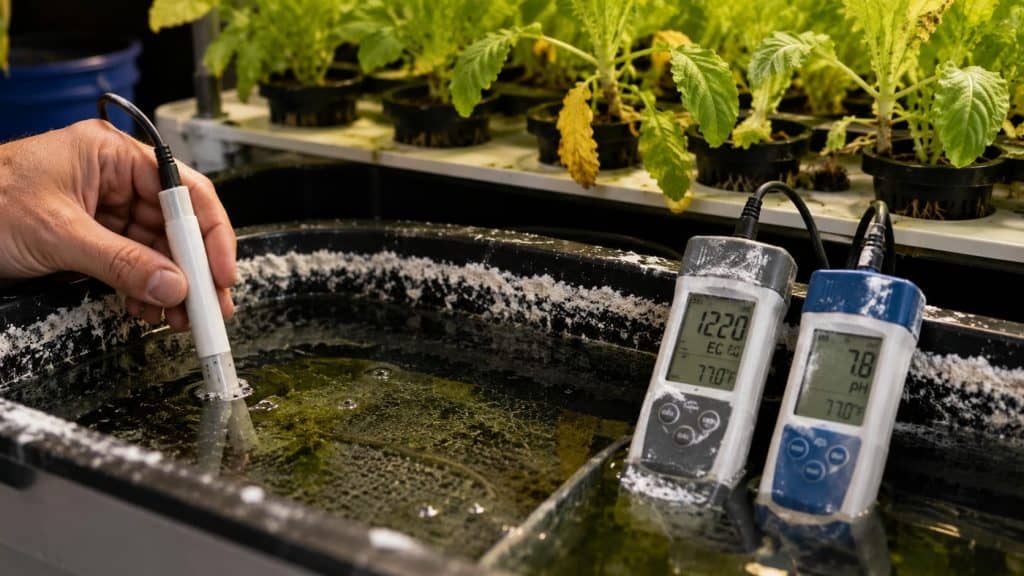
A few things can throw your system into lockout. The main culprits are pH swings, too much salt in the water, poor starting water, and damaged roots.
pH is the biggest trigger. As a report from Eutrema explains, pH controls how soluble nutrients are. If pH moves outside the target range, the availability of several nutrients, including iron, calcium, and phosphorus, can decline. They’re in the water, but the roots can’t access them.
Overfeeding is a classic mistake. Adding too much fertilizer drives the EC (salt concentration) way up. This creates a salty environment around the roots. The different ions start competing, and some get blocked from entering the plant, even though they’re physically present.
The benefits of nutrient management include avoiding these imbalances and ensuring the plants receive what they need without toxicity. Insights from Texas A&M University indicate.
“Research from Texas A&M University explains that high salt concentration restricts plant growth primarily through ‘ionic stress, which induces cellular injury and nutrient imbalances’.” – Texas A&M University
Your tap water might be causing problems before you even add nutrients. Hard water is full of calcium and carbonates. This gives you a high starting EC and can mess up the balance of your carefully mixed nutrient solution.
Finally, look at the roots themselves. If they’re damaged from low oxygen, disease, or a reservoir that’s too warm (above 22°C/72°F), they simply can’t absorb nutrients well. A weak root system makes any chemical imbalance in the water much worse.
The usual causes stack up:
- EC too high from over-fertilizing.
- pH drifting out of the 5.5-6.5 window.
- Nutrients not mixed properly.
- Reservoir temperature getting too hot.
These issues often feed into each other. A pH shift causes poor uptake, which leads to salt buildup, which further hurts the roots. It becomes a cycle that keeps getting worse until you fix it.
The Fastest Methods to Fix Nutrient Lockout
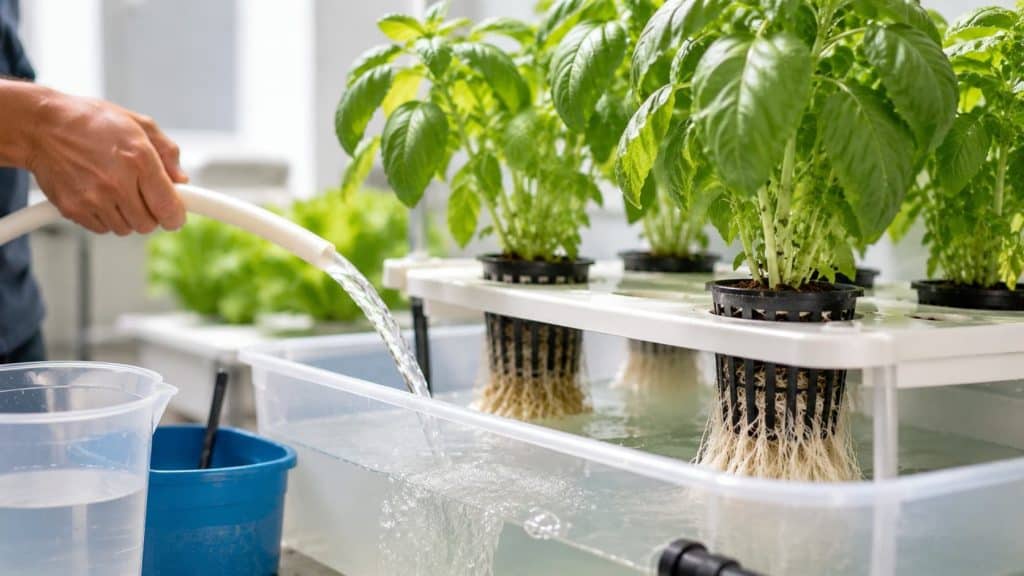
When you hit lockout, you need to stop the cycle. The quickest fix is a full system reset. Research from sources like NoSoilSolutions confirms that flushing out the accumulated salts is the most direct way to get things back on track.
Here’s the step-by-step process:
1. Drain the Reservoir. Get rid of all the old, high-EC nutrient solution. This is the water that’s causing the problem.
2. Flush the System. Fill the reservoir with clean, pH-adjusted water. Aim for a pH between 5.8 and 6.0. Let the clean, pH-adjusted water circulate long enough to flush the system thoroughly, then replace it with a fresh solution.
This helps dissolve salt deposits clinging to the roots, the tubing, and your growing medium (like clay pebbles). Some growers use a flushing agent during this step, which can help break down mineral buildup more effectively.
3. Clean Everything. Drain the flushing water. Now, physically clean the components. Scrub the reservoir walls to remove any salt crust or biofilm. Clean or replace air stones. Rinse out tubing. This removes the physical residue that can keep interfering with your fresh nutrients.
4. Start Fresh. Once everything is clean, refill your reservoir with a fresh batch of nutrients, mixed correctly and at the proper pH and EC for your plant’s stage.
This reset gives your plants a clean root environment. It removes the chemical barriers and allows them to start absorbing nutrients normally again. It’s a bit of work, but it’s the most reliable way to break the lockout quickly.
Choosing Between Plain Water and Light Nutrient Flush
You can use either, but most growers lean toward a light nutrient flush. The debate is common in cultivation forums and videos. Using a very weak nutrient solution, about ¼ to ½ of your normal strength, is often seen as a gentler approach.
Plain water dilutes salts quickly, but it may stress sensitive plants more than a light nutrient flush. It quickly dilutes and washes away the concentrated salts in your system. However, switching from a high-EC solution to pure water can shock the roots. It’s a sudden shift from too much to nothing, which can stress the plant.
A light nutrient flush works differently. It still lowers the overall salt concentration, but it provides a tiny amount of nutrients to keep the plant fed during the process. This can make recovery smoother, especially for plants already weakened by lockout.
Here’s a simple comparison:
| Method | Pros | Cons |
| Plain water | Rapid salt removal. Simple. | Can cause root shock. Deprives plant of nutrients temporarily. |
| Light nutrient | Gentler on plants. Maintains minimal feeding. | Takes a bit longer to reduce EC. |
So, which one should you pick?
- If you see a severe white crust of salts everywhere, plain water might be the faster fix.
- For sensitive plants or a less extreme case, the light nutrient flush is safer.
Whichever method you choose, the most important thing is to keep the pH of your flushing solution corrected, between 5.8 and 6.0. The choice really depends on how bad the lockout is and how your plants look.
Post-Flushing Recovery Steps for Hydroponic Plants
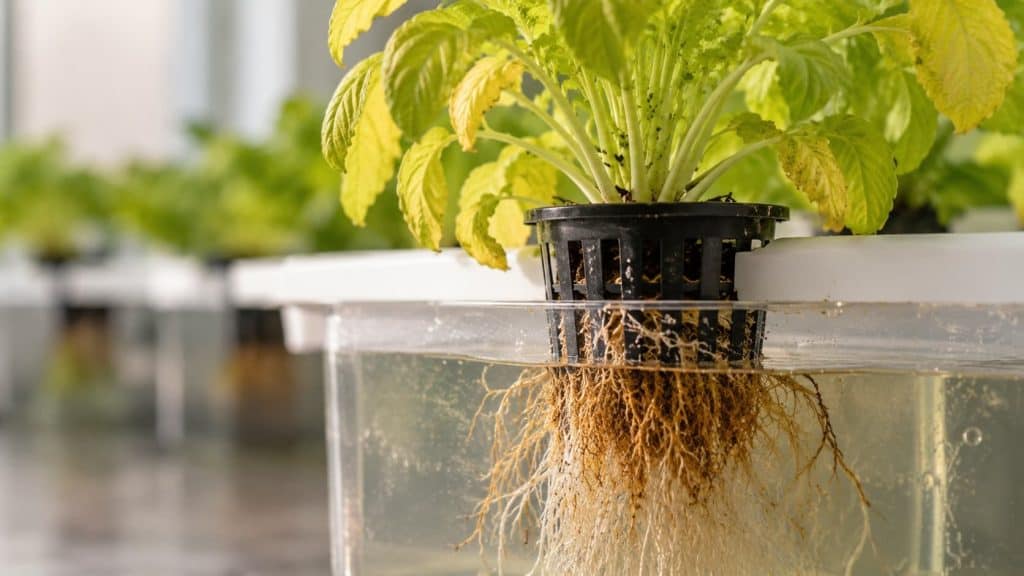
The flush fixes the problem, but the recovery phase is where you get the plants back on track. Protocols from growers like Rootbox Hydro suggest a careful, step-by-step approach to avoid slipping right back into lockout.
First, let the roots rest. After flushing, many growers run pH-balanced water briefly before refeeding at reduced strength, but the exact duration depends on crop condition and system type. This gives the roots a chance to stabilize in a clean, low-stress environment. Keep checking your pH during this period, it needs to stay steady.
Then, start feeding again, but slowly. Don’t jump back to your full-strength nutrient mix. Start with a solution at about 50% strength. Watch your EC meter; you want to see it start to drop slowly as the plants actually begin using the nutrients again.
Look for these signs that your plants are recovering:
- New growth appears, and it’s a healthy green color.
- The structure of new leaves looks normal, not twisted or deformed.
- The EC in your reservoir begins a gradual, steady decline.
The old, damaged leaves probably won’t heal. They might stay yellow or spotted. Focus on the new growth as your real indicator of success. Once you see steady improvement over a few days, you can very slowly increase your nutrient strength back to normal levels. This gradual refeeding rebuilds balance without shocking the root system again.
Fixing Root and Environmental Issues That Trigger Lockout

Credits: GreeenPlanet Wholesale
Sometimes the problem isn’t just in the water, it’s with the roots themselves, or the environment around them. Fixing these issues is key for a long-term solution.
First, look at your roots. Healthy roots should be white or light tan, and they shouldn’t smell bad. If they’re brown, slimy, or have a foul odor, you likely have root rot. This damage directly blocks nutrient uptake and makes any chemical lockout much worse.
Temperature is a silent culprit. Studies, like those from Pure Greens AZ, show that when reservoir temperature rises above about 22°C, dissolved oxygen drops and root-stress risk increases. Roots suffocate, stress increases, and harmful pathogens thrive.
Here’s what you can do to create a better environment:
Improve Oxygenation
- Add more air stones or increase the power of your air pump. More bubbles mean more oxygen for the roots.
Control Temperature
- Keep your nutrient solution cool. Use a reservoir chiller if needed, or simply place your tank in a cooler part of your grow space. Aim for below 22°C.
Clean Up the Roots
- Gently remove any clearly dead or decaying root material. Be careful not to damage healthy roots.
Supporting Actions
- Use clean, inert growing media like clay pebbles or rockwool.
- Cover your reservoir to block light, which prevents algae growth that competes with your plants.
A stable, cool, and oxygen-rich root zone is essential. Without it, even a perfectly balanced nutrient solution won’t work, because the roots are too damaged or stressed to use it.
Long-Term Strategies to Prevent Nutrient Lockout
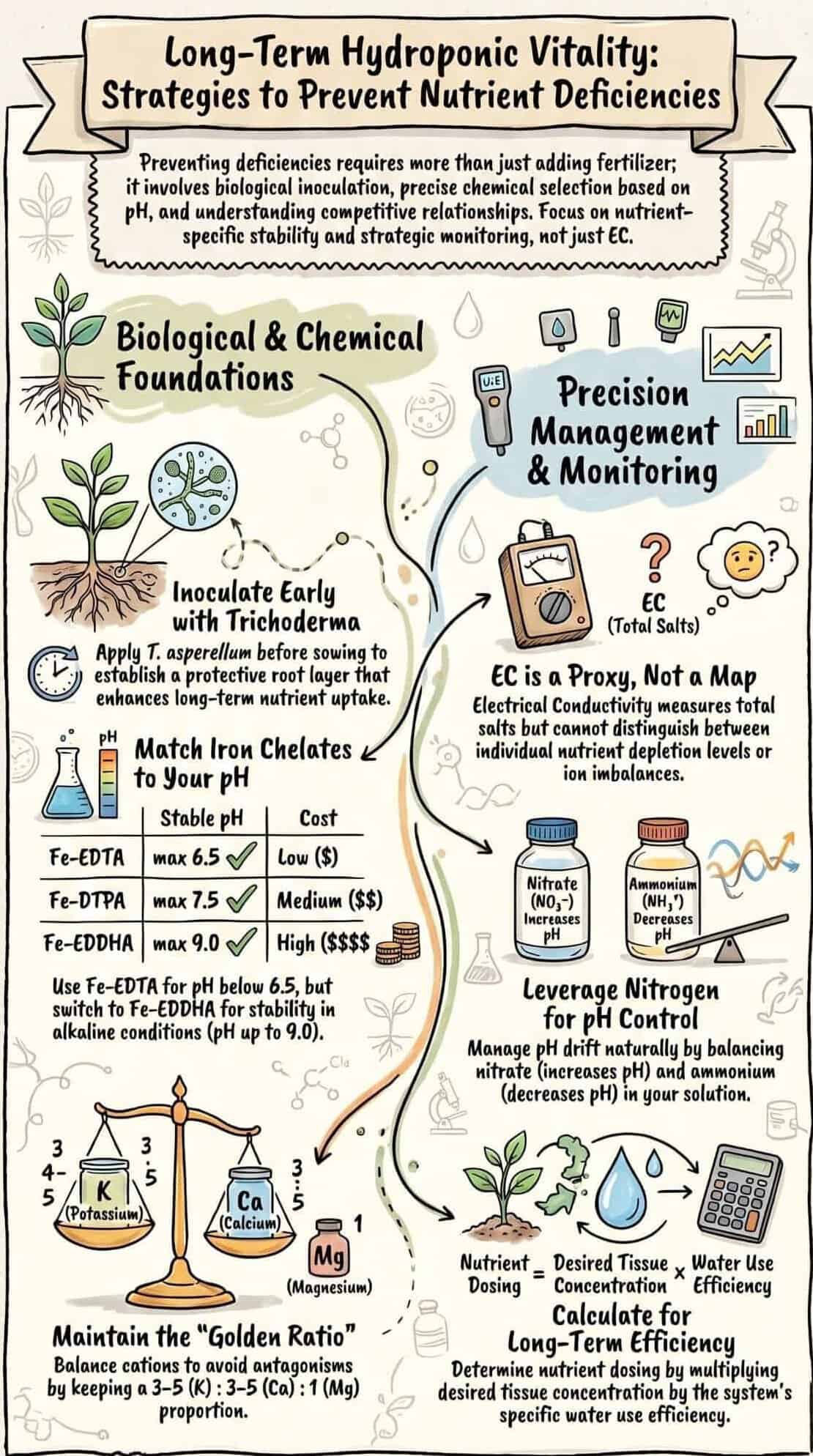
Stopping lockout is about building a routine. It’s not one big fix, but a bunch of small habits that keep your system in check.
Check your pH every day. Get used to doing it. A quick check with your meter keeps you in the safe zone between 5.5 and 6.5. Tweaking it a little bit today is easier than fixing a huge drift tomorrow.
Proper monitoring of nutrient concentrations using electrical conductivity tools allows precise control of plant feeding based on base nutrient profiles to optimize growth and prevent lockout.
In a working system, the EC should go down as the plants drink and eat. If the EC is rising even though the water level is dropping, that’s your first clue salts are building up.
Change the reservoir on a weekly schedule for many recirculating systems, especially DWC. This is especially key for systems like DWC where the water recirculates. A fresh batch of nutrients every seven days wash away the slow creep of leftover salts and keep everything in proportion.
Start with clean water. If your tap water leaves a white crust on your kettle, it’s probably hard. Using filtered or RO water gives you a blank slate. You know exactly what you’re putting in.
Mix nutrients in the right order. Follow the bottle instructions. Typically, you add silica first, then calmag, then the main nutrients, and any extras last. This order stops chemicals from clumping together and locking out.
Clean your gear. Take time to scrub the reservoir, rinse the tubing, and clean or replace air stones. It stops that slimy biofilm and crusty salt residue from causing problems down the line.
Lockout happens when small things get ignored. A pH drift you didn’t catch, a reservoir you didn’t change, and salts you didn’t wash off. Doing the maintenance consistently is what keeps your plants fed and growing without hiccups.
Flushing Alone Often Fails Based on Real Grower Insights
Sometimes a flush doesn’t fix the problem. Grower forums like THCFarmer have plenty of stories where someone drained their reservoir, refilled it, and the plants still looked sick. The flush treated the symptom, the high salt concentration, but not the underlying cause.
Here are the usual reasons a simple flush fails:
The Water Source is Bad. If your tap water is very hard (full of calcium and carbonates), flushing with it just reintroduces the same problematic minerals. You’re cleaning out old salts but adding new ones.
The Roots Are Already Damaged. Flushing removes the chemical barrier, but if the roots are brown and rotten from disease or low oxygen, they can’t recover. They still can’t absorb nutrients properly.
EC Isn’t Actually Lowered. In severe cases, a flush may not be enough if the system still has high salt buildup or damaged roots. A quick flush might not lower it enough if the salt buildup is extreme on the roots and equipment. You need a thorough clean.
Over-Flushing Stresses Plants. Switching from a high-nutrient solution to pure water for too long can shock the roots and cause temporary deficiencies. The plant goes from one extreme to another.
Common mistakes that lead to failure:
- Not addressing hard water.
- Not measuring EC after the flush to confirm it dropped.
- Jumping back to full-strength nutrients too quickly.
- Ignoring aeration; low oxygen keeps roots stressed.
A successful recovery depends on fixing the cause. Was it high pH? Bad water? Root rot? Just flushing the tank won’t solve those. You have to identify and correct the original problem.
Fix the Root, Not the Symptoms
Lockout isn’t random, it’s a breakdown in nutrient uptake in plants. When it happens, guessing makes it worse. Precision fixes it.
Reset everything. Stabilize your numbers. Rebuild the roots. Then reintroduce nutrients with control, not hope. Your system should move from chaos back to balance step by step.
The real edge comes from discipline: watching pH, EC, and water quality daily, not occasionally. Tools matter because data removes guesswork.
Hydro systems recover fast when you act correctly. Miss the sequence, and you delay growth. Follow it, and new life shows up within days.
Control the environment, and the plant will handle the rest.
FAQ
What causes nutrient lockout in hydroponic systems most often?
Nutrient lockout in hydroponics most often occurs due to pH imbalance in hydroponics and unstable EC levels in hydroponics. When ppm in hydroponic systems becomes too high, salt buildup in hydroponics and increased root zone salinity restrict nutrient uptake. Overfeeding plants, poor nutrient solution formulation, and high water hardness also contribute. These factors reduce ion uptake and trigger nutrient deficiency symptoms or nutrient toxicity.
How do I identify nutrient deficiency symptoms versus nutrient toxicity quickly?
You can identify the difference by observing plant symptoms and confirming with measurements. Yellowing leaves hydroponics often indicate nitrogen lockout or iron deficiency, while burnt leaf tips usually signal nutrient toxicity caused by over fertilizing hydroponics. Leaf curling from nutrients may point to potassium lockout or calcium deficiency. Check EC levels in hydroponics using an EC meter or PPM meter to confirm whether levels are too high or too low.
How should I fix pH imbalance and stabilize nutrient uptake?
You should measure pH using reliable pH meters for hydroponics and correct pH swings in hydroponics with controlled adjustments using pH up and pH down. Maintaining stable pH supports proper nutrient ratios, including NPK in hydroponics and essential micronutrients. You should also control nutrient solution temperature and maintain adequate dissolved oxygen in hydroponics. These steps improve root health, support ion uptake, and prevent micronutrient lockout and macronutrient lockout.
What is the best way to remove salt buildup and reset the system?
The most effective method is flushing hydroponic systems with clean water. Root flushing helps leaching salts and reduces root zone salinity quickly. You should follow a consistent reservoir change schedule and improve hydroponic reservoir maintenance practices. Removing algae in reservoir, using a reservoir cover, and maintaining dark reservoirs will improve nutrient solution clarity and reduce the risk of recurring hydroponic nutrient lockout.
How can I prevent nutrient lockout in different hydroponic setups?
You can prevent nutrient lockout by adjusting practices based on your system type. In recirculating hydroponic systems such as deep water culture or DWC nutrient lockout setups, maintain proper nutrient solution aeration and dissolved oxygen in hydroponics. In NFT nutrient lockout or nutrient film technique systems, ensure consistent flow. In drip irrigation hydroponics and ebb and flow systems, avoid overfeeding plants and maintain balanced nutrient ratios using base nutrients, grow nutrients, and bloom nutrients.
References
- https://en.wikipedia.org/wiki/Plant_nutrition
- https://pmc.ncbi.nlm.nih.gov/articles/PMC8964292/
Related Article
- https://tophydroponicgarden.com/nutrients/
- https://tophydroponicgarden.com/organic-nutrients-for-hydroponics/
- https://tophydroponicgarden.com/what-are-hydroponic-base-nutrients/
Was this helpful?
