

Filtering tap water for hydroponics helps remove chlorine, excess minerals, sediment, and dissolved contaminants that can interfere with nutrient balance, root health, and plant development.
Hydroponic systems rely entirely on water to deliver nutrients directly to plant roots. Unlike traditional soil gardening, hydroponics has very little natural buffering against poor water conditions. This means even small issues in tap water quality can gradually affect nutrient absorption, pH stability, and overall plant health.
Many beginner growers start with ordinary tap water because it is affordable and easily available. However, municipal water often contains chlorine, chloramine, heavy minerals, dissolved solids, and other treatment additives that may disrupt hydroponic nutrient solutions over time.
Learning how to filter tap water for hydroponics is not necessarily about creating perfectly pure laboratory water. Instead, it is about creating clean, stable, and manageable water conditions that allow plants to absorb nutrients efficiently while reducing stress on the hydroponic system.
Today, hydroponic growers commonly use sediment filters, activated carbon systems, reverse osmosis filtration, and aeration methods to improve water quality while maintaining cost efficiency and nutrient control.
Core Principles of Filtering Tap Water for Hydroponics
- Filtering tap water for hydroponics focuses on removing contaminants and stabilizing water chemistry before nutrients are introduced into the system.
- Core filtration strategies include sediment removal, chlorine reduction, dissolved mineral control, and water quality monitoring depending on local tap water conditions.
- While advanced filtration systems may require additional maintenance and mineral supplementation, properly filtered water improves nutrient consistency, root development, and long-term hydroponic stability.
Understanding Tap Water Filtration for Hydroponics
Definition and Principles of Hydroponic Water Filtration
After experimenting with different hydroponic systems, many growers discover that water quality directly influences nutrient absorption, root health, and crop consistency. At its core, filtering tap water for hydroponics means removing or reducing substances that interfere with nutrient delivery and plant development.
Instead of relying entirely on untreated municipal water, hydroponic growers improve water quality through several foundational approaches:
Chlorine and Chloramine Reduction
Municipal water systems commonly use disinfectants such as chlorine and chloramine to control bacteria. While useful for public sanitation, these chemicals may negatively affect beneficial microbial activity and root-zone stability inside hydroponic systems.
Sediment and Particle Removal
Sediment filtration removes rust, dirt, sand, and microscopic debris that can accumulate inside pumps, tubing, drip emitters, and hydroponic reservoirs.
Mineral and Hardness Management
Hard water contains elevated levels of calcium, magnesium, and dissolved minerals that may interfere with nutrient formulas and pH balance.
Dissolved Contaminant Reduction
Advanced filtration systems help reduce dissolved solids, heavy metals, fluoride, and unwanted compounds that gradually build up inside nutrient reservoirs.
Because hydroponic plants depend entirely on water-based nutrition, water quality becomes one of the most important factors in overall system performance.
Key Components of Filtering Tap Water for Hydroponics

Most successful hydroponic filtration systems rely on several essential components that work together to improve water stability and nutrient control.
1. Sediment Filtration
Sediment filters physically remove particles before water enters more advanced filtration stages.
Common contaminants include:
- Sand
- Rust particles
- Pipe debris
- Dirt
- Organic sediment
This helps protect hydroponic equipment while extending the lifespan of additional filters.
2. Activated Carbon Filtration
Activated carbon filters help reduce:
- Chlorine
- Chemical odors
- Organic compounds
- Certain pesticides
Carbon filtration is widely used in small hydroponic systems because it is relatively affordable and effective for improving general water quality.
3. Reverse Osmosis (RO) Systems
Reverse osmosis systems force water through semi-permeable membranes to reduce:
- Dissolved salts
- Heavy metals
- Excess minerals
- Fluoride
- High TDS levels
RO filtration provides growers with greater control over nutrient formulation because the starting water contains fewer interfering substances.
4. Water Aeration and Resting
Allowing tap water to sit with aeration may help dissipate chlorine naturally over time.
Air stones and circulation pumps also improve oxygen levels before nutrients are mixed into the reservoir.
5. Continuous Water Monitoring
Proper hydroponic filtration also requires monitoring:
- pH
- Electrical conductivity (EC)
- Total dissolved solids (TDS)
- Water temperature
Stable water chemistry improves nutrient uptake and reduces plant stress.
When balanced properly, these components create cleaner and more predictable hydroponic growing conditions.
Benefits of Filtering Tap Water for Hydroponics
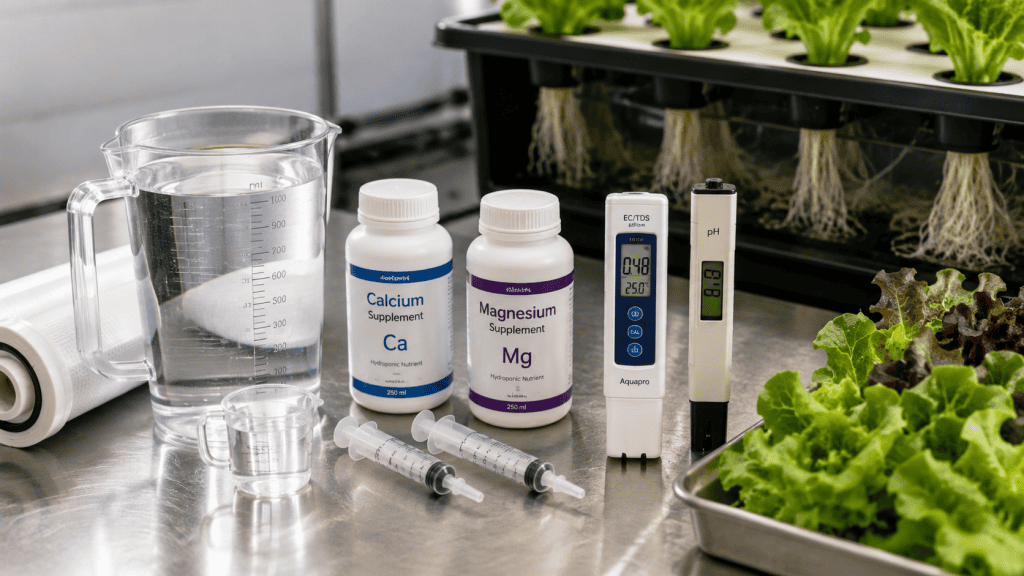
Transitioning to filtered water in hydroponics provides significant improvements in nutrient consistency, root stability, and overall plant performance.
Here are some of the primary benefits of proper hydroponic water filtration:
Improved Nutrient Absorption
Cleaner water reduces competition between unwanted dissolved minerals and hydroponic nutrients, helping plants absorb nutrients more efficiently.
Better pH Stability
Excess minerals and contaminants often contribute to unstable pH levels. Filtered water creates more manageable nutrient solutions.
Healthier Root Development
Reducing chlorine and dissolved contaminants helps create a less stressful environment for roots while improving oxygen availability.
Reduced Equipment Clogging
Sediment and mineral buildup may clog:
- Pumps
- Drip emitters
- Spray nozzles
- Irrigation tubing
- Air stones
Filtered water helps reduce maintenance requirements and extends equipment lifespan.
Greater Nutrient Precision
Hydroponic growers gain more control over nutrient formulas when starting with cleaner baseline water conditions.
Types of Tap Water Filtration Methods for Hydroponics
| Filtration Method | How It Works | Why It Helps Hydroponics | Common Applications |
| Sediment Filter | Removes physical particles through mesh filtration | Prevents clogging and protects equipment | Pre-filter systems |
| Activated Carbon Filter | Absorbs chlorine and organic chemicals | Improves root-zone water quality | Indoor hydroponic gardens |
| Reverse Osmosis (RO) | Removes dissolved solids through membrane filtration | Produces low-TDS purified water | Advanced hydroponic systems |
| Aeration and Resting | Allows chlorine to dissipate naturally | Low-cost water improvement | Beginner hydroponics |
| UV Filtration | Uses ultraviolet light to reduce microorganisms | Helps limit biological contamination | Commercial operations |
According to general references discussing reverse osmosis:
“Reverse osmosis is a water purification process that uses a partially permeable membrane to separate ions and unwanted molecules from water.”
– Reverse osmosis overview
This explains why reverse osmosis systems are commonly used in hydroponic nutrient management.
Applications and Real-World Practice
Filtering tap water for hydroponics supports many different growing environments and production systems.
Home Hydroponic Gardens
Small indoor growers often use carbon filtration or resting methods to improve tap water quality while maintaining affordability.
Deep Water Culture (DWC) Systems
DWC setups benefit from cleaner water because roots remain constantly submerged inside nutrient reservoirs.
Drip Irrigation Hydroponics
Filtered water helps reduce emitter clogging and mineral buildup inside irrigation tubing.
Commercial Hydroponic Farms
Large-scale hydroponic operations frequently rely on reverse osmosis systems to achieve precise nutrient control and consistent production.
Seedling and Propagation Systems
Young plants are especially sensitive to unstable water conditions and often perform better in clean, low-contaminant nutrient solutions.
The flexibility of hydroponic filtration methods allows growers to adapt water treatment systems based on budget, crop type, and local water conditions.
Addressing Limitations and Challenges
Reverse Osmosis Removes Beneficial Minerals
RO systems remove both harmful and beneficial minerals. Growers may need to supplement calcium and magnesium after filtration.
Filtration Systems Require Maintenance
Filters and membranes gradually lose efficiency and require regular replacement to maintain performance.
Some RO Systems Produce Wastewater
Reverse osmosis filtration may generate wastewater during purification.
Water Quality Varies by Region
Not all tap water requires aggressive filtration. Some municipal systems already provide relatively balanced water for hydroponics.
Initial Setup Costs
Advanced filtration equipment may require higher upfront investment.
However, long-term improvements in nutrient stability and crop consistency often justify these costs.
Best Practices for Filtering Tap Water for Hydroponics
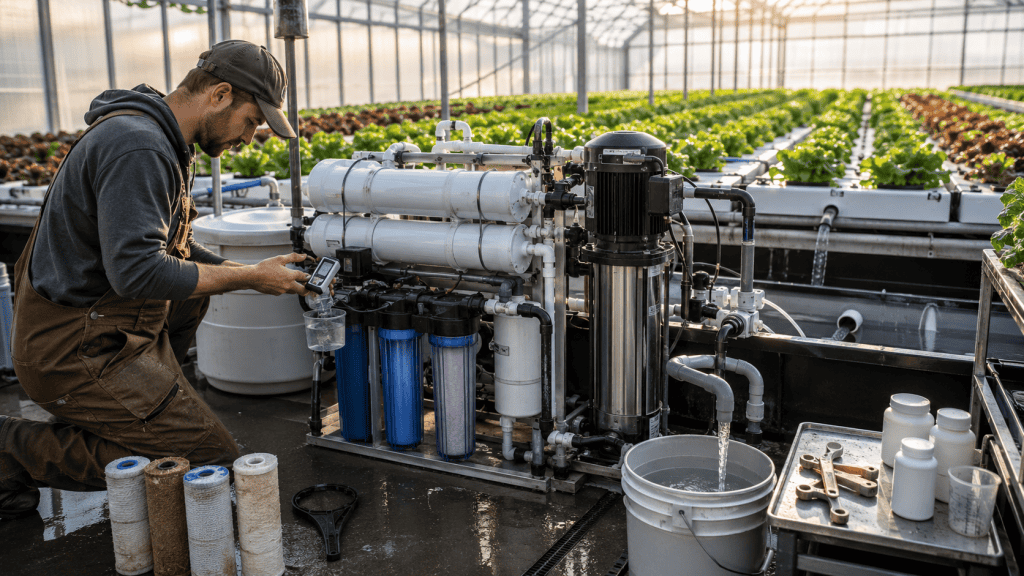
Test Water Before Installing Filters
Measure:
- pH
- EC
- TDS
- Water hardness
- Chlorine levels
Testing helps growers choose the correct filtration system instead of over-filtering unnecessarily.
Match Filtration to Specific Water Problems
Different water conditions require different solutions:
- Carbon filters for chlorine
- RO systems for high TDS
- Sediment filters for particles
According to general references discussing hydroponics:
“High electrical conductivity or salt content in the water source may create problems for hydroponic crops, which is why filtration should match the actual water issue.”
– Hydroponics – Wikipedia
Replace Filters Consistently
Dirty filters reduce efficiency and may eventually contaminate the nutrient system.
Monitor Reservoir Stability
Even filtered water still requires:
- pH adjustment
- EC monitoring
- Nutrient balancing
- Reservoir cleaning
Store Filtered Water Properly
Filtered water should remain:
- Covered
- Cool
- Oxygenated
This helps reduce contamination and algae growth.
Best hydroponic crops for filtered water systems include:
- Lettuce
- Basil
- Tomatoes
- Spinach
- Strawberries
- Microgreens
Recommended YouTube Videos
https://www.youtube.com/watch?v=qQFXF198gvk
Source: Hoocho
This video serves as an effective practical companion to the grow-to-bloom nutrient section, illustrating how dietary adjustments integrate with real-world hydroponic management. By highlighting the relationship between plant development stages and reservoir balance, it reinforces the importance of active feeding monitoring over static, predetermined schedules.
FAQs
Why is filtering tap water important for hydroponics?
Filtering tap water for hydroponics helps reduce chlorine, sediment, dissolved minerals, and contaminants that may interfere with nutrient absorption and root health. Because hydroponic plants rely entirely on water-based nutrients, stable water quality plays a major role in overall plant performance.
Can hydroponic plants grow using untreated tap water?
Yes, hydroponic plants can sometimes grow using untreated tap water depending on local water conditions. However, high chlorine levels, hard water minerals, and dissolved contaminants may create nutrient imbalance and pH instability over time. Filtering tap water improves consistency and nutrient control.
Is reverse osmosis necessary for hydroponics?
Reverse osmosis is not always necessary for hydroponics, but it becomes useful in areas with hard water or high TDS levels. RO systems help growers create cleaner baseline water conditions for more precise nutrient management.
Which filtration system is best for beginners?
Activated carbon filters are often the best starting point for beginner hydroponic growers because they reduce chlorine and improve water quality without requiring complex installation. More advanced growers may later upgrade to reverse osmosis systems.
Does filtered water improve hydroponic growth?
Yes, filtered water often improves hydroponic growth by stabilizing nutrient availability, reducing root stress, and improving overall nutrient solution consistency. Cleaner water also helps reduce maintenance problems caused by mineral buildup and sediment accumulation.
Wrapping Up Filtering Tap Water for Hydroponics
Hydroponic gardening depends heavily on water precision, and water quality directly affects plant health, nutrient stability, and long-term system performance.
By focusing on:
- Proper filtration
- Stable water chemistry
- Controlled mineral levels
- Clean nutrient delivery
- Consistent monitoring
Growers can create healthier hydroponic environments with stronger roots and more reliable plant growth.
It takes some experimentation and maintenance, but the long-term benefits are substantial. Nutrient solutions become easier to manage. Equipment remains cleaner. Plants grow more consistently and efficiently.
For serious hydroponic growers, learning how to filter tap water is not simply maintenance, it is one of the foundations of successful hydroponic cultivation.
References
- https://en.wikipedia.org/wiki/Hydroponics
- https://en.wikipedia.org/wiki/Reverse_osmosis
Related Articles
- https://tophydroponicgarden.com/hydroponic-supplies-basics/
- https://tophydroponicgarden.com/reverse-osmosis-water-for-hydroponics/
- https://tophydroponicgarden.com/hydroponic-nutrient-solution-basics/
Was this helpful?

I’m Barrie L., a passionate hydroponic gardening enthusiast dedicated to cultivating thriving, soil-less gardens. With a focus on all things hydroponic, I share my expertise on innovative growing techniques and sustainable practices through my blog, tophydroponicgarden.com. As a seasoned hydroponics specialist, my goal is to inspire and guide fellow gardeners in harnessing the power of water-based cultivation for bountiful and eco-friendly harvests. I’m also an author of the book “Hydroponics For Absolute Beginners: Your Step By Step Guide For How To Create An Hydroponics System At Home Without Soil, For Growing Vegetable, Fruit And Herbs.” which is sold on Amazon. Join me on a journey of redefining the way we cultivate plants, one nutrient-rich solution at a time. Happy growing!