

Hydroponics is a way to grow plants without soil, using water filled with nutrients instead. To a child, it can feel a bit like plant magic, but it’s really just smart science made visible.
The roots hang in water or a special material, drinking their “plant food” directly, so growth can be faster and cleaner than in regular dirt.
Kids can actually see the roots, talk about how water is reused, and even grow simple snacks like lettuce or herbs. It turns science into something they can touch, track, and taste, keep reading to see the easiest way to explain it.
Key Takeaways
- Hydroponics gives plants a direct “magic drink” of food and water, skipping the soil.
- It lets kids see roots grow and learn about water conservation in a clear, visual way.
- Starting is simple with a jar, water, plant food, and seeds for a quick, rewarding project.
What is Hydroponics? The Magic Drink for Plants

Think of a plant as a kid who needs to eat and drink to grow. Normally, a plant sits in soil, which acts like a big, messy lunchbox holding its water and food. The roots have to search through the dirt to find what they need.
Hydroponics changes all that. It’s like taking the lunch out of the box and handing the plant a smoothie. A magic smoothie that has everything the plant requires, right there for easy sipping.
The roots dangle directly into water that’s mixed with special plant food, called nutrients. There’s no soil involved.
This direct delivery of nutrients resembles the efficiency seen in modern hydroponic gardening systems that minimize waste and maximize growth speed.
This direct access means the plant doesn’t waste energy digging for a meal. It just drinks and grows. It’s a cleaner, more efficient way to garden. You can see it all happen in a clear container, which is part of the fun.
- Plants need water, air, light, and minerals.
- Soil is just one way to deliver those things.
- Hydroponics delivers them more directly through water.
This method isn’t newfangled or overly complex. It’s a straightforward system that highlights the basic needs of a plant.
By removing the soil, you remove the mystery. A child can understand that plants don’t eat dirt. They eat what’s in the dirt, and we can give that to them in water instead.
Why is Hydroponics So Cool? Superpowers for Plants
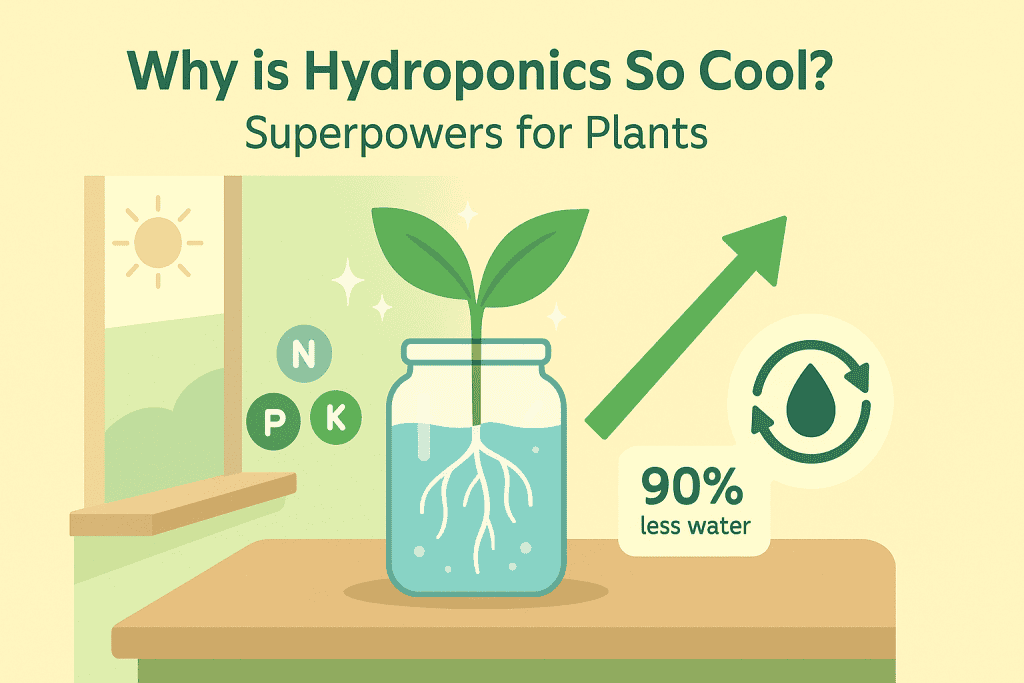
One of the best parts for a child is the visibility. In a traditional garden, the most interesting part, the root system, is hidden underground.
With hydroponics, you use a clear container. The roots are on full display, stretching and searching through the water like white tentacles.
This transparent setup is a fantastic example of the principles behind getting started with hydroponics at home, where easy-to-understand systems bring science to life.
It becomes a living science experiment on the windowsill. You can watch the entire growth process from seed to salad.
Hydroponics is also remarkably efficient with water. In a soil garden, a lot of water is lost. It drains away deep into the ground or evaporates into the air.
A hydroponic system recycles the same water over and over. The plant uses what it needs, and the rest stays in the reservoir. It can use up to 90% less water than growing in soil. This is a powerful, tangible lesson in conservation for a young mind.
Plants often grow faster this way. Since they get their food and water delivered so easily, they can put all their energy into getting bigger.
You might see a lettuce plant reach full size in weeks instead of months. That quick reward is thrilling for a kid who is impatient to see results. It’s perfect for small spaces, too, like an apartment or a classroom, bringing nature indoors.
Hydroponics vs. Soil: Muddy Cups vs. Clean Baths
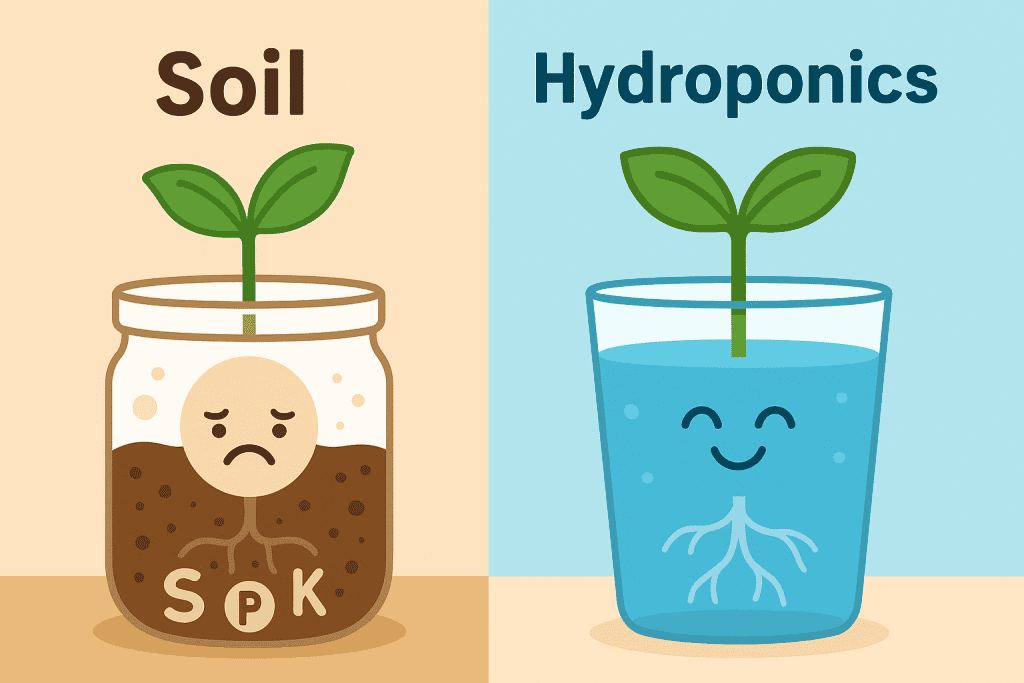
The difference between the two methods is easy to picture. Growing in soil is like giving a plant a muddy cup of water with some food crumbs mixed in.
The plant has to strain the mud out to get to the good stuff. It’s a lot of work. Hydroponics, on the other hand, is like giving the plant a clean, refreshing bath filled with exactly the vitamins it craves. The plant can just relax and absorb what it needs without any fuss [1].
This direct line to nutrients means fewer problems with pests and diseases that live in soil. There are no weeds to pull.
The environment is controlled and clean. For a child, this means less mess and more focus on the plant itself. They learn that the soil isn’t the food; it’s just the delivery truck. And with hydroponics, we’ve invented a faster, smarter truck.
The comparison makes the science behind plant growth much clearer. It strips gardening down to its essentials.
A child understands that light, water, air, and food are the real heroes. The soil is optional. This can lead to great conversations about how plants might grow in space or in places with poor ground. It opens up a world of possibilities.
Building Your Own Hydroponic Garden

Credits: BuildersSA
You don’t need a fancy kit to start. The simplest method is the Kratky method, which is perfect for a first try. Find a clear container, like a mason jar or a plastic bottle with the top cut off. This transparency is key for observation.
The child can be a scientist, watching every change. The setup is quick, which helps maintain their interest from the very beginning.
Although there are many myths around hydroponic systems, such as complexity or unsustainability, common myths about hydroponic growing are easily debunked with simple projects like this.
Next, you’ll need water and hydroponic nutrients. These nutrients are the “plant food” that makes the magic happen.
You can find small bottles online or at a garden store. Mix them into the water according to the instructions. It’s like making a special potion.
Then, you need a way to support the plant. A small net cup with a growing medium like rockwool or a sponge works perfectly. The seeds go into the medium.
- A clear jar or bottle
- Water mixed with hydroponic nutrients
- A net cup or a hole in the lid
- A growing medium like a sponge or rockwool cube
- Seeds (lettuce or herbs are great starters)
Place the cup with the seed in the lid of the jar so the bottom of the medium just touches the nutrient water. The roots will grow down to drink.
Put the jar in a bright spot, like a sunny windowsill. An air pump can add bubbles to give the roots oxygen, but it’s not necessary for a simple starter setup. The most important task is to watch the water level and refill it as the plant drinks.
What Plants Need to Grow: The Shopping List
Explaining a plant’s needs is simpler when you can point to each element in your hydroponic jar.
Water is the most obvious one. It’s the delivery system for the nutrients and it keeps the plant hydrated, just like we need to drink. In hydroponics, the water is doing all the heavy lifting, carrying the food directly to the roots [2].
Plants also need air, specifically oxygen around their roots. In soil, air pockets provide this. In a hydroponic system, if the water is still, the roots might not get enough oxygen.
This is why adding an air stone to create bubbles is a good idea. It’s like giving the roots a fizzy drink. Light is the plant’s energy source.
Through photosynthesis, the plant uses light to turn water and nutrients into food for growth. A sunny window or a simple grow light provides this.
The nutrients are the plant’s vitamins. The main ones are Nitrogen (N) for green, leafy growth, Phosphorus (P) for strong roots, and Potassium (K) for overall health and fruiting.
When you mix these into the water, you’re creating a complete, balanced meal. It’s easier for a child to grasp that plants need specific minerals when they see you adding them to the water yourself.
Fun Plants to Grow for Yummy Snacks
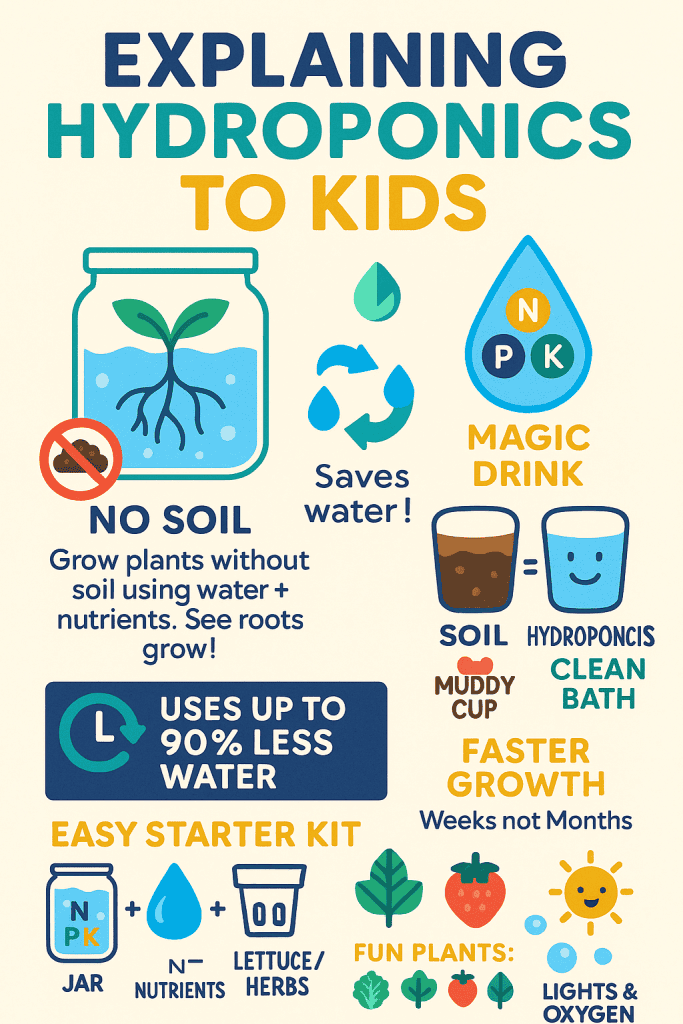
The best plants for a child’s first hydroponic garden are fast-growing and edible. There’s nothing more rewarding than eating something you grew yourself.
Leafy greens are ideal because they grow quickly and don’t require pollination. Lettuce is a classic choice. You can start harvesting the outer leaves in a few weeks, and the plant will keep growing.
Herbs are another great option. Basil grows vigorously in hydroponic systems and has a strong, pleasant smell that kids enjoy.
Mint is almost impossible to kill, but it’s best grown alone as it can take over. Cherry tomatoes are a bit more advanced but incredibly rewarding.
They require more light and possibly a small fan to pollinate the flowers, but the payoff of sweet, home-grown tomatoes is huge.
Strawberries can also be grown hydroponically. They might take a bit longer, but the idea of growing your own strawberries indoors is very exciting.
Starting with something simple like lettuce ensures a successful first experience. That success builds confidence and curiosity, leading to more complex projects later on.
Your First Hydroponic Adventure
The goal isn’t to become an expert farmer overnight. It’s to spark curiosity. A simple jar garden on the windowsill is a powerful teaching tool. It demonstrates biology, ecology, and patience in a way a textbook never could.
The child isn’t just learning about plants; they are learning about care, observation, and the satisfaction of nurturing life.
This hands-on approach makes abstract concepts concrete. Water conservation is no longer just a phrase; it’s a fact they see as the same water circulates week after week.
Plant biology is the white roots they watch lengthen every day. Start small, celebrate the first sprouts, and enjoy the process together.
The real harvest is the wonder it grows in a child’s mind. Find a jar and some seeds, and start your adventure today.
FAQ
How can I introduce hydroponics for kids at home without making it complicated?
You can begin with a small hydroponic cup experiment or another simple growing system that clearly shows plant roots in water.
Children enjoy hands-on hydroponics because the steps feel like fun plant experiments. A beginner hydroponics guide can help you give a simple hydroponics explanation while teaching how water helps plants grow and why plants often grow faster in this setup.
What makes kid-friendly hydroponics different from regular gardening?
Kid-friendly hydroponics simplifies the process by growing plants without soil and using tools that make a basic plant system explanation easy to understand.
Children can see how plants drink water and how plants eat through a simple nutrient solution. This approach turns child-friendly gardening into easy science for kids and supports gardening for young learners with clear, visible results.
How do I choose hydroponic learning activities for children who love science?
You can choose hydroponic learning activities by focusing on hydroponic project ideas that feel like children’s science projects, such as a hydroponic model for kids or a hydroponic demo for kids.
These activities work well in STEM plant projects and science class hydroponics. Children understand the water and nutrients lesson more easily when they record progress in a kids plant journal.
What’s the best way to teach hydroponics basics for children in a classroom setting?
Teachers can use a hydroponic classroom lesson that highlights teaching plants without soil while keeping the setup small and manageable.
A small hydroponic setup for kids supports easy germination for kids and clear roots and water lesson discussions. Students also learn well through a hydroponic roots example demonstration, which reinforces kid-friendly plant facts and easy plant science for kids.
Which plants work well for hydroponic activities at home with young learners?
Lettuce and simple herbs work well for hydroponic activities at home because they grow quickly and respond well to water-based gardening.
These choices fit child-level plant science goals and support simple plant growth lesson activities. They also encourage kid-friendly nature learning, basic gardening for children, and growing food at home for kids while keeping the process clean and easy to observe.
Conclusion
Hydroponics turns simple materials into a living science story kids can touch, watch, and enjoy.
With just a jar, some water, and a little plant food, children discover how roots grow, how water is saved, and how plants thrive without soil. It’s clean, fast, and endlessly fascinating.
Most of all, it invites curiosity, showing kids that nature is full of surprises waiting to be explored. Start small, stay curious, and let the adventure grow.
References
- https://www.farmtoschool.org/resources-main/exploring-hydroponics-a-classroom-lesson-guide
- https://pmc.ncbi.nlm.nih.gov/articles/PMC10909207/
Related Articles
- https://tophydroponicgarden.com/is-hydroponic-gardening-sustainable/
- https://tophydroponicgarden.com/getting-started-with-hydroponics-at-home/
- https://tophydroponicgarden.com/common-myths-about-hydroponic-growing/
Was this helpful?

I’m Barrie L., a passionate hydroponic gardening enthusiast dedicated to cultivating thriving, soil-less gardens. With a focus on all things hydroponic, I share my expertise on innovative growing techniques and sustainable practices through my blog, tophydroponicgarden.com. As a seasoned hydroponics specialist, my goal is to inspire and guide fellow gardeners in harnessing the power of water-based cultivation for bountiful and eco-friendly harvests. I’m also an author of the book “Hydroponics For Absolute Beginners: Your Step By Step Guide For How To Create An Hydroponics System At Home Without Soil, For Growing Vegetable, Fruit And Herbs.” which is sold on Amazon. Join me on a journey of redefining the way we cultivate plants, one nutrient-rich solution at a time. Happy growing!