

Leaves tell you what’s wrong with a plant long before it’s too late. Changes in their color or texture are early warnings for nutrient shortages, pests, or disease. A correct diagnosis is key, since the same yellow leaf could mean too little nitrogen or too much water.
Learning to read these signs lets you spot trouble early, whether you’re growing tomatoes or a fiddle-leaf fig. Here’s how to build a practical system for diagnosing plant problems.
Quick Guide to Reading Leaf Symptoms
- Leaf position, color, texture, and damage patterns provide valuable clues for plant disorder diagnosis.
- Nutrient deficiencies, diseases, pests, and environmental stress produce different symptom patterns on leaves.
- A systematic diagnosis process reduces treatment mistakes and improves plant recovery rates.
Leaf Diagnosis at a Glance
In my years managing greenhouses, I’ve learned that plant problems stop being mysteries the moment you look at the leaves in a structured order. This diagnostic roadmap stops you from jumping to conclusions.
When I spot yellowing on fresh, new growth, my first instinct is to check for an iron deficiency, whereas yellowing on older, lower leaves almost always sends me looking for a nitrogen shortage.
By moving logically from location to the details of the damage, you filter out the noise and get to the probable cause. Now, let’s start with the first and most telling clue: where the problem is showing up.
Following this sequence turns a confusing symptom into a clear direction for a fix. We’ll go through each step next.
The five observations every gardener should make include:
- Identify whether symptoms appear on old or new leaves.
- Examine leaf color changes and leaf vein discoloration.
- Check texture changes such as wilting, crispness, or mushiness.
- Look for pests, eggs, webbing, honeydew, or feeding damage.
- Review recent watering, fertilizer, weather, and chemical exposure.
Many gardeners mistakenly treat symptoms instead of identifying root causes. A yellow leaf is not a diagnosis. It is a clue.
That’s the core of accurate diagnosis. A single symptom, like yellow leaves, is just a starting point. You need the full pattern, the location, the specific color change, the texture, and any damage, to see the real picture.
Color is Your Second Clue
Once you’ve noted the location, look closely at the yellowing itself. Is the entire leaf turning a pale, uniform yellow? Or are the veins staying green while the tissue between them turns yellow?
- Uniform Yellowing: This usually points to a nitrogen deficiency, especially if it’s on the older leaves. It can also signal over-watering, as soggy roots can’t take up nutrients.
- Veins Remain Green (Interveinal Chlorosis): This pattern is a classic sign of iron deficiency when it appears on new growth. For older leaves, it might indicate a magnesium shortage.
The texture of the leaf often confirms what the color suggests. A nitrogen-deficient yellow leaf often feels thin and may drop early. An iron-deficient new leaf might still feel relatively normal but look pale and stunted. A leaf yellowing from over-watering will frequently feel soft or mushy at the base.
Now, let’s look at other color changes beyond yellow.
Leaf Position as an Indicator of Plant Problems

To see how nutrient mobility works with a different crop, look at a lemon tree or a pothos plant. If I notice the oldest, base leaves fading to a pale, uniform yellow while the top continues to push out green growth, I know the plant is actively cannibalizing its lower leaves to move mobile nitrogen upward.
However, if the new tips emerge stunted and paper-white, the issue is an immobile nutrient like iron, meaning the plant cannot pull resources from its older base.
But if those yellow leaves also feel soft or wilted when you touch them, the real culprit is probably over-watering and stressed roots. This method of checking location first, then details, stops you from treating the wrong problem. It makes you look before you pour fertilizer or water.
| Possible Cause | Leaf Affected |
| Nitrogen deficiency symptoms, magnesium deficiency leaves | Older leaves first |
| Iron deficiency chlorosis, calcium deficiency symptoms | New leaves first |
| Pest damage on leaves, disease, mechanical injury | Random leaves |
| Environmental stress, root problems | Entire plant |
How Nutrient Mobility Affects Symptoms
Here’s how it works in practice. Your tomato’s yellow leaves are all at the bottom, so you know iron isn’t the problem, it’s either a mobile nutrient shortage or a root issue. You look closer: are they a uniform yellow? That points strongly to nitrogen deficiency.
But if those yellow leaves also feel soft or wilted when you touch them, the real culprit is probably over-watering and stressed roots. This method of checking location first, then details, stops you from treating the wrong problem. It makes you look before you pour fertilizer or water.
Immobile nutrients cannot move efficiently within the plant. Deficiencies therefore appear in young tissue before older foliage shows symptoms.
Common examples include:
- Nitrogen deficiency affecting old leaves turning yellow
- Magnesium deficiency causing interveinal chlorosis plants
- Iron deficiency affecting new leaves
- Calcium deficiency damaging growing tips
Why Symptom Location Matters
Understanding symptom location helps eliminate unlikely causes quickly.
When new leaves turn yellow but their veins stay sharply green, that’s a textbook sign. It’s called interveinal chlorosis, and it strongly suggests an iron deficiency, not a lack of nitrogen. The plant can’t move enough iron from the older leaves to support the new growth.
That specific pattern, green veins on a yellow new leaf, is a clear signal, especially for plants like blueberries or azaleas. It tells you the issue is likely iron availability, often due to soil that’s too alkaline. In that case, adding a general fertilizer won’t help. Correct.
That one observation, where the yellowing is, and whether the veins stand out, cuts through the guesswork. That’s the goal. Exactly. It’s a practical skill, not a botany exam. You don’t need to know every disease name.
You just need to follow the clues the plant is giving you, in order. Start with where, then look at what, and finally feel how. That process will lead you to the right answer ninety percent of the time. The rest is for specialists.
You start with location (old vs. new growth), then check the color pattern (uniform vs. veined), and finally assess texture and damage. This simple sequence filters out the noise. It turns a worrying problem into a series of clear, yes-or-no questions that lead to a specific solution, saving your plant and your time.
Different Leaf Colors Indicate Specific Plant Conditions
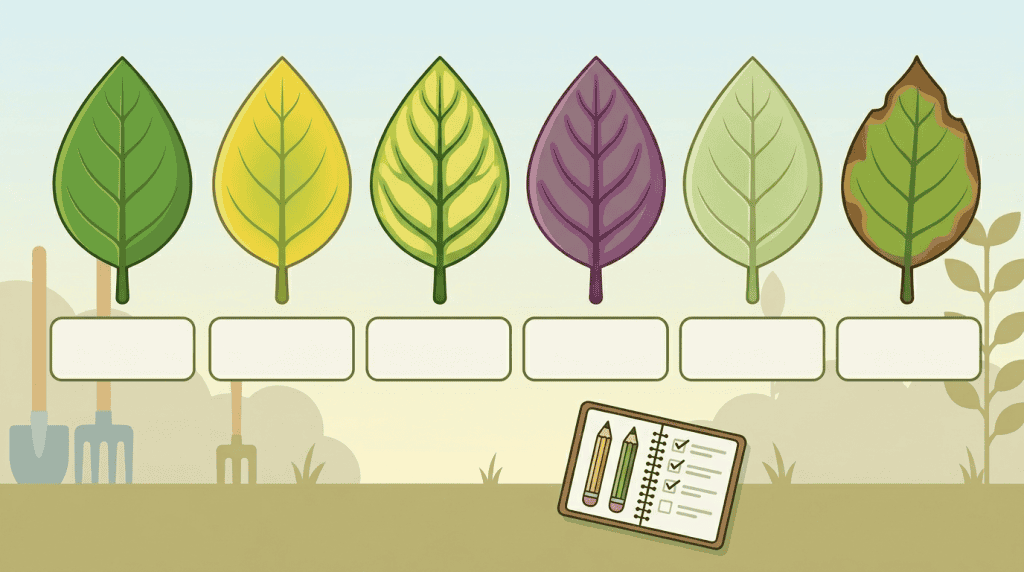
A change in leaf color is a signal, but it’s not a diagnosis by itself. Right, which is why you never stop at the color. You have to investigate. Is it one leaf at the bottom turning yellow and dropping cleanly? That’s probably normal aging.
Are many leaves yellowing from the edges inward, feeling dry? Think under-watering. Are they yellow with brown spots in the center, feeling soft? That’s more likely disease or over-watering. The color is the alarm bell. The other details, texture, location, pattern, tell you what the emergency actually is.
The real trick is using the other clues, like where the change is happening and what the leaf feels like, to figure out which one it actually is.
| Color Change | Common Cause |
| Yellowing plant leaves | Nutrient deficiency symptoms in leaves, overwatering |
| Interveinal chlorosis | Iron deficiency chlorosis, manganese deficiency leaves |
| Purple leaves | Phosphorus deficiency leaves |
| Pale green leaves | Low light, sulfur deficiency symptoms |
| Brown leaf edges | Drought stress, fertilizer burn |
Leaf chlorosis causes vary widely. Uniform yellowing usually points toward nitrogen deficiency symptoms or chronic nutrient shortage.
Patterned yellowing gives us much better clues than a fully yellow leaf. A classic example is interveinal chlorosis, which simply means the leaf tissue turns yellow while the veins stay sharply green.
When I see this skeletal look on new leaves, it tells me the plant is starving for iron. If I see it happening on the older, lower leaves, it is usually a clear sign of a magnesium shortage.
Understanding Yellow Leaves
Yellow leaves are not always signs of trouble.
That’s a critical distinction. A single, older leaf at the base turning yellow and dropping off is often just the plant’s way of housekeeping.Exactly. It’s the combination that tells the story. Rapid, widespread yellowing on older leaves, especially when the plant also looks sad overall, is a distress call.
The plant is cannibalizing its oldest parts to keep going. When you see that pattern, it’s time to act. Stop wondering and start checking the fundamentals.
Is the soil bone-dry or swampy? Has the plant been moved into stronger light or deeper shade? Did you just repot it or change your fertilizer? Stress yellowing means something in the plant’s environment has shifted.
Your job is to find out what, and fix it before the problem moves up the plant. Aging is a slow, solo process. Stress is a sudden, systemic collapse.
That’s stress. The plant is struggling, and it’s pulling resources from its oldest parts to survive. In that case, you go back to your checklist: check the soil, look for pests, and reassess your watering. Normal aging happens in isolation. Stress symptoms come as a package deal.
The following clues help distinguish causes:
- Uniform yellowing across old leaves often indicates nitrogen deficiency.
- Yellowing plus soggy soil suggests overwatering leaf signs.
- Yellowing with dry soil often indicates underwatering leaf symptoms.
- Yellowing between veins commonly points to micronutrient deficiencies.
Recognizing Nutrient-Related Discoloration
Nitrogen, iron, and phosphorus deficiencies create distinct patterns.
| Nutrient Deficiency | Typical Symptom |
| Nitrogen | Older leaves yellow first |
| Iron | New leaves yellow, green veins remain |
| Phosphorus | Purple leaves nutrient deficiency signs |
| Magnesium | Interveinal chlorosis on older leaves |
| Potassium | Brown leaf margins and necrosis |
According to Harvard University’s Healthy Plants resources
“Nutrient imbalances often appear before major growth reduction occurs.” – Harvard University’s Healthy Plants resources
It really is. Catching a problem at the leaf stage, before it hits the stems or roots, gives you a huge advantage. You have time to correct course. A plant can recover from a nutrient deficiency or early pest damage far more easily than from advanced root rot or a systemic infection.
Learning to read these early signs turns you from a reactive plant owner into a proactive one. You’re not just fixing problems; you’re preventing the worst ones from ever happening. How Do Leaf Spots Help Identify Diseases?
The specific details of a leaf spot are your best clue. Fungal spots tend to be round with clear borders, sometimes showing rings or a powdery center. Bacterial spots look angular and water-soaked, trapped between the leaf veins.
Spots from nutrient problems, like scorched edges from lack of potassium, follow a more uniform pattern. Damage from the sun or chemicals creates irregular, bleached patches that match where the exposure happened.
Feel the spot. A dry, papery or raised spot suggests fungus. A wet, slimy, or sunken spot points to bacteria. Crisp, scorched patches usually mean environmental damage. Your touch confirms the diagnosis.
Signs of Fungal Leaf Diseases
Fungal leaf diseases frequently produce expanding lesions that enlarge over time.
Common indicators include:
- Dark borders
- Circular lesions
- Yellow halos
- Tiny black fruiting bodies
- Leaf blight symptoms
According to the USDA
“Fungal pathogens remain among the most common causes of leaf spot identification challenges in crops and gardens.” – USDA
Signs of Bacterial Problems
Bacterial infections often look different from fungal diseases.
Water-soaked tissue, greasy spots, and rapid expansion frequently indicate bacterial leaf spot rather than nutrient disorders.
Spot appearance should always be evaluated alongside plant history and environmental conditions to improve diagnosis accuracy.
Leaf Texture and Firmness Indicate Plant Health Conditions
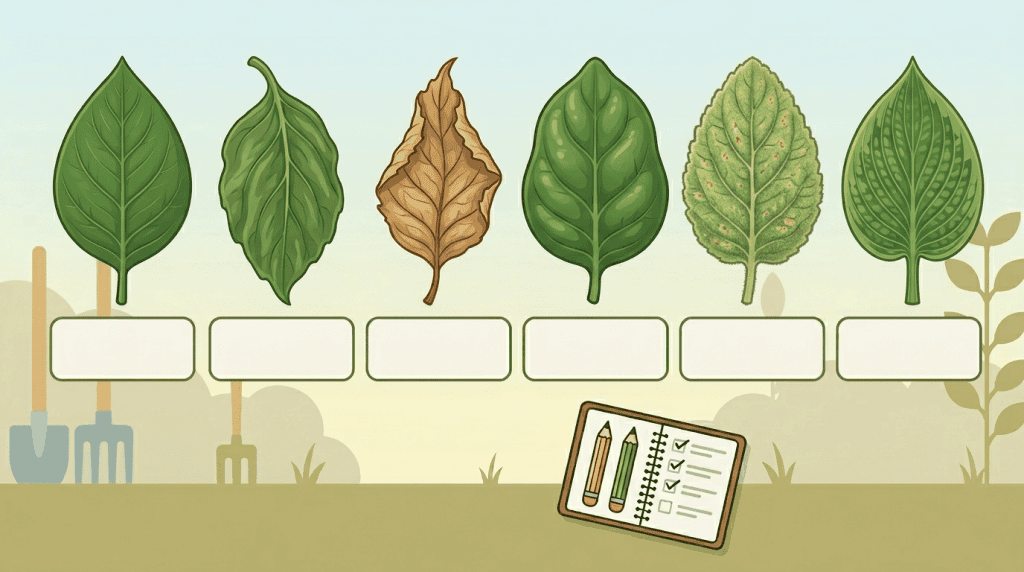
Changes in leaf texture often point to watering issues, root damage, disease, or environmental stress.
Soft and Mushy Leaves
Soft tissue frequently suggests excessive moisture.
Common causes include:
- Overwatering leaf signs
- Root rot leaf indicators
- Bacterial soft rot
Crispy and Brittle Leaves
Dry texture typically indicates dehydration or environmental stress.
Potential causes include:
- Underwatering leaf symptoms
- Heat stress leaf symptoms
- Fertilizer burn on leaves
- Salt accumulation
Wilting Despite Moist Soil
Wilting leaf symptoms in wet soil often indicate root failure rather than drought.
Root rot leaf indicators, vascular diseases, and compacted soil frequently prevent water uptake even when moisture is available.
Healthy roots remain essential for healthy leaves.
Leaves Curling, Twisting, or Distorting as Signs of Plant Problems
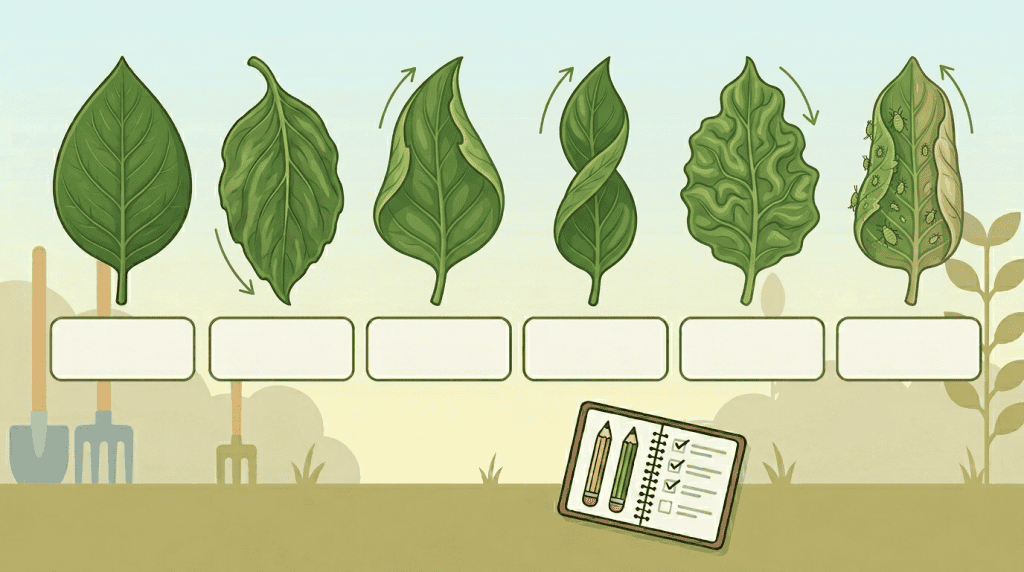
Leaf distortion is commonly associated with pests, herbicide exposure, viral infections, or environmental stress.
| Symptom | Common Cause |
| Downward curling | Stress, overfertilization |
| Upward cupping | Aphid leaf symptoms, whiteflies |
| Twisted growth | Herbicide injury symptoms |
| Mosaic patterns | Viral plant leaf symptoms |
Pest-Related Distortion
Sap-sucking insects often distort new growth.
Common examples include:
- Aphids
- Thrips
- Whiteflies
- Spider mites
These pests damage plant cells and alter growth patterns, leading to leaf curling and twisting.
When Viruses May Be Involved
Viruses frequently cause:
- Mosaic patterns
- Distorted leaf growth
- Stunted plant growth symptoms
- Persistent abnormalities
Unlike nutrient deficiencies, viral symptoms rarely improve after fertilizer applications.
Identifying Pest Damage Through Leaf Symptoms
Pest feeding creates distinct symptoms such as holes, stippling, webbing, tunnels, and sticky residue.
| Leaf Symptom | Likely Pest |
| Chewed holes | Caterpillars, beetles |
| Tiny pale specks | Spider mite leaf damage |
| Silver streaks | Thrips damage on leaves |
| Sticky residue | Aphid leaf symptoms, whiteflies |
| Leaf tunnels | Leaf miners |
Signs That Confirm Pest Activity
The following indicators strengthen pest diagnosis:
- Eggs
- Webbing
- Honeydew
- Frass
- Shed exoskeletons
Why Visual Confirmation Matters
Many gardeners mistake pest damage for disease or nutrient problems.
Finding physical evidence significantly improves treatment accuracy and reduces unnecessary pesticide applications.
Distinguishing Nutrient Deficiencies from Plant Diseases
Nutrient deficiencies usually appear uniformly across plants, while diseases often spread irregularly and worsen over time.
| Characteristic | Nutrient Deficiency | Disease |
| Pattern | Uniform | Patchy |
| Spread | Gradual | Progressive |
| Vein Symptoms | Common | Less common |
| Response to Feeding | Improves | Often unchanged |
Signs of Nutrient Deficiencies
Nutrient disorders typically display:
- Symmetrical symptoms
- Consistent progression
- Multiple plants affected similarly
Signs of Disease
Diseases often show:
- Uneven spread
- Localized outbreaks
- Progressive worsening
This distinction remains one of the most valuable diagnostic principles in plant pathology symptoms analysis.
Environmental Stress as a Cause of Plant Damage
Environmental factors often produce symptoms that resemble diseases or nutrient deficiencies but follow exposure patterns instead of spreading between plants.
Heat and Sun Damage
Common symptoms include:
- Leaf scorch symptoms
- Bleached patches
- Brown margins
- Environmental leaf damage
Water-Related Stress
Water imbalance remains one of the leading plant stress indicators.
Common signs include:
- Wilting
- Yellowing
- Root rot leaf indicators
- Leaf necrosis diagnosis symptoms
Chemical and Fertilizer Injury
Chemical exposure frequently causes:
- Fertilizer burn on leaves
- Herbicide injury symptoms
- Leaf margin burn
- Distorted growth
Environmental assessment should always occur before applying pesticides or additional fertilizer.
A Step-by-Step Method for Diagnosing Plant Problems Using Leaves

Credits: NATURE plus
A systematic approach helps identify the most likely cause while reducing the risk of treating the wrong problem.
Step 1: Identify the Plant
Compare the plant with healthy examples.
Know whether variegation, coloration, or leaf texture are normal characteristics.
Step 2: Examine the Symptoms
Evaluate:
- Location
- Color
- Texture
- Shape
- Pattern
Look for leaf yellowing patterns, leaf lesion identification, and chlorophyll loss symptoms.
Step 3: Inspect for Pests and Disease
Check:
- Upper leaf surface
- Lower leaf surface
- Stems
- Growing points
Search for webbing, eggs, fungal growth, honeydew, and feeding damage.
Step 4: Review Growing Conditions
Assess:
- Watering history
- Fertilizer use
- Soil pH
- Recent weather
- Chemical exposure
This diagnostic checklist helps separate plant nutrient imbalance from disease versus deficiency plants.
Consistent observation often reveals the answer before treatments are applied.
When to Seek Professional Plant Diagnosis
Professional testing is recommended when symptoms persist, spread rapidly, or suggest viral or systemic infections.
Situations That Require Expert Help
- Suspected viral diseases
- Large-scale crop damage
- Repeated treatment failures
- Severe root decline
- Valuable trees or landscape plants
Where to Get Reliable Diagnosis
Trusted resources include:
- University extension services
- Plant pathology laboratories
- Agricultural specialists
- Certified crop consultants
Professional diagnosis can save significant time and prevent costly treatment mistakes.
FAQ
How can leaf vein discoloration help identify plant problems?
Leaf vein discoloration can reveal specific nutrient deficiencies before the entire leaf changes color. During plant leaf symptom identification, green veins surrounded by yellow tissue often indicate iron deficiency chlorosis or other forms of interveinal chlorosis plants experience.
Comparing leaf vein yellowing patterns on older and newer leaves improves leaf discoloration diagnosis and helps identify the most likely nutrient-related issue.
Why do some plants show distorted leaf growth and twisted leaves?
Distorted leaf growth and leaf curling and twisting often result from insect activity, nutrient deficiencies, or environmental stress.
Aphid leaf symptoms, thrips damage on leaves, and other forms of pest damage on leaves frequently affect young tissue and cause misshapen growth. Boron deficiency symptoms and herbicide injury symptoms can also interfere with normal development and create curled leaf problems.
What causes purple leaves when plants seem otherwise healthy?
Purple leaves nutrient deficiency symptoms are commonly associated with phosphorus deficiency leaves, particularly when root activity slows in cool conditions. However, nutrient lockout symptoms caused by poor soil conditions can produce similar color changes.
A plant health assessment that includes root inspection, soil testing, and leaf symptom analysis can determine whether the issue involves nutrient availability or another stress factor.
Can leaf texture changes indicate hidden plant stress?
Leaf texture changes often provide early warning signs of plant stress. Thick, brittle, rough, or unusually soft leaves can indicate plant nutrient imbalance, environmental leaf damage, or developing disease problems.
Visual plant diagnosis becomes more accurate when leaf texture changes are evaluated alongside plant pathology symptoms, leaf discoloration, growth patterns, and other plant stress indicators.
How do I tell if stunted growth is linked to leaf symptoms?
Stunted plant growth symptoms are often connected to visible leaf abnormalities. Pale green leaves causes, chlorophyll loss symptoms, old leaves turning yellow, and new leaves turning yellow frequently point to nutrient deficiencies or root-related problems.
Diagnosing plant problems by leaves requires examining growth rate, leaf color, and overall plant vigor to identify the underlying cause of reduced development.
Diagnosing Issues Using Plant Leaves: Key Takeaways
Accurate diagnosis depends on evaluating multiple symptoms together rather than relying on a single leaf problem.
Successful visual plant diagnosis follows a repeatable process. Observe symptom location. Assess color changes. Evaluate texture. Look for pests. Review environmental conditions. Only then should treatment decisions be made.
The most reliable plant leaf health indicators rarely appear alone. Yellowing plant leaves, leaf spots, leaf curling and twisting, pest damage, and plant nutrient disorders must be interpreted together.
Keep records, photograph symptoms, and compare changes over time. This approach improves diagnosis accuracy and helps prevent unnecessary treatments.
References
- https://arboretum.harvard.edu/
- https://www.usda.gov/
Related Articles
- .https://tophydroponicgarden.com/why-are-my-hydroponic-plant-leaves-turning-yellow/
- https://tophydroponicgarden.com/what-is-the-role-of-a-growing-medium/
- https://tophydroponicgarden.com/factors-in-choosing-a-hydroponic-setup/
Was this helpful?

I’m Barrie L., a passionate hydroponic gardening enthusiast dedicated to cultivating thriving, soil-less gardens. With a focus on all things hydroponic, I share my expertise on innovative growing techniques and sustainable practices through my blog, tophydroponicgarden.com. As a seasoned hydroponics specialist, my goal is to inspire and guide fellow gardeners in harnessing the power of water-based cultivation for bountiful and eco-friendly harvests. I’m also an author of the book “Hydroponics For Absolute Beginners: Your Step By Step Guide For How To Create An Hydroponics System At Home Without Soil, For Growing Vegetable, Fruit And Herbs.” which is sold on Amazon. Join me on a journey of redefining the way we cultivate plants, one nutrient-rich solution at a time. Happy growing!