

How to clone tomato plants for hydroponics is an efficient way to expand your garden without seeds.
Tomato cloning uses healthy suckers from a strong mother plant to ensure identical genetics and consistent yields.
Cuttings root quickly in rockwool with cloning gel and high humidity, making this method ideal for hydroponic propagation.
With proper light, temperature, and moisture control, clones grow faster and produce vigorous, disease-free plants.
Key Takeaways
- Tomato cloning speeds up growth
Cloning allows plants to skip germination, resulting in faster establishment and earlier production.
- Clones provide consistent and reliable results
Cuttings taken from a healthy mother plant produce identical genetics, leading to uniform growth and stable yields.
- Cloning works perfectly for hydroponic systems
Tomato clones adapt quickly to soilless environments, reduce growing time, and support efficient indoor production year-round.
What Is Tomato Cloning, How to Clone Tomato Plants for Hydroponics, and Why It Works
Choosing seed vs clone can greatly affect how fast and efficiently you grow plants. Seeds are widely available and offer genetic variety, but they take longer to mature and require more early care. Clones, on the other hand, are cuttings taken from a healthy parent plant, allowing growers to skip the germination stage entirely.
Why many growers prefer clones:
- Up to 30 day savings compared to growing from seed
- Cost free clones when taken from an existing plant
- Faster establishment and predictable growth
- Identical genetics from proven, productive plants
While seeds are useful for breeding and variety, clones are ideal for growers who want speed, consistency, and lower costs. For hydroponic and indoor systems, cloning often provides a more efficient and reliable path to healthy plants.
Choosing the Best Mother Plant

Selecting the right mother plant is essential for producing strong, reliable clones. A healthy mother that shows no signs of pests, stress, or nutrient deficiency will pass on its strength to every cutting. Using an established plant also ensures the genetics are stable and already proven to grow well in your environment.
Key traits of a good mother plant:
- Free from pests and disease to ensure disease-free clones
- Strong stems and healthy leaf growth
- Consistent growth and good fruit production history
- Well-adapted to your growing conditions
A carefully chosen mother plant increases rooting success, reduces losses during cloning, and helps maintain vigorous tomato growth in hydroponic or soil-less systems.
Step-by-Step Tomato Cloning Guide
Selecting Tomato Suckers
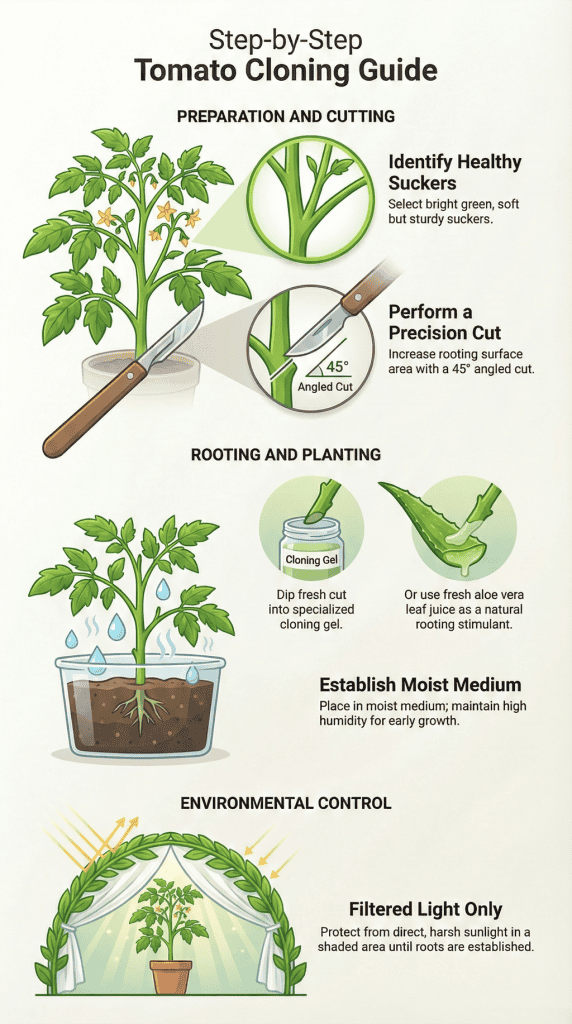
The best cuttings come from tomato suckers, also called axial shoots, that grow between the main stem and side branches. These shoots are young and flexible, which helps them root faster and adjust easily during cloning.
When choosing a shoot, look for:
- Bright green color
- Soft but sturdy stems
- Active, healthy growth
- No signs of pests or damage
Using strong, healthy suckers improves cloning success and leads to faster, more reliable plant growth.
Making the Perfect 45° Cutting
Use a sharp blade or scalpel to make a clean 45-degree cut just below a node. A smooth, angled cut helps the cutting absorb water more easily and reduces stress during rooting.
Important tips for a proper cut:
- Always use a clean, sharp tool
- Cut at a clear angle, not straight across
- Avoid squeezing or crushing the stem
Damaged stems heal slowly and are more likely to develop disease, which can reduce rooting success.
Using Cloning Gel or Aloe Vera
Dip the cut end into cloning gel or a rooting hormone to speed up root growth. For a natural option, aloe vera can help stimulate roots while protecting the cutting from stress.
After treatment:
- Place the stem into a moist growing medium
- Keep humidity high to prevent drying out
- Avoid direct, intense light
Maintaining moisture and humidity helps roots form faster and keeps the cutting healthy during early growth.
Choosing the Best Rooting Media
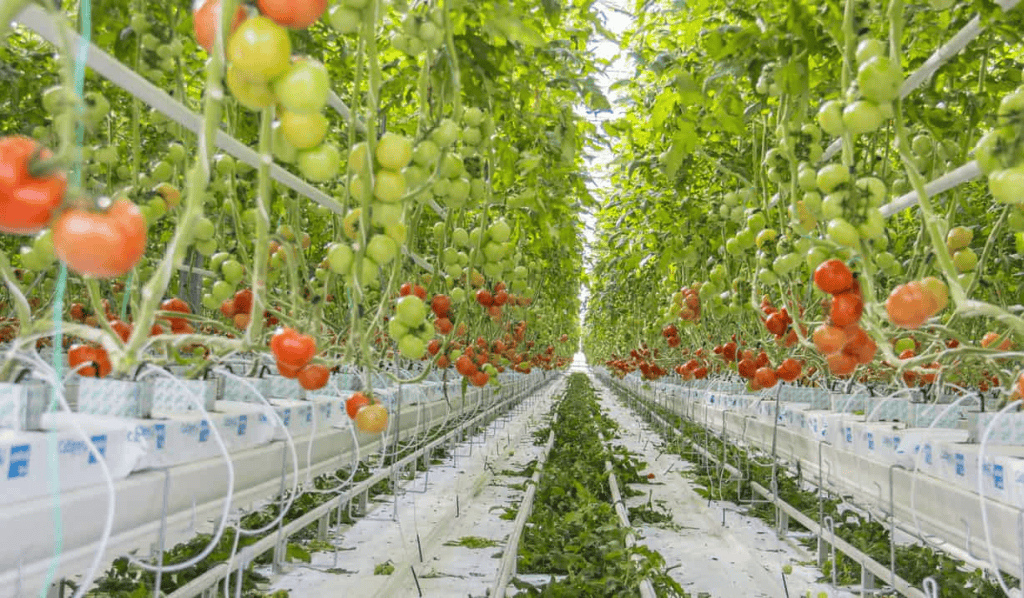
Choosing the right rooting medium is essential for successful soilless rooting. The medium should hold moisture, allow airflow, and support early root growth. Popular options include rockwool cubes, rockwool wedges, and foam blocks, each offering reliable results for hydroponic tomato clones [1].
Common rooting media options:
- Rockwool cubes – excellent moisture retention and easy to handle
- Rockwool wedges – ideal for tray systems and tight spacing
- Foam blocks – lightweight and reusable for repeated cloning
Using Rockwool Cubes and Humidity Domes
Rockwool cubes are widely used for tomato cloning because they stay moist while allowing oxygen to reach the roots.
When paired with a humidity dome, they create a stable environment that reduces stress and speeds up root formation.
Keep the cubes damp, not soaked, and maintain high humidity until roots appear.
Rockwool vs Aeroponic Cloners
An aeroponic cloner (or cloning machine) sprays a fine mist directly onto the cutting, delivering oxygen and moisture at the same time.
This often leads to faster rooting compared to rockwool. However, rockwool systems are simpler, lower cost, and easier for beginners.
The best choice depends on your budget, experience, and growing setup.
Creating Ideal Rooting Environments

Credit: STEM Lab
Creating the right environment is key to strong root development and the fastest rooting possible. Tomato cuttings need stable warmth, moisture, and gentle light to focus energy on forming roots instead of new leaves. Maintaining high humidity around 80% and a steady temperature of about 20°C helps reduce stress and improves success rates.
Key environmental conditions:
- Humidity: around 80%
- Air temperature: close to 20°C
- Gentle airflow to prevent mold
- Soft, indirect light
Humidity Dome Setup and Misting Schedule
A humidity dome helps trap moisture and prevent cuttings from drying out. Light misting keeps leaves hydrated while roots develop.
Best practices:
- Mist lightly 1–2 times per day
- Vent the dome briefly to refresh air
- Avoid excess water that can cause rot
Light Cycle, Water Temperature, and pH Balanced Water
Use low-intensity lighting on a 12/12 light cycle to support rooting without stressing the plant.
Keep water temperature stable and avoid cold or hot conditions.
Using pH-balanced water helps protect delicate tissues and supports healthy root formation during early growth.
Transplanting Tomato Clones in Hydroponic Systems
Knowing the right time to move a clone is essential for healthy transplant roots and smooth growth after a clone transplant. Tomato clones are ready when roots are well formed and strong enough to handle nutrient solution and airflow [2].
Signs a clone is ready to transplant:
- Roots are 2–5 cm long and bright white
- Roots hold the medium together
- New leaf growth is visible
How to Transplant Tomato Clones
Start by placing the rooted cutting into net pots, making sure the roots hang freely. Fill around the stem with hydroton media to support the plant while allowing oxygen to reach the roots.
Transplant tips:
- Handle roots gently to avoid damage
- Keep nutrient strength low at first
- Maintain stable temperature and pH
A careful transplant helps clones adjust quickly and continue growing without stress in a hydroponic system.
Seed vs Clone: Which is Better?
Choosing between seed vs clone can greatly affect how fast and efficiently hydroponic tomatoes grow. Seeds are easy to access and provide genetic diversity, but they require germination and careful early-stage management. Clones bypass this phase, allowing plants to establish and grow much sooner.
Why many growers prefer clones:
- Up to 30 day savings compared to starting from seed
- Cost free clones taken from an existing plant
- Faster, more predictable growth
- Identical genetics from proven, productive plants
Seed vs Clone Comparison Table
| Aspect | Seed | Clone |
| Time to growth | Slower due to germination | Faster, no germination needed |
| Cost | Requires buying seeds | Cost free clones |
| Genetic consistency | Variable | Identical to mother plant |
| Early care needs | High | Lower |
| Best use | Testing new varieties | Fast, consistent production |
Seeds are ideal for experimentation and breeding, while clones are better suited for growers who value speed, consistency, and efficiency in hydroponic systems.
Frequently Asked Questions
Can I clone tomato plants from any part of the plant?
No. The best cuttings come from tomato suckers or axial shoots, which grow between the main stem and side branches. These are young, fast-growing, and root more successfully than mature stems or leaves.
How long does it take for tomato clones to root in hydroponics?
Most tomato clones root within 7 to 14 days when kept at the ideal humidity (around 80%) and temperature (around 20–22°C). Rooting time may vary depending on your environment and rooting method.
Do I need a cloning gel, or can I root tomato cuttings naturally?
You can root tomato cuttings with or without cloning gel. Using cloning gel or a natural option like aloe vera improves root development and reduces transplant shock, but it’s not strictly necessary if environmental conditions are optimal.
Is rockwool better than a cloning machine for tomato propagation?
Both methods work. Rockwool is simple and ideal for beginners, while a cloning machine (aeroponics) may root faster but requires more equipment. Your choice depends on your budget, experience, and grow setup.
When should I transplant tomato clones into my hydroponic system?
Transplant your tomato clones once the roots are 2–5 cm long, bright white, and firm. The cutting should also show new leaf growth, which indicates it has successfully rooted and is ready to handle nutrients and airflow in a hydroponic system.
Final Thoughts: Why Cloning is Best for Hydroponics
Tomato cloning is a simple and efficient way to expand a hydroponic garden.
By choosing a healthy mother plant, using proper cutting techniques, and maintaining the right environment, growers can produce strong, disease-free clones with consistent results.
Compared to growing from seed, cloning offers faster growth, lower costs, and greater reliability.
With the right tools and care, hydroponic tomato cloning allows you to save time, maximize space, and enjoy steady, productive harvests year-round.
References
https://www.futuregarden.co.uk/expert-advice/six-top-tip-for-growing-plants-in-rockwool/
https://www.southernliving.com/when-to-plant-tomato-seedlings-11691200
Related Articles
https://tophydroponicgarden.com/deep-water-culture-hydroponics-diy/
https://tophydroponicgarden.com/how-to-maintain-a-hydroponic-system/
https://tophydroponicgarden.com/pruning-in-hydroponics/
Was this helpful?
