

Deep, loose soil beds are the best way to grow high-quality root vegetables. Carrots, beets, and potatoes need plenty of space to grow downward. This extra room ensures they stay straight and healthy. It is the main difference between a weak harvest and a professional yield. Adding drip irrigation keeps moisture steady at the root zone.
This prevents common problems like rot and split crops, even in humid cities like Jakarta. Mastering soil depth and watering makes root gardening simple and efficient. Follow the steps below to set up a high-yield garden.
Best System Choice at a Glance
- Raised beds with drip irrigation remain the most dependable system for most root vegetables, especially carrots, beets, potatoes, and radishes.
- Choose systems by root zone depth, aiming for 18-24 inches for long roots and 12-18 inches for bulbs and tubers.
- Use soil-based systems first, then test hydroponic root vegetables only if space, climate control, or water savings are the priority.
Quick Reads: Fast Decision Criteria Before You Choose
Choosing a system depends on five simple factors: depth, moisture, climate, budget, and space. Most people fail because they ignore the physical needs of the plant. A carrot cannot grow through a rock. A potato will not swell in hard clay. You must match the environment to the vegetable.
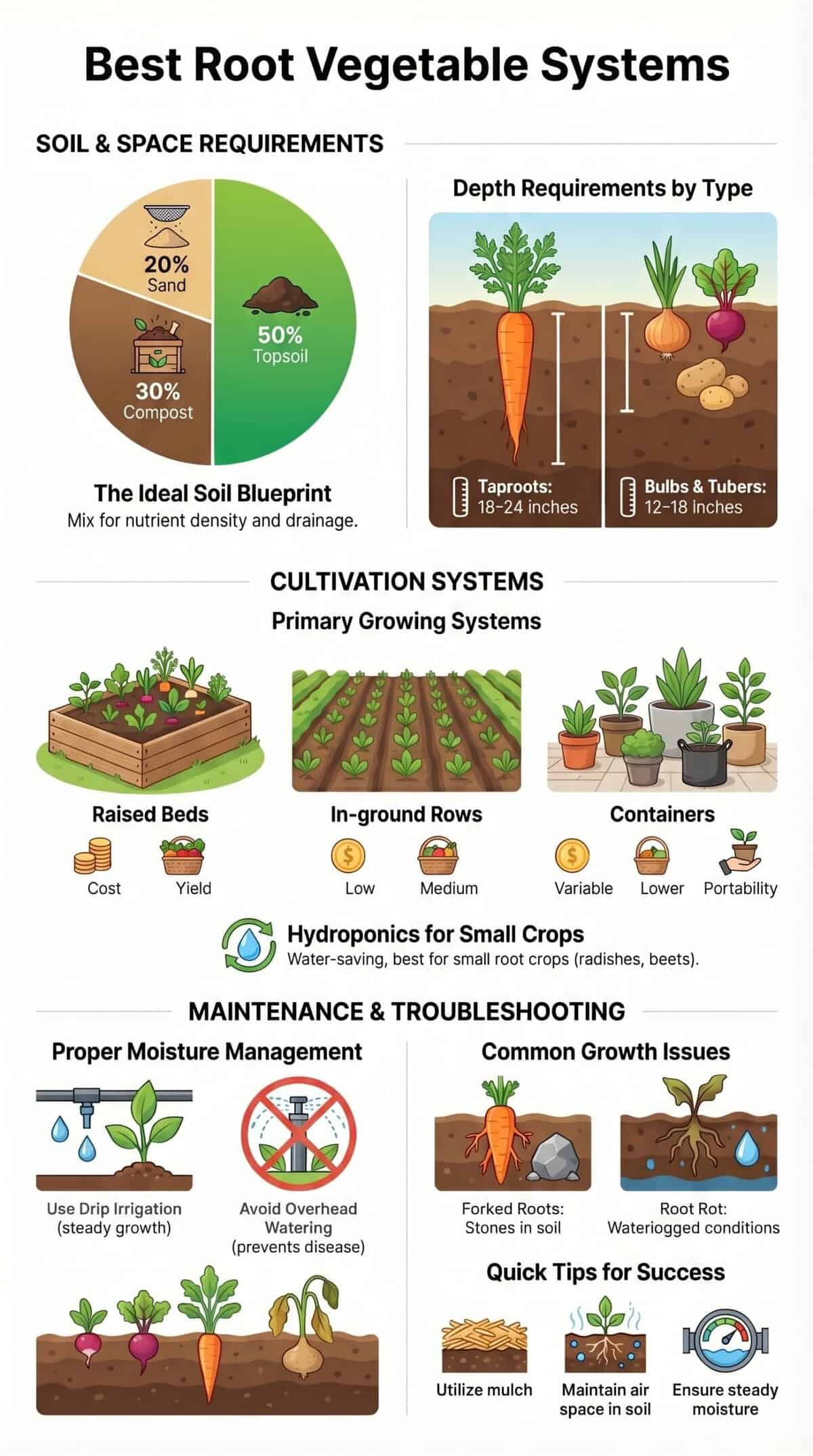
Depth is the first non-negotiable rule. Parsnips and long carrots need 18 to 24 inches. Bulbs like beets or radishes survive in 12 inches. If the container is too shallow, the roots will hit the bottom and deform.
Insights from ScienceDirect indicate:
“Root elongation is highly sensitive to soil strength; as soil compaction increases, roots become shorter and thicker due to the mechanical resistance of the soil matrix.” – ScienceDirect
Moisture is the second rule. Root crops hate a “flood and drought” cycle. This causes skin cracking.
Climate and budget follow closely. In humid areas, avoid spraying water on leaves. This prevents rot and fungus. Drip irrigation or soaker hoses work best here. Raised beds offer a cheaper entry point than complex hydroponic pumps. They also provide a natural buffer against heat. Always check your available square footage before buying materials.
- Key Decision Points:
- Depth: Use 18-24 inches for long taproots.
- Moisture: Use drip lines for even hydration.
- Budget: Soil beds are cheaper than high-tech reservoirs.
Essential Growing Conditions for Root Vegetables

Credits: Gardening Australia
Root crops require three things to thrive: deep loose media, steady water, and an obstacle-free path. When a root hits a stone or a hard clump of dirt, it forks. This leads to those strange, multi-legged carrots you see in social media fail posts. Proper systems ensure the soil stays airy and soft throughout the season.
Compaction is the enemy. Stepping on your garden beds squeezes out the oxygen. Without air, roots cannot breathe or expand. This is why no-dig methods and raised beds are so popular. They keep the growing area separate from walking paths. Consistent moisture is also vital for texture. Beets and radishes often crack when the soil dries out and then gets soaked suddenly.
A good system also manages nutrients carefully. High-nitrogen levels can lead to beautiful green leaves but tiny, hairy roots. You want a balance that favors phosphorus and potassium for underground growth. Aim for a pH between 6.0 and 6.5. This range makes minerals easily available to the plant.
- Ideal Growing Conditions:
- Loose Media: Allows roots to push downward without resistance.
- Air Space: Oxygen-rich soil prevents rot.
- Balanced Nutrients: Focus on potassium for root strength.
| Crop | Ideal Depth | Best System |
| Carrots | 18-24 in | Deep raised bed |
| Potatoes | 12-18 in | Hill planting + raised rows |
| Beets | 12-18 in | Flat bed planting |
| Parsnips | 24 in | Permanent beds |
A system that protects root zone aeration will outperform one with richer nutrients but poor structure.
Root Crop Depth Requirements by Vegetable Type
Depth determines the shape and quality of your harvest. If you plant a long-variety carrot in a shallow tray, it will curl. It might even grow sideways. Every vegetable has a “zone of expansion” it must reach to mature fully. Understanding these specific requirements prevents wasted effort and disappointing yields.
Long parsnips are the most demanding. They require at least 24 inches of loose soil. Carrots usually need 18 inches to stay straight. Potatoes are slightly different. They need 12 to 18 inches of depth, but they also need horizontal space. As the tubers grow, they push the soil outward. If the system is too tight, the potatoes stay small and cramped.
Small crops like radishes are more flexible. They can grow in just 6 inches of soil. However, even these small plants benefit from deeper beds. Deeper soil holds moisture longer. It also stays cooler during hot afternoons. Moving from shallow pots to deep permanent beds is the fastest way to increase your total yield.
- Depth Requirements:
- Parsnips: 24 inches for maximum length.
- Carrots: 18 inches for straight growth.
- Radishes: 6-12 inches for quick cycles.
| Root Crop | Soil Depth Requirement | Notes |
| Potatoes | 12-18 in | Extra width helps tuber expansion |
| Beets | 12-18 in | Stable moisture improves shape |
| Parsnips | 18-24 in | Sensitive to compaction |
| Rutabagas | 12-18 in | Wide bed system works well |
Transitioning from shallow patio systems to deep permanent beds is often the biggest yield upgrade.
The Role of Moisture Consistency in Preventing Forking and Cracking
Watering is about timing and depth. Most beginners water the surface every day. This is a mistake. Surface watering encourages roots to stay near the top. They become weak and sensitive to heat. Deep watering forces roots to grow downward toward the moisture. This creates a stronger, more resilient plant.
Consistency prevents physiological stress. When a beet goes thirsty, its skin toughens. If you suddenly drench it, the inside expands faster than the skin can stretch. The result is a deep crack that invites insects and rot. Drip irrigation systems solve this. They deliver a slow, steady trickle that keeps the soil moisture levels flat and stable.
Insights from the University of Minnesota Extension indicate:
“Water stress followed by a significant increase in moisture causes the center tissues to pull apart, leading to growth cracks and hollow hearts in root vegetables.” – University of Minnesota Extension
Mulching is the secret weapon for moisture. A thick layer of straw or wood chips acts as a lid. It stops the sun from baking the moisture out of the ground. In tropical climates, this is essential. It keeps the root zone cool while preventing the soil from crusting over. Crusted soil stops tiny seeds from emerging.
- Moisture Strategies:
- Drip Lines: Direct water to the roots, not the leaves.
- Mulch: Keeps soil temperature stable and retains water.
- Deep Soaking: Encourages vertical root travel.
Soil-Based Systems as the Most Reliable Choice
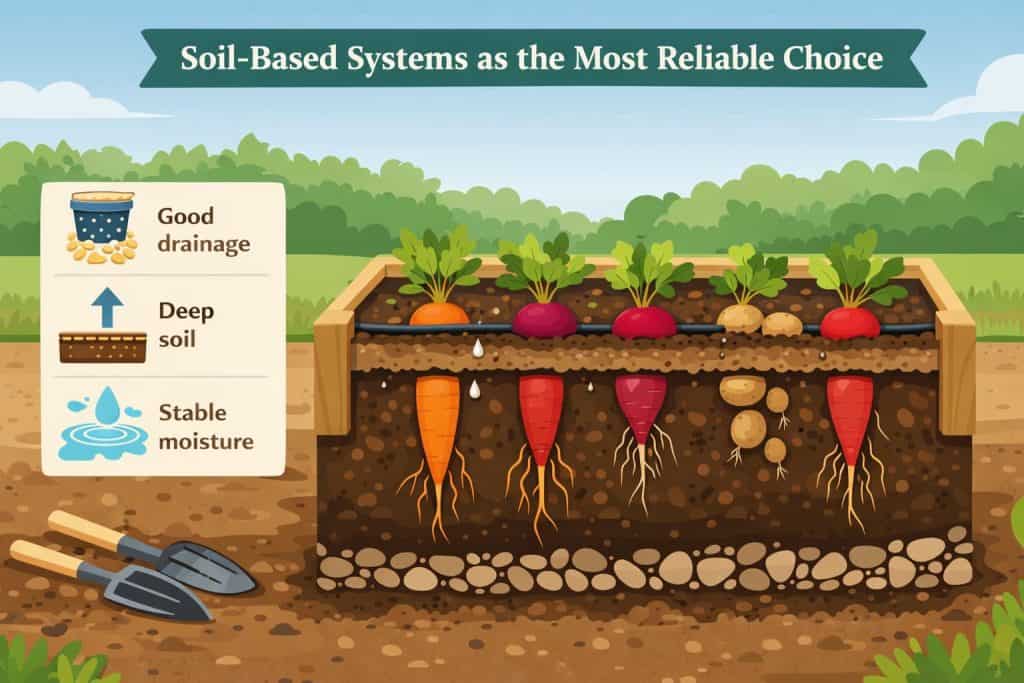
Soil is a living ecosystem that protects your plants. It contains microbes, fungi, and minerals that buffer against human error. If you forget to water for one day, the soil holds a reserve. If the weather gets hot, the soil keeps the roots cool. This “forgiveness factor” makes soil-based systems the gold standard for root crops.
Raised beds specifically solve many problems at once. They provide instant depth, even if your backyard has hard clay or rocks. You control the mix. You can add sand for drainage or compost for nutrition. Raised beds also drain better during heavy rains. This prevents the “root rot nightmare” often found in low-lying garden rows.
Soil also supports better flavor. Many growers believe the complex biology in the ground creates a sweeter carrot or a richer potato. The interaction with mycorrhizal fungi helps the plant absorb trace minerals. These systems are also easier to maintain over time. You simply add a layer of compost each year to keep the system productive.
- Soil System Benefits:
- Buffering: Protects against erratic watering or heat.
- Ease of Use: Lower technical skill required compared to hydro.
- Longevity: Improves every year with organic matter.
Raised Bed Benefits Compared With In-Ground Rows
Raised beds are the premium choice for most home growers. They offer total control over soil texture. This is vital for straight carrots. Because you never step on the bed, the soil stays fluffy. The main downside is the initial cost of lumber and soil. However, the lack of compaction leads to much higher yields per square foot.
In-ground rows are the traditional method. They cost almost nothing to start. If you have naturally sandy loam soil, this is a great option. However, in-ground rows are prone to compaction. They are also harder to protect from weeds and pests. Heavy rain can turn in-ground rows into mud pits, which causes root rot.
Permanent wide beds offer a middle ground. These are long-term areas that you never till. You add compost to the top and let worms do the work. They are great for intensive planting. No matter which you choose, the goal is the same. You must provide a clear, soft path for the vegetable to grow downward.
- Comparison at a Glance:
- Raised Beds: Best for drainage and preventing compaction.
- In-Ground Rows: Low cost but higher risk of hard soil.
- Wide Beds: Ideal for high-volume, organic production.
| Setup | Best Use | Strength | Weakness |
| Raised beds | Clay or wet sites | Better drainage | More soil cost |
| In-ground rows | Sandy loam | Lower budget | Compaction risk |
| Permanent wide beds | Intensive planting | Easy rotation | Fixed layout |
In clay soil, raised beds outperform rows because roots avoid dense subsoil layers.
Ideal Soil Mix Recipe for Straight, Uniform Roots
The perfect soil mix feels like soft cake crumbs. It should hold its shape when squeezed but fall apart easily. For root vegetables, you want a “sandy loam” texture. This allows water to move through while giving the roots enough grip to grow. Standard garden dirt is often too heavy and needs amending.
A reliable DIY mix uses 50% topsoil, 30% compost, and 20% coarse sand. The topsoil provides the base. Compost adds nutrients and holds some moisture. The sand is the most important part for carrots. It creates tiny gaps in the soil. These gaps allow the taproot to slide downward without hitting resistance.
Avoid using fresh manure in this mix. High nitrogen from fresh waste causes “hairy” roots and forking. Always use well-rotted compost. If you are growing in containers, you can add perlite or coco coir. These materials keep the pots light and airy. A good mix should drain quickly but stay damp to the touch.
- The Recipe:
- 50% Topsoil: The structural foundation.
- 30% Compost: Nutrients and moisture retention.
- 20% Coarse Sand: Essential for drainage and straight roots.
Best-Use Scenarios for Hydroponic and Soilless Systems
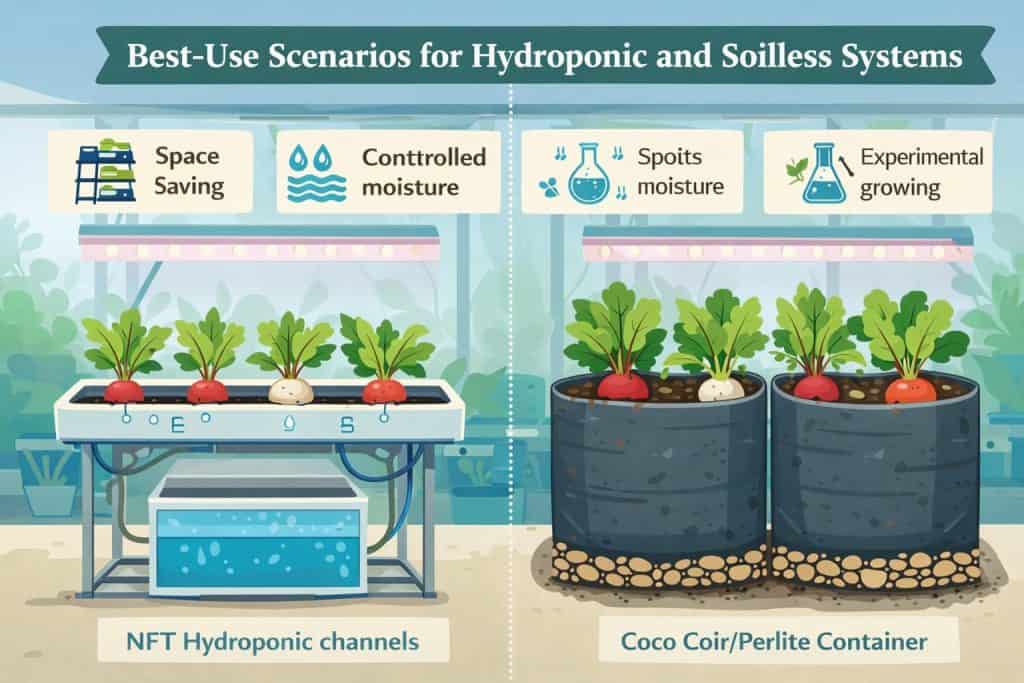
Hydroponics is for the space-constrained or the data-driven grower, especially if you want a hydroponic system for beginners that works in apartments or controlled indoor spaces. If you live in a high-rise apartment, you cannot easily move 500 pounds of soil.
A hydroponic reservoir is much lighter. It also can use up to 90% less water than soil methods than traditional gardening. This makes it a smart choice for dry climates or indoor setups.
Control is the biggest selling point. You decide exactly how much fertilizer the plant gets. You control the pH of the water every day. This can lead to very fast growth for crops like radishes. However, this control comes with a price. If a pump fails or the power goes out, your plants can die in hours. There is no soil to protect them.
Hydroponics makes sense for “clean” gardening. There are no soil-borne pests or weeds to pull. It is an intensive way to grow a lot of food in a tiny footprint. Most successful growers use a hybrid approach. They use a “soilless” media like coco coir. This provides some physical support for the roots while allowing for liquid feeding.
- Why Choose Hydroponics:
- Space: Perfect for balconies and indoor shelves.
- Water Efficiency: Ideal for drought-prone areas.
- Growth Speed: Precise nutrients can accelerate harvest.
Top-Performing Root Crops in Hydroponic Setups
Not all root crops enjoy swimming. Some are much easier to manage than others in a water-based system. Small, fast-growing vegetables are the best candidates.
Radishes are the gold standard for hydroponics and often the easiest hydroponic system crop choice for first-time indoor growers because they reach maturity in about 25 to 30 days. Their small size fits perfectly into standard net pots.
Beets also perform surprisingly well. They develop a clean, round shape in soilless media. Green onions and spring onions are equally easy. They love the constant access to oxygenated water. Some growers succeed with compact potato varieties using Dutch buckets. These buckets provide enough room for the tubers to expand without getting waterlogged.
Carrots and parsnips are difficult. Their long taproots often get tangled in the system or rot in the water. If you want to try carrots, use a deep media bed filled with perlite. Avoid NFT (Nutrient Film Technique) channels for these. The channels are too shallow. Stick to round or bulbous crops for the best results in your first hydro season.
- Best Hydro Crops:
- Radishes: Fast, small, and very easy.
- Beets: Yields uniform shapes and clean skin.
- Spring Onions: Thrives in almost any water system.
Common Beginner Mistakes That Cause Root Rot and Deformed Roots
Failure in root gardening usually boils down to “wet feet” or “hard walls.” Root rot happens when water sits still. Without movement, oxygen disappears. Bacteria then attack the soft tissue of the vegetable. This is common in both overwatered soil and poorly designed hydroponic reservoirs. The plant turns mushy and smells like sulfur.
Deformed roots are a physical problem. Beginners often plant in old garden soil that hasn’t been loosened. A tiny carrot seed has very little energy. If it hits a hard clump of clay, it gives up on growing straight. It finds the path of least resistance, which results in twisted, stunted vegetables.
Heat is another silent killer. In many systems, the water or soil gets too hot in the sun. High temperatures lower the oxygen levels. This stresses the plant and invites disease. Beginners often use shallow black plastic trays. These trays absorb heat and bake the roots. Switching to deeper, lighter-colored containers often fixes the problem immediately.
- Common Failure Points:
- Poor Aeration: Stagnant water and excessive heat deplete oxygen, leading to root hair death and bacterial rot.
- Physical Obstacles: Dense or rocky soil causes forking and stunted growth.
Reliable Irrigation Methods for Consistent Root Development
Drip irrigation is the most effective tool for a root gardener. It delivers water slowly and directly to the soil. This prevents the surface from drying out while the deep roots stay thirsty. Drip systems are easy to automate with a simple battery-powered timer. This ensures your plants get water even when you are busy.
Soaker hoses are a great low-budget alternative. They are porous pipes that “sweat” water along their entire length. They are perfect for rows of carrots or beets. Because they sit under the mulch, they lose very little water to evaporation. They are less precise than drip emitters but very easy to install for a beginner.
Overhead sprinklers are the worst choice for root crops. They wet the leaves, which encourages powdery mildew and other blights. They also tend to wash away the soil from the tops of the roots. This exposes the “shoulders” of carrots and beets to the sun, turning them green and bitter. Always aim for the ground, not the foliage.
- Irrigation Options:
- Drip Emitters: Most precise and water-efficient.
- Soaker Hoses: Best for dense seed beds.
- Root-Zone Watering: Keeps leaves dry and disease-free.
A fast comparison:
| Irrigation | Water Savings | Best For | Risk |
| Drip irrigation | 80% | Rows and raised beds | Emitter clogging |
| Soaker hose | High | Seed beds | Less precise PSI |
| Overhead | Low | Leafy greens | Disease spread |
Best pairings:
- carrots: buried soaker hose
- potatoes: drip line near hills
- beets: block planting with dual lines
The real win is consistency, not water volume.
Drip Irrigation Benefits Compared With Soaker Hoses
Drip irrigation offers high precision. Each plant gets a specific amount of water. This is excellent for widely spaced crops like potatoes or large beets. You can adjust the flow for different parts of the garden. The downside is that drip emitters can sometimes clog if your water has lots of minerals. You need a filter.
Soaker hoses are better for “carpet” planting. If you sow a thick bed of carrots, a soaker hose provides even moisture to every seed. There are no individual nozzles to worry about. They work at very low pressure, making them ideal for gravity-fed rain barrels. However, they can be less durable and may tear over several seasons.
For the best results, use a soaker hose during the germination phase. This keeps the seeds damp so they can sprout. Once the plants are established and growing deep, a drip system provides better deep-soil penetration. Both systems are vastly superior to hand-watering with a hose, which is often inconsistent.
- Key Differences:
- Drip: Best for precision and long-term durability.
- Soaker: Best for germinating small seeds in blocks.
- Maintenance: Drip needs filters; soakers need seasonal flushing.
| Feature | Drip | Soaker Hose |
| Pressure | 25-30 PSI | Low pressure |
| Precision | High | Medium |
| Seed rows | Excellent | Excellent |
| Maintenance | Filter needed | Flush seasonally |
For carrots, soaker hose is great during germination, then drip becomes better for long-term precision.
The Problems Caused by Overhead Watering
Overhead watering is a recipe for disaster in humid climates. When leaves stay wet, fungal spores thrive. Diseases like leaf blight can wipe out a carrot crop in days. Furthermore, the force of falling water can compact the soil surface. This creates a hard crust that prevents air from reaching the roots.
In sunny weather, water droplets on leaves can act like tiny magnifying glasses. They can burn the foliage, stressing the plant. This stress diverts energy away from the root and into repairing the leaves. You end up with a smaller harvest. It also wastes a lot of water through evaporation before it even hits the dirt.
Root-zone watering keeps the garden ecosystem healthy. It keeps the “above-ground” environment dry while the “below-ground” stays hydrated. This also helps with weed control. If you only water the base of your vegetables, the weeds in the pathways stay dry and die. It is a more targeted, professional approach to gardening.
- Risks of Overhead Watering:
- Disease: Promotes fungus and leaf rot.
- Soil Crusting: Blocks oxygen and prevents seedling emergence.
- Waste: High evaporation rates and weed promotion.
System Selection Factors: Space, Climate, and Budget
Your choice should be practical, not aspirational. If you have a large backyard with heavy clay, building raised beds is the most logical path. It bypasses your bad soil and gives you an immediate win. If you are on a tight budget, look for free heat-treated pallets to build your bed frames.
Climate dictates your watering and cooling strategy. In tropical West Java or Jakarta, you need systems that breathe. Use wooden beds or fabric grow bags instead of solid plastic. These materials allow heat to escape. If you live in a dry area, prioritize mulching and buried irrigation to save every drop of water.
Indoor growers have different needs. Space is the biggest constraint. Vertical shelving with deep containers or Dutch buckets is the way to go. Do not get distracted by expensive “tower” systems for root crops. Most towers are designed for lettuce and are too shallow for a real carrot or potato. Stick to depth over style.
- Selection Guide:
- Backyard: Raised beds with mulch.
- Apartment: Deep grow bags on a balcony.
- Humid Areas: Breathable containers and drip lines.
| Situation | Best System | Upfront Cost |
| Outdoor backyard | Raised beds + drip | Low |
| Balcony | Deep containers | Low-medium |
| Indoor grow room | Dutch bucket + coco coir | Medium-high |
| High humidity tropics | Soil + drip | Low |
For Jakarta, West Java, or similar tropical zones, the safest path is raised row planting with mulch and drip. Indoor growers with small footprints should prioritize container depth and vertical root space over hydro hype.
The Best Low-Budget Setup for Beginners
The best way to start is with a 12-inch raised bed. You can build one with simple cedar or untreated pine. Fill it with a mix of local topsoil and bags of compost. This setup is incredibly forgiving. It holds enough soil to stay moist but drains well enough to prevent rot.
For irrigation, a simple soaker hose connected to a garden hose is enough. Cover the soil with a few inches of straw. This prevents weeds and keeps the soil soft. This setup costs very little but produces high-quality vegetables reliably. It allows you to learn how plants grow without the stress of high-tech sensors.
Manual weed control is easy in a small bed. Use a shallow hoe once a week to stir the top inch of soil. This kills weed seeds before they take over. Because the bed is raised, it saves your back from unnecessary bending. It is the most sustainable way to build a gardening habit that lasts.
- Beginner Checklist:
- Structure: Simple 4×4 wooden raised bed.
- Soil: Local topsoil plus organic compost.
- Water: Soaker hose under straw mulch.
The Best Small-Space Indoor Setup
If you are gardening inside, forget the “dirt in a box” method. It is messy and heavy. Use Dutch bucket systems for beginners with a mix of perlite and coco coir. These buckets are self-draining, very clean, and easier to manage in small indoor spaces. They allow you to grow large root crops like beets or even potatoes in a corner of your kitchen.
Light is the biggest challenge indoors. You need a strong LED grow light. Position the light about 12 inches above the plants. As they grow, move the light up. Root crops need at least 12 to 16 hours of light to develop sugars. Without enough light, you will get plenty of leaves but no actual vegetables underground.
Fabric grow bags are another excellent indoor option. They are breathable and prevent the roots from circling the pot. When the roots hit the side of the bag, they “air prune,” which creates a denser root system. This is perfect for potatoes. When you are done, you can fold the bags up and store them easily.
- Indoor Essentials:
- Dutch Buckets: Clean, efficient, and great for larger roots.
- LED Grow Lights: Essential for sugar production and root swelling.
- Fabric Bags: Prevents root binding in small spaces.
Real Grower Insights on Soil and Hydro Root Crop Systems
Experienced growers usually recommend starting with soil. On forums like Reddit, the most common story is someone trying a high-tech hydro system and losing the whole crop to “root rot nightmare.” Soil provides a safety net. It houses beneficial bacteria that fight off pathogens naturally.
However, the “speed” of hydroponics is a major draw. YouTube growers often show massive radishes grown in record time. The consensus among these experts is that hydro is great once you have mastered the basics. They suggest starting with a “Kratky” jar for radishes before building a full Dutch bucket system.
The most valuable advice from community forums is to “watch the water.” In soil, the dirt tells you when it is thirsty. In hydro, the water temperature tells you when it is dangerous. Most successful urban growers end up using a mix of both. They keep their main crops in soil beds and use small hydro setups for fast-turnover salad radishes.
- Community Wisdom:
- Soil: Recommended for its high “forgiveness” and flavor.
- Hydro: Praised for speed but feared for its “crash” potential.
- Hybrid: Use soil for staples and hydro for quick experiments.
| Platform | Common Pain Point | Most Useful Fix |
| Root rot | Deeper media | |
| YouTube | Algae + heat | Ice bottles |
| Forums | Split roots | Even watering |
The phrase “root rot nightmare” appears often because oxygen loss compounds quickly in warm water systems.
That social proof aligns with extension guidance favoring well-drained loose soil.
Common Root Crop Failures Reported on Reddit
If you browse gardening threads, you will see the same mistakes repeated. The number one failure is “shallow containers.” People try to grow carrots in 4-inch seed trays. The result is always a stunted, woody mess. Another common complaint is “bolting.” This happens when the soil gets too hot, and the plant thinks it is time to flower.
“Hairy carrots” is another frequent post. This is usually caused by too much nitrogen or fresh manure. The plant gets confused and grows hundreds of tiny root hairs instead of one smooth taproot. People also struggle with “damping off.” This is a fungus that kills tiny seedlings at the soil line, often caused by poor airflow.
Finally, the “split beet” is a classic failure. This happens when a grower lets the soil get bone dry and then dumps a bucket of water on it. The plant cannot handle the sudden pressure and bursts. All of these problems are solved by choosing the right system, one with depth, air, and steady water.
- Common Failures:
- Shallow Trays: Leads to stunted, unusable crops.
- High Nitrogen: Results in hairy roots and no “body.”
- Erratic Watering: Causes splitting and woody textures.
YouTube-Proven Fixes That Improve Root Crop Results
YouTube is full of clever hacks for root gardeners. One of the best is the “ice bottle” trick. If your hydroponic reservoir gets too hot, you drop a frozen water bottle into it. This lowers the temperature and boosts oxygen levels instantly. It is a simple, free way to save a crop from rot.
Another great tip is using “black-out” lids. Algae grows when light hits the water. By painting your reservoirs black or covering them with foil, you kill the algae. This keeps the water clean and the nutrients available for the plants. Many growers also suggest using “air stones” even in systems that don’t technically require them.
For soil growers, the “cardboard mulch” method is a favorite. You lay down cardboard to kill weeds and then pile compost on top. This creates a deep, soft bed without any digging. It preserves the soil structure and encourages worms. Worms are the best friends of a root gardener. They create tunnels that roots follow deep into the earth.
- Effective Hacks:
- Ice Bottles: Lowers water temp to prevent rot.
- Air Stones: Adds vital oxygen to any water-based setup.
- No-Dig Cardboard: Builds deep soil without back-breaking labor.
The Most Reliable Starter System for Consistent Harvests
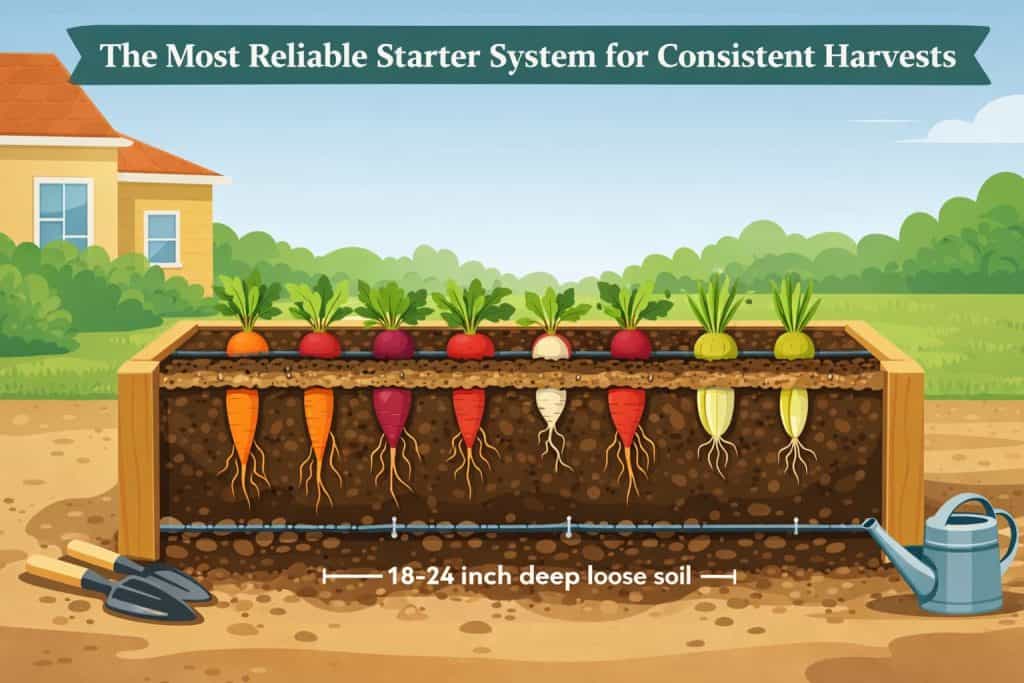
If you want a harvest you can actually eat, start with a 12 to 18-inch raised soil bed. Use a drip irrigation line. This setup is the “goldilocks” of gardening. It isn’t too expensive, it isn’t too complicated, and it works every time. It addresses the three pillars: depth, moisture, and air.
Make your bed 4 feet wide. This allows you to reach the middle from either side without stepping on the soil. Fill it with the sandy loam recipe mentioned earlier. Add a 2-inch layer of straw mulch. This simple design will outperform almost any high-tech gadget on the market for a first-time grower.
Plant easy crops first. Radishes and beets give you quick wins. Once you see how they grow, move on to carrots. Carrots require more patience and better moisture control. After one successful season, you will have the confidence to try containers or hydroponics. Gardening is a skill, and a raised bed is the best classroom.
- The Gold Standard Setup:
- Size: 4×4 or 4×8 raised wooden bed.
- Soil: 18 inches of loose, sandy loam.
- Water: Automatic drip timer with mulch.
The Best First Upgrade After the First Harvest
Once you have a successful harvest, do not rush to buy more plastic. The best upgrade is “living soil.” Start a worm bin or a compost pile. Adding your own worm castings to the root beds will drastically improve the flavor and size of your vegetables. It is the cheapest and most effective upgrade possible.
Next, look at your irrigation. If you started with a manual hose, upgrade to a solar-powered timer. This ensures your plants get water at 5:00 AM, which is the best time for them. It also allows you to go on vacation without worrying about your carrots splitting. Automation is about consistency, not laziness.
Finally, consider “succession planting.” Instead of planting all your carrots at once, plant a small row every two weeks. This gives you a steady supply of food all summer instead of one giant mountain of carrots that you can’t finish. It keeps the system productive and ensures you always have something fresh to pull from the ground.
- Upgrade Path:
- Phase 1: Home-made compost and worm castings.
- Phase 2: Automated watering timers.
- Phase 3: Succession planting for continuous harvests.
Final Takeaway: Keep It Simple for Reliable Harvests
When root crops struggle, it usually comes down to shallow depth or uneven watering, and that frustration shows up fast in split carrots or stunted beets. That’s the real issue.
For most gardens, soil-based raised beds with drip irrigation still give you the most reliable results because they hold 18-24 inches of loose growing depth and keep moisture steady without constant guesswork.
The smartest long-term move is to get this system working first, then expand only if space forces the change. Raised beds simply fail less. Once that’s dialed in, containers or hydroponics become useful next steps instead of risky experiments.
FAQs
What soil depth works best for different root vegetables?
Most root vegetables need enough soil depth and vertical root space to develop straight, full roots. Use a deep soil bed with loose soil and well-draining soil for carrots, parsnips, and other taproot crops.
Radishes and turnips need less depth, but good soil preparation still matters. Matching soil depth requirements to each crop prevents forked roots, cracking, and poor sizing at harvest.
How do I choose between raised beds and container gardening?
Choose raised bed gardening when you need better drainage, easier row spacing, and simpler weed control in root crops. Choose container gardening for patios, balconies, or small space root crops, but always match container depth and container size for roots to the crop.
Deep containers with a loose soilless mix for roots support carrots, beets, and turnips more reliably through the season.
Which planting layout helps grow root crops more efficiently?
The most efficient planting system depends on your garden size and the root crop varieties you grow. A wide bed system, block planting, or square foot gardening for roots improves intensive planting in tight spaces. In larger gardens, permanent beds with clear root crop spacing and row spacing make watering, thinning root seedlings, and hand weeding roots easier and consistent.
How can I prevent root cracking and forked roots?
Prevent root cracking and forked roots by keeping even watering from planting to harvest. Sudden dry soil followed by heavy watering often causes split carrots and misshapen roots.
Improve heavy clay soil with organic matter, composting for root crops, and sandy loam soil texture. Remove stones during soil preparation, maintain loose root zone aeration, and use mulch to stabilize moisture levels.
What system adjustments help root crops in different seasons?
Adjust your system to the season by combining proper soil temperature at planting with protection tools. For spring planting roots and fall planting roots, use row covers for root crops, cold frames for roots, or frost protection for roots.
In hot weather, mulch, steady moisture, and light shade support shade-tolerant roots and improve harvest timing roots, storage quality roots, and yields.
References
- https://www.sciencedirect.com/topics/agricultural-and-biological-sciences/root-growth
- https://extension.umn.edu/vegetables/irrigation-strategies-vegetables
Related Articles
- https://tophydroponicgarden.com/hydroponic-system-for-beginners/
- https://tophydroponicgarden.com/easiest-hydroponic-system/
- https://tophydroponicgarden.com/are-dutch-bucket-systems-good-for-beginners/
Was this helpful?

I’m Barrie L., a passionate hydroponic gardening enthusiast dedicated to cultivating thriving, soil-less gardens. With a focus on all things hydroponic, I share my expertise on innovative growing techniques and sustainable practices through my blog, tophydroponicgarden.com. As a seasoned hydroponics specialist, my goal is to inspire and guide fellow gardeners in harnessing the power of water-based cultivation for bountiful and eco-friendly harvests. I’m also an author of the book “Hydroponics For Absolute Beginners: Your Step By Step Guide For How To Create An Hydroponics System At Home Without Soil, For Growing Vegetable, Fruit And Herbs.” which is sold on Amazon. Join me on a journey of redefining the way we cultivate plants, one nutrient-rich solution at a time. Happy growing!