

The best hydroponic system for your home is the one that fits your space, routine, and budget without becoming a chore.
You might picture rows of plastic tubes and lab gear, but home setups can be small, quiet, and even look good on a counter.
Some are plug‑and‑grow, others give you more control if you like to tinker. Once you know how much time, space, and money you want to invest, the choice gets a lot easier. Keep reading to see how to match your goals to a system you’ll actually enjoy using.
Key Takeaways
- Your available space and budget are the most critical starting points.
- Beginner-friendly systems like Kratky or Deep Water Culture offer the easiest entry.
- The plants you want to grow directly determine the complexity of the system you need.
The Foundation: What You Need to Consider First

Before you look at any kits or diagrams, you have to look around your own home. The best system is the one you can manage in the space you have. It’s a practical matter, not just an aesthetic one.
Space is your primary constraint. A small apartment balcony or a kitchen counter demands a compact unit or a vertical tower.
A spare room or a garage opens up possibilities for larger Deep Water Culture (DWC) tubs or multi-tiered ebb and flow systems. You also need to think about access to an electrical outlet, as some systems need power for pumps and lights.
Your budget has two parts. The initial cost for the system itself, which can range from twenty dollars for a DIY Kratky jar to several hundred for an automated smart garden.
Then there are the ongoing costs for nutrients, electricity, and replacement growing media. Be honest about what you’re willing to spend, both now and later, especially when considering the cost comparison between Kratky and DWC setups that are popular among beginners.
- Space: Countertop, vertical, or dedicated room.
- Budget: Initial setup cost and recurring expenses.
- Experience: Your comfort level with technical tasks.
- Crops: Herbs, leafy greens, or fruiting plants.
Your experience level matters. If you’ve never grown a plant before, a complex system with timers and pumps can lead to frustration.
Starting simple builds confidence. The plants you want to grow are the final piece. Leafy greens and herbs are forgiving. Fruiting plants like tomatoes or peppers need more support and nutrients.
A Side-by-Side Look at Common Systems
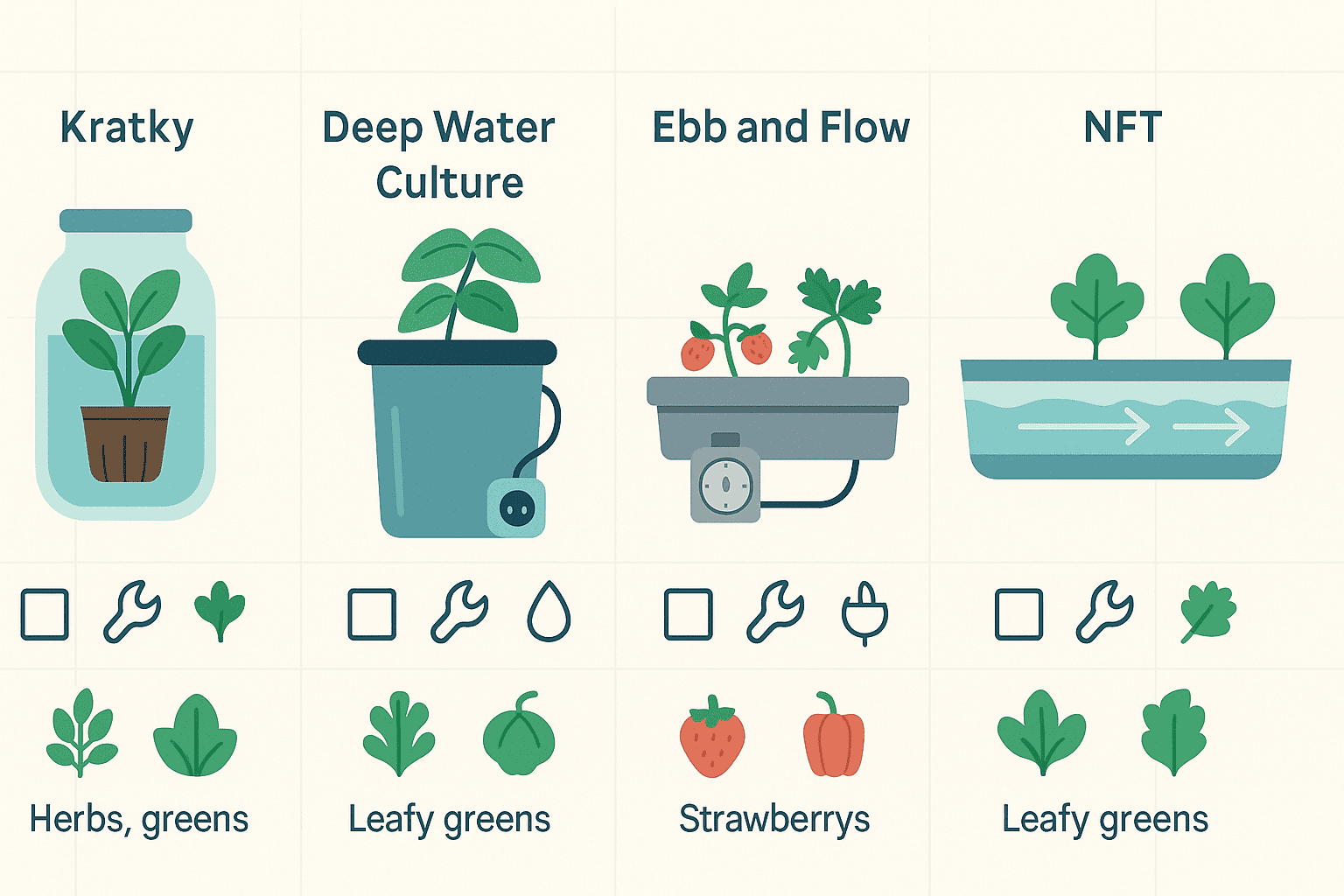
Each hydroponic method has a different personality. Some are quiet and independent, others are more demanding but productive. Understanding their core differences is the key to a good match.
The Kratky method is the simplest form of hydroponics. It’s a passive system, meaning it requires no electricity, no pumps, no moving parts.
You set it up and let it be. The plant’s roots sit in a nutrient solution, with an air gap above that provides oxygen as the water level drops. It’s remarkably effective for small, fast-growing plants.
Its simplicity is its greatest strength for a beginner. There’s very little that can go wrong. The downside is that it’s not suitable for larger, long-term plants, as the nutrient solution can become depleted and oxygen levels can fall.
It’s a perfect trial system. You can build one with a mason jar, a net pot, and some hydroponic nutrients.
Deep Water Culture (DWC) is often the next logical step. It’s similar to Kratky but adds an air pump and an air stone to oxygenate the water constantly.
This active oxygenation supports faster growth and healthier roots for larger plants like lettuce and basil. The system is still relatively simple, often just a bucket or a tub with a lid and the air system.
You have to monitor the water level more closely in a DWC system, and the air pump does introduce a point of potential failure, a small hum of electricity. But for many, the trade-off for more vigorous growth is worth it. It feels like a real hydroponic system for beginners without being overly complex.
| System Type | Best For | Space Needed | Maintenance Level | Power Required | Common Crops |
| Kratky | Complete beginners | Very small | Very low | No | Herbs, leafy greens |
| Deep Water Culture (DWC) | Beginners to intermediate | Small to medium | Low | Yes (air pump) | Lettuce, basil |
| Ebb and Flow | Intermediate growers | Medium | Medium | Yes | Greens, strawberries, peppers |
| Nutrient Film Technique (NFT) | Experienced growers | Small footprint | High | Yes | Fast-growing leafy greens |
| Vertical Tower Systems | Space-limited homes | Very small floor space | Medium to high | Yes | Greens, herbs |
Ebb and Flow Versus Nutrient Film Technique

Credits: Simple Greens Hydroponics
Ebb and Flow systems, also called Flood and Drain, work on a timer. They periodically flood the plant’s root zone with nutrient solution and then drain it away [1].
This cycle ensures the roots get both nutrients and oxygen. It’s a versatile system that can handle a wider variety of plants, including some fruiting varieties including fruiting varieties like tomatoes or peppers with proper sizing.
The need for a timer and a pump makes it a medium-maintenance option. You have to ensure the pump doesn’t clog and that the flood cycles are timed correctly. But the control it offers is a significant advantage for a gardener looking to expand their repertoire beyond basic greens.
Nutrient Film Technique (NFT) is a high-performance system. A very shallow stream of nutrient solution constantly flows over the roots, which are suspended in a sloped channel.
It’s highly efficient with water and nutrients and is excellent for fast-growing leafy greens. It’s also the system most prone to problems if the pump fails, as roots can dry out quickly.
Vertical towers are less a specific technique and more an application of one, often using a drip or NFT design. Their main benefit is spatial efficiency, allowing you to grow a lot of plants in a very small footprint.
They can be a great solution for a patio or a corner of a room, though they may require careful attention to lighting for all plants to receive equal exposure.
Matching the System to Your Life
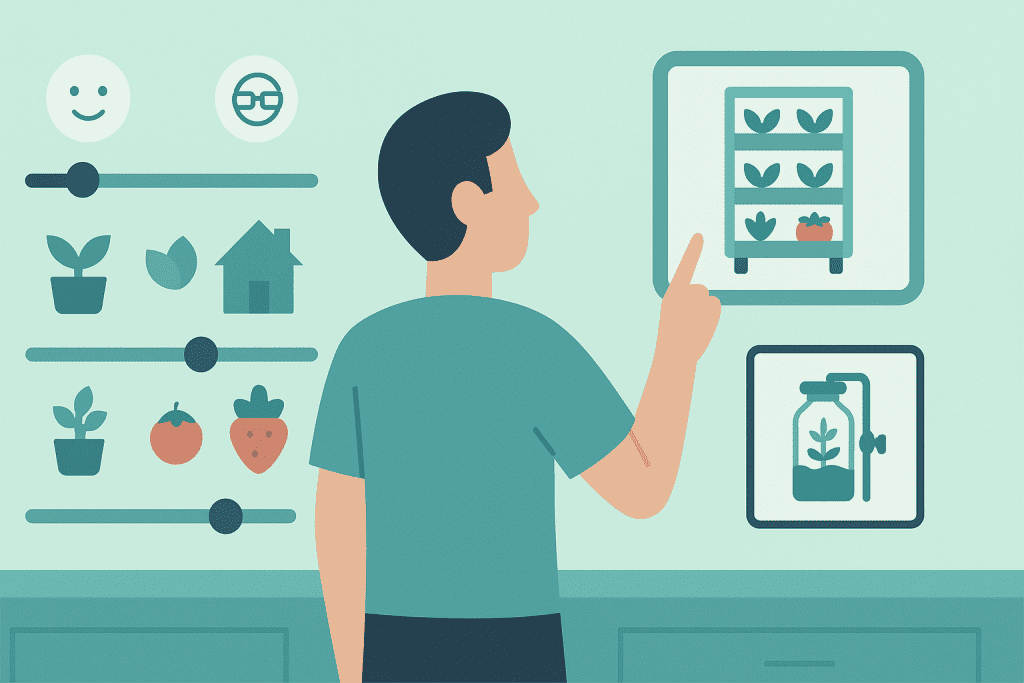
So, which one is for you? The answer lies in a clear-eyed assessment of your circumstances. It’s better to succeed with a simple system than to fail with a complex one.
Kratky or passive Wick you are a complete beginner, on a tight budget, or just want to dip your toes in the water [2].
It’s perfect for growing herbs like basil or mint on a sunny windowsill. The satisfaction of growing something with such a simple setup is immense. It proves the concept works before you invest further.
Opt for a Deep Water Culture (DWC) system if you have a bit more space, like a spare five-gallon bucket’s worth, and want faster, more robust growth.
It’s the workhorse for indoor leafy greens. If you enjoy a little more hands-on involvement without the complexity of timers, DWC is a fantastic middle ground. Many commercial growers use large-scale DWC for a reason.
Move up to an Ebb and Flow system when you’re ready to grow a wider variety of crops, perhaps some strawberries or peppers.
You’re comfortable with the idea of a pump and timer and you value the control it provides. It’s a system for a gardener who has mastered the basics and is looking for a new challenge.
Consider an NFT or Vertical Tower system if space is your primary limitation and you’re focused on high yields of greens.
You’re willing to accept a higher maintenance routine and the risk associated with pump dependency for the payoff of a dense, productive garden in a small area. These systems can feel very futuristic and rewarding when dialed in correctly.
Your First Steps Toward Hydroponic Harvests
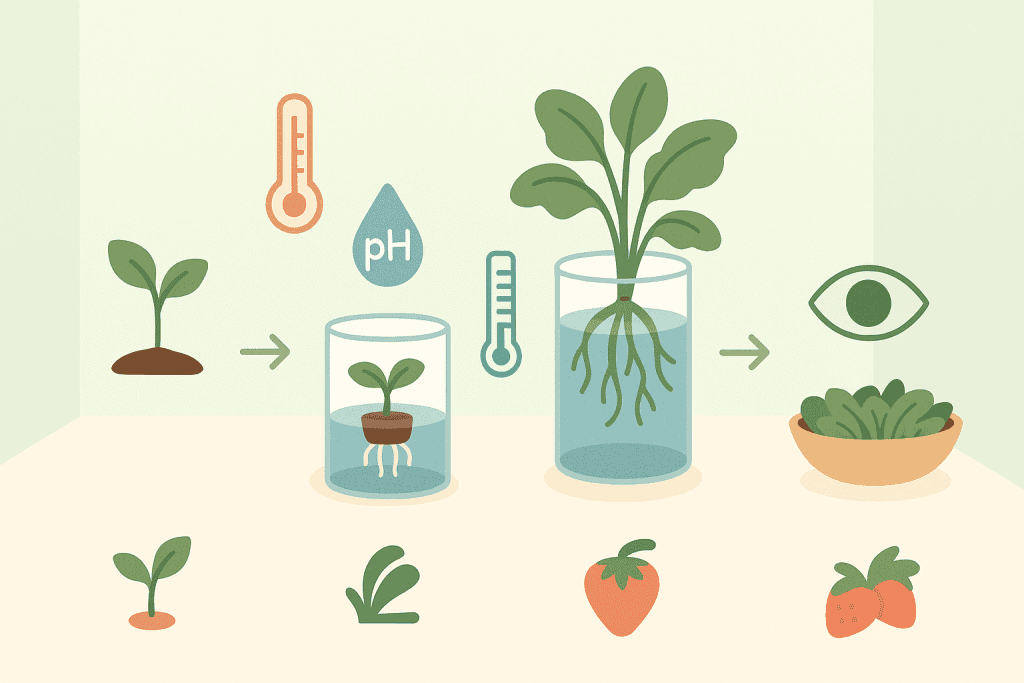
The goal isn’t to build a laboratory in your home. It’s to grow fresh, healthy food. The simplest system that meets your needs is almost always the best one to start with. Success with a few plants in a Kratky jar will teach you more than struggling with a large, complicated setup.
Start small. Pick one system, one type of plant, and focus on getting it right. Pay attention to the water temperature, keep an eye on the pH 5.5-6.5, water 65-75°F (18-24°C), and watch how your plants respond.
That direct observation is the real teacher. Your home hydroponic system is just a tool. The real growth happens in your understanding of the process.
This approach reflects what many find essential to know before starting hydroponics to build confidence and avoid early mistakes. Your first harvest is closer than you think.
FAQ
What should beginners know when choosing a home hydroponic system?
Home hydroponic gardening works best when beginners start simple and realistic. Hydroponic systems for beginners should match available space, time, and comfort with basic tasks.
An indoor hydroponic system may be a DIY hydroponic system or a hydroponic kit for home use. A beginner hydroponic setup should focus on easy hydroponic systems and clear steps for choosing a hydroponic system.
How do space and cost affect home hydroponic system choices?
Small space hydroponics is ideal for apartments, kitchens, or shelves. A countertop hydroponic garden or compact hydroponic system fits limited areas well.
Hydroponic system cost depends on size, materials, and automation. Affordable hydroponic systems reduce startup risk. A hydroponic system size guide helps plan proper home hydroponic installation without overcrowding the living space.
What plants, lights, and nutrients work best for indoor hydroponics?
Hydroponic growing at home works best with leafy greens and fast-growing crops. Hydroponic herbs indoors and hydroponic vegetables at home are reliable options.
Best plants for hydroponics require a balanced hydroponic nutrient solution and the correct hydroponic growing medium. Indoor plant growing systems also depend on meeting hydroponic lighting requirements using LED grow lights for hydroponics.
How do different hydroponic systems compare for home use?
A hydroponic system comparison explains types of hydroponic systems and hydroponic growing methods. A water-based gardening system may use a recirculating hydroponic system or non-circulating hydroponics.
A vertical hydroponic garden saves floor space, while a hydroponic grow box contains light and moisture. Reviewing hydroponic system pros and cons supports selecting the best home hydroponic setup.
What maintenance and yield should home growers expect?
Hydroponic yield at home depends on lighting, plant choice, and routine care. A low maintenance hydroponic system reduces daily work but still needs monitoring. Hydroponic maintenance tips include cleaning equipment and checking nutrients.
Energy efficient hydroponics limits power use. An automatic hydroponic system or smart hydroponic garden can manage hydroponic watering system tasks, supplies, and home hydroponic equipment consistently.
Conclusion
Choosing the right home hydroponic system is about aligning simplicity with your lifestyle. By starting with your space, budget, and experience level, you set yourself up for success rather than frustration.
Simple systems build confidence, while scalable options leave room to grow. Start small, learn from your plants, and adjust as you go. With the right match, hydroponics becomes an enjoyable habit, not a complicated project, and fresh indoor harvests quickly become part of your daily life.
References
- https://www.trees.com/gardening-and-landscaping/ebb-and-flow-hydroponics
- https://www.trees.com/gardening-and-landscaping/hydroponic-wick-systems
Related Articles
- https://tophydroponicgarden.com/kratky-method-vs-dwc-for-beginners/
- https://tophydroponicgarden.com/which-hydroponic-system-is-best-for-beginners/
- https://tophydroponicgarden.com/what-to-know-before-starting-hydroponics/
Was this helpful?

I’m Barrie L., a passionate hydroponic gardening enthusiast dedicated to cultivating thriving, soil-less gardens. With a focus on all things hydroponic, I share my expertise on innovative growing techniques and sustainable practices through my blog, tophydroponicgarden.com. As a seasoned hydroponics specialist, my goal is to inspire and guide fellow gardeners in harnessing the power of water-based cultivation for bountiful and eco-friendly harvests. I’m also an author of the book “Hydroponics For Absolute Beginners: Your Step By Step Guide For How To Create An Hydroponics System At Home Without Soil, For Growing Vegetable, Fruit And Herbs.” which is sold on Amazon. Join me on a journey of redefining the way we cultivate plants, one nutrient-rich solution at a time. Happy growing!