

Properly calibrating a pH pen helps hydroponic growers maintain accurate nutrient readings, stable water chemistry, and healthier plant growth. Regular calibration improves nutrient absorption, reduces pH instability, and supports long-term hydroponic system performance.
In hydroponic gardening, even small pH fluctuations can significantly affect nutrient availability and plant health. Because hydroponic systems rely entirely on water-based nutrient delivery, accurate pH monitoring becomes one of the most important parts of maintaining stable growing conditions.
Many growers invest in digital pH pens because they provide fast and convenient readings. However, pH pens gradually drift out of calibration over time due to residue buildup, improper storage, temperature changes, and normal sensor aging. Without proper calibration, growers may unknowingly adjust nutrient solutions incorrectly, leading to nutrient lockout, root stress, and inconsistent plant growth.
Learning how to calibrate a pH pen correctly is not simply a maintenance routine. It is a foundational practice that supports accurate nutrient management, healthier root systems, and more predictable hydroponic performance.
Today, hydroponic growers commonly use calibration buffer solutions, probe cleaning solutions, and proper storage methods to keep pH pens reliable throughout the growing cycle.
Looking to improve pH accuracy and nutrient consistency in your hydroponic system? Read on to discover how proper pH pen calibration supports healthier hydroponic gardening.
Core Principles of Proper pH Pen Calibration
- Calibrating a pH pen correctly focuses on maintaining accurate sensor readings through regular testing, cleaning, and buffer solution calibration.
- Core calibration practices include using fresh buffer solutions, cleaning the probe carefully, storing the pen properly, and recalibrating consistently based on usage frequency.
- While calibration requires routine maintenance and attention to detail, accurate pH monitoring improves nutrient absorption, reduces plant stress, and supports long-term hydroponic stability.
Understanding pH Pen Calibration
Definition and Importance of pH Calibration
After spending time managing hydroponic nutrient reservoirs, many growers realize that pH stability directly affects nutrient availability and plant performance. At its core, calibrating a pH pen means adjusting the device using known reference solutions so readings remain accurate.
Instead of relying on factory calibration permanently, hydroponic growers recalibrate their pH pens regularly to account for:
- Sensor drift
- Mineral residue buildup
- Probe aging
- Temperature fluctuations
- Storage inconsistencies
Because hydroponic plants absorb nutrients directly through water, inaccurate pH readings may cause growers to unknowingly create unstable nutrient conditions.
According to general references discussing pH measurement:
“A pH meter is a scientific instrument that measures the hydrogen-ion activity in water-based solutions.”
— pH meter – Wikipedia
This explains why maintaining accurate pH readings becomes essential in hydroponic nutrient management.
Key Components of Proper pH Pen Calibration

Most successful hydroponic growers follow several essential calibration practices to maintain accurate readings and stable nutrient control.
1. Using Fresh Calibration Buffer Solutions
Calibration buffer solutions provide known pH reference points used to adjust the pH pen accurately.
Common calibration standards include:
- pH 4.0
- pH 7.0
- pH 10.0
For hydroponics, pH 4.0 and pH 7.0 buffers are most commonly used because hydroponic nutrient solutions usually operate within slightly acidic ranges.
Old or contaminated buffer solutions may create inaccurate calibration results, which is why many growers avoid reusing opened calibration liquids.
2. Cleaning the Probe Carefully
Residue buildup on the sensor may interfere with measurement accuracy over time.
Growers commonly clean probes using:
- Distilled water
- Electrode cleaning solution
- Gentle rinsing methods
Aggressive scrubbing may damage sensitive glass electrodes and shorten probe lifespan.
Many growers notice that inaccurate readings often begin with small residue buildup that is difficult to see visually.
3. Calibrating at Consistent Intervals
Frequent hydroponic testing gradually shifts sensor accuracy over time.
Many growers recalibrate:
- Weekly
- Before nutrient reservoir changes
- After deep cleaning
- After long storage periods
- Whenever readings appear inconsistent
The calibration frequency depends heavily on usage intensity and environmental conditions.
Commercial hydroponic growers often calibrate daily because even small pH inaccuracies can affect nutrient consistency at scale.
4. Proper Probe Storage
Improper storage is one of the most common reasons pH pens fail prematurely.
pH probes should generally remain:
- Moist
- Clean
- Protected from drying out
Many growers use dedicated storage solution because dry storage may permanently damage probe responsiveness.
A dried-out sensor often becomes slow, unstable, or inaccurate even after recalibration.
5. Verifying Calibration Accuracy
After calibration, experienced growers commonly retest the pH pen using clean buffer solution to confirm stability.
Verification helps identify:
- Weak probes
- Sensor degradation
- Contaminated solutions
- Calibration errors
- Temperature-related inconsistencies
When maintained correctly, these practices help keep pH measurements reliable throughout the hydroponic growing cycle.
Benefits of Proper pH Pen Calibration
Maintaining accurate pH calibration provides major benefits for nutrient management, root stability, and hydroponic consistency.
Here are some of the primary advantages of calibrating a pH pen correctly:
Improved Nutrient Absorption
Accurate pH readings help growers maintain nutrient solutions within optimal absorption ranges, reducing nutrient lockout and improving plant performance.
Cleaner and more stable nutrient chemistry allows plants to absorb nutrients more efficiently.
Better pH Stability
Reliable measurements make it easier to manage nutrient reservoirs consistently and prevent overcorrection.
Excessive pH adjustments often happen because inaccurate meters provide misleading readings.
Healthier Root Development
Stable pH conditions reduce stress on root systems while improving nutrient availability and oxygen balance.
Reduced Nutrient Waste
Incorrect pH readings commonly lead to unnecessary:
- pH up adjustments
- pH down adjustments
- Reservoir replacements
- Nutrient corrections
Accurate calibration helps reduce waste and improves nutrient efficiency.
More Consistent Plant Growth
Stable nutrient chemistry supports:
- Uniform growth
- Better leaf development
- Stronger root systems
- Improved crop consistency
Hydroponic growers often notice healthier plant development once pH monitoring becomes more consistent.
Types of pH Pen Calibration Methods
| Calibration Method | How It Works | Why It Helps Hydroponics | Common Usage |
| Single-Point Calibration | Uses one buffer solution, usually pH 7.0 | Basic accuracy adjustment | Beginner hydroponics |
| Two-Point Calibration | Uses pH 4.0 and pH 7.0 buffers | Improves reading accuracy across hydroponic ranges | Standard hydroponic systems |
| Three-Point Calibration | Uses pH 4.0, 7.0, and 10.0 buffers | Higher precision across wider ranges | Advanced growing systems |
| Automatic Calibration | Digital pens auto-detect buffer values | Simplifies calibration process | Modern pH meters |
| Manual Calibration | User manually adjusts calibration settings | Greater adjustment control | Professional monitoring |
According to general references discussing pH calibration:
“Calibration is necessary to maintain the accuracy of pH measurements over time.”
— pH measurement overview
This explains why regular calibration remains important for long-term hydroponic accuracy.
Applications and Real-World Practice
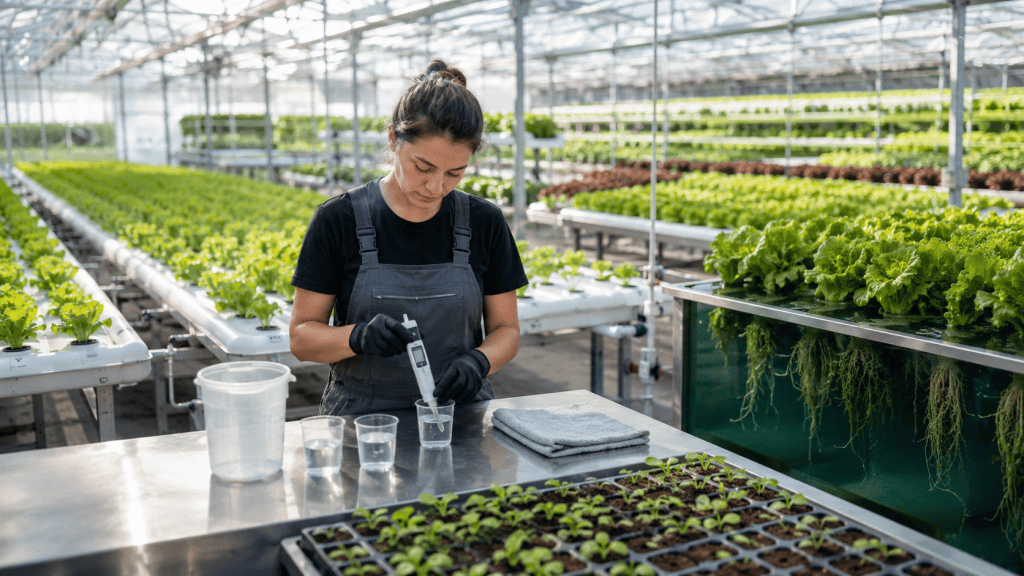
Proper pH pen calibration matters in every hydroponic setup, but the stakes change depending on the system. A small herb garden may recover from one bad reading. A packed NFT channel or commercial lettuce rack may not be as forgiving.
A calibrated pH pen helps growers make better decisions before plants show stress. It gives a clearer picture of nutrient solution behavior, especially after mixing nutrients, topping off reservoirs, or correcting pH drift.
Deep Water Culture (DWC)
Deep Water Culture depends heavily on stable water chemistry because plant roots sit directly in the nutrient solution. If the pH reading is wrong, the entire root zone is affected. There is no soil buffer to soften the mistake.
Nutrient Film Technique (NFT)
NFT systems move a thin stream of nutrient solution past the roots. That steady flow makes the system efficient, but it also means pH problems can spread fast. One incorrect adjustment can affect every plant in the channel.
Seedling and Propagation Systems
Seedlings are less forgiving than mature plants. Their roots are small, soft, and still developing. If the pH drifts too far, young plants may show stress before a grower realizes the nutrient solution is the problem.
Stable readings help reduce early-stage plant stress and improve propagation consistency.
Commercial Hydroponic Farms
Commercial hydroponic farms need repeatable measurements. A single bad reading can affect hundreds or thousands of plants. This is why many larger operations use higher-quality meters and stricter calibration routines.
Home Hydroponic Gardens
Home hydroponic gardens often have small reservoirs. That makes pH changes more noticeable. A few milliliters of pH adjuster can move the number quickly, especially in compact countertop systems or small indoor tents.
The adaptability of digital pH monitoring makes proper calibration important across nearly every hydroponic setup.
Common pH Pen Calibration Mistakes
Even experienced growers make small pH pen calibration mistakes. The problem is that these mistakes rarely look serious at first. A reading may only drift by a few points, but in hydroponics, that can be enough to push plants toward nutrient lockout, weak roots, or uneven growth.
A pH pen works best when it is treated like a small measuring instrument, not a casual garden tool. The pen, buffer solution, probe cleaner, and storage solution all play a role. When one part is neglected, the reading becomes less trustworthy.
For most growers, the best setup includes:
- A reliable digital pH pen
- Fresh pH 4.0 and pH 7.0 buffer solution
- Probe storage solution
- Electrode cleaning solution
- Distilled water for rinsing
Using Expired Buffer Solution
Old calibration liquids gradually lose reliability and may create inaccurate readings.
Storing the Probe Dry
Dry storage damages sensitive sensors and reduces probe responsiveness.
Skipping Probe Cleaning
Mineral residue buildup interferes with calibration accuracy over time.
Reusing Contaminated Buffer Solution
Pouring used calibration liquid back into the original container may contaminate future calibrations.
Calibrating With Tap Water Residue
Residual tap water on the probe may dilute calibration solutions and affect accuracy.
Many hydroponic pH issues begin with small calibration mistakes that go unnoticed initially.
Addressing Limitations and Challenges
Digital pH pens are useful, but they are not maintenance-free tools. They need cleaning, calibration, and proper storage to stay accurate. A grower who treats a pH pen like a simple kitchen thermometer will usually get poor readings sooner or later.
Most problems come from the same few places: worn probes, cheap sensors, dry storage, temperature swings, and skipped calibration. None of these issues make pH pens useless. They just mean growers need to understand the trade-offs before trusting every number on the screen.
A good pH pen setup usually includes:
- A digital pH pen
- pH 4.0 and pH 7.0 buffer solutions
- Probe storage solution
- Electrode cleaning solution
- Distilled water for rinsing
pH Probes Gradually Wear Out
Every pH probe has a limited lifespan. Even with careful cleaning and proper storage, the sensor slowly becomes less responsive. Readings may take longer to settle. Numbers may drift. Calibration may fail more often. At that point, the issue may not be the buffer solution or the grower’s method. The probe may simply be aging.
This matters because a worn probe can make a hydroponic system look unstable when the reservoir is actually fine. A grower may keep adding pH up or pH down, only to create the problem they were trying to fix.
Cheap pH Pens Drift More Frequently
Cheap pH pens can work, but they usually need more attention. Many budget models drift faster, respond slower, and feel less consistent after repeated use. That does not mean every low-cost pen is bad. It means growers should set expectations correctly.
For a small herb setup or occasional testing, a basic pen may be enough. For larger reservoirs, expensive crops, or daily nutrient management, poor accuracy can become costly. A few wrong readings can lead to overcorrection, nutrient lockout, and wasted solution.
Temperature Variations Affect Readings
Temperature can affect pH readings more than many growers expect. Cold buffer solution, warm nutrient water, or sudden temperature shifts can make a meter respond slowly or display unstable numbers. Some pH pens have automatic temperature compensation, but that does not make them perfect.
The issue is not only the meter. Calibration solutions and nutrient reservoirs should be close in temperature when possible. If a pen is calibrated in cold buffer solution and then used in a warm reservoir, the reading may take longer to settle.
Calibration Requires Ongoing Maintenance
Unlike simple test strips, digital pH pens require:
- Cleaning
- Calibration
- Proper storage
- Periodic replacement
Storage Mistakes Can Damage Sensors Permanently
Poor storage can ruin a pH pen faster than normal use. The probe should not dry out. It should not sit in dirty liquid. It should not be stored in plain distilled water for long periods. The sensor needs the right storage environment to stay responsive.
A dried-out probe may recover after soaking in storage solution, but not always. Sometimes it stays slow or inaccurate. That is why storage habits matter more than many beginners realize.
The safest approach is simple. After each use, the grower should rinse the probe, gently shake off excess water, and store it with proper electrode storage solution in the cap.
Best Practices for Calibrating a pH Pen Correctly
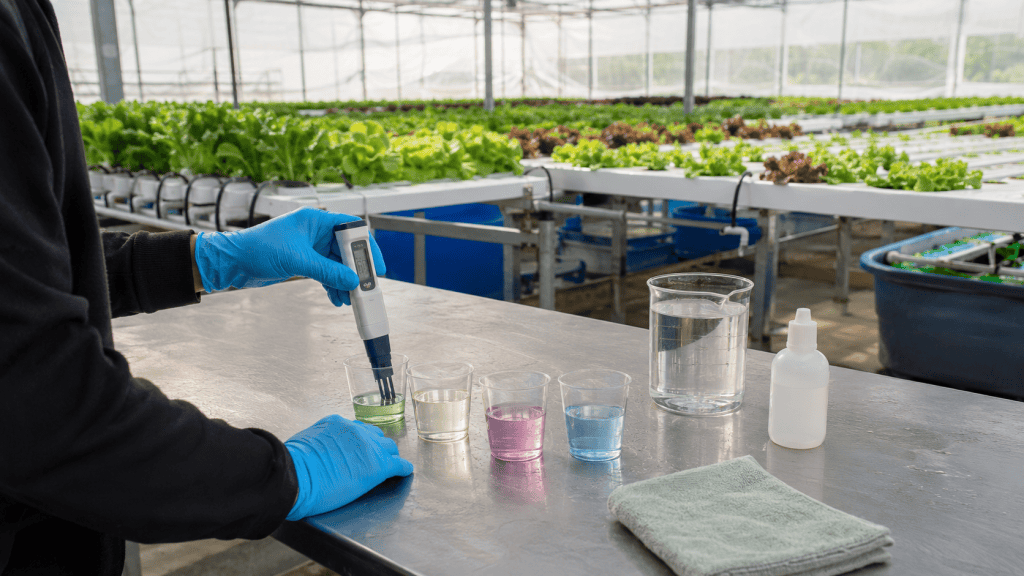
A pH pen gives better results when the grower treats calibration as part of the routine, not as a rescue step after readings look strange. The goal is simple: keep the meter clean, hydrated, and checked against fresh reference solutions.
Most growers do not need a complicated lab setup. They need a clean process they can repeat without cutting corners. That usually means using proper buffer solution, rinsing between steps, storing the probe correctly, and recalibrating before important nutrient changes.
Use Fresh Calibration Solutions
Fresh calibration solution matters more than many growers think. A pH pen can only calibrate correctly if the reference liquid is still accurate. Once buffer solution gets old, contaminated, or exposed to heat, it may no longer hold its stated pH value.
Growers should avoid dipping the probe directly into the original bottle. That can contaminate the entire supply. The better move is to pour a small amount into a clean cup, calibrate the pen, then throw the used liquid away.
Rinse Between Calibration Steps
Rinsing between calibration steps keeps one solution from contaminating the next. This small step protects accuracy, especially during two-point calibration with pH 7.0 and pH 4.0 buffers.
Tap water is not the best choice for this job. It can leave minerals, chlorine, or dissolved solids on the probe. Distilled water is safer because it rinses without adding extra residue.
The grower should rinse the probe gently, then shake off excess water or blot the body lightly with a clean tissue. The glass bulb should stay moist, but it should not carry drops of rinse water into the calibration cup.
Store the Pen Properly
Proper storage keeps the probe responsive. A pH pen should not be stored dry. The glass electrode needs moisture to keep working correctly. Once it dries out, readings may become slow, unstable, or permanently wrong.
Many growers make this mistake after rinsing the pen. They clean it, shake it off, and put it away dry. That may seem tidy, but it can shorten the life of the sensor.
The better method is simple. After use, rinse the probe, gently remove excess water, and store it in electrode storage solution inside the cap. The cap should stay clean and wet enough to protect the probe.
Avoid Touching the Glass Electrode
The glass electrode is the most delicate part of the pH pen. It should not be touched, wiped hard, scraped, or scrubbed. Even a small scratch or oily fingerprint can affect how the probe responds.
If residue builds up, the grower should clean it with an electrode cleaning solution instead of force. A soft rinse is usually enough for light use. For sticky nutrient residue, soaking the probe briefly in a cleaning solution is safer than rubbing it.
This matters most in hydroponics because nutrient mixes can leave salts and film on the probe. A damaged or dirty electrode may still turn on and display numbers, but those numbers may not be trustworthy.
Recalibrate Consistently
Consistent recalibration prevents small errors from becoming bigger problems. A pH pen may drift slowly over time, even when it looks clean and works normally. Regular calibration keeps the meter aligned with known reference points.
Many hydroponic growers recalibrate:
- Weekly
- Before nutrient mixing
- After cleaning
- Whenever readings drift unexpectedly
Best hydroponic crops that benefit from stable pH monitoring include:
- Lettuce
- Basil
- Tomatoes
- Strawberries
- Spinach
- Microgreens
Recommended YouTube Videos
Growing Fodder in an Indoor Hydroponic Farm
Source: Growing Fodder
This video serves as a practical resource for understanding hydroponic fodder, indoor farming, and livestock feed production. By demonstrating fodder cultivation within a controlled hydroponic environment, it provides growers with a clearer perspective on space optimization, water management, tray-based production cycles, and the logistics of daily harvest planning in real-world applications.
FAQs
Why is calibrating a pH pen important for hydroponics?
Calibrating a pH pen is important for hydroponics because accurate pH readings directly affect nutrient absorption and plant health. Incorrect readings may create unstable nutrient solutions and nutrient lockout. Regular calibration helps maintain healthier hydroponic growing conditions.
How often should a pH pen be calibrated?
Many hydroponic growers calibrate their pH pens weekly or before major nutrient adjustments. Frequent testing, probe aging, and residue buildup gradually affect sensor accuracy over time.
Which calibration solutions are used for pH pens?
Most hydroponic growers use pH 4.0 and pH 7.0 buffer solutions for regular calibration. Some advanced calibration methods also use pH 10.0 solutions for wider calibration ranges.
Can a dirty pH probe affect readings?
Yes, residue buildup on the probe may interfere with sensor responsiveness and create inaccurate pH readings. Cleaning the probe carefully helps maintain reliable hydroponic nutrient monitoring.
What happens if a pH pen is not calibrated properly?
Without proper calibration, hydroponic growers may unknowingly create unstable nutrient conditions that reduce nutrient availability and stress plants. Over time, inaccurate pH management may affect root health and crop consistency.
Wrapping Up Proper pH Pen Calibration
Hydroponic gardening depends heavily on nutrient precision, and accurate pH monitoring sits at the center of maintaining stable water chemistry.
Many growers focus heavily on nutrients, lighting, and environmental control while overlooking one of the most important foundations of hydroponic consistency: accurate measurement itself.
By focusing on:
- Proper calibration
- Clean probes
- Fresh buffer solutions
- Consistent monitoring
- Correct storage methods
Growers can maintain healthier nutrient solutions and improve overall hydroponic stability.
It requires regular maintenance and attention to detail, but the long-term benefits are substantial. Nutrient adjustments become more accurate. Root systems remain healthier. Plants grow more consistently throughout the growing cycle.
For serious hydroponic growers, learning how to calibrate a pH pen correctly is not simply equipment maintenance, it is one of the foundations of successful hydroponic nutrient management.
References
- https://en.wikipedia.org/wiki/PH_meter
- https://tophydroponicgarden.com/accurate-ph-testing-for-hydroponics/
Related Articles
- https://tophydroponicgarden.com/hydroponic-supplies-basics/
- https://tophydroponicgarden.com/hydroponic-nutrient-solution-basics/
- https://tophydroponicgarden.com/hydroponic-water-quality-guide/
Was this helpful?

I’m Barrie L., a passionate hydroponic gardening enthusiast dedicated to cultivating thriving, soil-less gardens. With a focus on all things hydroponic, I share my expertise on innovative growing techniques and sustainable practices through my blog, tophydroponicgarden.com. As a seasoned hydroponics specialist, my goal is to inspire and guide fellow gardeners in harnessing the power of water-based cultivation for bountiful and eco-friendly harvests. I’m also an author of the book “Hydroponics For Absolute Beginners: Your Step By Step Guide For How To Create An Hydroponics System At Home Without Soil, For Growing Vegetable, Fruit And Herbs.” which is sold on Amazon. Join me on a journey of redefining the way we cultivate plants, one nutrient-rich solution at a time. Happy growing!