

Cucumbers left to sprawl on the ground rot faster, attract more pests, and become a nightmare to harvest. A simple trellis fixes all of that.
Building a DIY cucumber trellis takes basic materials and an afternoon. The most dependable designs A-frame, cattle panel, and string trellis hold heavy vines through an entire season without falling apart.
Going vertical saves real space in raised beds, containers, and tight backyard gardens while keeping air moving freely around the leaves.
The right cucumber support comes down to what you have and how much room you’re working with. Keep reading to find the right fit.
Build It Right the First Time Your Cucumber Trellis Checklist
A good cucumber trellis isn’t complicated, but the material, timing, and setup you choose will determine how well your vines perform all season long.
- Vining cucumber varieties perform best with vertical support that handles heavy fruit without bending or collapsing.
- Cattle panels and livestock panels are the most durable materials home gardeners consistently rely on season after season.
- Installing support before planting protects both roots and young vines from damage that slows growth early on.
Why Should You Grow Cucumbers on a Trellis?
Trellising keeps fruit clean, improves airflow, reduces crowding, and makes harvesting easier while maximizing garden space.
Growing cucumbers on a trellis can keep plants healthier and make better use of garden space. Whether you’re growing cucumbers hydroponically or in traditional soil gardens, vertical support remains essential for healthy vines and better yields.
Instead of allowing vines to spread across the ground, a trellis encourages upward growth, making it easier to manage plants throughout the season.
A trellis allows air to move more freely around the leaves. Better air circulation helps foliage dry within 1 to 2 hours after rain or watering compared to 4 to 6 hours for ground-sprawling vines, which significantly reduces the window during which fungal spores can establish on wet leaf surfaces.
Keeping cucumbers off the ground also minimizes soil contact, resulting in cleaner fruit that is easier to harvest.
As noted by University of Illinois Extension,
“With the plant canopy up off of the ground, there is better airflow through the plants, which allows the canopy to dry out faster, helping to reduce disease development.” –University of Illinois Extension
Key benefits include:
- Better airflow around foliage
- Cleaner fruit with less soil contact
- Easier harvesting and inspection
- Reduced vine sprawl
- Improved pest visibility
- Better use of limited space
- Greater productivity in urban gardening environments
Keeping cucumbers off the ground helps reduce rot and keeps fruit from becoming misshapen. Gardeners using small-space trellis systems often grow multiple plants in areas that would otherwise support only one sprawling vine.
The same vertical space freed up by trellising cucumbers can also support hydroponic herbs in nearby containers, making the most of limited garden space indoors or on a balcony.
Harvesting is also much easier because cucumbers are easier to spot. Cucumbers remain visible and easier to spot instead of hiding beneath dense foliage, reducing the chance of overlooked fruit becoming oversized.
Vining Cucumbers Need Support Bush Types Usually Don’t
Most vining cucumber varieties benefit significantly from support structures. Vining cucumber varieties produce long stems that spread quickly during the growing season.
Without support, these vines spread across the garden, taking up valuable space and making maintenance more difficult.
Examples include:
- Marketmore
- Straight Eight
- Suyo Long
- Lemon Cucumber
- Most pickling cucumber varieties
- Most slicing cucumber varieties
In contrast, bush cucumber varieties usually stay compact and often require little or no support. Their shorter growth habit makes them suitable for containers and smaller garden spaces.
Before building a trellis, check the seed packet or plant label to determine whether the variety grows as a compact bush or a climbing vine. Choosing the right support system based on the plant’s growth habit can save time and prevent unnecessary work later in the season.
Which DIY Cucumber Trellis Design Works Best?
The best trellis depends on your space, budget, and cucumber variety. A-frame trellises offer balance, string trellises save money, and cattle panels provide maximum durability.
The right trellis depends on your space, budget, and how much maintenance you want to do. Some gardeners prioritize affordability, while others prefer structures that can withstand years of use.
Trellis Type Comparison
| Trellis Type | Cost | Durability | Best For |
| A-Frame Trellis | Medium | High | Raised beds |
| String Trellis | Low | Medium | Small gardens |
| Mesh Trellis | Medium | High | Most home gardens |
| Cattle Panel Trellis | Medium-High | Very High | Heavy vines |
| PVC Trellis | Low-Medium | Medium | Beginner projects |
| Bamboo Trellis | Low | Medium | Rustic gardens |
Many experienced gardeners recommend hog panels, livestock panels, and concrete reinforcing wire because they handle heavy plant loads and remain functional for years.
Popular options include:
- A-frame trellis
- Cattle panel trellis
- Remesh trellis
- PVC trellis
- String trellis
- Tunnel trellis
- Arched trellis
- Lean-to trellis
Some gardeners prefer a simple seasonal setup, while others want a trellis that lasts for years. Temporary setups may work well for seasonal gardens, while permanent gardens benefit from more durable materials that withstand weather and heavy harvests.
Building a Wooden String Trellis Takes Less Than an Afternoon

A wooden string trellis uses two vertical posts, a top rail, eye hooks, and garden twine to create a lightweight climbing structure for cucumbers.
A string trellis is one of the easiest and least expensive options for beginners. It requires minimal materials, adapts easily to different garden layouts, and works particularly well in raised beds and containers.
Materials Needed
- Two 2×2 or ripped 2×4 posts
- One top rail
- Deck screws
- Eye hooks
- Jute twine or sisal rope
- Drill
- Screwdriver
- Measuring tape
Step-by-Step Instructions
- Cut the two side posts and top rail to the desired height.
- Position the posts and anchor them at least 12 inches into the soil.
- Attach the top rail securely using deck screws.
- Install eye hooks every 8-12 inches across the frame.
- Run garden twine in a ladder, grid, or zigzag pattern.
- Tie secure knots using a reliable garden twine knot.
- Plant cucumbers near the base of the structure.
- Guide young vines toward the lowest strings.
This easy DIY project works especially well for container gardens, pot trellises, and square-foot gardening setups. You may need to gently guide young vines at first, but they usually start climbing on their own.
Anchor the trellis securely before planting. A mature vining cucumber plant loaded with fruit can place 3 to 5 kg of combined vine and fruit weight on the support structure by mid season.
Why Do Cattle Panel Trellises Last Longer?
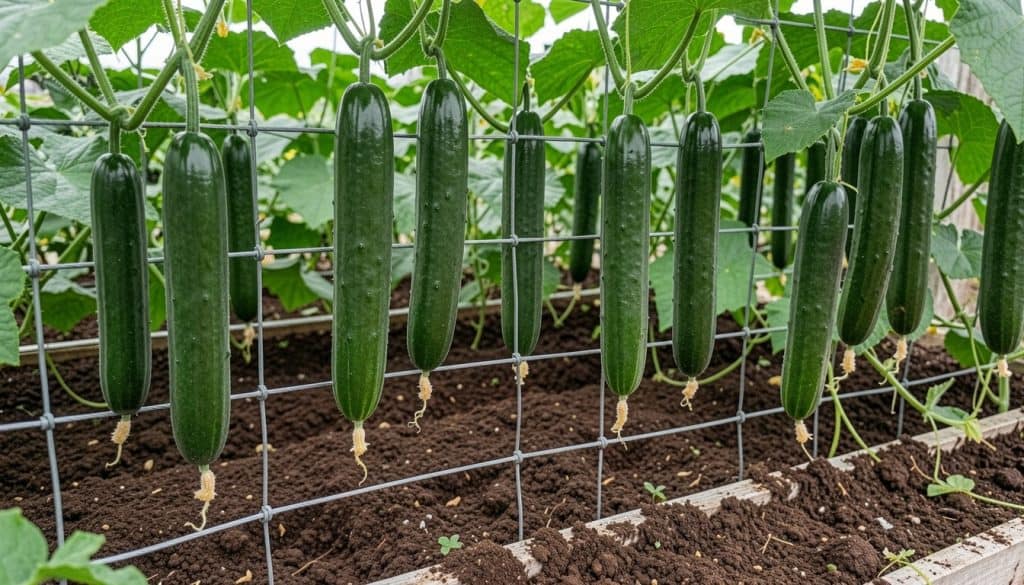
Cattle panels resist weather, support heavy vines, and remain functional for years with minimal maintenance.
Cattle panel trellises are one of the most durable options available. Originally designed to contain livestock, these heavy-duty panels provide exceptional strength and stability in the garden.
Their strong design supports heavy vines and fruit without bending or sagging. Cattle panels typically last 8 to 10 growing seasons outdoors when stored dry during winter and inspected annually for rust or bent sections.
Advantages include:
- Handles heavy fruit loads
- Resists sagging
- Supports aggressive vine growth
- Creates arched trellis or tunnel trellis designs
- Suitable for multiple growing seasons
Many gardeners transform cattle panels into attractive tunnel trellises that create shaded walkways while maximizing vertical growing space. These structures can also support other climbing crops, increasing their value beyond a single season.
Potential drawbacks include:
- Higher upfront cost
- Greater weight during installation
- Transportation challenges
Even with the higher upfront cost, many gardeners feel cattle panels are worth it. Because they last so long, you won’t need to replace them as often as lighter materials.
Decorative Trellises Look Great But Fall Apart Under Real Vine Weight
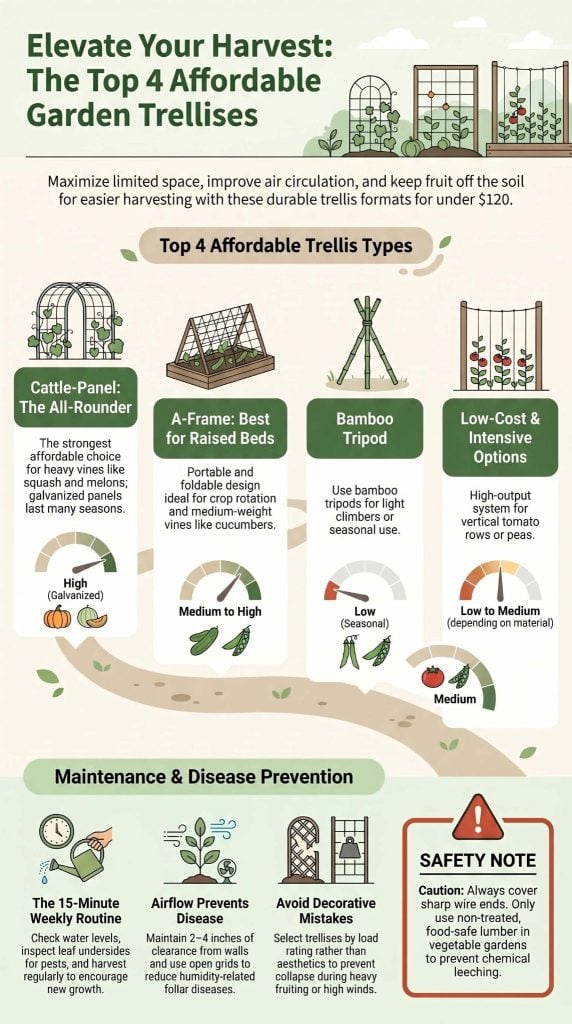
Many decorative trellises fail because they focus more on looks than strength and cannot support mature cucumber vines.
These structural failures are among the common issues in hydroponic cucumbers, where weak supports directly reduce plant health and fruit quality.
Gardeners often discover that lightweight materials and weak connections cannot handle the weight of mature vines, whether grown vertically in soil or in controlled environments.
It’s easy to choose a trellis based on appearance, especially with so many attractive garden ideas online. However, cucumbers grow quickly and become surprisingly heavy once they produce fruit. A trellis that looks sturdy in a photo may struggle to support a full season of growth.
Gardeners often discover that lightweight materials and weak connections cannot handle the weight of mature vines.
As plants climb higher and fruit develops, the stress on the structure increases. Small weaknesses that seemed harmless at the start of the season can quickly become major problems.
Common mistakes include:
- Using thin decorative wood
- Weak attachment points
- Insufficient anchoring
- Poor weight distribution
- Installing support too late
- Ignoring mature vine weight
Warning signs include:
- Leaning posts
- Sagging garden netting
- Bent supports
- Broken fasteners
- Loose zip ties
Many experienced gardeners share the same advice: build for strength first and appearance second.
A practical trellis may not look fancy, but it is much more likely to support healthy cucumber plants through harvest season.Practical structures outperform decorative designs because they prioritize function first.
How Early Should You Install a Cucumber Trellis?
Install the trellis before planting or immediately after transplanting to avoid damaging roots and vines later.
As noted by University of Georgia Cooperative Extension
“Trellising is one chore that should be accomplished fairly soon after the plants are established. Trellising gets the plant and fruit up off the ground. This makes for better quality fruit and less disease. It also helps maintain order in the garden and makes harvesting easier.” –University of Georgia Cooperative Extension.
Timing matters almost as much as the trellis design itself. Young cucumber plants typically begin producing tendrils 7 to 14 days after transplanting outdoors, at which point they actively search for the nearest support to attach to. These tendrils naturally search for something to climb.
If you wait too long to install support, vines may spread across the ground. Adding a trellis afterward often means moving stems, untangling vines, or disturbing roots that have already started to develop.
Installing the trellis early provides several advantages:
- Protection of developing roots
- Easier vine training
- Better growth direction
- Reduced transplant stress
- Stronger attachment points
Early support also encourages cucumbers to grow upward from the beginning. This creates better airflow around the leaves and makes future maintenance easier.
Training Tips
- Guide vines gently toward supports
- Use loose ties when necessary
- Monitor growth weekly
- Support young stems until tendrils attach naturally
Adding a lower support line exactly 12 inches above the soil surface gives young plants their first climbing point and reduces the distance tendrils need to reach before attaching, which typically shortens the vine establishment period by 3 to 5 days.
Check plants once or twice a week during periods of rapid growth to help keep vines moving in the right direction. Early support encourages healthier vertical growth throughout the season.
A Few Minutes Each Week Keeps Your Trellis Strong All Season

Credits : UC Master Gardeners of San Luis Obispo County
Regular inspections, vine training, and tightening loose connections help trellises remain stable throughout the growing season.
Even a well-built trellis needs occasional attention. Wind, rain, heavy vines, and growing fruit can put extra strain on the structure over time. Spending a few minutes each week checking your trellis can help prevent small issues from turning into bigger problems.
Routine maintenance also keeps cucumber plants healthier. Strong support allows vines to spread evenly, improves airflow, and makes harvesting much easier.
Weekly Checklist
- Inspect anchors
- Tighten twine
- Check trellis stability
- Examine stakes for movement
- Replace damaged ties
- Inspect wood for rot
- Check metal for rust
A quick inspection each week is usually enough to catch loose connections or worn materials before they fail.
Plant Care
- Maintain even soil moisture
- Improve airflow when necessary
- Lightly prune overcrowded vines
- Support heavy fruit clusters
- Monitor for pests and disease
Healthy plants put less stress on the trellis and are often easier to manage throughout the season. Good airflow can also help reduce disease problems and keep foliage dry after watering.
Weekly checks take only a few minutes but can help your trellis stay strong until the final harvest.
FAQ
Can you build a DIY cucumber trellis without any tools or welding experience?
A no-weld trellis using bamboo stakes and jute twine requires nothing beyond scissors and basic knot-tying skills. Push bamboo stakes at least 30 cm into the ground, tie horizontal string rows every 20 cm apart, and guide vines upward as they grow.
This beginner trellis approach works well for vining cucumbers in raised beds, containers, and small balcony gardens without requiring any construction experience or specialized equipment whatsoever.
What is the best way to stop a homemade trellis from collapsing under heavy vines?
Drive stakes or t-posts at least 45 cm into the ground before attaching any netting or wire mesh to the frame.
Cattle panel and hog panel trellises resist collapse better than string or bamboo setups because their rigid structure distributes vine weight across the entire panel rather than concentrating load on individual attachment points.
Adding a horizontal crossbar at the top significantly improves wind resistance and prevents the whole structure from leaning forward as vines mature and fruit weight accumulates through the season.
How do you train cucumber vines to climb a vertical string trellis evenly?
Guide the main stem upward along the central string and tuck new tendrils around the line every few days before they attach randomly in the wrong direction and become difficult to reposition.
Remove lateral shoots below the first 30 cm of stem to encourage the plant to grow upward rather than spreading outward along the ground.
The Florida weave method, which involves weaving twine horizontally between vertical stakes as plants grow taller, keeps multiple vining cucumber plants organized neatly along the same trellis line throughout the season.
Can you reuse a DIY garden trellis for multiple growing seasons?
Cattle panel, concrete reinforcing wire, and wire mesh structures typically last 6 to 10 seasons outdoors when rinsed clean, dried completely, and inspected annually for rust.
Bamboo stakes and wooden lattice survive two to three seasons with basic end-of-season care. Remove all plant material after the final harvest, replace broken stakes, and store foldable components flat in a covered area to prevent warping before the next season.
What is the best cucumber trellis option for a small balcony or container garden?
A compact a-frame trellis made from two bamboo or PVC panels joined at the top fits most container sizes and folds completely flat for storage between growing seasons.
For very tight spaces, a wall-mounted trellis using wooden lattice attached directly to a balcony railing keeps vines climbing vertically without occupying any floor space at all.
Selecting compact vining cucumber varieties rather than large slicing types reduces the overall fruit weight the trellis must support as plants mature and production increases through the season.
DIY Cucumber Trellis That Actually Works
Cucumber trellises fail when people build them too late or make them too weak. The vines take over fast, and suddenly the plant is everywhere except where you want it. That usually leads to messy growth and harder harvesting.
You’ll get better results when you keep things simple and build strong support early. Use sturdy materials, set it up before the vines spread, and guide the plant as it grows instead of fixing problems later.
TopHydroponicGarden shares practical, no-fuss ideas that help you build trellises that hold up and keep your cucumber plants easy to manage.
References
- https://extension.illinois.edu/blogs/good-growing/2020-04-08-starting-garden-supporting-plants
- https://newswire.caes.uga.edu/story/2591/veggie-support.html
Related Articles
- https://tophydroponicgarden.com/how-to-grow-cucumbers-hydroponically/
- https://tophydroponicgarden.com/common-issues-in-hydroponic-cucumbers/
- https://tophydroponicgarden.com/best-herbs-to-grow-in-a-hydroponic-garden/
Was this helpful?

I’m Barrie L., a passionate hydroponic gardening enthusiast dedicated to cultivating thriving, soil-less gardens. With a focus on all things hydroponic, I share my expertise on innovative growing techniques and sustainable practices through my blog, tophydroponicgarden.com. As a seasoned hydroponics specialist, my goal is to inspire and guide fellow gardeners in harnessing the power of water-based cultivation for bountiful and eco-friendly harvests. I’m also an author of the book “Hydroponics For Absolute Beginners: Your Step By Step Guide For How To Create An Hydroponics System At Home Without Soil, For Growing Vegetable, Fruit And Herbs.” which is sold on Amazon. Join me on a journey of redefining the way we cultivate plants, one nutrient-rich solution at a time. Happy growing!