

Plants absorb nutrients without soil by taking up dissolved mineral ions directly from water through their root systems. It’s a surprisingly straightforward process that relies on basic physics and plant biology. Roots act like sophisticated pumps, using energy to pull in essential elements like nitrogen and potassium that are floating freely in a nutrient solution.
This direct access allows plants to grow faster and more efficiently than their soil-bound counterparts. Keep reading to see how you can harness this simple science for a healthier, more productive garden.
Key Takeaways
- Roots absorb nutrients as dissolved ions through both passive and energy-powered active transport.
- The pH of your water directly controls which nutrients are available for plant uptake.
- Oxygen in the root zone is the hidden fuel that drives the entire nutrient absorption process.
The Basic Mechanics of Soilless Feeding

You might picture roots searching through dirt for food. In a soilless system, the search is over before it begins. The nutrients are already dissolved and surrounding the roots, like a perfectly prepared meal. The plant just needs to bring that meal inside.
The journey starts with the nutrient solution itself. Fertilizers designed for hydroponics are 100% water-soluble. They break down into their ionic forms, the only state plants can actually use. Nitrogen becomes nitrate (NO₃⁻), phosphorus becomes phosphate (H₂PO₄⁻), and potassium becomes a positive ion (K⁺). These tiny, charged particles are the real food.
Roots aren’t just passive sponges. They have specialized cells with membranes that control what enters. Think of these membranes as selective gatekeepers.
Some nutrients, driven by concentration differences, diffuse through passively. Others require a special pass and an energy ticket, a process called active transport. This selective nutrient uptake is essential in any controlled environment, including when you set up a precise hydroponic setup to optimize growth. [1].
The Three Pathways to the Root

Alt Text: How plants absorb nutrients without soil infographic showing root uptake, pH levels, and nutrient absorption process
Plants use three natural processes to get nutrients to the root surface. Understanding these shows why soilless systems can be so effective.
Mass Flow is the most significant driver. As a plant transpires, releasing water vapor from its leaves, it creates a pull that draws more water up from the roots. This moving water carries dissolved nutrients along with it, delivering them right to the root’s doorstep.
Diffusion happens when nutrients are absorbed at the root, creating a local area of lower concentration. Nutrients from the surrounding, higher-concentration solution then slowly move in to balance things out. It’s a constant, quiet migration toward the hungry root.
Root Interception is less critical in hydroponics but still relevant. As roots grow and extend through the water or growing medium, they physically bump into and absorb nutrient ions. In a well-mixed reservoir, however, mass flow and diffusion do the heavy lifting.
Here’s a quick comparison of how key nutrients are absorbed:
- Nitrogen: Primarily absorbed as nitrate (NO₃⁻) or ammonium (NH₄⁺) ions.
- Phosphorus: Taken up as phosphate ions (H₂PO₄⁻ or HPO₄²⁻).
- Calcium & Magnesium: Absorbed as positive ions (Ca²⁺, Mg²⁺) through active transport.
- Iron & Zinc: These micronutrients often need chelating agents to stay available for uptake.
Why pH is the Gatekeeper of Nutrients
You can have a perfectly mixed nutrient solution, but if the pH is wrong, your plants will starve. pH controls the chemical availability of each nutrient.
It’s the most critical factor you will manage. Proper nutrient management, often misunderstood due to common myths about hydroponic growing, is key to ensuring optimal ionic uptake and avoiding nutrient lockout.
The scale runs from 0 (acidic) to 14 (alkaline), with 7 being neutral. Most hydroponic crops thrive in a slightly acidic range, typically between 5.5 and 6.5. Within this window, all essential nutrients remain soluble and available for uptake.
Stray outside this range, and problems arise. In a solution that’s too acidic (low pH), micronutrients like manganese and iron can become so available they reach toxic levels.
Meanwhile, phosphorus and calcium may bind up and become inaccessible. In an alkaline solution (high pH), the opposite occurs, micronutrients lock out, leading to deficiencies like interveinal chlorosis, where leaves turn yellow but the veins stay green.
Checking pH should be as routine as checking the water level. A digital pH meter is a wise investment for accuracy. You’ll adjust it using pH Up (usually potassium hydroxide) or pH Down (usually phosphoric acid) solutions, adding them drop by drop to avoid shocking the plants.
The Unsung Hero: Oxygen in the Root Zone
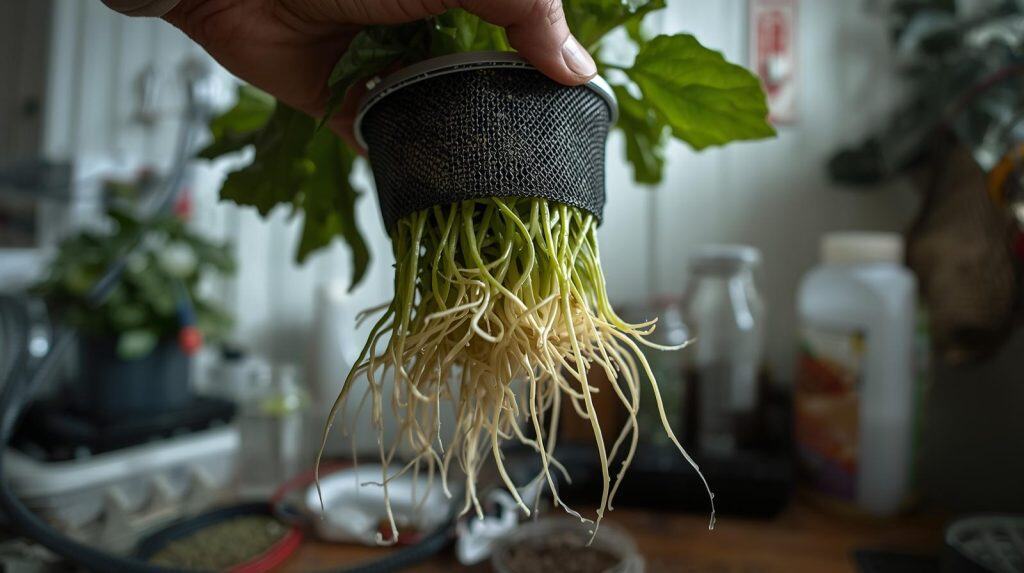
Roots need to breathe. Oxygen is the key that unlocks the energy for active transport. In soil, air pockets provide oxygen. In a bucket of water, you have to provide it artificially. Aeration is a crucial component to prevent root rot, a common pitfall highlighted in misconceptions about hydroponics that can lead to unhealthy roots if ignored.
When roots are submerged, they consume oxygen through respiration. This process produces the ATP (adenosine triphosphate) that powers the molecular pumps in the root cells.
These pumps are essential for pulling in nutrients against a concentration gradient. No oxygen, no energy. No energy, no nutrient uptake.
This is why aeration is non-negotiable in deep water culture (DWC) and other hydroponic methods. An air pump and air stone bubble oxygen through the nutrient solution, keeping the roots healthy and metabolically active.
Stagnant, oxygen-deprived water leads to root rot, a smelly, slimy condition that quickly kills plants. Healthy roots should be white and fuzzy with root hairs, a sign they are actively absorbing nutrients and water.
Putting It All Into Practice

Source : Knowledge Chronicle
Mastering soilless growth means creating a stable environment where these processes can work uninterrupted. Your goal is consistency. Wild swings in pH, temperature, or nutrient concentration force the plant to constantly adapt, wasting energy that should go toward growth.
Start with a quality nutrient formula designed for hydroponics. Follow the manufacturer’s schedule, but remember it’s a guideline, not a strict rule.
Your plants will tell you what they need. Pale green leaves often cry out for nitrogen. Purple tinges on stems or leaves can signal a phosphorus deficiency.
Monitor electrical conductivity (EC) to measure the total dissolved salts in your solution. This tells you the nutrient strength.
As plants drink water, the EC will rise; as they absorb nutrients, it will fall. Keeping it within the optimal range for your crop prevents both deficiency and toxicity.
Your Blueprint for Nutrient Absorption
The elegance of soilless gardening lies in its simplicity. You remove the complexity of soil and provide everything the plant needs directly.
You become the steward of the root environment, balancing pH, oxygen, and nutrition. It’s a direct conversation between you and the plant, with no soil in the way to muffle the message.
Pay close attention to your roots. They are the engine of your garden. Keep them oxygenated, at the right temperature, and bathed in a perfectly balanced nutrient solution.
When you get it right, the results are undeniable. You’ll see growth rates that seem impossible, and harvests that are both abundant and clean. Your plants are ready to perform, they’re just waiting for you to set the stage [2].
FAQ
How do plants use nutrient absorption in water to grow without soil?
Plants can take in nutrients through nutrient absorption in water, using dissolved inorganic nutrient ions instead of soil. The roots use nutrient uptake pathways, including root nutrient absorption and active nutrient transport, to absorb mineral nutrient ions. This simple process lets plants grow in soilless culture, pulling what they need directly from a hydroponic nutrient solution.
Why does pH affect nutrient uptake without soil?
The pH nutrient absorption balance in water directly impacts nutrient uptake in plants. When the solution is too acidic or alkaline, root ion channels nutrient absorption slows down. Proper nutrient solution pH balance helps improve ionic nutrient uptake, making nutrient uptake efficiency stronger and protecting plants from poor nutrient availability hydroponics systems.
How do root hairs help nutrient uptake hydroponic systems?
Root hairs increase root surface nutrient absorption, giving more space for nutrient ion transport. In hydroponic nutrient uptake, water nutrient uptake plants depend on tiny hairs to boost nutrient uptake by roots. These hairs improve the nutrient absorption rate by holding dissolved nutrient uptake close to the plant root membrane transport areas.
Can leaves absorb nutrients in soilless culture systems?
Yes, plants can use foliar nutrient absorption, taking nutrients through leaves when root nutrient permeability is low. Sprays with mineral nutrient absorption can boost nutrient uptake regulation and speed up hydroponic growth nutrients. While roots handle nutrient transporting proteins, leaves assist during low nutrient availability hydroponics, helping nutrient absorption mechanisms stay balanced.
What affects nutrient uptake efficiency hydroponics most?
Nutrient uptake controlling factors include nutrient diffusion roots, cation absorption plants, and anion absorption plants. The root absorption nutrient ions depend on nutrient uptake pH effect, dissolved nutrient uptake strength, and hydroponic nutrient management. Good nutrient circulation keeps nutrient solution absorption steady, supporting the nutrient absorption and plant growth connection in every system.
Conclusion
You can boost growth when you understand how plants absorb nutrients without soil. Keep pH in the right range. Keep oxygen high around the roots. Control nutrient strength so ions stay available. Watch leaf color to read plant needs. Use fully soluble nutrients so roots take them in fast. Give the roots a stable and clean environment with steady oxygen. You will see faster growth when the absorption process stays consistent.
References
- https://pmc.ncbi.nlm.nih.gov/articles/PMC10625363/
- https://www.agronomyjournals.com/article/view/1972/7-11-18
Related Articles
- https://tophydroponicgarden.com/common-myths-about-hydroponic-growing/
- https://tophydroponicgarden.com/how-to-build-a-simple-hydroponic-setup/
- https://tophydroponicgarden.com/common-misconceptions-about-hydroponics/
Was this helpful?

I’m Barrie L., a passionate hydroponic gardening enthusiast dedicated to cultivating thriving, soil-less gardens. With a focus on all things hydroponic, I share my expertise on innovative growing techniques and sustainable practices through my blog, tophydroponicgarden.com. As a seasoned hydroponics specialist, my goal is to inspire and guide fellow gardeners in harnessing the power of water-based cultivation for bountiful and eco-friendly harvests. I’m also an author of the book “Hydroponics For Absolute Beginners: Your Step By Step Guide For How To Create An Hydroponics System At Home Without Soil, For Growing Vegetable, Fruit And Herbs.” which is sold on Amazon. Join me on a journey of redefining the way we cultivate plants, one nutrient-rich solution at a time. Happy growing!