

You look at a head of lettuce grown in a field. It probably took about 25 gallons of water to get it to your plate. Now, picture that same lettuce, crisp and green, grown without a speck of soil. It might have used just three gallons. That’s the immediate, tangible difference hydroponics makes.
This method of growing plants in nutrient-rich water isn’t just a fancy gardening trick. It’s a fundamental shift in how we produce food, offering a powerful set of answers to some of agriculture’s biggest environmental problems.
From conserving our most precious resource to shrinking agriculture’s carbon footprint, the benefits are profound and increasingly necessary. Keep reading to see how this technology is reshaping our relationship with the land.
Key Takeaways
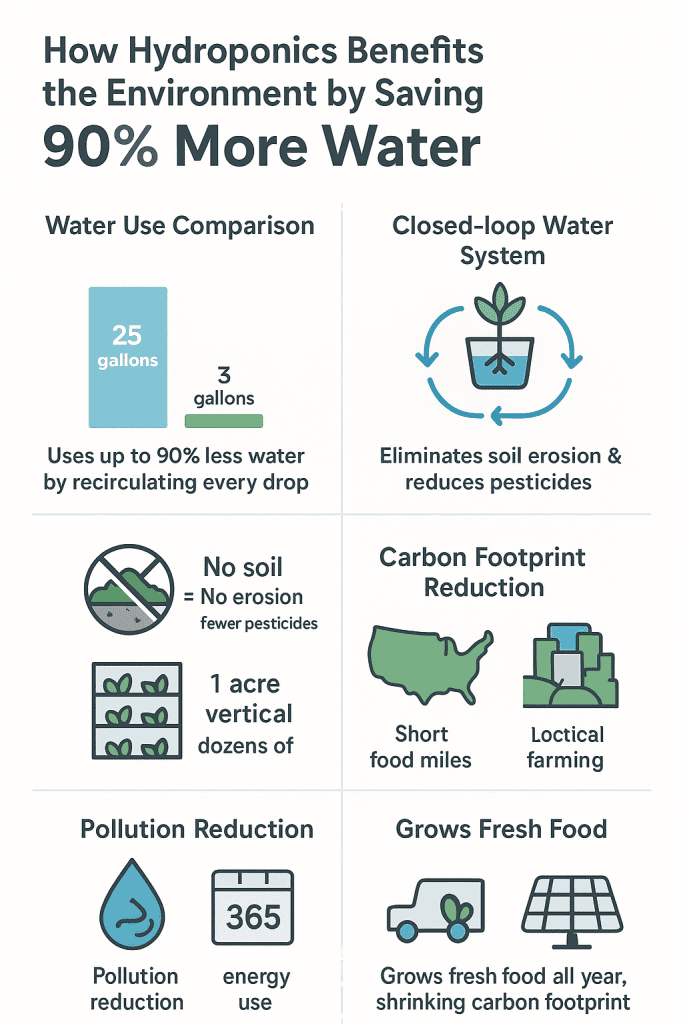
- Hydroponics uses up to 90% less water than traditional farming by recirculating every drop.
- It eliminates soil use, which prevents erosion and reduces the need for chemical pesticides.
- Growing food locally in vertical farms cuts down on transportation emissions and food miles.
The Radical Efficiency of Water Use

Think about how you water a houseplant. You pour water into the soil, and a lot of it drains out the bottom, lost. Traditional farming works on a colossal version of that principle. Water is sprayed or flooded across fields, where much of it evaporates into the air or runs off the surface, carrying fertilizers with it. A hydroponic system changes that entire equation [1].
In a closed-loop hydroponic setup, water isn’t just delivered and lost. It’s captured and reused. The same water circulates past the plant roots, which absorb what they need. Any excess drains back into a reservoir to be recirculated again.
This simple recirculation is why studies show hydroponics can use between 70% and 90% less water than conventional agriculture. This constant water recirculation mechanism is one of the key benefits of hydroponic farming, ensuring minimal waste and maximum efficiency.
The precision goes even deeper. Because the roots are suspended directly in the nutrient solution or a neutral medium, every drop of water is available to the plant. There’s no loss to the deep percolation that happens in soil. This direct delivery system means plants get exactly the hydration they need with zero waste.
- Closed-loop recirculation prevents water from being wasted through runoff, demonstrating the need for constant water management in effective hydroponic systems.
- Direct root contact ensures maximum water uptake by the plant.
- Reduced evaporation occurs because water is contained within the system.
This water conservation has a ripple effect. By using less water from municipal supplies or aquifers, hydroponic farms reduce the strain on local water resources. It also means there’s far less agricultural runoff, which is a leading cause of water pollution in rivers and oceans.
A Solution That Bypasses Soil Entirely
Soil degradation is one of the most underreported environmental crises. Centuries of intensive farming have eroded topsoil, drained it of nutrients, and contaminated it with chemical residues. Hydroponics sidesteps this problem entirely by removing soil from the equation. This has several cascading benefits for the planet. By running water through a nutrient solution, plants receive exactly what they need without soil contamination or depletion.
Without soil, there is no soil erosion. The relentless cycle of tilling, planting, and harvesting that gradually wears away the fertile top layer of earth is stopped. This preservation of land is vital for long-term ecological health. Furthermore, many common plant pests and diseases are soil-borne. By growing in a sterile, controlled medium like rockwool or clay pellets, hydroponic farmers can drastically reduce outbreaks.
This control leads to a significant reduction in pesticide use. When you eliminate the primary habitat for many pests, the need for chemical interventions plummets. Many hydroponic farms can operate with little to no pesticides, creating a cleaner growing environment. This means no pesticide runoff contaminating groundwater or harming nearby ecosystems. The food produced is cleaner, and the local environment is safer.
The space efficiency is another game-changer. Hydroponics enables vertical farming, where plants are stacked in layers. A single acre of vertical farm can produce the equivalent of dozens of acres of traditional farmland.
This kind of trade-off between land use and vertical productivity makes hydroponics a revolutionary investment in sustainable agriculture. This means we can grow more food on less land, reducing pressure to convert forests and other natural habitats into new agricultural fields. It’s a powerful tool for conservation.
Shrinking the Carbon Footprint of Your Food
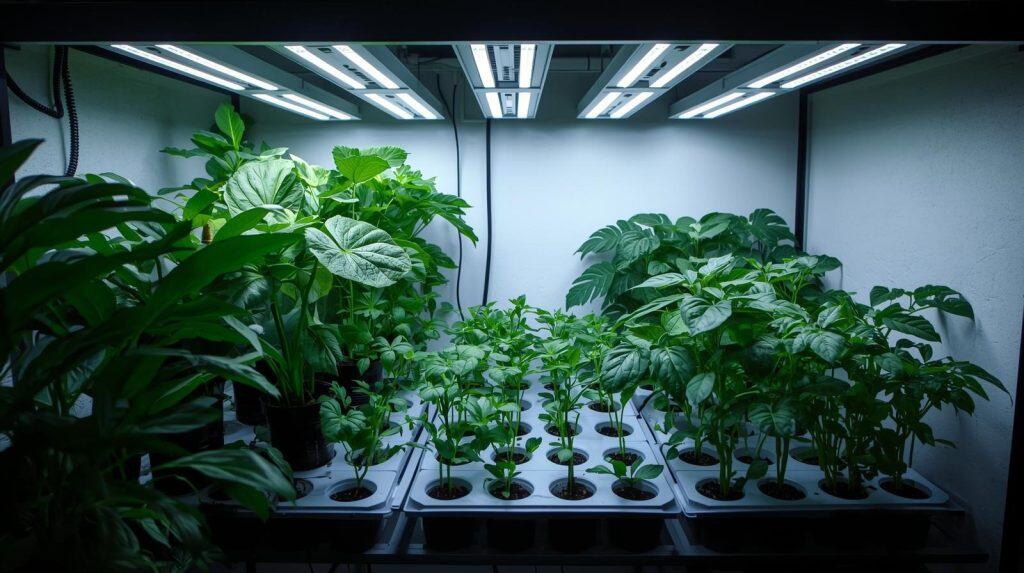
The journey of a strawberry from a farm in California to a grocery store in New York involves trucks, refrigeration, and a significant amount of fossil fuels. These “food miles” contribute heavily to the carbon footprint of our diets. Hydroponics offers a way to shorten that journey dramatically.
Because hydroponic systems can be set up anywhere, they are perfect for urban agriculture. Rooftops, abandoned warehouses, and even underground tunnels can be transformed into productive farms. This means food can be grown within the cities where it will be consumed. Such setups often rely on running water systems that support high-density plant growth in minimal space, making urban farms both practical and sustainable.
These controlled environments also allow for year-round production. Traditional farming is at the mercy of the seasons. But a hydroponic greenhouse provides perfect growing conditions 365 days a year.
This consistency reduces the need to import out-of-season produce from other countries or hemispheres, again cutting down on the carbon emissions associated with long-distance transport and refrigeration. It also strengthens local food security, making communities more resilient.
While hydroponic farms do use energy for lighting and climate control, this impact can be mitigated. Many modern farms are integrating renewable energy sources like solar panels to power their operations. When you weigh the energy used against the savings from eliminated transportation, reduced water pumping, and avoided pesticide manufacturing, the net environmental benefit is often positive.
The Practical Path Forward
The environmental case for hydroponics is strong, but it’s not without its hurdles. The initial investment for a commercial-scale system can be high, involving costs for infrastructure, lighting, and monitoring technology. It also requires a new set of skills, a shift from traditional agricultural knowledge to a more technical, precision-based approach.
Yet, for those willing to learn, the payoff is a method of farming that aligns with the needs of a resource-constrained planet. It’s a system that grows more food with less—less water, less land, and less pollution. The question isn’t really whether hydroponics is good for the environment, but how quickly we can integrate its principles into our global food system.
A Clearer Future for Farming

Source : Everything Hydrophonics
Hydroponics presents a compelling vision for the future of food. It’s a method that respects ecological limits while meeting human needs. By conserving water, preserving land, and cleaning up the process of growing food, it addresses the core environmental challenges of traditional agriculture [2].
The next time you see hydroponically grown produce, you’re not just looking at a vegetable. You’re looking at a more efficient, and perhaps more sustainable, way of feeding the world. Consider supporting a local hydroponic farm or even starting a small system at home to be part of the change.
FAQ
How does hydroponics water conservation help you use less water?
Hydroponics water conservation lets you grow plants with less water because the system recirculates what the roots don’t use. You get cleaner produce and safer water use in agriculture since the setup limits chemical runoff. This closed-loop system also lowers the chance of water pollution. Many families in cities choose it because it fits well with small spaces.
Why does soil-less farming lower the environmental impact in your area?
Soil-less farming avoids soil erosion and land degradation. You control nutrient management and nutrient recycling so plants take in what they need. You also reduce pesticide use, which keeps nearby rivers cleaner. These steps support eco-friendly agriculture and minimize environmental impact. It helps you grow food in places where soil is poor or limited.
How does urban farming and vertical farming support sustainable agriculture?
Urban farming and vertical farming help you grow food close to home. You cut food miles and lower the carbon footprint of transport. These systems use water-efficient farming and water-saving technology so you waste less water. They also support sustainable crop production and steady food security since you can farm year-round.
What makes controlled environment agriculture good for cleaner produce?
Controlled environment agriculture helps you manage climate control, plant disease control and nutrient solution management. You get clean produce and safer food production because pests and diseases stay out. You also use precision farming tools that improve fertilizer efficiency. Many growers like it because it supports pollution-free farming with reduced fertilizer runoff.
How do novel farming methods improve resource optimization for your garden?
Novel farming methods like aquaponics synergy and biodegradable growth medium help you save natural resources. You support resource optimization through energy-efficient hydroponics and renewable energy integration. You also avoid soil contamination and deforestation reduction becomes possible. These hydroponic system benefits help you grow edible plant growth with minimal waste farming.
Conclusion
The environmental argument for hydroponics is straightforward. It confronts the wastefulness of conventional farming head-on, offering a system that conserves water, protects land, and minimizes chemical pollution. By localizing food production, it also cuts down on the carbon emissions from transportation.
While it requires an initial investment and new skills, the payoff is a method of agriculture that works in harmony with ecological limits, not against them. It’s a practical step toward a more resilient and sustainable food supply.
References
- https://jurnalnew.unimus.ac.id/index.php/EBiC/article/download/466/294
- https://journal.ypidathu.or.id/index.php/agriculturae/article/download/870/607/9807
Related Articles
- https://tophydroponicgarden.com/key-benefits-of-hydroponic-farming/
- https://tophydroponicgarden.com/does-hydroponics-need-running-water/
Was this helpful?

I’m Barrie L., a passionate hydroponic gardening enthusiast dedicated to cultivating thriving, soil-less gardens. With a focus on all things hydroponic, I share my expertise on innovative growing techniques and sustainable practices through my blog, tophydroponicgarden.com. As a seasoned hydroponics specialist, my goal is to inspire and guide fellow gardeners in harnessing the power of water-based cultivation for bountiful and eco-friendly harvests. I’m also an author of the book “Hydroponics For Absolute Beginners: Your Step By Step Guide For How To Create An Hydroponics System At Home Without Soil, For Growing Vegetable, Fruit And Herbs.” which is sold on Amazon. Join me on a journey of redefining the way we cultivate plants, one nutrient-rich solution at a time. Happy growing!