

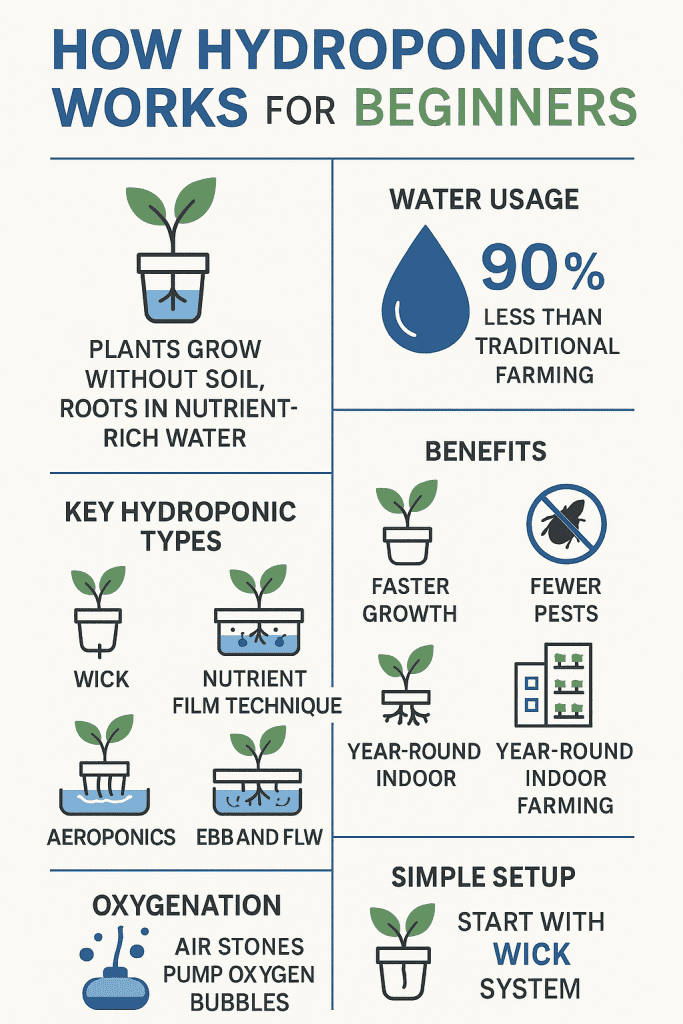
Plants don’t actually need soil to grow – they just need water, nutrients, and something to hold their roots. Hydroponics lets plants grow in water mixed with nutrients they need.The roots hang out in this nutrient soup instead of having to work so hard pushing through soil to find food. Some setups use plain old buckets, others spray roots with misty nutrients (that’s called aeroponics), but they all do the same job: feeding plants without the mess. Plus, there’s way fewer bugs to deal with and it uses about 90% less water than regular farming. Want to see how simple these systems really are? Let’s break it down.
Key Takeaways
- Plants take in food and oxygen right through their roots in water, no dirt required. It’s like serving them dinner directly instead of making them search through soil for it.
- There’s a bunch of ways to do it – some plants float in nutrient-rich pools (that’s Deep Water Culture), others get a thin stream of food water flowing past their roots, and some use simple wicks to drink up what they need.
- Growing plants this way isn’t just cleaner – they grow faster, produce more, and use less water than traditional gardening. Plus, without soil, there’s fewer bugs and diseases to worry about. Pretty straightforward stuff.
How Hydroponic Systems Deliver Nutrients and Oxygen
Plants can grow without any dirt at all – pretty wild, right? They just need water mixed with the right nutrients, sort of like how we take daily vitamins instead of foraging for food. Think of it as a feeding tube that goes straight to the roots, giving them exactly what they need without all the work of pushing through soil. No more hoping the dirt’s got enough of the good stuff – these plants get their meals delivered right to them.
Plants grow in coconut husks or rockwool instead of dirt. Rockwool is a fiber made from rock. These materials don’t feed the plants – they’re just there to keep them standing up straight while their roots dangle in the nutrient soup. Roots need to breathe too, and that’s where bubbles come in. Little air stones (like the ones in fish tanks) pump oxygen into the water, or sometimes the roots just hang in air with nutrient mist.
Without this air supply, roots would drown just like we would. Plants in hydroponic systems grow faster and bigger than plants in soil. It’s pretty wild to see lettuce or tomatoes growing in what looks like nothing but water, but that’s the beauty of it, especially when looking at this introduction to hydroponics that explains how roots absorb nutrients directly. No weeds to pull, no soil to dig, just plants doing their thing with exactly what they need.
- Wick System: Nutrients travel passively through a wick from reservoir to roots using capillary action. It’s simple and low-maintenance.
- Deep Water Culture (DWC): Roots dangle in a continuously oxygenated nutrient solution, kept aerated by pumps or air stones.
- Nutrient Film Technique (NFT): A thin, flowing film of nutrient solution runs over roots, providing constant access to water, nutrients, and oxygen.
- Aeroponics: Roots hang in air and get misted with nutrient solution for maximum oxygen exposure.
- Ebb and Flow: Nutrient solution floods the root zone periodically then drains away, cycling nutrients and oxygen efficiently.
- Drip System: Nutrient solution drips slowly onto roots or growing medium, controlling water and nutrient use precisely.
Exploring Different Hydroponic System Types and Their Mechanisms

Understanding how each hydroponic system works helps you pick the right setup for your plants and experience level. Let’s look closer at the nutrient delivery methods and root exposure for several popular types. The wick system uses a simple mechanism. A wick moves nutrient water from a tank to plant roots. The wick can be cotton or nylon.
This capillary action requires no pumps or electricity, making it ideal for beginners or small-scale gardening. Because the flow is passive, it’s less prone to mechanical failure but might not suit water-hungry plants. Deep Water Culture (DWC) suspends roots directly in an oxygen-rich nutrient solution. Here, air stones connected to pumps continuously bubble air into the water, ensuring roots get enough oxygen to stay healthy. This method promotes rapid growth because roots have constant access to nutrients and oxygen, making it one of the most reliable hydroponic systems for both small growers and larger operations.
Nutrient Film Technique (NFT) involves a thin film of nutrient solution flowing over roots inside a sloped channel. The constant flow refreshes nutrients and oxygen, supporting vigorous growth. Roots cling to the channel’s surface, absorbing what they need without sitting in stagnant water. Aeroponics takes root oxygenation to the extreme by suspending roots in air and misting them regularly with nutrient-rich water. This offers maximum oxygen exposure, which can accelerate nutrient uptake and plant growth.
The system requires precise timing and maintenance but rewards with fast yields. Ebb and Flow systems flood the root zone with nutrient solution intermittently, then drain it away. The flood and drain cycle gives roots fresh nutrients and oxygen. It provides both water and air to roots. This system works well for many plant types and allows control over flooding frequency.
Drip irrigation hydroponics slowly drips nutrient solution onto the roots or growing medium. This delivers precise amounts of water and nutrients, reducing waste and preventing overwatering. It’s a flexible system suitable for various crops and growing environments.
Why Hydroponic Gardening Boosts Growth and Crop Production
Growing plants without soil isn’t just some neat trick – it actually helps them grow better. When plants don’t have to waste energy pushing through dirt looking for food, they can focus on the good stuff: growing bigger leaves, stronger stems, and more fruits. Compare two tomato plants. One grows in soil. One grows in a hydroponic system.
The hydroponic plant usually grows way faster because it’s basically getting room service for every meal. The roots just soak up exactly what they need from the nutrient water, no searching required. And since everything’s so controlled, you end up with plants that grow more evenly, like they’re following some sort of growth blueprint. All plants grow to the same size in hydroponic systems. No soil means way fewer problems with bugs and plant diseases.
It’s pretty simple – most plant-eating pests and nasty fungi need dirt to survive, so they can’t bug your hydroponic plants. This means farmers don’t have to spray as many chemicals, which is better for the plants and everyone who eats them. The water savings are huge too. The water savings are huge too. Hydroponic systems use only 10% of the water that soil farming does.
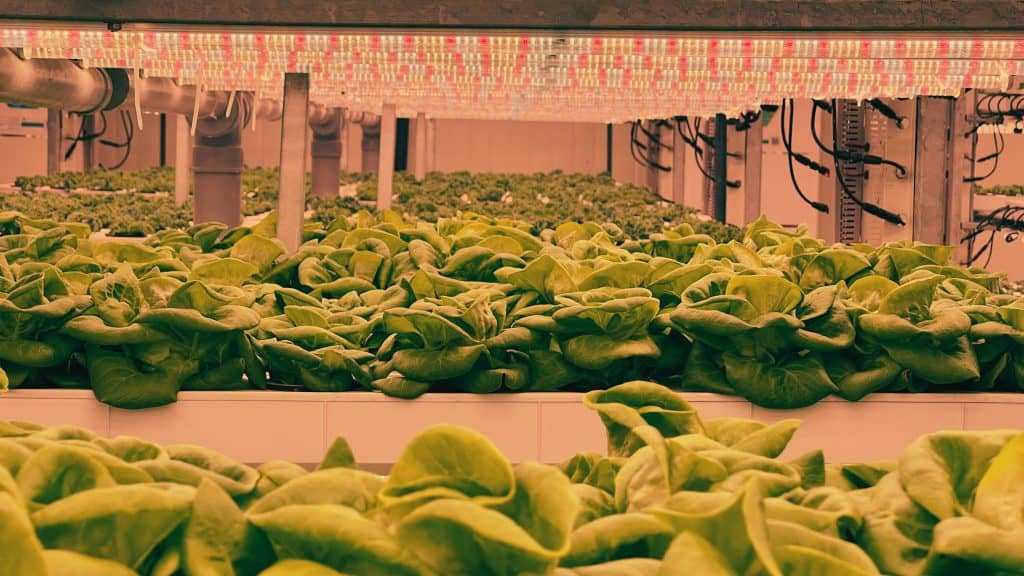
In efficient recirculating systems, water loss can be as little as 1.5% per day [1]. And nutrient use is lower too — fertilizers can be reduced by up to 60% [2]. Space?.That’s where things get really interesting. When you don’t need dirt, you can stack plants on top of each other in towers or on shelves. Some indoor farms grow lettuce 20 levels high in spaces smaller than a backyard garden. Even city folks can grow fresh veggies year-round in their apartments now. No more waiting for growing seasons or worrying about weather.
Choosing and Managing Your Hydroponic Setup
Starting out in hydroponics doesn’t mean jumping into the deep end. New growers should probably stick to simple setups like wick systems – they’re basically like big plant water bottles. Hydroponics can be simple enough for beginners who want to experiment before moving on to more advanced setups like aeroponics or NFT channels. Getting the plant food right takes some work.
You’ve got to mix up the nutrients like you’re following a recipe, then check the water regularly to make sure it’s not too acidic or loaded with too many minerals. It’s kind of like being a chef for your plants – they’ll let you know pretty quick if they don’t like what you’re serving. Light and temperature matter just as much as they do in regular gardening. Most folks use grow lights (those purple-looking ones you might’ve seen) and some fans or heaters to keep things steady. Setting up timers helps – no one wants to be turning lights on and off at sunrise and sunset every day.
Just like any garden tool, these systems need cleaning now and then. Pumps get gunky, tubes can clog up, and the water tanks need a good scrub sometimes. Skip the maintenance and you’ll end up with sick plants or a broken system. Nothing complicated – just regular checkups to keep everything running smooth.
Real-Life Hydroponic Insights
Source: Agriculture Academy
A friend once set up a small NFT hydroponic channel in a basement. At first, nutrient flow was uneven, and some roots dried out. After adjusting the flow rate and adding an air stone, plants flourished. Leafy greens grew faster than expected, and harvests lasted longer. This experience showed how simple tweaks in hydroponic water circulation and oxygenation matter a lot.
I think hydroponics might not replace soil farming entirely anytime soon, but its advantages in controlled environments and water efficiency make it an important part of sustainable agriculture. It fits well in urban farming where space and soil quality limit traditional methods.
FAQ: How Does Hydroponics Work Simply?
How do hydroponic systems help plants grow without soil?
In a hydroponic system, plant roots sit in growing media like coco coir or a growing medium instead of soil. The roots get water and nutrients through a water solution that is dissolved in water. This setup helps hydroponic plants and grown plants stay healthy, while nutrient solution supports steady plant growth. Root systems thrive in hydroponic gardening because water reservoir tanks and an air pump keep the roots supplied with oxygen.
What types of hydroponic systems are used to grow plants?
There are many types of hydroponic systems, each with its own method to help plants grow. A wick system is simple, while a drip system feeds water solution directly to plant roots. More advanced methods like nutrient film technique, ebb and flow system, and deep water culture let plants grow faster. These hydroponic operations can be small for a hydroponic garden or large scale for hydroponic farming.
What are the benefits of hydroponics for growing fruits and vegetables?
The benefits of hydroponics include letting plants grow year round in a hydroponic gardening system. Because plants are grown hydroponically, they often grow faster than traditional gardening and use less water than traditional soil methods. Hydroponically grown fruits and vegetables can boost food security in the United States and beyond. Hydroponic gardening also makes it easier to control nutrient film and root system health, ensuring better harvests.
What challenges come with hydroponic growing and hydroponic gardening?
While hydroponic gardening and hydroponic growing are efficient, issues like pump failure in a gardening system can hurt plant roots. If the water reservoir or air pump stops, hydroponic plants may suffer. Managing hydroponic operations on a commercial hydroponic scale requires care to keep water and nutrients balanced. Still, grown hydroponically plants in a hydroponics system offer big rewards when the hydroponic gardening system runs well.
Conclusion
Plants really don’t care about soil – they just want their nutrients, water, and oxygen delivered straight to their roots. That’s what hydroponic systems do, using everything from basic wicks to fancy mist sprayers. The best part? Plants grow faster without fighting through dirt, and there’s way less trouble with bugs. Starting out’s pretty simple too – grab a basic wick setup and some nutrients, then watch what happens. Sometimes ditching the dirt is all it takes to see your plants take off.
Related Articles:
- https://zipgrow.com/water-use-efficiency-hydroponics-aquaponics
- https://www.maxapress.com/article/doi/10.48130/tihort-0024-0002?viewType=HTML&
References:
- https://tophydroponicgarden.com/hydroponics-introduction/
- https://tophydroponicgarden.com/hydroponic-systems/
- https://tophydroponicgarden.com/hydroponics-for-beginners/
Was this helpful?

I’m Barrie L., a passionate hydroponic gardening enthusiast dedicated to cultivating thriving, soil-less gardens. With a focus on all things hydroponic, I share my expertise on innovative growing techniques and sustainable practices through my blog, tophydroponicgarden.com. As a seasoned hydroponics specialist, my goal is to inspire and guide fellow gardeners in harnessing the power of water-based cultivation for bountiful and eco-friendly harvests. I’m also an author of the book “Hydroponics For Absolute Beginners: Your Step By Step Guide For How To Create An Hydroponics System At Home Without Soil, For Growing Vegetable, Fruit And Herbs.” which is sold on Amazon. Join me on a journey of redefining the way we cultivate plants, one nutrient-rich solution at a time. Happy growing!