

Water conservation isn’t just a buzzword; it’s a necessity. Hydroponics answers the pressing question: how does hydroponics conserve water? By recycling nutrient-rich water in closed systems, it slashes water waste down to a fraction of traditional farming.
Unlike conventional soil irrigation that loses gallons to evaporation and runoff, hydroponics delivers water precisely where plants need it most , their roots. This method not only saves water but speeds up growth and boosts yields.
Curious how this all works and what it means for the future of farming? Keep reading for a full breakdown.
Key Takeaways
- Hydroponics uses closed-loop systems to recirculate water, cutting waste drastically.
- Precise water delivery to roots limits evaporation and runoff common in soil farming.
- Techniques like Nutrient Film Technique (NFT) and Deep Water Culture (DWC) maximize water efficiency.
The Water Crisis: Why Efficiency Matters

Water scarcity is no longer a distant threat. Around the globe, freshwater resources are dwindling fast, with agriculture consuming about 70% of this precious resource. The traditional way of farming, relying heavily on soil irrigation, often wastes vast amounts of water through evaporation, runoff, and deep seepage, leaving less water for people and ecosystems.
With urban populations soaring and climate change intensifying droughts, efficient water use in agriculture is urgent. Hydroponics surfaces as a promising answer, offering a way to grow more with less water.
Hydroponics: A Definition and Its Relevance
Hydroponics is a method of growing plants without soil. Instead, plants root directly into nutrient-rich water solutions. This soil-less approach allows precise control of the plant’s water and nutrient intake, making it highly efficient. When comparing hydroponics to traditional farming, the difference in water use is staggering.
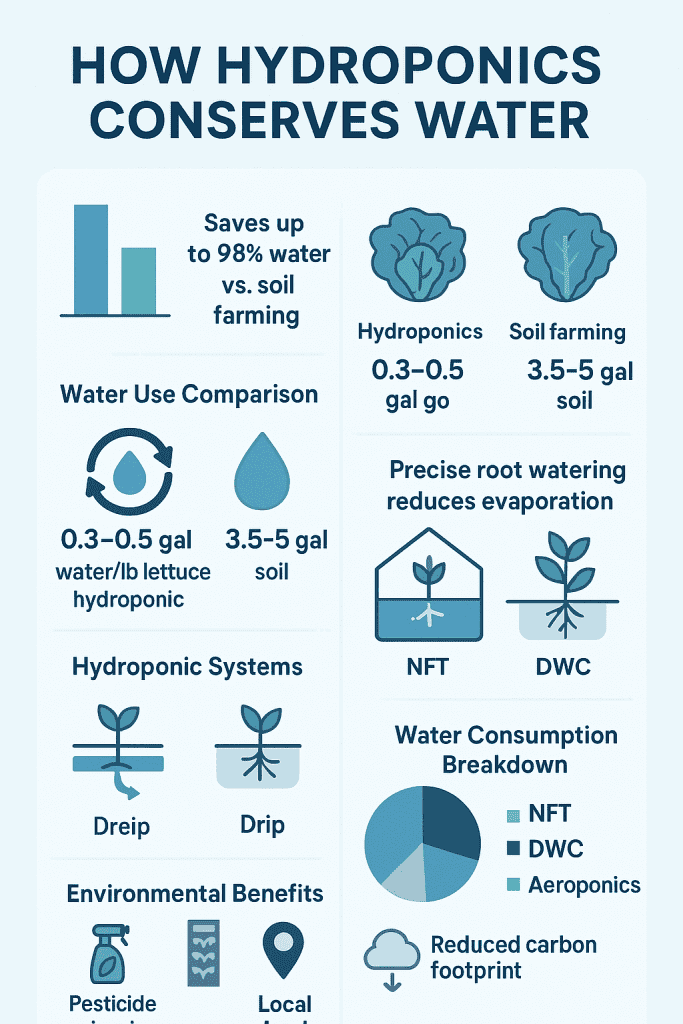
It can save between 90% to 98% of water normally required. For instance, producing a pound of lettuce hydroponically may need just 0.3 to 0.5 gallons of water, whereas conventional farming uses 3.5 to 5 gallons. This efficiency makes hydroponics particularly valuable in dry regions and urban settings where water and land are limited [1].
The Mechanisms of Water Conservation in Hydroponics

Source : San Antonio Urban Farming
Closed-Loop Systems
One of the biggest secrets to hydroponic water savings is the closed-loop system. Water infused with nutrients circulates continuously through the system. Plants absorb what they need, and the leftover solution drains back into a reservoir for reuse. This drastically reduces runoff and waste , unlike soil farming where water seeps into the ground or evaporates. Such recirculation ensures almost every drop counts, demonstrating the sustainability of modern farming methods.
Reduced Evaporation
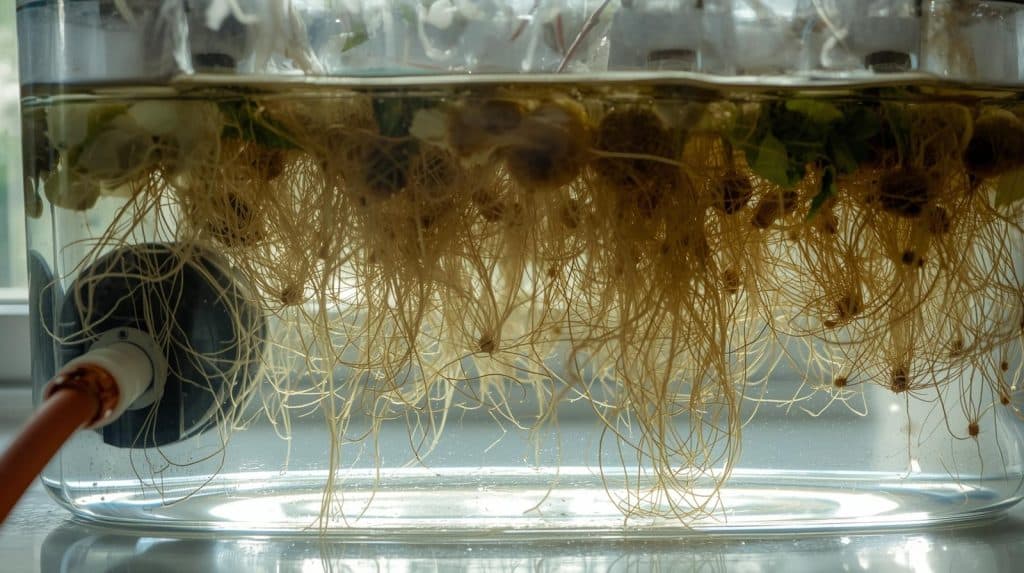
Traditional irrigation often exposes water to open air, leading to significant evaporation losses. Hydroponic setups, especially those operating indoors or in greenhouses, limit water exposure.
Systems like Nutrient Film Technique maintain a thin layer of nutrient solution that flows over roots, minimizing surface water and evaporation. Controlled environments recapture humidity, further conserving water.
Targeted Watering
Hydroponics delivers water directly to plant roots in measured amounts. This precision watering avoids saturating non-root areas that don’t benefit plant growth. It eliminates the waste seen in flood irrigation or sprinkler systems that soak entire fields regardless of plant needs. This efficient water use is a key reason hydroponic systems are becoming a popular investment for farmers seeking to optimize resource management.
Water-Efficient Hydroponic Systems: Examples
Nutrient Film Technique (NFT)
NFT circulates a shallow stream of nutrient solution over the roots in a sloped channel. This thin film ensures roots are always moist but never waterlogged. It suits fast-growing leafy greens and herbs like lettuce and basil. Continuous recirculation in NFT means water is reused repeatedly, reducing total consumption.
Deep Water Culture (DWC)
In DWC, plant roots suspend directly in oxygenated nutrient-rich water tanks. This setup allows roots constant access to water and nutrients, promoting rapid growth. DWC is ideal for crops like lettuce and spinach, saving water by limiting evaporation and reusing nutrient solutions.
Other Systems
Drip irrigation in hydroponics delivers nutrient solutions drop-by-drop to roots, reducing excess. Aeroponics mists nutrient-rich water onto roots suspended in air, using even less water by maximizing oxygen exposure and minimizing evaporation.
Addressing Concerns: When Hydroponics Might Use More Water
Initial Setup
Starting a hydroponic farm requires filling reservoirs and establishing water circulation systems. While this uses water upfront, it pays off long-term through massive savings during crop cycles.
System Type
Some systems are more water-efficient than others. For example, NFT and DWC typically use less water than flood-and-drain setups. Choosing the right system based on crop type and environmental conditions is crucial for maximizing water conservation [2].
Crop Choices
Water demand varies by crop. Leafy greens generally consume less water than fruiting plants like tomatoes. Strategic crop selection helps tailor water use to conservation goals.
Practical Tips for Implementing Water-Saving Hydroponics
System Selection
Start with systems suited to your climate, space, and crop needs. NFT is great for beginners with limited space; DWC suits growers wanting faster leafy harvests.
Water Monitoring
Regularly check pH, nutrient levels, and water quality using meters and sensors. Precise monitoring prevents overwatering and nutrient imbalances, saving water and enhancing plant health.
Rainwater Harvesting
Collecting rainwater to supplement hydroponic systems can reduce reliance on municipal water. Proper filtration and treatment ensure the water is safe for nutrient solutions.
The Bigger Picture: Environmental Benefits Beyond Water Savings
Hydroponics also reduces pesticide use since soil-borne pests are eliminated. It minimizes land requirements via vertical farming, enabling local food production closer to consumers, which cuts carbon footprints from transport. The integration of advanced technology, such as automated irrigation and sensors, positions hydroponics as a forward-thinking approach where an AI assistant can play a role in optimizing growth conditions and resource use.
Hydroponics: A Sustainable Solution for the Future
Hydroponics offers a powerful tool for conserving water in agriculture. By recycling water, reducing evaporation, and delivering nutrients precisely, it dramatically cuts water wastage. As global water scarcity worsens, hydroponics stands out as a sustainable farming method that can boost food security while protecting vital water resources. Exploring hydroponics might just be the next step toward greener, smarter agriculture.
FAQ
How does hydroponics save water compared to traditional farming?
Hydroponics uses hydroponic water recirculation and closed-loop systems to reduce water loss. Water-efficient farming techniques, precise water delivery, and irrigation automation minimize water waste.
What hydroponic systems are most water-efficient?
Deep water culture water saving, nutrient film technique water use, and drip irrigation hydroponics are highly efficient. Vertical farm water conservation and hydroponic drip system water savings also help maximize water use efficiency.
Can hydroponics help in drought-prone areas?
Yes, hydroponics in drought areas and water-smart hydroponic systems reduce water consumption while maintaining crop yields. Hydroponics drought resilience and soil-less water conservation make it suitable for regions with limited water.
How is water recycled in hydroponics?
Nutrient solution recycling, hydroponic water reuse, and hydroponic water cycle control ensure minimal water loss. Hydroponic irrigation scheduling and water retention in hydroponics enhance reuse efficiency.
How does technology improve water conservation in hydroponics?
IoT in hydroponic water management, hydroponic sensors for water, and automated irrigation hydroponics allow precise control over water use. Hydroponic water monitoring and water-saving hydroponic technology optimize irrigation and reduce waste.
If you’re intrigued by how hydroponics conserves water and want to explore growing your own water-wise garden, why not start small? There are plenty of starter kits and resources that make getting into hydroponics easier than ever. The future of farming is here , efficient, sustainable, and surprisingly water-smart.
Conclusion
Hydroponics revolutionizes farming by dramatically conserving water through closed-loop recycling, precise root-targeted watering, and reduced evaporation. This soil-less method uses up to 98% less water than traditional agriculture, making it ideal for drought-prone and urban areas. Coupled with advanced technologies, hydroponics not only safeguards precious water resources but also boosts crop yields sustainably. Embracing hydroponics is a vital step towards a resilient, eco-friendly future in agriculture.
References
- https://www.mdpi.com/1996-1073/16/4/1690
- https://jisem-journal.com/index.php/journal/article/download/754/295
Related Articles
- https://tophydroponicgarden.com/hydroponics-introduction/
- https://tophydroponicgarden.com/key-benefits-of-hydroponic-farming/
- https://tophydroponicgarden.com/is-hydroponic-gardening-sustainable/
Was this helpful?

I’m Barrie L., a passionate hydroponic gardening enthusiast dedicated to cultivating thriving, soil-less gardens. With a focus on all things hydroponic, I share my expertise on innovative growing techniques and sustainable practices through my blog, tophydroponicgarden.com. As a seasoned hydroponics specialist, my goal is to inspire and guide fellow gardeners in harnessing the power of water-based cultivation for bountiful and eco-friendly harvests. I’m also an author of the book “Hydroponics For Absolute Beginners: Your Step By Step Guide For How To Create An Hydroponics System At Home Without Soil, For Growing Vegetable, Fruit And Herbs.” which is sold on Amazon. Join me on a journey of redefining the way we cultivate plants, one nutrient-rich solution at a time. Happy growing!