
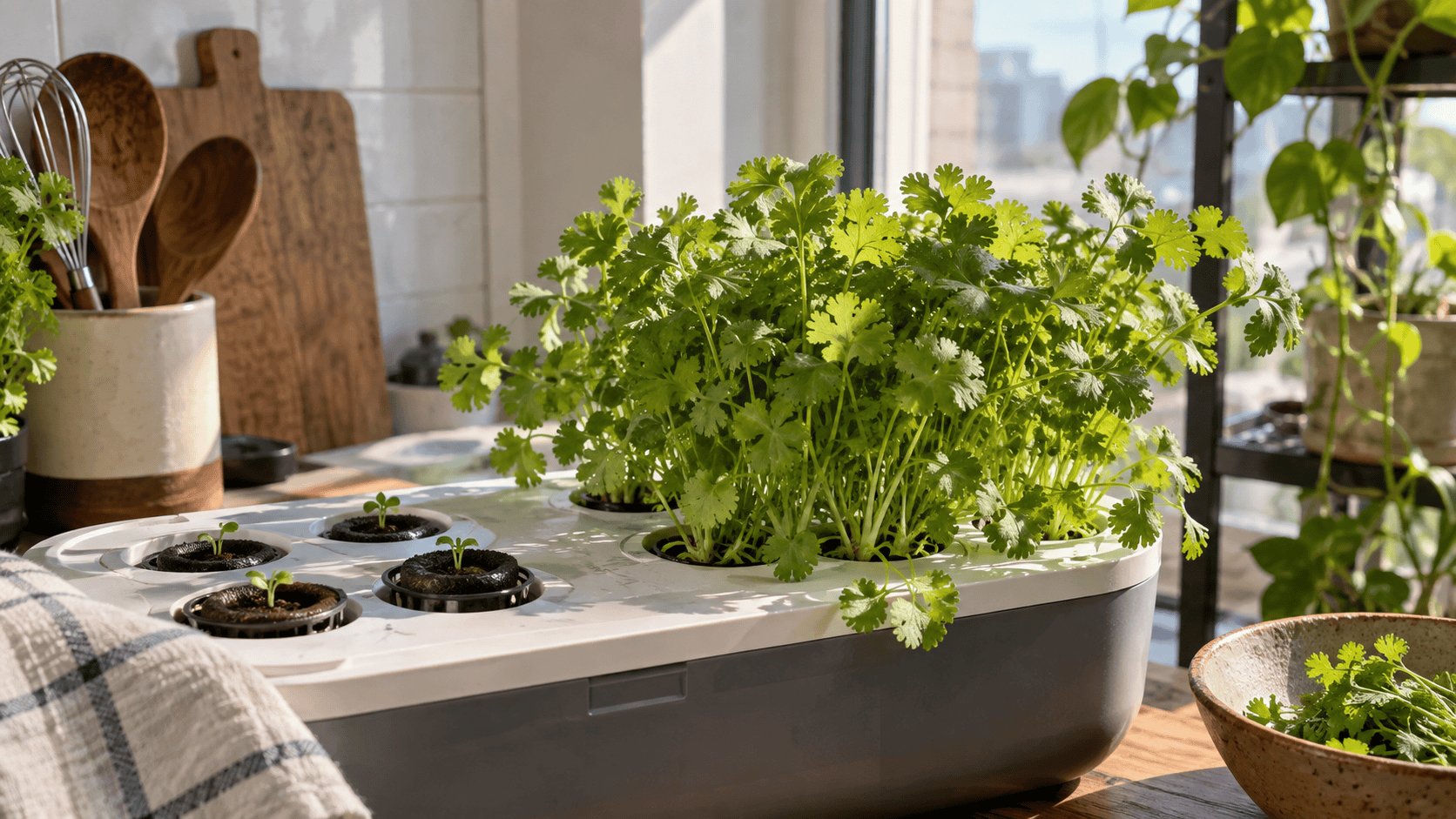
Growing cilantro hydroponically from seed is doable, but it behaves a little differently from basil or lettuce.
Germination can be uneven, young roots are better left undisturbed, and warm conditions can push established plants toward bolting sooner than expected.
Top Hydroponic Garden keeps the process practical: start with fresh seed, manage moisture carefully, give seedlings time to establish, then plan the next crop before the current one finishes.
Keep reading to see how that works from the first dry coriander seed to your first harvest.
Cilantro From Seed: What Matters Most?
You don’t need to overcomplicate the first crop. Keep these three things in mind:
- Keep seeds damp, not waterlogged.
- Avoid unnecessary root disturbance.
- Start a new batch before older plants bolt.
Once those basics are right, most of the growing process comes down to steady care.
Can You Grow Cilantro Hydroponically From Seed?
Yes.
Cilantro can be started from seed and grown entirely hydroponically through harvest.
Starting from seed also makes sense because the young plant can establish in a propagation plug that stays around the roots when it moves into the main system.
Cilantro and coriander come from the same plant, Coriandrum sativum.
The fresh leaves and stems are usually called cilantro, while the dried fruits are known as coriander.
The main difference from longer-lived herbs is timing.
Cilantro has a relatively short leafy stage before maturity and warmer conditions encourage flowering. That makes it more useful to think of the crop as a repeating cycle rather than one plant you keep indefinitely.
| Stage | What Is Happening | What to Watch |
| Seed preparation | Seed absorbs moisture | Freshness and moisture |
| Germination | Root and shoot emerge | Excess water and temperature |
| Seedling | Young leaves establish | Light and root growth |
| Vegetative growth | Leaf production increases | Nutrients and heat |
| Harvest | Usable stems are cut | Regrowth and bolting |
| Next sowing | Another crop begins | Continuous supply |
Avoid relying on one exact harvest date. Seed quality, cultivar, light, temperature, and your hydroponic system can all change the timeline.
What Should You Know About Cilantro Seeds Before Germination?
What looks like one round cilantro seed is actually the dried coriander fruit, and it can contain two seeds.
According to UF/IFAS Extension,
“Each cilantro “seed” is a coriander fruit holding two seeds, so seedlings tend to come up in pairs.” – UF/IFAS Extension
That explains why one round seed may produce more than one shoot.
You can sow it whole, gently separate it into halves, or buy split seed if available.
Splitting may help some batches germinate more evenly, but it is not something every grower needs to do.
Pre-soaking is optional too.
A short soak can help hydrate dry seeds, but fresh cilantro seed can also be planted directly.
What matters more is what happens afterward: steady moisture, enough air around the seed, suitable temperature, and enough patience for uneven germination.
How Do You Germinate Cilantro Seeds for Hydroponics?
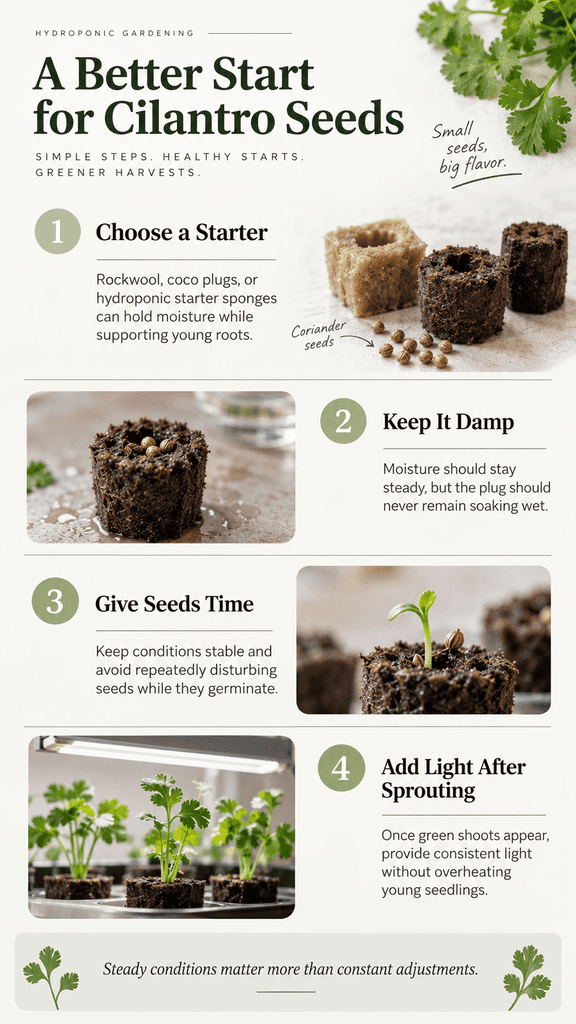
Germination is usually the stage where growing cilantro hydroponically from seed needs the most patience.
Cilantro does not always sprout as quickly or as evenly as herbs like basil, so a slower start is not automatically a sign that something has gone wrong.
The main goal is to give the seed a stable environment where it can germinate without being constantly disturbed.
Sudden changes in moisture, excessive handling, or rushing the process can make this stage more difficult than it needs to be.
This is one reason Top Hydroponic Garden treats seed starting as an important part of the overall growing routine, not just a quick step before hydroponics begins.
Once the setup is ready, the process becomes much easier to follow.
The next steps cover how to prepare, sow, and manage cilantro seeds until healthy seedlings emerge.
Step 1: What Growing Medium Should You Use?
Good options include:
- Rockwool: Holds moisture well and is easy to move into a net cup.
- Coco or coir plugs: Provide steady moisture while supporting young roots.
- Seed-starting sponges: Simple to handle and designed for easy transfer into hydroponic systems.
Large clay pebbles are less convenient for starting tiny cilantro seeds because the gaps make moisture and seed placement harder to control.
If you’re comparing different options, Top Hydroponic Garden covers them in its guide to the best grow medium for hydroponic herbs.
For cilantro, the best medium isn’t just one that holds moisture. It should also make the seedling easy to transfer without disturbing the young roots.
Step 2: How Wet Should the Starter Plug Be?
Moisten the starter plug and let excess water drain. It should feel damp, not soaked.
- Avoid saturation: Too much water reduces air around the seed and may encourage fungal growth or decay.
- Plant shallowly: Place the seed near the surface instead of pushing it deep into the medium.
- Allow for uneven germination: You can sow more than one seed unit per pod if needed.
Keep in mind that one round coriander fruit may contain two seeds, so small pods can become crowded quickly.
Step 3: What Conditions Help Cilantro Seeds Sprout?
Keep germination conditions steady rather than constantly adjusting them.
- Keep the plug damp: Avoid repeated drying and heavy rewatering.
- Maintain airflow: Good air exchange helps prevent a sealed, overly wet environment.
- Avoid disturbing the seed: Cilantro may germinate slowly or unevenly, so don’t dig through the medium to check for roots.
- Watch for real problems: Only intervene if you notice rot or persistent excess moisture.
Cilantro usually benefits more from stable conditions and patience than from extra germination tricks.
Step 4: When Should You Add Grow Light?
Once shoots appear, move the seedlings under consistent light so they can develop compact stems and healthy foliage.
Seedlings that receive too little usable light often stretch toward the fixture.
At the same time, placing a warm grow light too close can add heat that cilantro does not particularly enjoy.
Adjust the fixture as the plants grow rather than relying on one height throughout the crop.
You do not need complicated lighting calculations for this stage.
Watch how the seedlings respond and keep the canopy bright without turning the growing area unnecessarily hot.
Which Hydroponic System Works Well for Cilantro?
Cilantro can grow in Kratky, DWC, NFT, and compact countertop hydroponic gardens. There is no single system you need to use just because the crop is cilantro.
Kratky keeps things simple with fewer moving parts. DWC adds active aeration around the roots, while NFT makes more sense when several plants share a circulating setup. Countertop units are convenient but can become crowded when cilantro grows beside faster herbs.
Choose around your space, maintenance routine, and number of plants rather than chasing a supposedly perfect cilantro system.
If you’re building a setup from scratch, the Top Hydroponic Garden guide to a DIY hydroponic system for herbs compares several simple methods and where each one fits.
When Should Cilantro Seedlings Move Into the System?
Move cilantro seedlings when they look established rather than following a fixed number of days. Growth speed can vary with light, temperature, moisture, and seed quality, so the plant itself is a better guide than the calendar.
A seedling is usually ready when:
- Leaves have developed and new growth looks healthy.
- The stem can support itself without leaning heavily.
- Roots are visible emerging from the starter plug.
Whenever possible, transfer the entire starter plug directly into the final net cup. Avoid pulling the seedling out, washing the roots, or separating them unless there is a clear reason.
This keeps root disturbance low and makes the transition into the hydroponic system much simpler.
What Conditions Help Hydroponic Cilantro Stay Healthy?
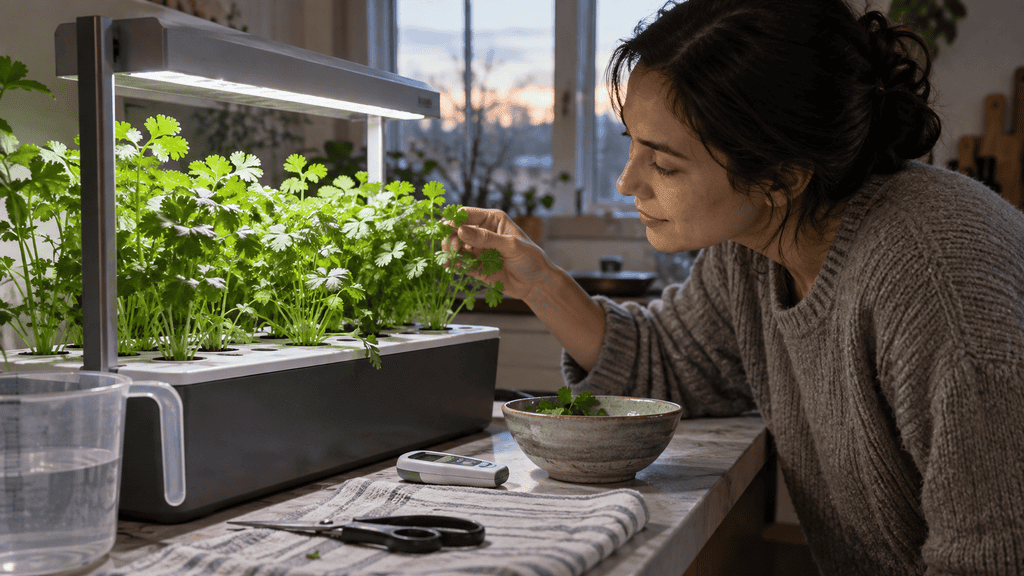
Once cilantro is established, the focus shifts from getting the seedling started to keeping growth steady for as long as possible.
This stage is less about making constant adjustments and more about maintaining an environment where the plant can keep producing healthy leaves without unnecessary stress.
Cilantro can be a little less forgiving than some common hydroponic herbs, especially as it gets older.
Small changes that barely affect another plant may become more noticeable in cilantro, particularly when several growing factors start working against each other at the same time.
That is why it helps to look at the growing environment as a whole rather than chasing one perfect setting.
The next sections break down the main conditions that matter most once cilantro moves into active growth.
What pH and Nutrient Strength Does Cilantro Need?
Use a complete hydroponic nutrient solution and keep feeding gentle while seedlings are still small.
Cilantro-specific EC recommendations vary considerably between growing guides, so avoid treating one highly precise number as universal.
Watch the plant and reservoir together instead.
Check whether EC rises or falls as water disappears, monitor pH changes, and look at roots and new leaves before adjusting nutrients.
Pale foliage does not automatically mean you should add fertilizer. Root stress, unsuitable pH, temperature, or normal plant aging can sometimes produce similar symptoms.
How Do Light and Temperature Affect Cilantro?
Give cilantro enough light for compact leafy growth, but avoid creating excessive heat around the canopy.
Oregon State University Extension notes that cilantro completes its life cycle faster in warm weather, while cooler conditions allow the plant to stay in leafy growth longer.
Indoor growers should therefore watch room temperature, airflow, grow-light heat, and the root zone rather than focusing on light intensity alone.
If a previously leafy plant suddenly develops taller central growth and finer upper leaves, it may already be moving toward bolting.
Keeping conditions reasonably cool will not stop maturity forever, but it can help protect the useful leafy stage.
How Do You Care for Cilantro After Transplanting?
Once cilantro is established, daily care should stay fairly simple. Monitor the reservoir, check roots occasionally, maintain enough light and airflow, and avoid letting several seedlings become so crowded that they compete heavily for space.
Water level alone does not tell you what the reservoir needs. Check EC and pH before deciding whether to add plain water or nutrients because plants do not always consume both at the same rate.
For a more detailed routine, Top Hydroponic Garden explains how to top off a hydroponic reservoir properly without automatically adding nutrients every time the water level falls.
Also keep the reservoir covered from light where possible. During regular checks, pay attention to roots that become slimy or smell unpleasant instead of assuming every slight color change means root rot.
Why Does Hydroponic Cilantro Bolt So Quickly?

Credits: Gardening and Cooking
Bolting is the point where cilantro shifts away from broad leafy growth and begins producing flower stalks and eventually seed.
It is part of the normal life cycle, not a sign that hydroponics has failed.
Early signs include taller central stems and finer, more divided leaves near the top.
Once flowering becomes established, trying to return the plant to its younger leafy form is rarely productive.
The useful goal is therefore not to stop bolting forever. It is to avoid pushing the plant toward flowering earlier than necessary and to have another cilantro batch ready when the older one reaches that stage.
What Causes Cilantro to Bolt?
Warm growing conditions are one of the main triggers, particularly once cilantro is already mature.
Plant age matters too.
Even a healthy crop kept under good conditions eventually moves toward flowering because that is part of its natural growth cycle.
Environmental stress can shorten the useful leafy period as well. Irregular water conditions, root-zone problems, or sudden changes may add stress to an already mature plant.
Cultivar also plays a role.
Slow-bolting cilantro varieties can be useful when plants consistently flower earlier than you want.
How Can You Delay Cilantro Bolting?
Keep conditions reasonably cool, maintain a stable root zone, and avoid large swings in water or nutrient availability.
Make sure mature foliage is not sitting directly against a warm grow light and maintain enough airflow around the canopy.
Choosing a slow-bolting cultivar can also extend the useful harvest window.
Then harvest while the plant is still producing plenty of broad leaves rather than waiting for one enormous final cut.
The most practical strategy, though, is succession sowing. A younger batch gives you fresh cilantro even when the older plants naturally begin flowering.
What Problems Are Common When Growing Cilantro From Seed?
Cilantro symptoms are easy to misread because one visible problem can have several possible causes.
Yellow leaves, for example, do not automatically prove that nutrients are too weak. The same goes for darker roots, slow germination, or weak seedlings.
Before making a major adjustment, check the surrounding conditions and look for more than one clue.
| Problem | Possible Causes | First Things to Check |
| Seeds do not sprout | Old seed, moisture, temperature | Seed condition and plug moisture |
| Fuzzy seed growth | Excess moisture or fungal growth | Saturation and airflow |
| Tall, weak seedlings | Insufficient usable light | Light distance and intensity |
| Pale or yellow leaves | Nutrient, pH, root, or heat issue | EC, pH, roots, temperature |
| Tall central growth | Bolting | Heat, maturity, flowering stems |
| Slimy or smelly roots | Root-zone stress | Oxygen, temperature, cleanliness |
Make one sensible correction at a time. Changing nutrient strength, light, water level, and temperature together only makes it harder to tell what actually helped.
When and How Should You Harvest Hydroponic Cilantro?
Harvest based on the amount of usable foliage rather than waiting for one exact plant age.
Once the plant has several established stems and continues producing healthy central growth, you can begin taking mature outer stems.
Use clean scissors and leave enough active foliage behind for continued growth.
Smaller harvests work well while the plant remains leafy.
As bolting approaches and a replacement crop gets larger, a heavier final harvest becomes more practical.
Watch plant structure too. Tall central growth and finer upper leaves tell you more than the calendar about where cilantro is in its life cycle.
Cilantro is not a herb you need to keep producing indefinitely. A few useful harvests followed by replacement can be a perfectly successful crop.
How Do You Keep Hydroponic Cilantro Growing Continuously?
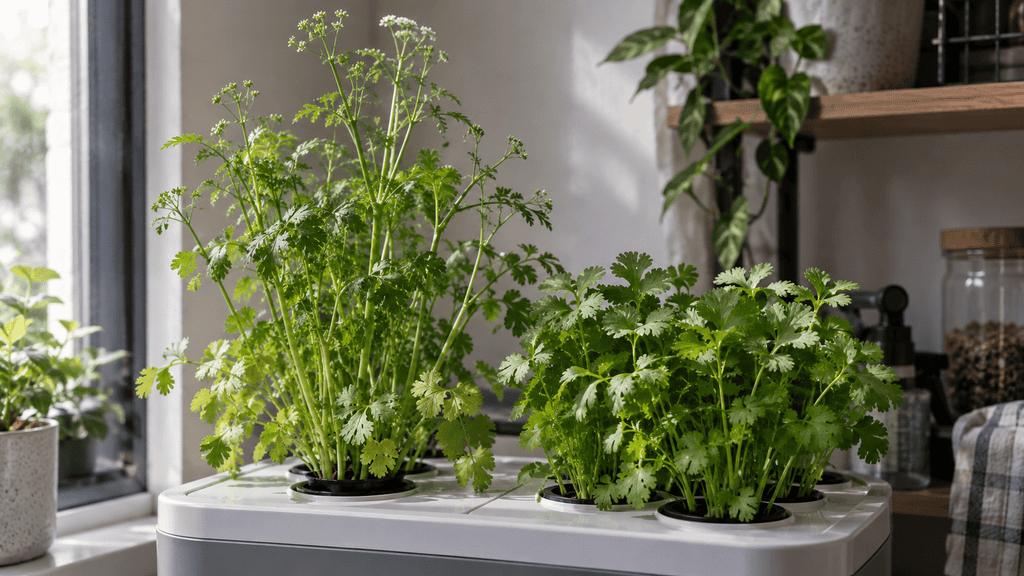
Continuous cilantro is easier when several batches overlap.
Instead of sowing every planting site on the same day, start a smaller new batch while the current plants are still healthy. By the time older cilantro begins bolting, younger seedlings are already developing behind it.
As noted by Oregon State University Extension,
“Avoid planting during peak summer heat, when plants are likely to bolt before producing many leaves.” – Oregon State University Extension
You do not need to copy one interval exactly indoors. Your cultivar, temperature, light, consumption, and actual growth rate should decide how often another batch starts.
Top Hydroponic Garden favors this kind of plant-first routine because it works with the crop instead of constantly correcting it.
Keep a simple note of sowing, first harvest, and bolting dates.
After a few cycles, your own garden will show you the most useful schedule.
FAQ
Why Haven’t My Cilantro Seeds Sprouted After a Week?
Cilantro can germinate unevenly, so a week without shoots does not automatically mean failure. Check seed freshness, moisture, and temperature before starting over.
Is White Fuzz Around Cilantro Seeds Always Mold?
Not always. Check whether the seed is actively sprouting or becoming soft, rotten, and surrounded by spreading fuzzy growth.
Can Cilantro Share a Hydroponic Reservoir With Basil?
Yes, but cilantro generally prefers cooler conditions and may bolt sooner in a warm setup that basil handles well.
Can You Grow Hydroponic Cilantro in a Hot Climate?
Yes, especially indoors where airflow and heat are easier to manage. Expect stronger bolting pressure and use succession sowing instead of trying to keep one plant leafy indefinitely.
What Should You Do When Cilantro Starts Flowering?
Harvest the remaining leaves and replace the plant if fresh cilantro is your goal. You can also let flowering continue if you want the plant to produce coriander seed.
Keep Fresh Cilantro Coming Batch After Batch
Growing cilantro hydroponically from seed becomes much easier when you work with its natural cycle. Get germination right, protect young roots, maintain steady growing conditions, and harvest before flowering takes over.
The bigger trick is not trying to make one cilantro plant last forever. Top Hydroponic Garden treats succession sowing as part of the routine, so a younger batch is already coming along when the current crop slows down.
Check Top Hydroponic Garden for more practical guides on growing herbs, managing reservoirs, and keeping a home hydroponic setup easier to maintain.
References
- https://blogs.ifas.ufl.edu/leonco/2026/09/03/start-it-or-sow-it/
- https://extension.oregonstate.edu/news/how-grow-cilantro-leaves-or-coriander-seeds
Related Articles
- https://tophydroponicgarden.com/best-grow-medium-for-hydroponic-herbs/
- https://tophydroponicgarden.com/diy-hydroponic-system-for-herbs/
- https://tophydroponicgarden.com/how-to-top-off-your-hydroponic-reservoir/
Was this helpful?

I’m Barrie L., a passionate hydroponic gardening enthusiast dedicated to cultivating thriving, soil-less gardens. With a focus on all things hydroponic, I share my expertise on innovative growing techniques and sustainable practices through my blog, tophydroponicgarden.com. As a seasoned hydroponics specialist, my goal is to inspire and guide fellow gardeners in harnessing the power of water-based cultivation for bountiful and eco-friendly harvests. I’m also an author of the book “Hydroponics For Absolute Beginners: Your Step By Step Guide For How To Create An Hydroponics System At Home Without Soil, For Growing Vegetable, Fruit And Herbs.” which is sold on Amazon. Join me on a journey of redefining the way we cultivate plants, one nutrient-rich solution at a time. Happy growing!