

Hydroponics offers a surprisingly effective, soil-free method for growing plants. Plants grow faster and healthier when nutrients go straight to their roots in water.
This method also needs less space, making it perfect for apartments. Deep water culture is a simple system. It lets beginners grow herbs and leafy greens indoors.
True for leafy greens only. Anyone can easily start a hydroponic garden. It requires little setup and no special knowledge.
Key Takeaways
- Choose beginner-friendly systems like deep water culture or NFT for easy setup.
- Gather essential materials including nutrient solutions, air pumps, and grow lights.
- Maintain nutrient balance and oxygenation for healthy, fast-growing plants.
Choose Your Hydroponic System

Getting the right system from the start matters more than most beginners realize. It shapes everything that comes next, how much time you’ll spend tinkering, whether you’ll actually enjoy the process, and honestly, if you’ll stick with it past the first month.
For people just starting out, deep water culture (DWC) and nutrient film technique (NFT) tend to work best.
Deep water culture is straightforward. Plant roots hang directly into oxygen-rich nutrient water, suspended and submerged. What makes it appealing? You don’t need fancy pumps just to move water around. An air pump handles oxygenation, and that’s really it.
The roots sit there, absorbing nutrients constantly. It’s forgiving when you make small mistakes, and expanding to grow more plants feels natural.
This system is a popular choice among those exploring hydroponics vs traditional gardening due to its simplicity and forgiving nature.
Nutrient film technique works differently. A thin stream of nutrient solution flows over roots that rest in sloped channels, then drains back into the reservoir. It’s tidy, uses less water than DWC, and takes up minimal space, which matters if your growing area is cramped.
The catch? You’ll need a water pump, and if the pump fails, plants notice quickly since the water layer is so thin.
Then there’s everything else. Drip systems, wick systems, ebb and flow setups, they all offer more control over exactly what your plants get. But that control comes with complexity. You’re adjusting more variables, troubleshooting more parts.
The Kratky method stands apart. It’s passive, meaning no pumps, no electricity, no moving parts at all. You mix nutrients in water, set plants in net pots, and let them sit.
It’s the lowest-fuss option available, though it works better for quick-growing plants like lettuce than for long-term crops.
Your choice really depends on three things: how much space you have, what you can spend, and whether you’d rather set something up once and mostly leave it alone, or tinker regularly.
What works best for different situations:
- DWC: forgiving, easy to expand, works for most plants
- NFT: space-saving, neat setup, but needs a reliable pump
- Kratky: simplest possible, zero electricity, better for short-cycle crops
Gather Essential Materials
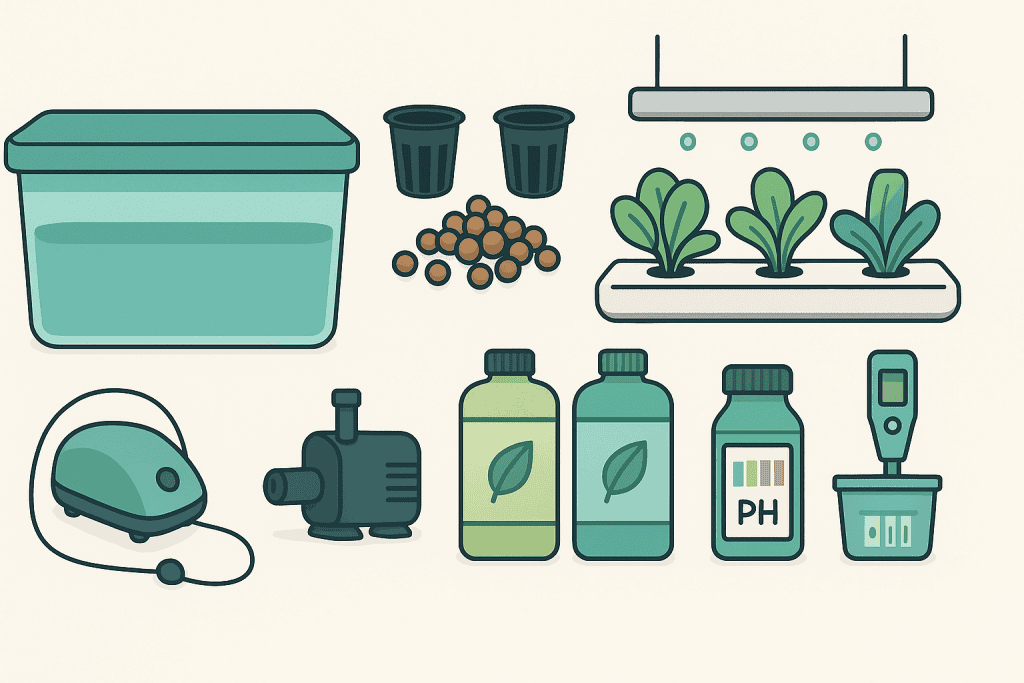
Once you pick a system, collecting the right gear is next. Think of your setup like a mini ecosystem.
It needs containers to hold nutrient solution, net pots to hold plants, and a growing medium like rockwool or clay pellets. Opaque containers work best to stop light from encouraging algae growth.
Air pumps and air stones oxygenate the water in systems like DWC, keeping roots happy. Water pumps help circulate nutrients in NFT or drip systems.
You’ll also need a hydroponic nutrient solution packed with minerals plants crave, and a pH kit to keep acidity in check around 5.5 to 6.5.
If you don’t have enough natural light, LED grow lights are a smart addition. Tubing, timers, and racks can round out your setup for automation and support.
Remember that some hydroponic systems don’t need running water like the Kratky method, which requires minimal equipment and no pumps.
Here’s a quick list:
- Opaque container or reservoir.
- Net pots and growing medium (rockwool, clay pellets).
- Air pump and air stone (for oxygenation).
- Submersible water pump (NFT or drip systems).
- Hydroponic nutrient solution.
- pH adjustment kit.
- Grow lights (if needed).
- Tubing, timers, support rack.
Setting Up Your System
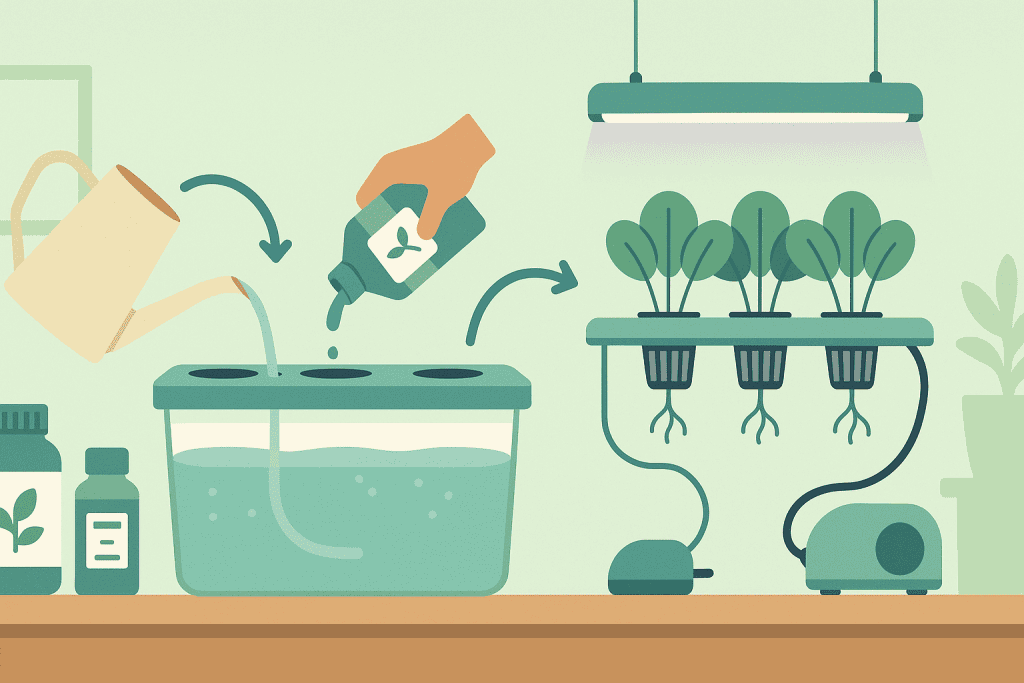
Setup can seem tricky, but it’s mostly about fitting parts together and mixing nutrients right. Drill holes in your container lid to snugly fit net pots.
Fill the reservoir with water, add your hydroponic nutrient solution, and adjust pH carefully to between 5.5 and 6.5 for best nutrient absorption [1].
Attach the air stone to the air pump and place it in the water for oxygen, especially in DWC. If you’re using NFT, hook up the water pump and tubing to keep nutrients flowing over roots.
Position grow lights above your plants for 12 to 16 hours a day if natural sunlight isn’t enough. This part takes patience but it’s rewarding to watch your system come alive.
Planting and Initial Care
Start seeds in a sterile medium like rockwool plugs to avoid contamination. Once seedlings sprout their first true leaves, carefully transfer them into net pots within your system. Make sure roots have good contact with the nutrient solution but aren’t drowning [2].
Hydroponic plants like leafy greens, herbs, and strawberries are great for beginners because they adapt well and grow fast. Keep an eye on water levels, nutrient concentration, and pH daily at first until you get a feel for your system’s rhythm.
Ongoing Maintenance
Hydroponics isn’t “set and forget.” Except to check pH and water levels daily or every other day. Nutrient levels drop and pH drifts over time, so regular monitoring is key.
Check nutrient concentration using an EC meter and adjust as needed. Keep pH between 5.5 and 6.5 by adding pH up or down solutions.
Oxygenation must stay consistent, without enough oxygen, roots suffer and growth slows. Clean your system every couple of weeks to prevent algae and root rot. Remove dead roots or leaves promptly and watch for pests like aphids or fungus gnats.
With steady care, your indoor garden can produce fresh herbs and vegetables year-round, even in small spaces like balconies or kitchens.
For more on transitioning plants, consider how you might go from hydroponics to soil if you want to try soil-based growing later.
Tips for Hydroponic Success
- Maintain a steady upper limit slightly high.
- Avoid overfeeding nutrients; nutrient burn stunts growth.
- Use timers for lights and pumps to keep a routine.
- Rotate crops regularly to prevent disease build-up.
Getting Started with Hydroponics at Home: Fresh and Soil-Free

Credits: NT Hydroponics
Starting hydroponics at home is easier than it looks once you understand the basics. Choosing a simple system like deep water culture, gathering a handful of supplies, and setting up your indoor garden can bring fresh leafy greens to your kitchen without soil mess.
Keep nutrient levels, pH, and oxygen in check, and you’ll be rewarded with fast-growing, healthy plants [3].
For anyone wanting a sustainable, space-saving way to garden, hydroponics offers a satisfying route to homegrown veggies and herbs. So grab a container, some nutrient solution, and start your soil-free adventure today. Your taste buds will thank you.
FAQ
What do I need for a simple home hydroponic setup as a beginner?
A beginner-friendly home hydroponic setup needs a sturdy reservoir, a reliable hydroponic growing medium, and a balanced hydroponic nutrient solution.
You can start with deep water culture basics or the Kratky method at home because both require only a few parts. If your room lacks sunlight, add indoor grow lights, hydroponics fixtures and follow careful pH adjustment hydroponics steps.
How do I start seeds for an indoor hydroponic system?
To start seeds for an indoor hydroponic system, place them in rockwool or another stable hydroponic growing medium and keep the cubes evenly moist. Use LED grow lights for hydroponics to help seedlings grow strong.
When roots appear, move them into your DIY hydroponics system. Monitor EC levels hydroponics guidelines to prevent nutrient burn and early deficiency signs.
Which plants grow best in small space hydroponics or balcony hydroponics?
Leafy greens grow best in small space hydroponics and balcony hydroponics because they mature quickly and do not need large containers.
A basic hydroponic lettuce setup or other homegrown leafy greens hydroponics projects work well in compact hydroponic units. Hydroponic herbs indoors, such as basil or cilantro, also adapt easily and do not require complex climate control systems.
How do I prevent root problems in a DIY hydroponic system?
To prevent root problems in a DIY hydroponic system, provide steady aeration in hydroponics by using hydroponic air stones and clean water.
Follow hydroponic reservoir tips to keep the solution fresh and avoid overheating. Regular hydroponic filtration helps remove debris. Inspect roots often, remove damaged sections, and use simple hydroponic algae control steps to keep surfaces clean.
How often should I check or maintain my home hydroponic setup?
You should check your home hydroponic setup daily to confirm safe water quality for hydroponics, stable hydroponic nutrient ratio levels, and correct pH.
Follow a weekly hydroponic water change schedule to keep nutrients balanced. A consistent hydroponic cleaning routine helps prevent pests and algae. If issues appear, rely on clear hydroponic troubleshooting tips or a troubleshooting chart.
Conclusion
Hydroponics makes home gardening accessible, clean, and incredibly rewarding. With the right beginner-friendly system, basic equipment, and a little routine care, you can grow fresh herbs and vegetables anytime, even in small spaces.
Monitoring pH, oxygen, and nutrients ensures strong, fast plant growth without soil. Once your system is running smoothly, it practically feels effortless.
If you’re looking for a sustainable, year-round way to enjoy homegrown produce, hydroponics is an easy and satisfying place to start.
References
- https://www.miilkiiagrow.com/news/step-by-step-guide-to-deep-water-culture-hydroponic-systems/
- https://brightlanegardens.com/indoor-garden/hydroponics/how-to-start-seeds-in-rockwool-cubes-for-hydroponics/
- https://hydroplanner.com/blog/hydroponics-where-to-start
Related Articles
- https://tophydroponicgarden.com/hydroponics-vs-traditional-gardening/
- https://tophydroponicgarden.com/does-hydroponics-need-running-water/
- https://tophydroponicgarden.com/can-you-go-from-hydroponics-to-soil/
Was this helpful?

I’m Barrie L., a passionate hydroponic gardening enthusiast dedicated to cultivating thriving, soil-less gardens. With a focus on all things hydroponic, I share my expertise on innovative growing techniques and sustainable practices through my blog, tophydroponicgarden.com. As a seasoned hydroponics specialist, my goal is to inspire and guide fellow gardeners in harnessing the power of water-based cultivation for bountiful and eco-friendly harvests. I’m also an author of the book “Hydroponics For Absolute Beginners: Your Step By Step Guide For How To Create An Hydroponics System At Home Without Soil, For Growing Vegetable, Fruit And Herbs.” which is sold on Amazon. Join me on a journey of redefining the way we cultivate plants, one nutrient-rich solution at a time. Happy growing!