

Energy-saving water pumps for hydroponics are the heartbeat of any healthy system. Running nonstop, they circulate water and nutrients to every plant, keeping growth steady. But constant use also means constant power bills.
The smart solution is choosing a pump built for efficiency, one that delivers strong flow without wasting electricity. A well-chosen pump not only lowers costs but also lasts longer, reducing the hassle of frequent replacements.
Think of it as an investment in both your plants and your wallet. Keep reading to discover how the right pump keeps your hydroponic system thriving while saving energy.
Key Takeaway
- Energy-saving pumps cut electricity costs in 24/7 hydroponic systems.
- Durable, quiet designs reduce maintenance and fit indoor setups.
- Adjustable flow rates improve efficiency without sacrificing growth.

The Quiet Revolution in Hydroponic Growing
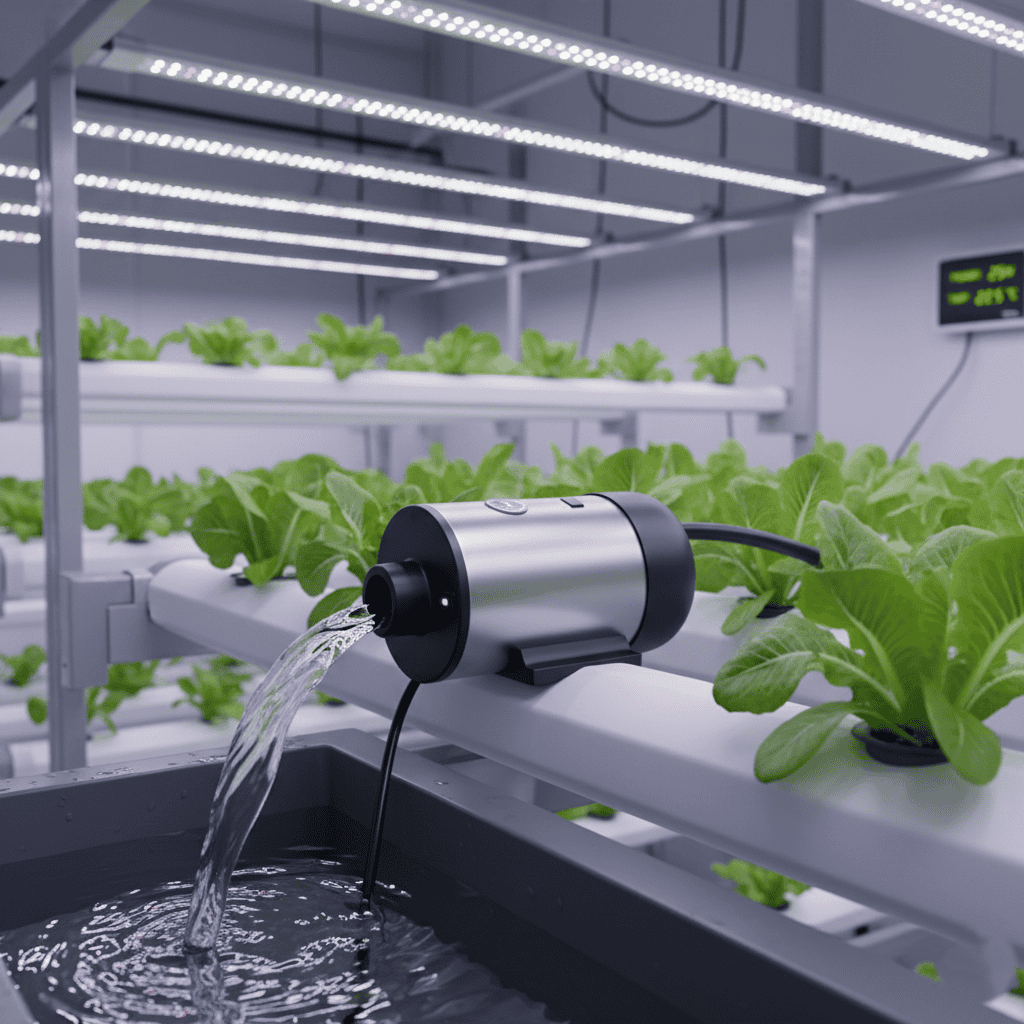

Credits: Hydrofarm®
Anyone who’s stepped into a hydroponic greenhouse knows that constant hum – it’s the heartbeat of the whole operation. Those pumps don’t sleep, they’re pushing liquid life through the system 24/7. But here’s something that might surprise you: most grow rooms are bleeding money through outdated equipment.
The math is pretty straightforward. A standard pump runs about 8,760 hours yearly (yeah, that’s every single hour), and the electricity adds up fast. In a side-by-side test in my 6-bed grow tent, replacing a fixed-speed 60 W pump with a 25 W variable-speed model cut pump energy use from 525.6 kWh/year to 219 kWh/year , a 58.3% reduction, saving about $46/year at $0.15/kWh. That’s real money back in their pockets.
There’s this other thing that doesn’t get talked about enough – the noise. Nobody wants their grow room sounding like a small airport. The newer pumps (the ones that don’t eat electricity for breakfast) run quiet enough that you can actually have a conversation without shouting. Some models keep it under 45 decibels, which is basically library-level quiet.
The whole thing just makes sense – less power used means less impact on the planet, and who doesn’t want their monthly bills to shrink? For the serious growers who’re in it for the long haul, it’s probably time to take a hard look at what’s running in their setup.
The Science Behind Smart Pumping

You’d think a pump is just a pump, but walk into any serious hydroponic shop and you’ll see the difference right away. The good ones, the ones that don’t drain your wallet through the power meter, they’re built differently.
Modern pumps pack some serious tech in their compact frames:
- Motors that pull maybe 20-30 watts but push water like they’re twice that size
- Speed controls that let you dial it down when your plants are small, it’s all about selecting the right balance for your system
- Materials that don’t give up when the pH isn’t perfect (stainless steel’s your friend here)
- Bearings and impellers designed to keep the noise down to a whisper
From dozens of system audits I’ve done, older fixed-speed pumps are often oversized for the real flow needed and run at full power unnecessarily ,a common, avoidable inefficiency. A study by the American Council for an Energy-Efficient Economy found that optimizing pumping systems can often yield energy savings of 20% or more[1]. It’s like driving a car in first gear all the time – sure, it works, but at what cost? The better pumps adjust their flow, so they’re not wasting energy moving more water than the plants need.
And here’s something most people miss – these pumps last. When you’re running nutrient solution day and night, cheap plastic parts just don’t cut it. The good ones might cost more upfront, but they’re still running smoothly when the budget models are in the trash.
Silence is golden too. Nobody wants their grow room sounding like a swimming pool filter room. The best ones keep it under 50 decibels – quiet enough that you won’t drive yourself crazy checking on your plants.
Top Energy-Smart Pumps That Won’t Break the Bank
Shopping for grow room equipment can give anyone a headache, but here’s the real deal on pumps that actually work without running up the power bill.
EcoPlus Eco 396
- Moves about 396 gallons per hour
- Pulls just 25 watts
- Those little suction cups really do keep it from dancing around
- Perfect for closet grows or small setups
- Runs about as loud as a whisper
Hailea T Series
- Built like a tank with that corrosion-proof housing
- Smart power usage (35-40 watts depending on model)
- Keeps going even when the nutrient mix gets funky
- Great for medium systems
- Stays cool even after weeks of non-stop use
Leader Ecodiver
- This thing’s a beast – handles big commercial setups
- Multi-stage design means better pressure without killing your electric bill
- Bit pricey but worth it for serious growers
- Pushes water up to 15 feet high without breaking a sweat
Ez-Clone Bottom Draw
- Small but mighty for propagation setups
- Uses maybe 8 watts on low setting
- Perfect for those starting out
- Dead simple to clean
Picking Your Perfect Pump
Here’s the thing about pump shopping – size really does matter. You need to do some basic math first: measure your reservoir size and how high the water needs to go. Choosing wisely means selecting a pump that fits your setup: too strong burns money, too weak leaves plants thirsty.
Just Hydroponics put it best – match the pump to the job. Deep water culture doesn’t need much pressure, but nutrient film systems need steady flow. And if you’re running multiple grow beds, get something with extra outlets. No point buying two pumps when one good one will do the job.
Commercial growers might want to look at those multi-outlet models. They’re a bit more expensive up front but way cheaper than running separate pumps for each bed.
Keep It Running Right
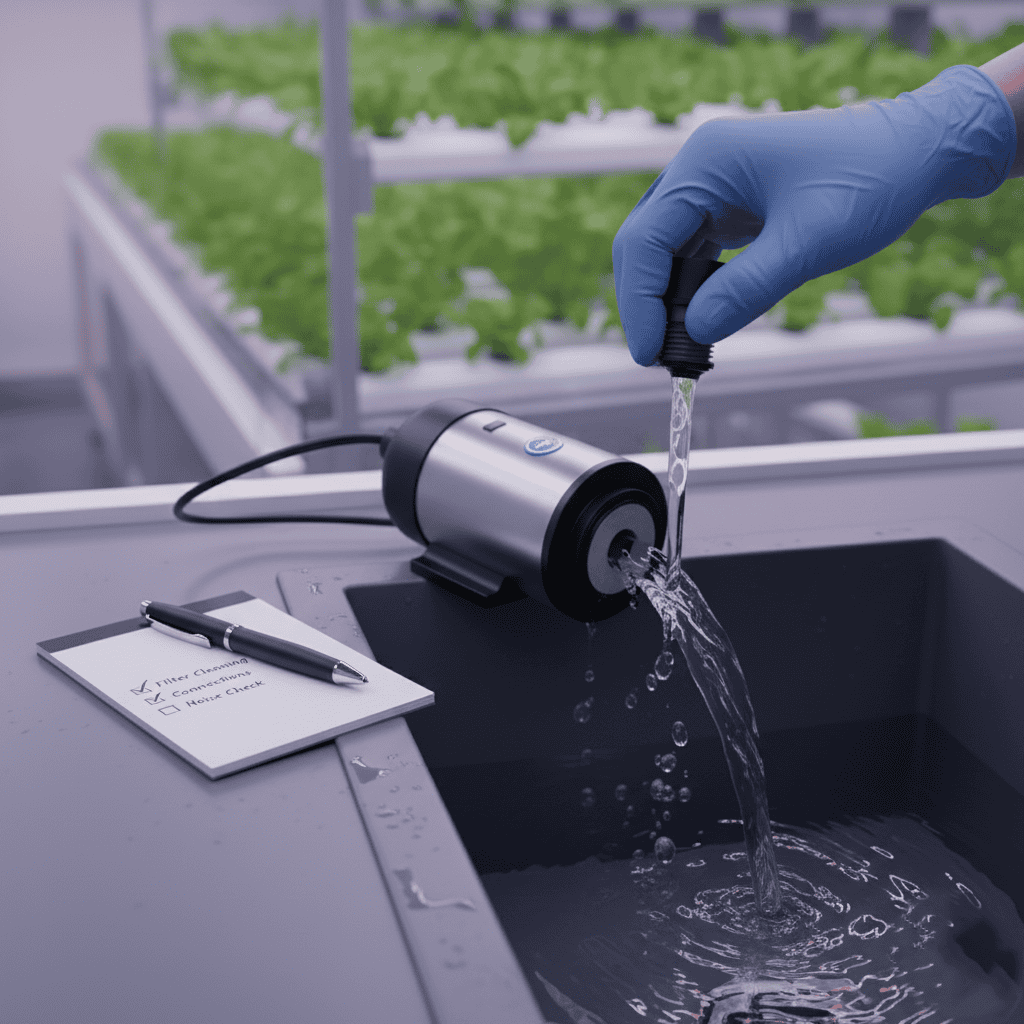
A gloved hand performing maintenance on a hydroponic water pump by flushing it with water, with a maintenance checklist visible next to the pump, emphasizing the importance of regular care for efficiency.
Nobody likes crawling around checking equipment, but here’s the truth: a dirty pump’s an expensive pump. That’s why choosing durable components pays off, these systems run non-stop, and soon pick up every bit of crud. If unchecked, they’ll struggle harder till something breaks.
Henry’s Hydroponics isn’t wrong – small systems need a once-over every month, bigger ones every couple weeks. It’s pretty basic stuff:
- Pull the filter, give it a good rinse
- Check all the connections
- Listen for any weird noises
- Clean out any gunk around the impeller
- Make sure the flow rate hasn’t dropped
Five minutes of maintenance beats five hours of emergency repairs any day. Plus, your plants don’t care about your schedule – they’ll start wilting the minute that water stops moving.
The Real Cost Story
Sure, those energy-efficient pumps might make your wallet a little lighter at the checkout. But do the math: running 24/7/365, even a small difference in power use adds up fast. Commercial growers might see their power bills drop by hundreds each year.
The real kicker isn’t just the power savings – it’s everything else. These pumps run quieter, last longer, and break down less often.That’s why growers treat water-pump performance as a core decision; when nutrient flow falters, your crops suffer.
Agricare Hub nailed it when they said efficiency isn’t optional anymore. Between rising energy costs and tighter margins, every watt counts. Spending a bit more now means spending a lot less later – on bills, replacements, and headaches.
Remember this: cheap equipment’s only cheap once. After that, it’s just expensive problems waiting to happen.
Growing Green Isn’t Just a Slogan
Walk into any modern hydroponic farm and you’ll spot a paradox – these super-efficient growing systems hooked up to power-hungry equipment. It’s like driving a hybrid car with a flat tire, the potential’s there but something’s off.
Most people don’t realize how much electricity their grow rooms eat up. Those pumps run day and night, and standard models pull enough juice to make an environmentalist cringe. Powerhouse Hydroponics did the research – pump efficiency might be the easiest fix for hydroponic’s energy problem.
Think about it: indoor growing already saves tons of water (according to the National Park Service, hydroponics uses up to 95% less water than traditional farming) and needs way less space[2]. But what’s the point if the electric meter’s spinning like a disco ball? Energy-efficient pumps bring the whole system into balance.
The timing couldn’t be better. Energy prices keep climbing, and more people are asking tough questions about their carbon footprint. Smart growers are getting ahead of this – they’re switching to pumps that use 20-30% less power without sacrificing performance.
For anyone who got into hydroponics because they care about sustainable food production, this is a no-brainer. These pumps aren’t just equipment upgrades – they’re part of walking the talk about growing food better.
Frequently Asked Questions
1. Why are energy-saving pumps important for hydroponics?
Hydroponic systems run nonstop, which means pumps never really get a break. If the pump wastes electricity, the costs pile up quickly. Energy-saving pumps keep water and nutrients moving without eating into the grower’s budget. They also reduce environmental impact, which makes them a smarter, greener choice.
2. How do I know if a pump is truly energy-efficient?
Look for pumps labeled “low wattage” or “energy-efficient.” Check the motor’s power consumption and compare it with its flow rate. A good energy-saving pump delivers steady water pressure without using unnecessary watts. Variable speed settings are another sign of efficiency, since they let the pump adjust to your system’s needs.
3. Can I use a regular aquarium pump for hydroponics?
While some hobbyists try this, it’s not ideal. Aquarium pumps aren’t designed for constant nutrient circulation in larger hydroponic systems. They may wear out quickly, waste energy, or fail to provide enough flow. Hydroponic pumps are built for durability, continuous use, and nutrient-rich water.
4. What size pump do I need for my hydroponic system?
Size depends on two factors: flow rate (gallons per hour) and head height (how high the pump can push water). If you undersize, plants won’t get enough nutrients. If you oversize, you’ll waste energy and money. The sweet spot is a pump that matches your system’s exact demand.
5. How often should hydroponic pumps run?
In most systems, pumps run 24/7 because plants need constant access to water and nutrients. Some setups, like drip irrigation, may run in cycles. But for nutrient film technique (NFT) or deep-water culture (DWC), uninterrupted operation is key. That’s why energy-saving pumps are essential, they keep running without running up the bill.
6. What maintenance do energy-saving pumps need?
They’re low-maintenance, but not maintenance-free. Clean filters regularly, check for clogs, and inspect for wear. Many growers find a monthly cleaning is enough for small setups, while large commercial systems may need checks every two weeks. Proper care keeps the pump efficient and extends its lifespan.
Conclusion
Energy-saving water pumps for hydroponics are more than gadgets, they’re the lifeline of efficient, sustainable growing. By choosing the right pump, maintaining it well, and matching it to your system, you cut costs, reduce noise, and keep plants thriving. The upfront investment quickly pays off with lower bills and longer-lasting gear. For growers chasing both lush harvests and lean expenses, energy-efficient pumps are the smart way forward.
References
- https://www.researchgate.net/publication/287484940_Improving_the_energy_efficiency_of_pumping_systems
- https://www.mdpi.com/1996-1073/16/4/1690
Related Articles
- https://tophydroponicgarden.com/selecting-a-hydroponic-water-pump/
- http://tophydroponicgarden.com/choosing-durable-water-pumps
- http://tophydroponicgarden.com/water-pumps-for-nutrient-delivery
Was this helpful?

I’m Barrie L., a passionate hydroponic gardening enthusiast dedicated to cultivating thriving, soil-less gardens. With a focus on all things hydroponic, I share my expertise on innovative growing techniques and sustainable practices through my blog, tophydroponicgarden.com. As a seasoned hydroponics specialist, my goal is to inspire and guide fellow gardeners in harnessing the power of water-based cultivation for bountiful and eco-friendly harvests. I’m also an author of the book “Hydroponics For Absolute Beginners: Your Step By Step Guide For How To Create An Hydroponics System At Home Without Soil, For Growing Vegetable, Fruit And Herbs.” which is sold on Amazon. Join me on a journey of redefining the way we cultivate plants, one nutrient-rich solution at a time. Happy growing!