
Article description: Learn what the primary macronutrients for plants are, how NPK ratios work, and how to fix nutrient deficiencies in hydroponic systems.

Plants need three main macronutrients: nitrogen, phosphorus, and potassium, often called NPK. These are the core building blocks for growth. In hydroponics, this is everything. There’s no soil to act as a backup. Your nutrient solution is the entire food supply.
As explained by Biology Insights, “Plants require the primary macronutrients are Nitrogen (N), Phosphorus (P), and Potassium (K), required in the greatest concentrations.”
Every single gram of NPK has to be carefully measured and mixed. Plants use these elements in large amounts, much more than the tiny doses of micronutrients.
Managing hydroponic nutrients means directly controlling processes like protein creation and energy transfer inside the plant. It’s precise science. Most feeding charts don’t capture this complexity, especially when balancing hydroponic base nutrients that determine overall solution stability. To understand how NPK really works, keep reading.
NPK Fundamentals Every Hydroponic Grower Should Understand
- Nitrogen, phosphorus, and potassium are required in the largest quantities because they drive chlorophyll production, energy transfer, and water regulation.
- In hydroponics, pH 5.5 to 6.5 determines nutrient availability more than the label’s NPK ratio.
- Overfeeding or imbalance can cause nutrient lockout, antagonistic suppression, or reduced crop quality.
What the Primary Macronutrients (NPK) Are and Why They Matter Most
The primary macronutrients are Nitrogen (N), Phosphorus (P), and Potassium (K), often referred to as the 3 nutrients needed for hydroponic planting, and plants require them in the highest concentrations to build tissue, transfer energy, and regulate metabolism..
As explained in this hydroponic nutrient guide by Bitponics, “Macronutrients are the nutrients that plants need a lot of. They are super important for plant growth. There are three primary macronutrients: nitrogen, phosphorus, and potassium.” Nitrogen forms chlorophyll and amino acids. Without it, photosynthesis slows and vegetative growth stalls.
Phosphorus enables ATP (Adenosine Triphosphate) production and DNA formation.
Potassium activates enzymes and regulates osmotic balance within the root zone.
Plants absorb these as ions in solution. In hydroponics, that means nitrate nitrogen (NO₃⁻), ammonium nitrogen (NH₄⁺), phosphate phosphorus, and potash potassium must remain soluble and stable.
These nutrients operate differently from secondary macronutrients like calcium, magnesium, and sulfur, which are required in slightly smaller amounts but still essential.
To clarify their functional differences:
- Nitrogen drives vegetative growth and protein synthesis.
- Phosphorus powers energy transfer and root development.
- Potassium regulates water movement and enzyme activation.
In hydroponics, there is no cation exchange capacity from soil to stabilize errors. That shifts responsibility entirely to your reservoir nutrients and hydroponic feeding schedule. Precision matters more than branding.
Beyond the Bottle: Why N-P-K Is Useless Without Proper pH Control (5.8 Benchmark)

In hydroponics, NPK nutrients remain bioavailable when solution pH stays between 5.5 and 6.5, with 5.8 widely considered the operational sweet spot.
According to the University of Florida IFAS Extension, nutrient availability shifts dramatically outside optimal pH ranges, even when fertilizer levels appear adequate. When pH drifts, ions precipitate or change charge state.
Electrical Conductivity might read 1.8 dS/m, but that does not guarantee usable nutrients. Frontiers in Plant Science (2024) notes that bulk EC measures total dissolved salts, not ion specificity.
Growers using Masterblend 4-18-38 often report that stable pH improves growth more than changing formulas. Reddit communities frequently repeat the same truth. Effective hydroponic feeding requires active management of solution chemistry.
Common pH drift symptoms include:
- Yellowing lower leaves mistaken for nitrogen deficiency
- Purple stems confused with phosphorus shortage
- Leaf scorch blamed on potassium imbalance
These may reflect pH nutrient availability issues rather than true nutrient deficiency. When pH swings, nutrient lockout follows. Balance begins with chemistry.
How Nitrogen (N) Drives Vegetative Growth and When It Becomes Harmful
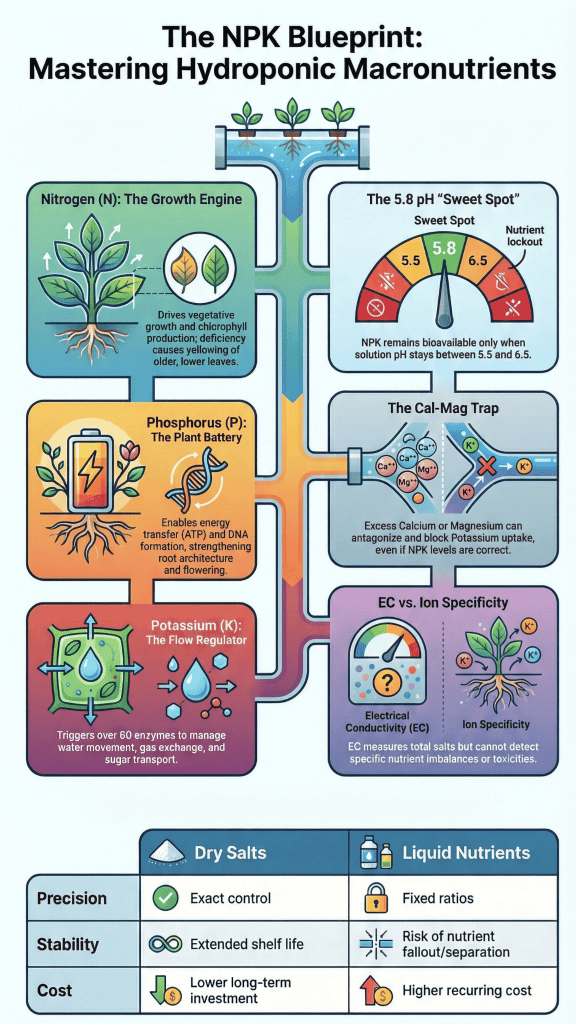
Nitrogen drives vegetative growth and protein synthesis. Phosphorus powers energy transfer and root development. Potassium regulates water movement and enzyme activation. Together, they represent the 3 nutrients needed for hydroponic planting to sustain structural growth, metabolic activity, and reproductive performance.
As noted by ALTO Garden’s hydroponic nutrient overview, “The three main macronutrients in a hydroponic nutrient solution are nitrogen (N), phosphorus (P), and potassium (K).
Nitrogen photosynthesis relies on chlorophyll formation. That deep green canopy signals active growth. As a mobile nutrient, nitrogen moves from older leaves to new tissue when scarce, causing yellowing on lower foliage.
Hydroponic systems typically supply nitrogen as:
- Nitrate nitrogen (NO₃⁻)
- Ammonium nitrogen (NH₄⁺)
- Calcium nitrate in two part nutrients
A 2025 MDPI study examining hydroponic wheat sprouts found that increasing nitrogen boosted biomass but suppressed lipid accumulation and antioxidant compounds. In this case, increased biomass did not correspond to increased nutritional density.
This introduces the nitrogen paradox. High nitrogen promotes lush vegetative growth nitrogen during early stages, but overapplication can dilute flavor compounds in herbs or reduce oil content in fruiting crops. Biomass expands. Quality may decline.
Professional growers monitor critical nutrient levels using tissue analysis plants and DRIS nutrient norms to avoid luxury uptake. Nitrogen must match plant stage and light intensity. Otherwise, vegetative growth may outpace reproductive or quality development.
Why Phosphorus Is Considered the Plant’s Energy Battery
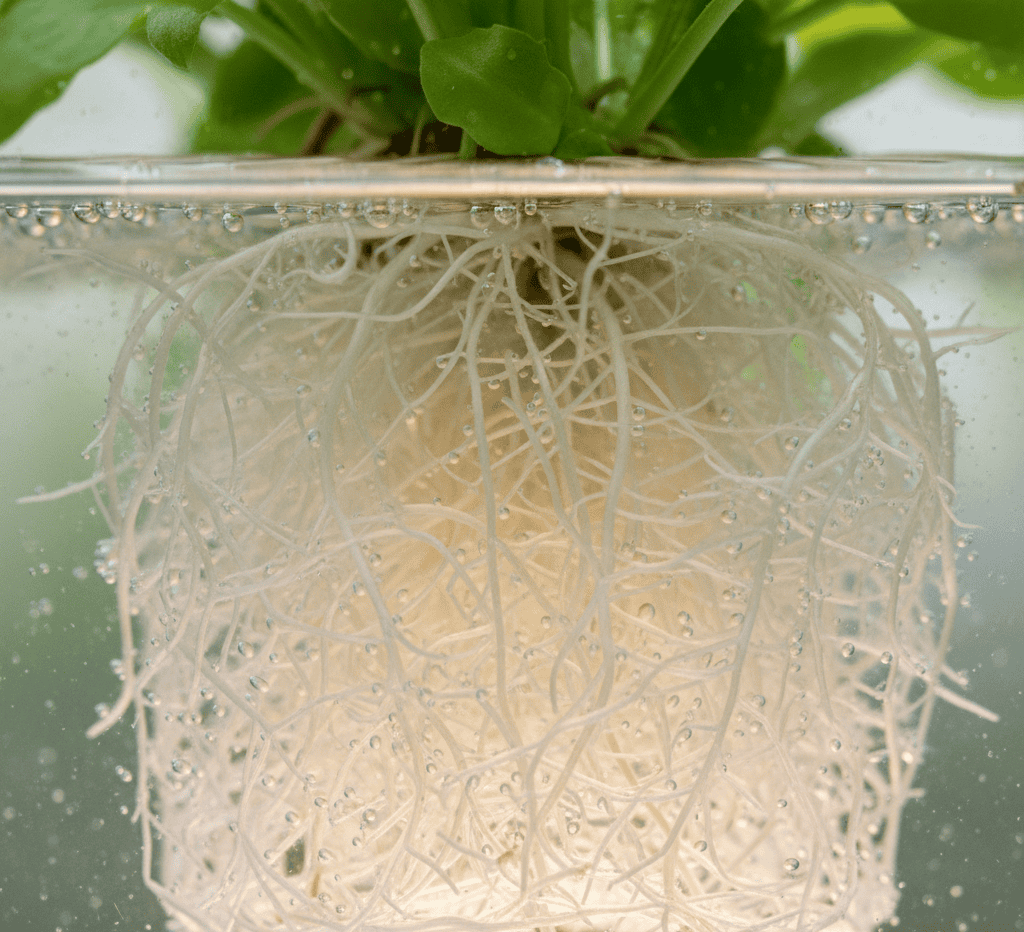
Phosphorus enables energy transfer through ATP phosphorus reactions, supporting root growth, flowering phosphorus demand, and DNA formation.
Every cell relies on ATP, the molecule that stores and releases energy. According to Harvard Health Publishing, ATP acts as the universal energy currency in biological systems (https://www.health.harvard.edu). In plants, that energy drives root expansion and flower initiation.
Phosphorus also strengthens early root architecture, which improves nutrient uptake and stress tolerance. During bloom stages, growers often adjust the NPK ratio toward higher phosphorus levels.
Deficiency symptoms typically include:
- Dark green or purplish leaves
- Stunted root development
- Delayed flowering
In hydroponics, phosphorus fixation is less common than in soil nutrients, but pH imbalance can still limit availability. Bloom boosters increase phosphate ions (primarily H₂PO₄⁻ and HPO₄²⁻ depending on pH), yet without proper macronutrient balance, excess P can interfere with zinc and iron uptake.
Energy flow defines yield. When ATP slows, growth slows. Flowers stall. Fruit sets poorly. Consistent phosphorus availability is therefore critical for sustained growth and reproductive development.
What Potassium (K) Regulates in Plant Metabolism and Stress Response
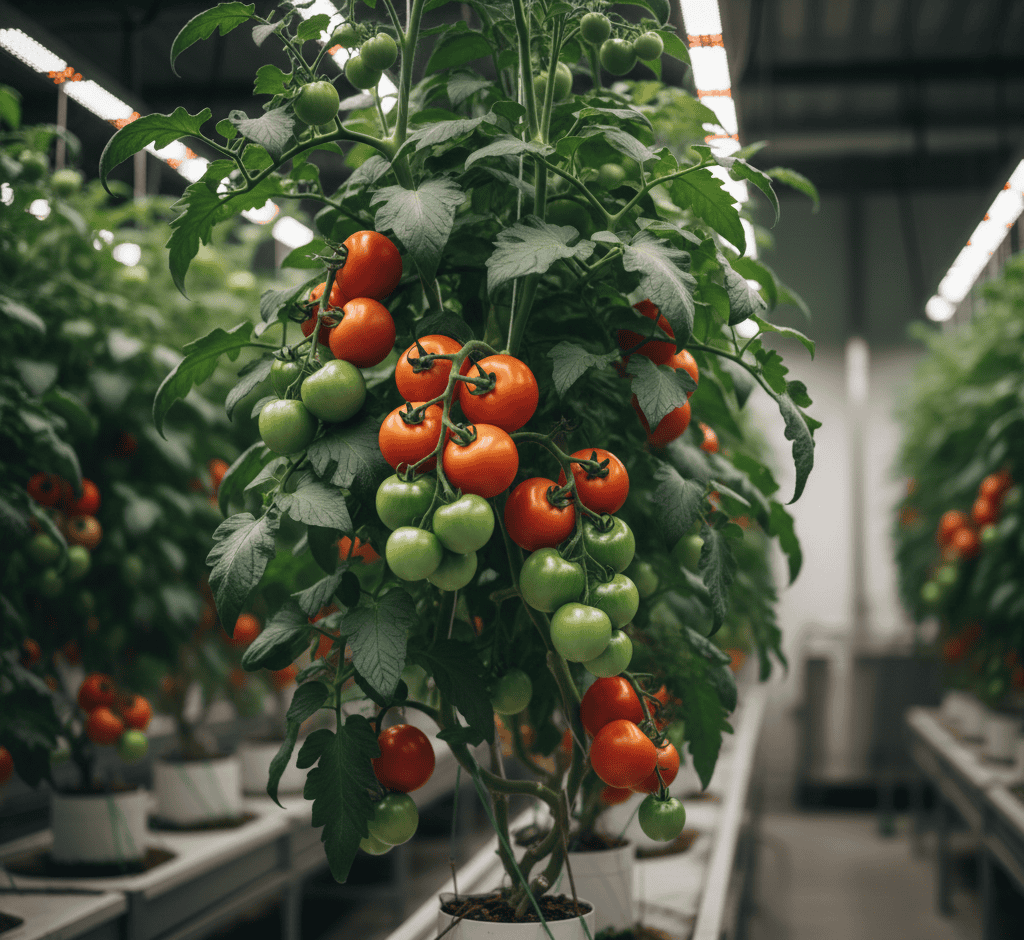
Potassium regulates stomata opening, enzyme activation, and sugar transport, directly influencing fruit size, stress tolerance, and plant immunity.
Unlike nitrogen or phosphorus, potassium osmosis regulation does not build structure. It manages flow. Over 60 enzymes rely on potassium for activation, according to agronomic data from Frontiers in Plant Science.
Stomata control potassium determines gas exchange and transpiration rates. In high light or elevated CO₂ environments, potassium demand increases because sugar production accelerates.
Common deficiency indicators include:
- Brown leaf margins known as leaf scorch
- Weak stems
- Poor fruit firmness
In hydroponics, leaching losses are minimal, but nutrient antagonism can still restrict potassium uptake.
CO₂ enrichment raises the ceiling. Without adequate fruiting potassium, sugars accumulate in leaves instead of moving to fruit. Transport fails. Yield plateaus.
Why EC Alone Isn’t Enough and The Move Toward Ion-Specific Dosing
Electrical Conductivity measures total dissolved salts, not individual nutrients, which means perfect EC can mask potassium deficiency or sodium toxicity.
Advanced systems now use ion specific sensors rather than relying solely on EC levels hydroponics within 1.5 to 2.5 dS/m. Modern hydroponic tools such as digital pH meters, EC monitors, and automated dosing systems allow growers to fine-tune nutrient balance beyond basic conductivity readings.
| Metric | Measures | Limitation |
| EC (1.5–2.5 dS/m) | Total dissolved salts | No detail on individual ions |
| Ion Specific Sensors | Individual nutrient ions | Higher cost, technical setup |
A Frontiers (2024) study on decision tree based nutrient control reported 15% reduction in nutrient waste using Model Predictive Control algorithms. That shift reflects a move toward precision agriculture inside controlled environments.
Bulk EC hides imbalances between anion nutrients like nitrate and cation nutrients like potassium and calcium. As LED intensity increases, metabolic rates change. Ion balance becomes dynamic, not static.
Precision replaces guesswork. Algorithms increasingly manage hydroponic solutions.
The Cal-Mag Trap: How Calcium Nitrate Can Suppress Potassium Uptake
Excess calcium nitrate or magnesium sulfate can antagonize potassium uptake, reducing yield despite adequate NPK ratios.
Nutrient antagonism occurs when high levels of one ion block absorption of another. In hydroponics, overuse of calcium nitrate or epsom salt plants can suppress fruiting potassium.
Market data shows dry nutrient salts hold 63.1% share among serious growers, including users of Jack’s 3-2-1 and Masterblend, partly because they allow tighter ratio control.
Common mistakes include:
- Adding Cal Mag to fix every leaf spot
- Ignoring root zone nutrients imbalance
- Raising EC without checking ion ratios
Excess calcium can also contribute to localized deficiencies elsewhere. Ironically, chasing calcium deficiency blossom end rot without correcting overall balance may worsen potassium mobility.
Balance prevents antagonistic nutrients from undermining each other.
Dry Salts vs. Liquid Nutrients: Efficiency, Stability, and Cost Comparison
Dry nutrient salts provide greater precision and lower long term cost, while liquid nutrients offer convenience but less concentration flexibility.
| Feature | Dry Salts | Liquid Nutrients |
| Cost | Lower over time | Higher recurring cost |
| Precision | High control of ratios | Fixed formulations |
| Stability | Long shelf life | Risk of nutrient fallout |
| Ease | Requires measuring | Ready to use |
Products like FloraNova Grow attract beginners for simplicity. However, many growers transition to dry salts for tighter control of macronutrient balance and reservoir nutrients.
Liquid blends sometimes separate when combining high phosphorus and calcium, leading to precipitation. Dry formulas reduce that risk.
Beginners benefit from ease. Advanced growers prioritize data and repeatability.
Example of Content They Can Create

Credits: Hydroponic Nutrients Comparison: Which is Best for Your Plants? – 3D Print & Hydro Lifestyle
A clear, beginner-friendly guide that explains how to choose the right nutrients for hydroponic gardening, focusing on what your plants actually need to thrive. The host breaks down the differences between liquid, powdered, and organic nutrient types and their pros and cons.
It also covers macronutrients like N, P, and K, what each does for plant growth, and when to use specific mixes based on whether you’re growing leafy greens or fruiting crops.
Along the way, the video offers practical tips on adjusting feeding schedules and avoiding common feeding mistakes, plus tools like TDS/EC meters to monitor your hydroponic nutrient solution effectively.
If you want a visual and simple breakdown of how hydroponic macronutrients work and how to choose the right formulas for your setup, this video is a good place to start.
FAQs
How does the NPK ratio affect hydroponic plant growth?
The NPK ratio shows the balance of primary plant nutrients in a hydroponic nutrient solution. Nitrogen nutrient supports leaf growth, phosphorus plant growth supports roots and blooms, and potassium functions plants like water control and strength. Balanced NPK levels help meet plant nutrient requirements at each stage. In hydroponics NPK systems, adjusting macro element ratios improves plant vigor macronutrients efficiently.
What are common nitrogen deficiency symptoms in hydroponics?
Nitrogen deficiency symptoms often start with pale older leaves due to low nitrogen chlorophyll production. You may see slow nitrogen leaf growth and weak stems. Because macronutrient mobility plants allow nitrogen to move upward, lower leaves yellow first. Hydroponics nutrient deficiencies like this reduce plant growth macronutrients and overall plant health NPK balance if not corrected quickly.
Why is phosphorus important for roots and flowering?
Phosphorus plant growth is vital for phosphorus root development and strong blooms. It supports phosphorus energy transfer and phosphorus respiration inside plant cells. Poor phosphorus uptake can delay flowering and reduce fruit set. In hydroponic macronutrients planning, phosphorus bloom phase levels must match plant growth macronutrients demand to prevent macronutrient deficiency and weak root systems.
How does potassium deficiency impact fruit quality?
Potassium deficiency affects potassium water regulation and potassium stomata function, which control moisture and gas exchange. Without enough potassium ions plants cannot maintain strength or potassium disease resistance. This lowers potassium fruit quality and reduces yields. Monitoring potassium absorption rates in hydroponic NPK formulas helps prevent primary macro shortage during the potassium maturity stage.
How can growers monitor and optimize hydroponics NPK levels?
Start by understanding NPK labels explained on nutrient mixes and tracking balanced NPK levels in your hydroponic nutrient solution. Regular NPK monitoring ensures proper primary nutrient delivery. Adjust hydroponic feeding schedule based on plant growth stage, from nitrogen vegetative stage to bloom and maturity. Careful NPK optimization prevents nitrogen toxicity signs and other macronutrient interactions problems.
Mastering Primary Macronutrients for Maximum Hydroponic Performance
The primary macronutrients for plants remain Nitrogen, Phosphorus, and Potassium, but their effectiveness depends on pH stability, ion balance, and stage specific dosing.
Hydroponics removes soil buffering and exposes chemistry. Precision in NPK ratio, pH control, and nutrient uptake determines success more than brand loyalty.
As research from MDPI, Frontiers, and university extensions shows, macronutrient management now focuses on ion specificity, metabolic trade offs, and real time monitoring.
Control the chemistry. Respect antagonistic interactions. Match feeding to light and growth stage. That is how primary nutrients translate into yield and quality.
For deeper hydroponic system optimization and advanced feeding strategies, continue learning at TopHydroponicGarden.com.
References:
- https://altogarden.com/blog/nutrients-for-hydroponic-plants/
- https://www.bitponics.com/hydroponic-nutrients-guide/
Related articles:
- https://tophydroponicgarden.com/what-are-hydroponic-base-nutrients/
- https://tophydroponicgarden.com/3-nutrients-needed-for-hydroponic-planting/
- https://tophydroponicgarden.com/hydroponic-tools/
Was this helpful?
