

No, hydroponics does not require direct sunlight. You can grow healthy plants indoors using artificial lights, as long as they get enough brightness and the right color range for photosynthesis.
To the plant, a photon from the sun and a photon from an LED are the same, what matters is intensity and timing.
That simple fact means you can build a garden in a basement, spare room, or tiny apartment that never sees direct sun, and still get great yields. If you want to set up lighting that actually works, keep reading to see how to choose and use it.
Key Takeaways
- Artificial grow lights can fully replace direct sunlight for hydroponic plants.
- The ideal light setup depends heavily on what you’re growing.
- Consistent light cycles, managed by a timer, are as important as the light itself.
The Freedom of Growing Without Direct Sun

You might picture a hydroponic system bathed in golden sunlight on a patio. That’s one way to do it, but it’s not the only way.
The real magic of hydroponics is its independence from the soil and, just as importantly, from the sun. It untethers you from the constraints of geography and season.
Think about what light actually does for a plant. It provides the energy for photosynthesis, the process that turns water and carbon dioxide into sugar.
The plant is essentially a solar-powered sugar factory. As long as you can provide the right type of energy, the plant will thrive. This is where modern lighting technology steps in.
Understanding the limitations of hydroponics helps clarify why controlling light is so crucial to success indoors.
Natural sunlight is fantastic, and it’s free. But it’s also wildly inconsistent. A cloudy day, a short winter, a window that faces north, all of these can limit your growth.
Artificial lights remove that unpredictability. You decide when the sun rises and sets. You control the intensity, ensuring every leaf gets exactly what it needs.
This control is a game changer. It means you can optimize growth for speed and health. You can grow strawberries in December and lettuce in a room with no windows.
For someone with limited outdoor space, this is the key to a productive garden. The initial investment in a light setup pays for itself in harvests.
The main considerations with artificial light are spectrum, intensity, and duration. Spectrum refers to the colors of light the bulb emits. Intensity is how bright it is. Duration is how long you leave it on each day. Getting these three factors right is the secret to success.
- Spectrum: Plants use mostly blue and red light. Blue promotes leafy, vegetative growth. Red encourages flowering and fruiting.
- Intensity: This is like the volume of the light. Seedlings need less intensity, while fruiting plants like tomatoes need a lot.
- Duration: This is the photoperiod, or the day/night cycle. Most vegetables need 14-16 hours of light followed by 8-10 hours of darkness.
Navigating the World of Grow Lights
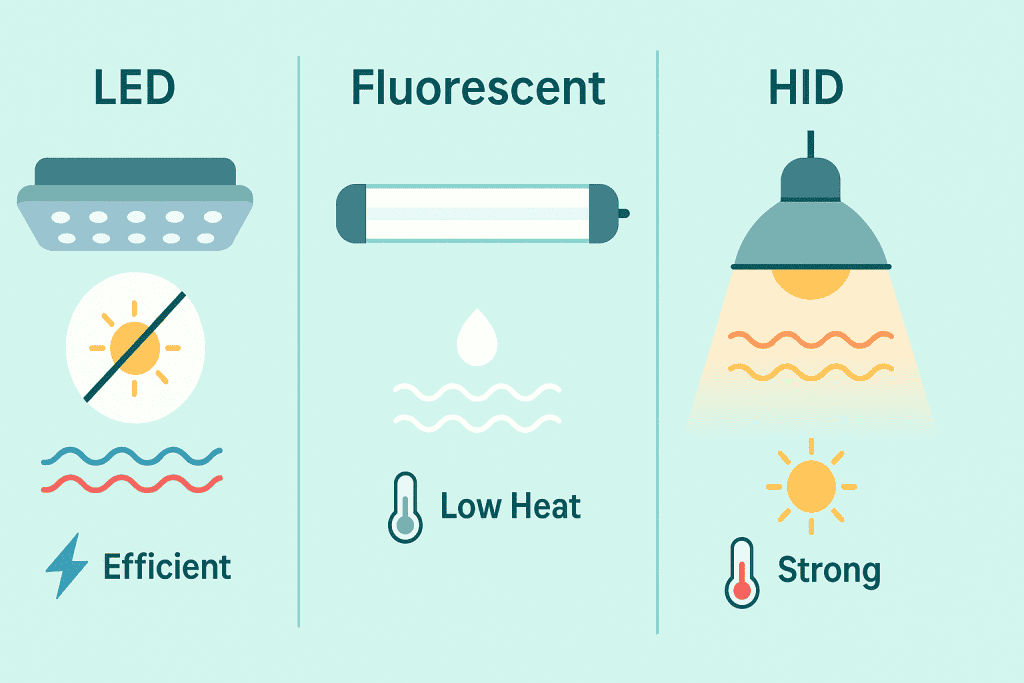
Walking into the world of grow lights can feel overwhelming. The technology has advanced rapidly, offering several good choices. Your decision will hinge on your budget, what you want to grow, and how much heat you can manage in your space [1].
LED lights are the modern favorite for a reason. They are highly energy-efficient, which saves you money on electricity over time.
They produce very little heat, so you can place them closer to your plants without causing damage. Most importantly, you can find full-spectrum LEDs that provide a balanced mix of blue and red light, perfect for all stages of growth.
Fluorescent lights, particularly T5 high-output tubes, are another solid option. They are less expensive upfront than LEDs. They are cool-running, making them ideal for starting seeds or growing low-light plants like lettuce and herbs.
Their intensity is lower, so they aren’t the best choice for light-hungry plants like tomatoes or peppers when they get larger.
Then there are the older technologies: Metal Halide (MH) and High-Pressure Sodium (HPS) lights. MH bulbs emit a blue-heavy light good for the vegetative stage.
HPS bulbs put out a red-orange light that promotes flowering and fruiting. Some growers use a combination of the two. The downside is that they generate a significant amount of heat and use more electricity than LEDs. Here’s a quick comparison to help you choose:
- LEDs: Best for most home growers due to efficiency, low heat, and full-spectrum capabilities.
- Fluorescents: Ideal for seedlings, cuttings, and leafy greens.
- HID (MH/HPS): Powerful option for large, fruiting plants, but requires heat management.
Choosing Lights Based on Your Plants
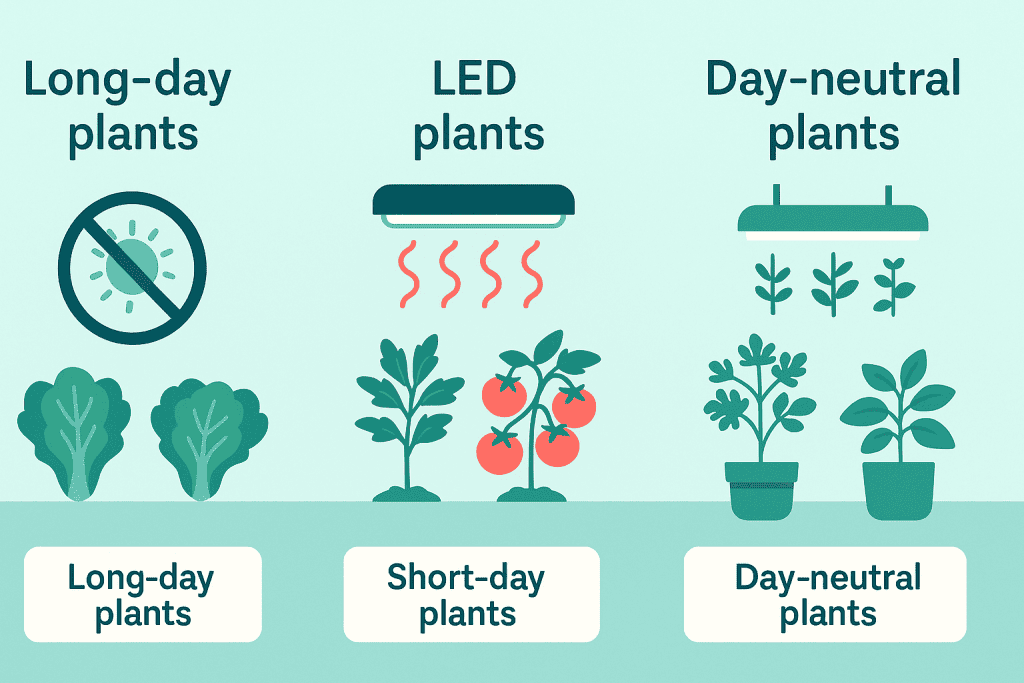
Not all plants have the same appetite for light. Understanding this is crucial to avoiding wasted energy or disappointing harvests. You wouldn’t feed a kitten the same amount as a Great Dane, and the same logic applies to light.
Long-day plants, such as lettuce, spinach, and many herbs, thrive with 14 to 18 hours of light per day. Adjustable up to 18-24h for vigorous veg growth for precision
They are perfectly happy under the consistent glow of fluorescents or LEDs. These are the easiest plants for a beginner to start with. You’ll see rapid, lush growth with minimal fuss.
Starting simple is key, much like the hydroponics learning curve, where beginners find success with straightforward setups and forgiving plants.
Short-day plants, like strawberries or some chrysanthemums, have a different trigger. They need a longer period of uninterrupted darkness (12 hours or more) to initiate flowering.
This is where a timer becomes non-negotiable. You must provide a strict schedule to get them to produce fruit or flowers.
Day-neutral plants, including tomatoes, peppers, and eggplants, are less concerned with day length. They will flower once they reach a certain maturity. However, they are extremely hungry for light intensity.
To get a good yield from these plants, you need powerful lights, like high-wattage LEDs or HPS systems, positioned close to the canopy.
A simple timer is your best friend. It automates the light cycle, giving your plants the consistency they crave. It also makes your life easier. You can set it and forget it, knowing your garden is getting the right amount of “sun” every single day.
Practical Tips for Your Light Setup
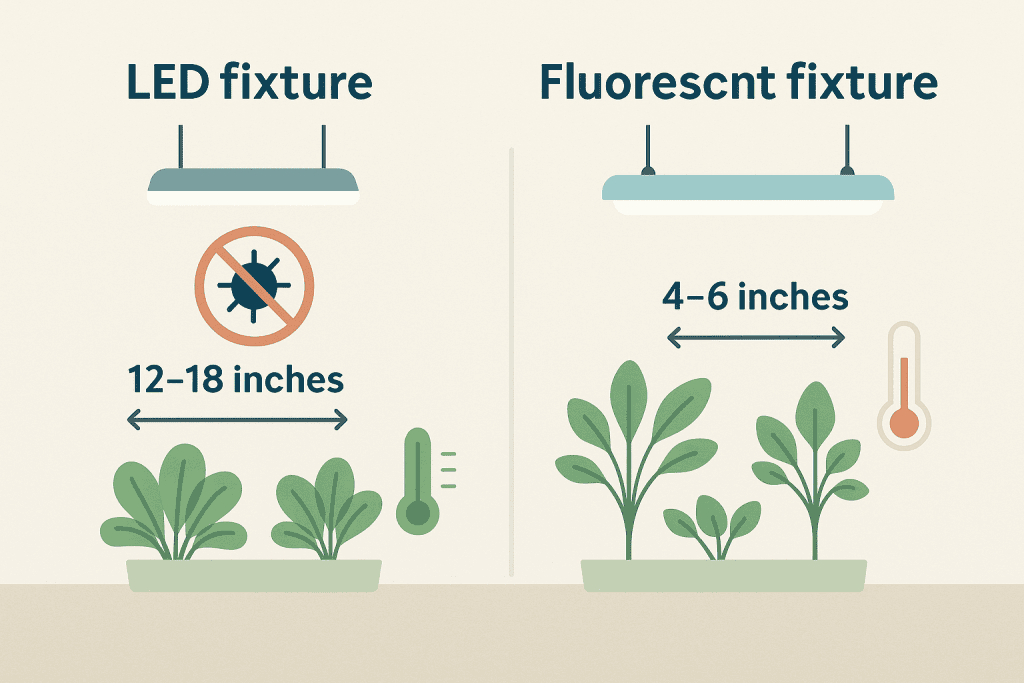
Getting the lights is one thing. Setting them up correctly is another. The distance between the light and the top of your plants, known as the canopy, is critical.
Too far away, and the light intensity drops off, leading to weak, “leggy” plants that stretch toward the source. Too close, and you can cause light burn or heat stress.
A good rule of thumb for LEDs is to start with the light about 12 to 18 inches above the seedlings. Watch how the plants respond.
If they seem to be stretching, lower the light. If the leaves start to curl or look bleached, raise it. Fluorescent lights can be placed much closer, around 4 to 6 inches away, since they run so cool.
If you want to experiment with larger plants, consider how growing trees hydroponically requires attention to root space and oxygen, which parallels managing light distance and intensity.
You also need to think about coverage. A single light bulb will only effectively cover a certain area.
Make sure your light fixture is large enough, or you have enough fixtures, to evenly light your entire grow tray. Plants on the edges that receive less light will grow slower and be less productive.
Think of your indoor garden as a tiny, self-contained world. The lights are its sun. By choosing the right sun and giving it a reliable schedule, you create the perfect conditions for life to flourish. It’s a powerful feeling.
Your Hydroponic Lighting Journey
The question isn’t whether you can grow plants without direct sunlight. You absolutely can. The real question is how you want to design your personal food-producing ecosystem.
Artificial lighting is the tool that grants you that freedom. It turns any spare corner into a potential garden [2].
Start with a simple LED light and a timer over a tray of lettuce. Learn the rhythm. Watch the daily progress. That small success is the first step toward a harvest that’s entirely your own, sun or no sun.
FAQ
What are the basic hydroponics sunlight needs for beginners?
Many beginners ask about hydroponics sunlight needs when growing indoors. Plants grow well with hydroponic artificial light or hydroponic LED lights because these meet core hydroponic light requirements.
You only need to match hydroponic light intensity, hydroponic light duration, and hydroponic light cycles to the plant’s needs. A simple hydroponic lighting for beginners setup works reliably, even in hydroponics low light conditions.
How do I know the best light for hydroponics if I grow in a dark room?
If you grow in a dark room, you should focus on hydroponics without sunlight and look closely at the hydroponic lighting spectrum, hydroponic PAR light, and hydroponic lumens requirement.
These explain how plants use hydroponic photosynthesis light. In most cases, hydroponics supplemental lighting or hydroponics artificial sunlight systems can deliver steady hydroponic plant growth light for reliable indoor harvests.
Can plants live in hydroponics without natural light at all?
Yes, plants can grow in hydroponics without natural light. Many growers use hydroponic indoor lighting with hydroponic grow lamps or hydroponic fluorescent lights.
It is important to track hydroponic plant light absorption, hydroponic light wattage, and hydroponic canopy lighting. These support hydroponic plant development light and meet hydroponic plant energy needs, even when you grow in hydroponics low light conditions.
How do I choose between sunlight vs grow lights for different plants?
You can choose between sunlight vs grow lights by comparing hydroponics natural light, hydroponics indoor sunlight, and hydroponics greenhouse sunlight with hydroponic grow room lighting.
Some plants prefer hydroponic shade tolerant plants conditions, while others need stronger hydroponic light intensity.
A hydroponic plant lighting guide or hydroponic lighting requirements chart shows clear hydroponic plant response to light and helps you select the right option.
What helps me avoid hydroponic light deficiency in small indoor spaces?
To avoid hydroponic light deficiency in small spaces, many growers use hydroponic indoor sun substitute options or a hydroponic light replacement for sun setup.
You should adjust hydroponic grow light distance and monitor hydroponic light heat. When you fine-tune hydroponics light optimization, hydroponics light efficiency, and your hydroponic light setup indoor, you maintain steady lighting and support healthy plant growth.
Conclusion
Hydroponics proves that sunlight isn’t a barrier to thriving plant growth. With the right artificial lights, you gain full control over spectrum, intensity, and timing, unlocking predictable, year-round harvests in any space.
Whether you’re raising herbs on a shelf or cultivating fruiting plants in a windowless room, modern lighting gives you the freedom to grow on your terms. Start small, refine your setup, and enjoy the satisfaction of a garden that flourishes without the sun.
References
- https://greentowerharvest.com/gear-guides/best-grow-lights-for-hydroponics/
- https://jardimgreen.com/en/artificial-lighting-tips-for-indoor-hydroponics/
Related Articles
- https://tophydroponicgarden.com/what-are-the-limitations-of-hydroponics/
- https://tophydroponicgarden.com/is-hydroponics-difficult-to-learn/
Was this helpful?
