

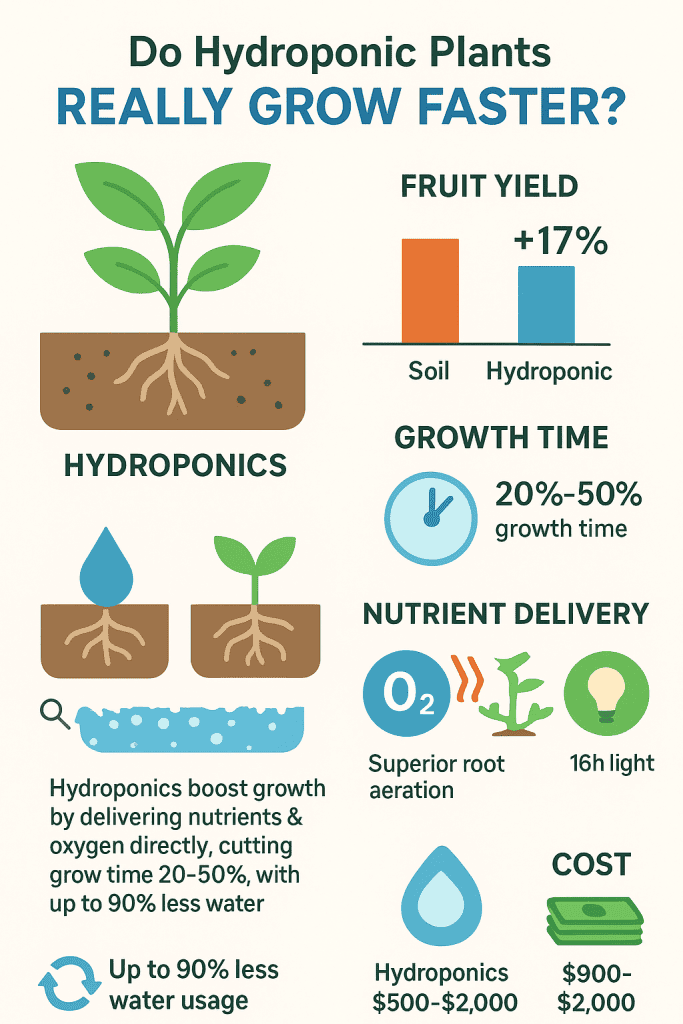
They do. The numbers don’t lie. In a controlled greenhouse study at the University of Nevada, Reno, hydroponic strawberry plants produced a 17% higher fruit yield compared to their soil-grown counterparts. Across the board, research suggests hydroponic systems can slash grow times by 20% to 50%. But that speed comes with a story, one that’s less about magic and more about mechanics.
It’s a story of direct nutrient lines, perfect pH, and roots that never have to search for a drink. The real question isn’t just if they grow faster, but why, and whether that speed is the right fit for your hands, your budget, your goals. Let’s dig into the dirt, or rather, the lack of it, to find out.
Key Takeaways
- Direct nutrient delivery eliminates the energy plants waste searching for food in soil.
- Superior root aeration in water-based systems supercharges plant metabolism.
- Precise control over environment and water usage creates consistently ideal growing conditions.
You walk into a room where the air is still and smells faintly of minerals. On one side, plants sit in dark, moist soil. On the other, their roots dangle in clear water, surrounded by bubbles. The difference is immediate, almost visceral. The hydroponic plants seem to stand taller, their leaves a more vibrant green. This isn’t just an illusion. It’s botany meeting engineering.
The Engine of Growth: Nutrient Delivery

Think of a plant in soil. It has to send its roots out on a constant search mission, expending energy to find the nitrogen, phosphorus, and potassium it needs. It’s a scavenger hunt where the prizes are hidden. Now, picture a hydroponic plant. Its roots are suspended in a nutrient-rich solution. Every essential element is delivered directly, like an intravenous drip. The plant doesn’t search. It simply absorbs.
This direct access is the primary driver of accelerated growth. The energy a soil-based plant uses for root expansion is, in a hydroponic system, redirected to upward growth and fruit production. Studies on crops like basil show this clearly, with hydroponically grown plants absorbing nutrients like nitrates and phosphates more efficiently. The plant’s basic metabolism gets a turbocharge [1].
- Energy redirection from root growth to foliage and fruit
- Immediate absorption of macro and micronutrients
- Consistent nutrient availability without soil-dependent release
The result is a plant that can focus entirely on what you want it to do: grow, making it a promising method for those interested in growing trees with hydroponics.
The Breath of Life: Oxygen and Roots
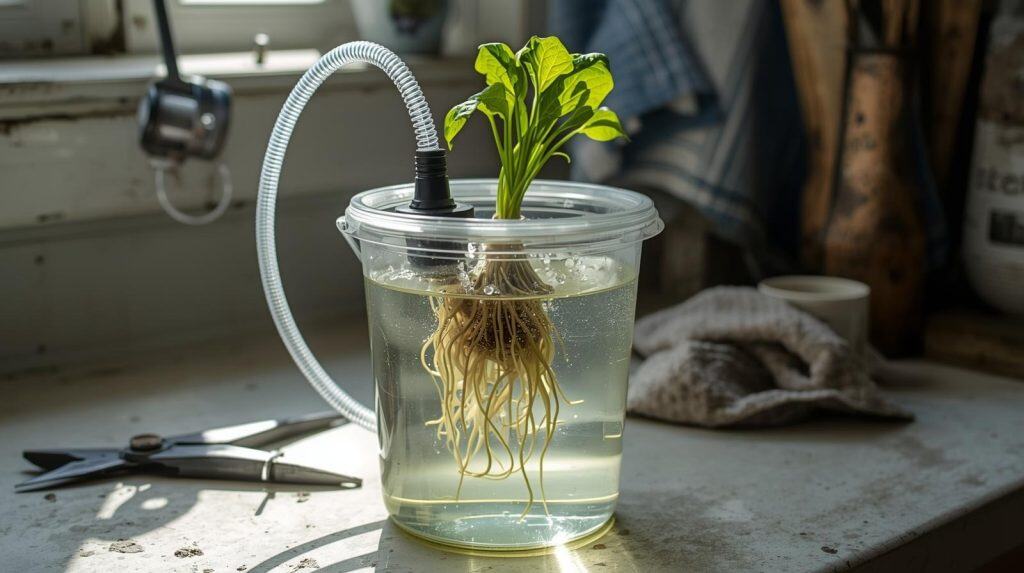
Roots need to breathe. In dense, sometimes waterlogged soil, oxygen can be scarce. Roots suffocate, growth stunts. In a well-designed hydroponic system, like a Deep Water Culture (DWC) setup, the roots are constantly aerated by air pumps. They are surrounded by oxygen, which is crucial for nutrient uptake. This favorable aeration, as the Growee article points out, is an often-overlooked but critical component. It ensures the roots are not just fed, but are functioning at their peak metabolic rate.
The Controlled World: Environment and Efficiency
Soil gardening is at the mercy of the weather. A heatwave, a cold snap, a week of rain, these are variables you can’t control. Hydroponics, especially indoors, flips the script. You become the weathermaker. You control the temperature, ideally keeping it between 65°F and 75°F for many plants. You control the humidity. You control the light cycles, giving plants up to 16 hours of perfect “sunlight” daily.
This control extends to water. Hydroponic systems are famously efficient, using up to 90% less water than traditional agriculture. The water in a recirculating system is used again and again, with only what the plants drink needing replacement. There’s no evaporation into the air or percolation deep into the ground beyond root reach. Every drop is put to work, illustrating the environmental impact of hydroponics as a sustainable growing method.
Where Speed Shows Up Most

Source : The World of Agriculture
Not all plants respond to hydroponics equally, but many see dramatic benefits. Leafy greens are the stars of the show. Lettuce, spinach, and kale can go from seed to harvest in about a month in a hydroponic system. Herbs like basil and mint can see a 25% increase in their growth rate.
Fruiting plants like tomatoes and strawberries, as the UNR study confirmed, show significant increases in yield per square meter [2]. For the home grower, this means a more reliable and frequent harvest from a much smaller space.
The Other Side of the Coin
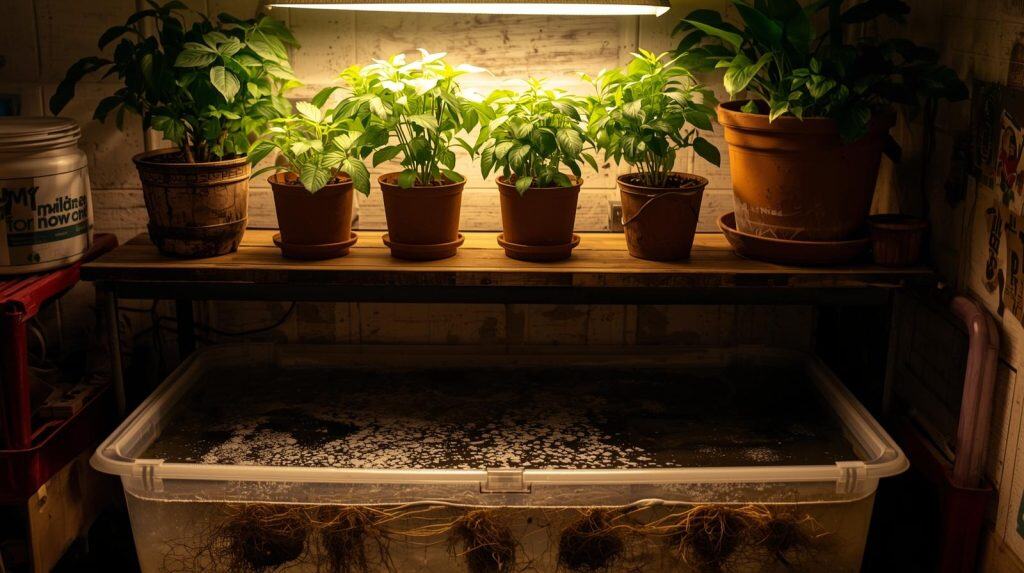
This speed and control come with trade-offs. The initial investment is the biggest hurdle. Setting up a basic hydroponic system can cost between 500and500 and 500and2,000, while a soil garden might only require 100−100-100−300 for pots, soil, and seeds. There’s a technical learning curve. You need to understand pH levels, electrical conductivity (EC) of nutrients, and system maintenance. A power outage can be catastrophic.
Then there’s the taste debate. Some purists argue that soil-grown produce develops deeper, more complex flavors due to interactions with the soil microbiome. While hydroponic crops can be incredibly fresh and clean, achieving that specific, earthy flavor profile can be a challenge. It’s a trade-off between consistency and complexity.
Your Path to Faster Growth
So, is hydroponics the undisputed champion of speed? For the most part, yes. The evidence from research and commercial practice is overwhelming. The system’s ability to deliver nutrients and oxygen directly to the roots, combined with total environmental control, creates an engine for growth that soil simply can’t match.
But the answer isn’t just a scientific fact. It’s a personal one. It depends on whether you’re a hobbyist who enjoys the feel of soil and the rhythm of the seasons, or an optimizer seeking maximum yield in minimal space and time. It depends on your willingness to learn about ppm and pH, and your budget for pumps and meters.
Hydroponics offers a powerful tool, but it’s not a set it and forget it system, it requires attention and care to maintain success. The best garden is always the one you can sustain and enjoy.
If you’re curious, start small. A single basil plant in a mason jar Kratky system can be your gateway. You’ll see those roots grow and those leaves flourish, and you’ll answer the question for yourself, one fast-growing leaf at a time.
FAQ
Do hydroponic plants always grow faster than soil-grown plants?
Not always. A hydroponic growth rate can speed up when light, water, and nutrients are well balanced. Some crops show faster plant growth hydroponics because nutrient delivery hydroponics is direct. But if the setup is poorly managed, soil vs hydroponics speed can end up close. Real results depend on care, not just the growing method.
What makes hydroponics produce bigger harvests?
Hydroponics vs soil yield can rise because plants use less energy searching for food. Hydroponics nutrient availability stays steady, leading to higher hydroponic crop yield. Hydroponic plant productivity improves when roots stay oxygen-rich through hydroponic oxygenation and hydroponic root aeration. These conditions can push hydroponic yield increase in some vegetables.
Why do some hydroponic plants mature sooner?
Hydroponics faster maturation can happen when plants get controlled nutrients and oxygen. A hydroponic controlled environment speeds hydroponic plant metabolism. Many growers notice shorter hydroponic plant harvesting time when they manage light, water flow, and hydroponics growth speed factors. Better care can lead to hydroponics for faster harvest without chemicals or boosters.
Can water usage affect how fast hydroponic plants grow?
Yes. Hydroponic water use efficiency saves moisture while keeping roots fed. Because hydroponic vs soil water usage is lower, nutrients stay in the system instead of being washed away. This supports hydroponic plant development and hydroponic crop faster growth. Clean, recycled water helps keep hydroponics plant development steady, even in dry places.
Are hydroponic plants healthier than soil plants?
They can be if monitored. Hydroponics vs soil nutrient uptake changes when roots absorb exact minerals. Stable hydroponic nutrient absorption and hydroponic plant nutrition benefits can support stronger growth. With good care, hydroponics root system growth becomes more active, boosting hydroponics vs soil plant vigor. But mistakes can slow growth just like in soil.
References
- https://pmc.ncbi.nlm.nih.gov/articles/PMC7885021/
- https://extension.unr.edu/publication.aspx?PubID=2756
Related Articles
- https://tophydroponicgarden.com/can-you-grow-trees-with-hydroponics/
- https://tophydroponicgarden.com/what-is-the-environmental-impact-of-hydroponics/
- https://tophydroponicgarden.com/is-hydroponics-a-set-it-and-forget-it-system/
Was this helpful?

I’m Barrie L., a passionate hydroponic gardening enthusiast dedicated to cultivating thriving, soil-less gardens. With a focus on all things hydroponic, I share my expertise on innovative growing techniques and sustainable practices through my blog, tophydroponicgarden.com. As a seasoned hydroponics specialist, my goal is to inspire and guide fellow gardeners in harnessing the power of water-based cultivation for bountiful and eco-friendly harvests. I’m also an author of the book “Hydroponics For Absolute Beginners: Your Step By Step Guide For How To Create An Hydroponics System At Home Without Soil, For Growing Vegetable, Fruit And Herbs.” which is sold on Amazon. Join me on a journey of redefining the way we cultivate plants, one nutrient-rich solution at a time. Happy growing!