


Choosing the right net pot size matters. It’s not just about holding the plant; it dictates how roots get oxygen, how stable your plant is in the system, and whether algae or clogging becomes a problem later. While nutrients and lights get the spotlight, the net pot is often the overlooked culprit when things go wrong.
Recent studies in 2025 emphasize “root ergonomics”, fitting the pot to the plant’s actual growth behavior, not a generic chart. From small lettuce to large fruiting crops, the wrong pot size can undermine everything else you’ve set up correctly. Let’s look at the real factors that determine which size you need.
Quick Picks for Choosing the Right Net Pot Size
- 2-inch net pots work best for lettuce, herbs, seedlings, and propagation systems with lightweight root zones.
- 3-inch pots have become the practical standard for home DWC because they balance stability, airflow, and media efficiency.
- 5-inch to 6-inch pots reduce tipping, stem stress, and root choking in heavy fruiting crops like tomatoes and peppers.
The Little Plastic Cup That Can Ruin Your Hydroponic Setup
Net pots look simple. They’re just cups. But I’ve seen them quietly wreck more hydroponic systems than anything else. Most growers get into trouble here because their net pots are too small, they’re placed too close together, or they just don’t keep the plant stable. That little piece of plastic decides whether your whole garden thrives or fails.
One rule is critical. Once the roots start growing, you need to keep about two inches of air between the water surface and the bottom of the net pot. That gap isn’t wasted space. It’s where roots get the oxygen they desperately need. Without it, you’re inviting root rot.
The size of the pot is non-negotiable. If you’re growing vegetables taller than one foot in a Deep Water Culture (DWC) system, you need a net pot that’s at least three inches wide. Trying to grow mature tomatoes, peppers, or cannabis in a two-inch pot is a bad idea unless you’re ready to build a heavy-duty support structure.
If the pot is too small, the roots get packed in. They form what growers call a “solid plug.” The roots squeeze through the tiny mesh holes so tightly that nutrient solution can’t pass through. It’s the same problem as trying to push water through a blocked pipe.
Using Hydroton or clay pebbles creates another issue: algae. Light hitting the exposed pebbles is a perfect recipe for algae growth. A simple solution is to cover the pebbles with something reflective. This blocks the light and stops the algae from starting.
For root health, many growers use products like Hydroguard and food-grade hydrogen peroxide at a 3% concentration. These help keep roots clean, white, and full of oxygen. They’re standard tools for anyone serious about hydroponics.
If your setup uses a loose substrate like perlite, you must use a net pot with a fine mesh. A standard mesh will let the perlite bits fall right through. This can clog and destroy your water pumps, leading to a total system breakdown.
Grower forums and guides emphasize airflow in NFT/DWC. This means good airflow isn’t optional; it’s a requirement for the system to work properly.
In short, the plastic cup holding your plant controls your hydroponic success more than you probably think. The right size, the correct spacing, and maintaining root health all depend on it. If you ignore the net pot, you’re risking your entire garden.
The Real Meaning Behind Net Pot Size Labels
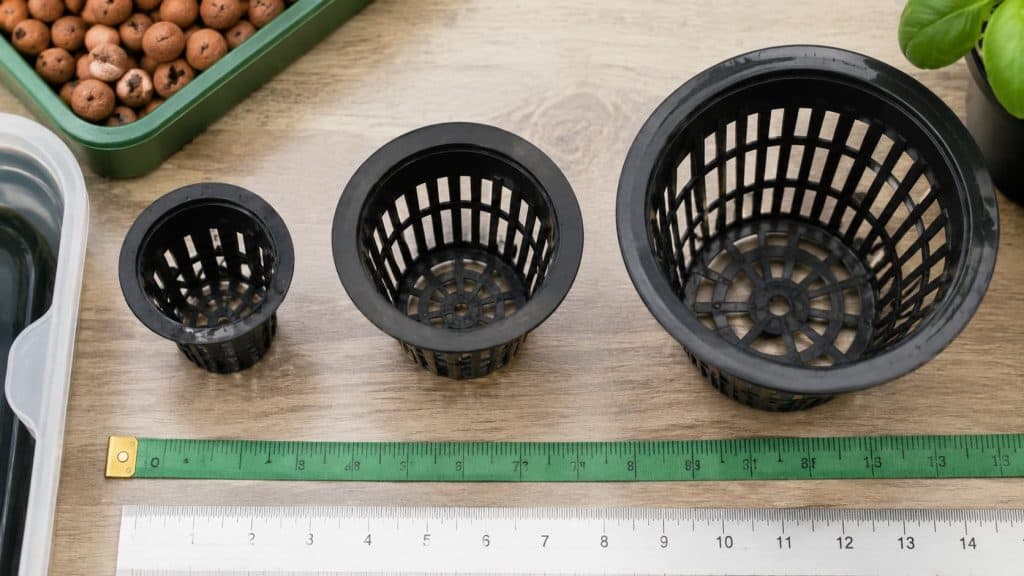
You see a net pot labeled “3-inch” or “76mm.” It seems simple, just the width of the top. But that number tells you a lot more. It’s a rough guide to how much room the roots will have and how much growing media you can use.
More importantly, it determines whether the cup will fit properly into your system’s lid, pipe, or growing channel. If the size is wrong, the whole setup becomes unstable.
The type of system you use changes what pot you need. In a Nutrient Film Technique (NFT) setup, a shallower pot lets roots reach the flowing water faster. For Deep Water Culture (DWC), a deeper pot is better.
It gives the plant more stability and keeps the base of the stem dry, which prevents problems. In aeroponics, pots with wide, open mesh allow roots to expand almost without limits. A few specific features make a big difference, but people often miss them.
The lip or rim. This edge keeps the pot from falling through the hole in your lid or channel. It’s the pot’s anchor. Mesh density. Wider holes let more air reach the roots, but they also let small growing media like perlite escape. A finer mesh holds those materials in place.
Depth. If you’re growing plants with heavy fruit, like peppers or tomatoes, a deeper pot provides a stronger anchor for the root mass. The center hole. A small opening in the middle can squeeze the stem as the plant grows larger. This can stunt growth during the final stages.
Low-quality plastic pots often bend when holding a heavy plant. This flexing puts stress on the roots and stem. Experienced growers usually choose thicker pots made from polypropylene.
These resist cracking and won’t squeeze the stem over a long growing period. The shape of the pot isn’t just about looks, it’s about how well it supports your plant from start to finish.
So, the size on the label isn’t just a measurement. It’s about finding the right fit, having enough strength, and giving the roots the space they need. If you don’t pay attention to these details, you’ll likely run into problems later.
Matching Your Plant to the Right Net Pot Size
Leafy greens and fruiting plants don’t just look different above the surface. Their roots are completely different, too. Lettuce, basil, and cilantro have simple, shallow roots that don’t need much space.
Plants that grow fruit, like peppers and tomatoes, develop thick, sprawling root systems. They need a bigger pot to support their weight and size. Understanding how to choose the right size ensures these pots provide ideal root support and plant stability from day one
Here’s a guide to which net pot size fits which plants.
| Pot Size | Best Plants | Root Behavior | Stability | Recommended System |
| 2-inch | Lettuce, basil, cilantro, clones | Roots grow down fast, don’t spread wide. | Low | NFT, towers, Kratky jars |
| 3-inch | Strawberries, kale, small peppers | Roots grow sideways and down in a balanced way. | Medium | DWC, ebb and flow |
| 4-inch | Cucumbers, medium peppers, tomatoes | Roots branch out aggressively. | Medium to High | DWC buckets, Dutch buckets |
| 5-inch | Large peppers, cucumbers, cannabis | Roots expand into a dense mass. | High | RDWC, flood and drain |
| 6-inch+ | Tomatoes, melons, woody herbs | Roots become thick and structural. | Very High | 5-gallon DWC systems |
The 2-inch pot is common for starting seeds and growing leafy greens. It puts the roots close to the nutrients fast. But this benefit disappears once a plant gets bigger and needs more support.
A lot of growers change pot sizes as their plants grow. They’ll start seeds in a 2-inch pot with Rockwool. When the plant enters its vegetative stage, they move it to a 3-inch or 4-inch pot. Finally, for fruiting crops, they finish in a 5-inch or 6-inch pot. This step-by-step moving reduces stress on the plant.
It keeps the roots healthy with oxygen, and it provides a firm anchor when the plant is loaded with heavy fruit or flowers.
The point is simple. Different plants have different root habits, and they need different pot sizes. Choosing the right size for your plant’s type and stage of growth leads to stronger plants. It also means you won’t discover a root problem that ruins your harvest.
The Hidden Problem with 2-Inch Net Pots
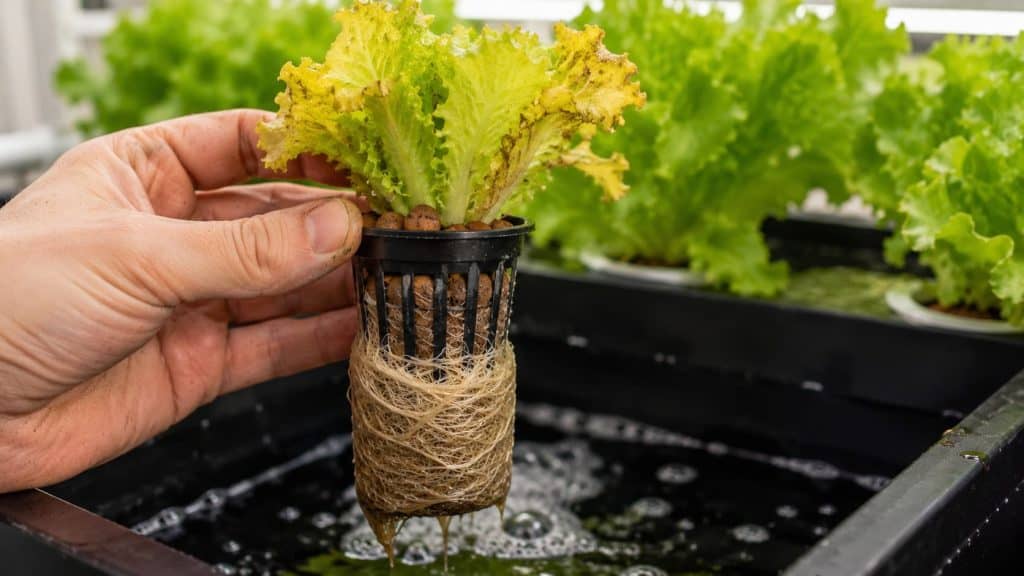
A common problem in hydroponics starts with a small, innocent-looking piece of plastic: the 2-inch net pot. Many growers don’t see the issue until their plants begin struggling. The main problem isn’t how deep the roots grow, but how crushed they become inside that tiny cup.
This is called the “solid plug” effect. Growers talk about it on forums like Reddit, and Growers report ‘solid plug’ issues on forums like Reddit. Roots pack into the small mesh holes so tightly that nutrient solution can’t reach the center of the root mass.
It’s similar to trying to soak a sponge that’s been squeezed into a ball. The inside stays dry. Research from Advances in Horticultural Science shows.
“Scientific research confirms this problem is not just anecdotal. A 2025 study published in Advances in Horticultural Science examined the effects of root restriction on hydroponically grown tomatoes. The researchers found that ‘plant growth, photosynthesis, total water use (52-62%), and yield were significantly reduced’ when roots were confined to limited volumes. This proves that the ‘solid plug’ effect in 2-inch pots directly damages plant health, not just root appearance.” – Advances in Horticultural Science
When a plant grows taller than one foot, the problems get worse. A slender 2-inch pot can’t handle the sideways force from heavy fruit or even just a fan blowing on it. The result is plants tipping over, reservoir lids cracking, or stems snapping. It’s like putting a full-grown tree in a small decorative pot.
The failures usually look the same in different systems:
- Roots drown because the water level is too close to the base of the plant.
- Roots become tightly bound in the cramped mesh, which stops them from growing.
- You need excessive trellising or supports to keep plants like tomatoes upright.
- Stems get squeezed, or “girdled,” where they pass through the small hole in the center of the pot.
- Algae grows on exposed growing media because light reaches it.
It’s interesting that many beginner hydroponic kits still include 2-inch pots and suggest using them for large fruiting plants. Every growing season, more experienced growers move away from this advice because it doesn’t work.
The core issue isn’t just the pot itself. It’s the mismatch between the small container and the plant’s needs. A 2-inch pot can’t handle the root mass, the need for airflow, or the physical leverage of a tall plant. When the container fails, the whole system suffers.
Why the Air Gap Rule is So Important

In hydroponics, especially Deep Water Culture (DWC), roots need to do two things at once. They must absorb water and nutrients, but they also need to get enough oxygen. If the base of the plant, called the crown, sits underwater constantly, the oxygen exchange stops. That’s when problems like slime, pythium, and root rot start.
This is why the “2-inch air gap” rule exists. Once the roots have grown down into the nutrient solution, you should lower the water level. The surface of the water should sit about two inches below the bottom of the net pot. In a recent analysis by Plant Physiology and Biochemistry.
“The importance of root-zone oxygen cannot be overstated. A 2025 study in Plant Physiology and Biochemistry investigated how oxygen supply affects root development in hydroponic systems. The results were striking: with adequate root-zone oxygen, ‘root dry weight increased by over 73.0% … root length (181.2%), fork number (198.4%), and tip number (165.4%)’ compared to oxygen-deprived conditions. This scientific evidence supports why maintaining that 2-inch air gap between the water surface and net pot bottom is not optional, it is essential for massive, healthy root growth.” – Plant Physiology and Biochemistry
This creates two different environments for the roots:
- The lower roots stay submerged, soaking up nutrients.
- The upper roots hang in the humid air, absorbing oxygen to fuel the plant’s growth.
- The crown area stays drier, which dramatically lowers the chance of rot.
A larger net pot makes this separation easier. It provides a bigger buffer zone where roots can access air. Many growers also use small amounts of 3% hydrogen peroxide or products like Hydroguard. These help keep the root zone clean and oxygen-rich. It’s common to see growers on forums like Reddit report healthier roots after they adjust their air gap and stop letting water touch the bottom of the pot.
There’s another benefit. Larger pots help insulate roots from warm water. When the nutrient solution temperature goes above 72°F (22°C), the amount of dissolved oxygen in it drops fast. This is dangerous for roots. They need space to breathe, not just a warm bath.
Your Growing Media Changes Which Net Pot You Need
The material you use to support your plant’s roots isn’t just filler. It changes how the roots grow and how water moves. This means you have to choose both the right net pot size and the right mesh.
A 2025 study in MDPI Smart Hydroponics shows that the best results come from matching your growing media to your pot and your system. This keeps pumps running and roots healthy.
Here’s how different materials work.
| Growing Media | Best Pot Size | Mesh Compatibility | Retention Behavior | Main Risk |
| LECA / Hydroton | 3- to 6-inch | Standard mesh | Drains fast, good airflow. | Light leaks causing algae. |
| Rockwool Cubes | 2- to 4-inch | Medium mesh | Holds moisture very well. | Can become too wet and waterlogged. |
| Rapid Rooters | 2-inch | Standard mesh | Holds a moderate amount of moisture. | Can fit loosely in the pot. |
| Perlite | 3-inch + | Fine mesh | Very loose, drains extremely fast. | Particles can clog the water pump. |
| Coco Coir | 3- to 5-inch | Fine or medium mesh | Holds moisture strongly. | Can reduce airflow to roots. |
LECA, or Hydroton, works best in larger pots. The clay pebbles allow excellent air circulation and can support a heavy root system, which is ideal for plants like tomatoes. The downside is that the gaps between pebbles let light through, which can lead to algae growth.
Perlite has its own challenge. The small, white particles can slip right through the holes of a standard mesh net pot. This “substrate fallout” builds up over time and can jam water pumps and disrupt the system’s cycles.
Before you pick a net pot, think about the fit. Does the mesh keep your growing media inside the pot, while still allowing water to flow through properly? Getting this combination right ensures your roots get enough oxygen and don’t drown. If you ignore it, you’re setting up your system for problems.
How the 3-Inch Net Pot Became the Home Grower’s Favorite
It’s interesting how the 3-inch net pot has become the default choice for home hydroponic growers. It’s not too large and not too small. It hits a practical middle ground that works for a lot of different systems. At 76mm wide, it fits perfectly into common DWC bucket lids, tower systems, NFT channels, and homemade reservoirs.
It also doesn’t use an excessive amount of growing media. Its popularity highlights the net pots vital role in hydroponics by providing a reliable balance of stability, aeration, and root support that fits most growers’ needs.
On gardening forums like Quora and Reddit, people often call it the “universal standard.” The reason is simple: it handles a wide range of plants well. You can grow leafy greens in it, and you can also grow medium-sized fruiting plants like peppers. You don’t have to make major adjustments or buy new equipment.
A few practical features explain its popularity:
- It fits the standard holes found in most pre-made bucket lids.
- It holds enough Hydroton or clay pebbles to stabilize plant stems, which prevents them from tipping over.
- It’s easy to handle when you need to move plants during their growth cycle.
- The size matches common hole saw bits, which is perfect for do-it-yourself projects.
- There’s a well-known DIY trick: a standard baked bean can is almost exactly 3 inches wide, so you can use it as a template to melt a perfect hole in a plastic lid.
For new growers, the 3-inch pot helps avoid mistakes. A huge 6-inch pot wastes media and limits how many plants you can grow in a space. A tiny 2-inch pot restricts root growth and becomes a problem as plants get bigger. The 3-inch pot gives plants enough room to develop without complicating the system.
Even experienced growers stick with it. The 3-inch pot offers a good mix of flexibility, stability, and simple practicality. Sometimes the most obvious, middle-of-the-road option is actually the smartest one.
When the Net Pot Hurts the Plant Itself

Credit: Simple Greens Hydroponics
Most people think of net pots as homes for roots. But as a plant matures, the pot can become a problem for the stem itself. Plants like tomatoes, peppers, and cucumbers go through a phase called “secondary growth.” Their stems get thicker and wider.
This expanding stem presses against the hard plastic ring in the center of the net pot. The plastic doesn’t give. Plant science research shows support affects growth; girdling common in tight pots. Hydroponic growers see a similar kind of pressure inside their net pots. The stem isn’t just growing; it’s fighting against its own container.
This can cause a few specific issues:
Plastic girdling. When the stem presses tightly against the center ring, it can slow down the flow of water and nutrients inside the plant. In severe cases, you can see actual grooves cut into the stem’s surface where the plastic has dug in.
Pot damage. Cheap pots with thin rims can crack under the weight of a heavy plant. Months of exposure to light and moisture can also make the plastic brittle, causing it to fail before the plant is finished growing.
Heavy, fruiting tomatoes are the most common victims. Their large clusters of fruit pull the plant sideways. This creates a powerful levering force right where the stem passes through the pot’s rim.
Because of this, many experienced growers don’t take risks. They either use a tool to carefully widen the center hole of the pot, or they transplant their plants into larger 5-inch or 6-inch pots earlier in the growth cycle. This gives the stem the space it needs.
It’s a reminder that roots aren’t the only part of the plant that can outgrow its container. Sometimes, the stem hits its limit first, stuck between its need to grow and the rigid plastic holding it back.
Thinking About Ditching Plastic Net Pots?
Some indoor growers want to move away from plastic. They worry about microplastics, tiny bits of plastic that might end up in their vegetables. You can find pots made from other materials, like stainless steel or glazed ceramic. They work, but they come with their own set of problems.
Let’s break down the choices.
Plastic Net Pots
- The Good: They’re light, cheap, and don’t react with nutrients. You can cut or drill them easily.
- The Bad: Over many months or years, plastic can wear down. Tiny particles might flake off into your water.
Stainless Steel Pots (316-Grade)
- The Good: This is the strong, rust-resistant type of stainless steel. It lasts a long time.
- The Bad: It’s heavy and costs more. The catch? Hydroponic nutrient solution is harsh. Even this good steel can start to corrode after a while. If it rusts, it can throw off your nutrients and leave orange stains on your roots.
Glazed Ceramic or Clay Pots
- The Good: They don’t react with chemicals and they block light completely. This stops algae from growing on them.
- The Bad: They’re the heaviest option. Their solid walls also don’t let as much air reach the roots as a mesh pot does.
People who use metal pots say rust is sneaky. You might not see it at first, but it slowly changes your water and can stain roots orange.
Because of this, plastic is still the top choice for big commercial farms. It’s the easiest and most reliable material to work with.
But if you’re growing at home and want something reusable and plastic-free, the other options are out there. It’s a trade. Do you want the unbeatable convenience of plastic, or are you willing to deal with more weight, cost, and potential rust for a different material? Your answer depends on what matters most to you in your garden.
Advanced Growers Are 3D-Printing Their Own Net Pots
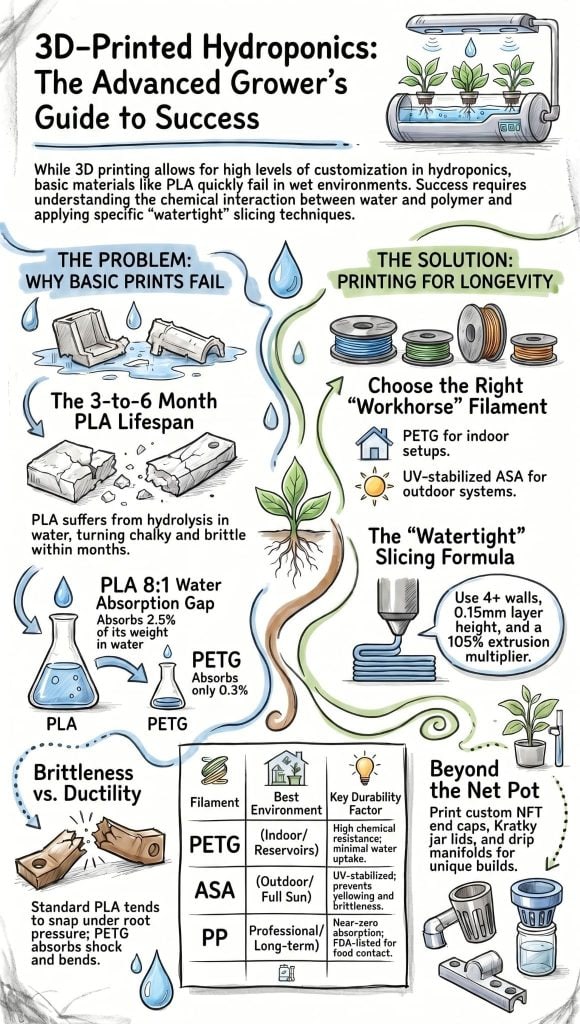
Some hydroponic growers have stopped buying net pots off the shelf. Instead, they’re designing and printing their own. Why? Because a standard plastic cup doesn’t always do the job. A custom 3D-printed pot lets you fix specific problems in your setup.
Growers use 3D printing for custom pots per recent innovations. It showed how custom parts can make NFT (Nutrient Film Technique) systems work better. Growers read that and thought, why not apply it to net pots? So now, they’re printing pots that don’t just hold a plant, they shape its entire world.
Here’s what you can build into a custom pot:
- A special slot for an air stone, so oxygen gets pumped straight to the roots.
- A super-fine mesh wall that keeps tiny growing media, like perlite, from falling out.
- A trapezoid shape that fits perfectly into an NFT channel with zero wobble.
- A beefed-up center hole that won’t choke a thick tomato stem.
- Drainage holes drilled in the exact right spots for a flood-and-drain system.
It gets even more high-tech. Some people make pots with a clear window, called a “rhizotron” wall. They point a camera at it and use AI software (based on 2023 research) to track root growth. The pot becomes a health monitor.
The big idea here is a total shift. The job of a net pot is no longer just to be a container. Now, it’s about controlling the root zone: the air flow, the temperature, how the media stays put, and how the stem is supported. For growers chasing the best results, the generic plastic cup is starting to look pretty basic.
A Small Net Pot Problem Can Turn Into a Bigger Growing Issue
When roots don’t have enough space or airflow, plants usually show signs fast. Growth slows down, leaves can start looking weak, and heavy plants become harder to support. Even with good nutrients, a crowded root zone can keep your system from performing the way it should. That’s where many growers run into trouble.
Choosing the right net pot from the start makes the whole setup easier to manage. Your roots stay healthier, water flow stays more stable, and plants have room to grow without extra stress. A simple size change can prevent a lot of problems later in the grow cycle.
FAQ
How Does Net Pot Size Affect Root Rot Risk?
Choosing the right size net pots helps reduce root rot risk because proper sizing improves airflow around the root zone. Small pots can restrict root expansion and trap excess moisture around dense roots. Oversized pots may hold too much wet grow media, which can reduce oxygen access. A balanced net pot size guide should consider root mass, nutrient solution volume, water temperature, and airflow to support healthy hydroponic growth.
What Net Pot Size Supports Fast-Growing Vegetables Best?
The best net pot size for hydroponics depends on the plant’s growth speed, root development, and final plant weight. Fast-growing vegetables usually need larger net pots to support strong stems, stable canopy management, and expanding root systems. When learning how to choose net pot size, growers should also consider plant spacing, vegetative growth requirements, and fruit load. Proper net pot diameter selection helps improve plant stability and nutrient uptake.
Can Incorrect Net Pot Size Lower Hydroponic Yields?
Yes, using the wrong pot size can reduce plant growth, delay harvest time, and lower overall yield. Small pots may limit root expansion and nutrient uptake, while oversized pots can increase algae growth, evaporation rate, and excess moisture retention. Net pot size vs root mass is an important factor because healthy roots directly affect plant health and growth rate. Proper sizing supports consistent hydroponic production across different system scales and crop types.
Why Does Hydroponic System Type Affect Net Pot Size?
Each hydroponic system supports roots differently, so pot sizing must match the system design. Net pot size for DWC often supports larger root systems because roots stay submerged for long periods. Net pot size for NFT is usually smaller because NFT channels have limited width and shallow nutrient flow. Net pot size for Kratky, aeroponics, and flood and drain systems also depends on flow rate, oxygen access, water depth, and root support requirements.
How Does Grow Media Change Net Pot Size Selection?
Different grow media affect drainage, moisture retention, and root aeration, which directly influences pot selection. Net pot size for rockwool cubes may differ from net pot size for clay pebbles, coco coir, hydroton, or perlite because each material holds water differently. Grow media also affects pH buffering, electrical conductivity stability, and oxygen movement around the roots. Choosing the right size net pots helps maintain balanced moisture levels and stronger root development.
References
- https://dr.ntu.edu.sg/entities/publication/e91d0819-b490-438d-8a45-0b651ce35216
- https://www.researchgate.net/publication/322453658_Effect_of_Pot_Volume_on_the_Growth_of_Sweetpotato_Cultivated_in_the_New_Hydroponic_System
Related Article
- https://tophydroponicgarden.com/what-are-net-pots/
- https://tophydroponicgarden.com/how-to-choose-the-right-size-of-net-pots/
- https://tophydroponicgarden.com/role-of-net-pots-in-hydroponics/
Was this helpful?
