

A food-safe hydroponic reservoir should hold nutrient solution without leaching unwanted chemicals, growing algae, overheating the water, or making maintenance harder than it needs to be. For most home hydroponic growers, the best choices are opaque food-grade HDPE buckets, food-safe polypropylene containers, potable-water storage tanks, or stainless steel reservoirs.
The reservoir is easy to overlook because it does not look technical. It is just a bucket, tote, tank, or bin. But it touches the nutrient solution every hour of the grow. That solution feeds the roots directly, so the container material matters.
A good reservoir keeps water clean, dark, cool, oxygenated, and easy to test. A poor reservoir can cause algae, pH drift, heat stress, root problems, and food-safety concerns.
Choosing a food-safe hydroponic reservoir starts with one rule: anything that touches nutrient solution should be safe for long-term contact with water used around edible crops.
That is the right starting point. A reservoir is not just a container. It is part of the whole hydroponic system.
Core Principles of Choosing a Food-Safe Reservoir
- The reservoir should be food-safe or potable-water rated to ensure no harmful chemicals leach into the nutrient solution.
- Proper material selection must include light-blocking properties, adequate volume for the crop, warping resistance, and easy cleaning access.
- The container must effectively integrate with system components like pumps, tubing, air stones, lids, bulkhead fittings, and drain valves.
Understanding Food-Safe Hydroponic Reservoirs
Definition and Importance of Food-Safe Material
A food-safe hydroponic reservoir is a container made from materials intended for food contact, drinking water, or potable-water storage. In practice, growers should look for labels such as food grade, BPA-free, potable water, NSF/ANSI 61, or FDA food-contact compliant.
Instead of relying on unknown storage bins, hydroponic growers select specific materials to avoid:
- Chemical leaching
- Algae growth in clear bins
- Material degradation under grow lights
- Unsafe additive exposure
- Previous contaminant residue
Because the reservoir touches the water that feeds edible crops, material choice is part of clean growing, not just equipment shopping.
According to the U.S. Food and Drug Administration regarding food contact substances:
“A food contact substance is a substance that comes into contact with food.”
— Food Contact Substances – FDA
This explains why the reservoir material choice is essential in maintaining edible crop safety.
Key Components of a Food-Safe Hydroponic Reservoir

Most successful hydroponic growers follow several essential selection criteria to maintain clean nutrient solution and stable plant control.
1. Proper Reservoir Material
Food-grade HDPE #2 and Polypropylene #5 are the most common and durable reservoir materials used in home systems.
Common safe material standards include:
- HDPE #2
- Polypropylene #5
- Stainless Steel
Avoid containers with strong chemical smells, unknown resin codes, or those previously used for storing toxic chemicals.
2. Opaque Light Protection
Light entering the nutrient solution encourages algae, which can clog pumps and compete with roots.
Growers commonly block light using:
- Opaque dark plastics
- Wraps or covers
- Safe exterior coatings
Proper light protection ensures the nutrient solution remains exclusively available to the plants.
3. Appropriate Size and Volume
Reservoir size directly affects the stability of pH, EC, and temperature over time.
Many growers choose volume based on:
- Crop water demand
- System type (e.g., DWC, NFT)
- Number of plants
- Heat levels in the grow room
- Desired maintenance frequency
4. Secure Lid and Easy Access
The lid must block light while allowing easy entry for testing, topping off, and cleaning.
Good lids should be:
- Light-tight
- Structurally strong
- Easy to open for maintenance
5. Safe Fittings and Seals
Tubing, grommets, and valves must also be food-safe to prevent contamination.
Verification helps identify:
- Non-food adhesives
- Unsafe vinyl tubing
- Unknown epoxies
- Leaking bulkhead seals
- Material chemical reactions
Benefits of a Food-Safe Hydroponic Reservoir
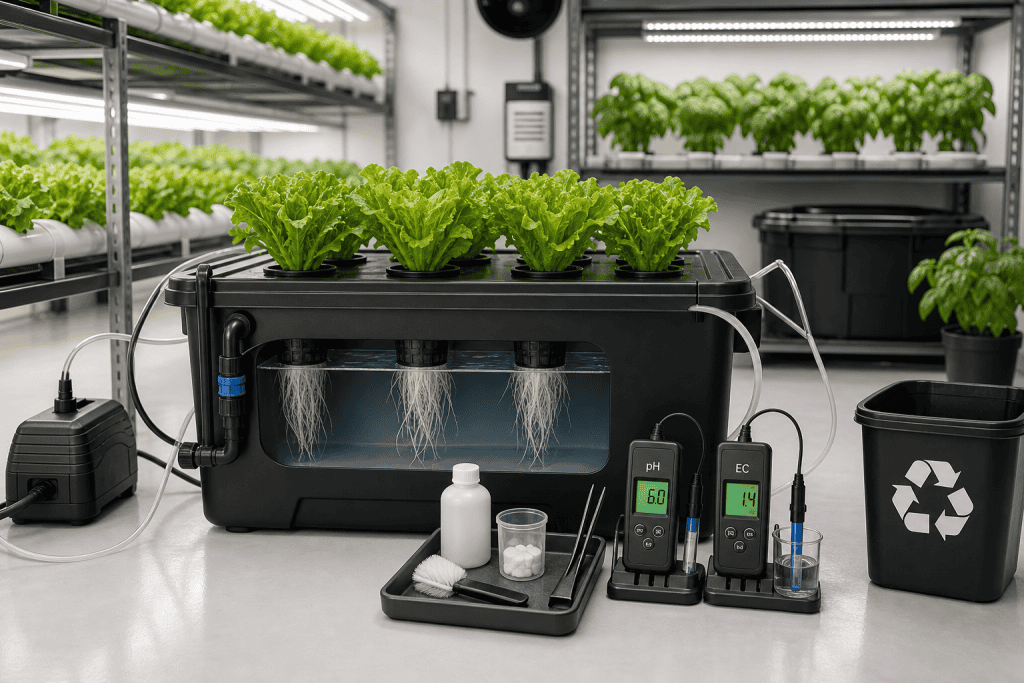
Maintaining a food-safe reservoir provides major benefits for nutrient management, plant health, and long-term system stability.
Here are some of the primary advantages of choosing a food-safe reservoir correctly:
Cleaner Nutrient Solution
Opaque, food-safe materials prevent algae growth and chemical leaching, keeping the water clean for edible crops.
Better pH and EC Stability
Larger, stable reservoirs make it easier to manage nutrient levels consistently and prevent overcorrection.
Improved Root-Zone Health
Stable conditions reduce stress on root systems while improving nutrient availability and oxygen balance.
Reduced Maintenance and Waste
Correct reservoir selection helps reduce unnecessary:
- Algae cleaning sessions
- Nutrient over-adjustments
- Reservoir replacements
- Solution refreshes
Stable nutrient chemistry supports:
- Uniform plant growth
- Stronger root systems
- Better crop consistency
- Reduced odor problems
Types of Hydroponic Reservoir Materials
| Material | Description | Why It Helps | Common Usage |
| Food-Grade HDPE #2 | Durable, common, and affordable plastic | Best all-around food-safe choice | Buckets and totes |
| Polypropylene #5 | Stable material often used for food containers | Good for lids, small bins, and fittings | Compact systems |
| Stainless Steel | Non-porous and highly long-lasting | Permanent setups; easy cleaning | Serious/Pro systems |
| LDPE #4 | Flexible plastic material | Useful for liners and flexible parts | Support components |
| Potable-Water Tanks | Designed for long-term water storage | Ideal for large-scale stability | Commercial/Large scale |
According to NSF regarding drinking water contact materials:
“NSF/ANSI/CAN 61 establishes minimum criteria for evaluating the health effects of materials in contact with drinking water.”
— NSF/ANSI/CAN 61 Standards
This explains why potable-water ratings are a strong signal for hydroponic reservoir safety.
Applications and Real-World Practice
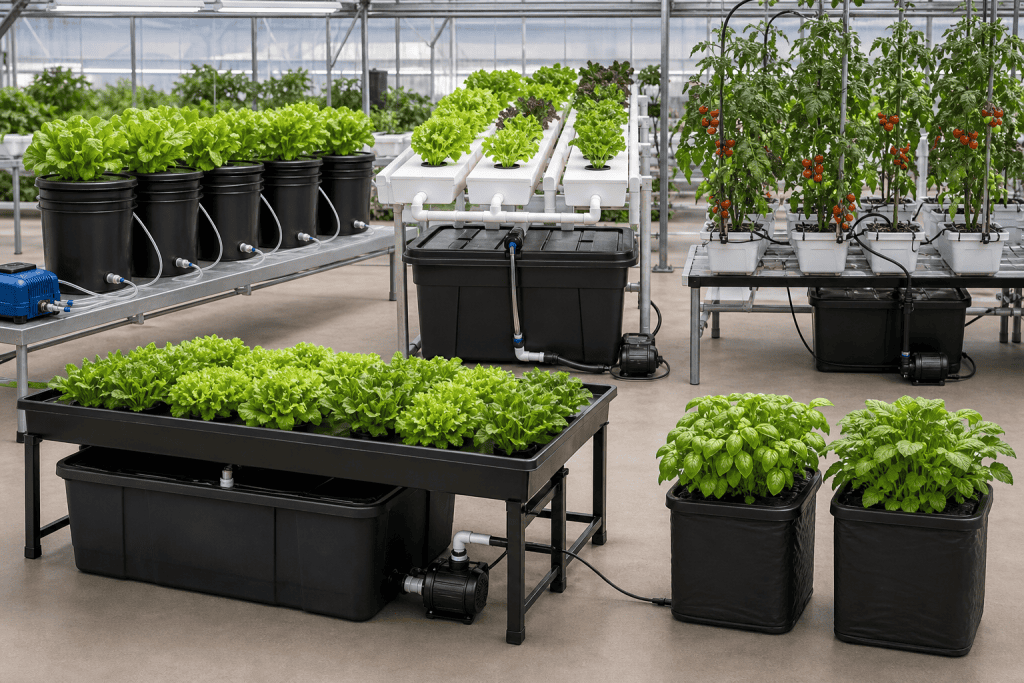
Deep Water Culture (DWC)
In DWC, the reservoir acts as the root zone, requiring opaque, oxygenated, and easy-to-aerate tanks like food-grade 5-gallon buckets or larger totes.
Nutrient Film Technique (NFT)
NFT systems utilize a central reservoir where opaque designs with fitted lids keep algae out of pumps and channels.
Ebb and Flow Systems
These systems need sufficient volume to flood trays while keeping pumps submerged to avoid salt concentration as water levels drop.
Drip and Dutch Bucket Systems
Reservoirs must be sized for daily demand, as fruiting crops like tomatoes can drain small tanks quickly in warm conditions.
Kratky Systems
While simple, container choice still matters; wrapped mason jars or food-grade buckets are essential for blocking light.
Common Reservoir Selection Mistakes
Even experienced growers make mistakes when selecting a reservoir, often underestimating the impact of light exposure or unknown plastic additives.
A proper setup for most growers includes:
- A reliable food-safe HDPE or PP container
- Opaque lid or wrap
- Food-safe bulkhead fittings and seals
- Appropriately sized volume for the crop
- Smooth interior for easy cleaning
Using Cheap Non-Food Totes
Many budget household totes are not designed for long-term water contact or grow-room humidity.
Choosing Clear Containers
Visible water levels are convenient but almost always invite algae growth.
Undersizing the Reservoir
Tiny tanks become unstable quickly as plants mature and water levels fluctuate.
Using Old Chemical Buckets
Buckets previously holding paint, oil, or detergent may contain hazardous residues.
Skipping Light Gaps and Seals
Ignoring light gaps around tubing or using non-food sealants can contaminate the system.
Addressing Limitations and Challenges
A good reservoir setup usually includes:
- Food-grade plastic or steel tank
- Drain valve or pump for cleaning
- UV-resistant materials for outdoor use
- Cleanable smooth-wall interior
- Properly shaded or insulated walls
Material Lifespan and Degradation
Even food-grade plastic can crack, warp, or degrade over time under heat and UV exposure.
Temperature Management
Dark containers block light effectively but may absorb heat, requiring shading or insulation in warm environments.
Maintenance Difficulty with Large Tanks
Large reservoirs are stable but harder to move; drain valves or transfer pumps are essential for cleaning.
Biofilm and Algae Risks
Food-safe does not mean maintenance-free; ignoring testing routines can still lead to mineral buildup and odors.
Storage Habit Consistency
Reservoirs must be thoroughly cleaned between crops to prevent root disease or odor carryover.
Best Practices for Choosing a Food-Safe Reservoir
Verify Material Certification
Look for food-grade, potable-water, or NSF markings to ensure the plastic is safe for edible crops.
Match Volume to Crop Needs
Ensure the tank is large enough to maintain chemical stability and satisfy the drinking habits of mature plants.
Ensure Total Light Opacity
Keep the lid closed and block light around cords and tubing to prevent algae colonization.
Routine Testing and Maintenance
Regular monitoring prevents small errors from becoming bigger problems.
Many hydroponic growers maintain their reservoirs:
- Weekly
- Before nutrient mixing
- After cleaning
- Whenever readings drift
Crops that benefit from stable monitoring include:
- Lettuce
- Basil
- Tomatoes
- Strawberries
- Spinach
- Microgreens
Recommended YouTube Videos
The Best Hydroponic Reservoir Design
Source: Hoocho
This video is useful for seeing how reservoir design fits into a working hydroponic setup. It supports the practical side of choosing a food-safe hydroponic reservoir: the tank must hold nutrient solution safely, connect cleanly with the rest of the system, and stay accessible enough for testing, cleaning, and adjustments.
FAQs
What is the best material for a food-safe hydroponic reservoir?
Food-grade HDPE #2 is one of the best materials. It is durable, common, affordable, and widely used for buckets, barrels, and water storage.
Can a plastic storage tote be used as a hydroponic reservoir?
A plastic storage tote can be used only if it is suitable for food or water contact. Look for food-grade labeling, BPA-free language, or a reliable resin code such as #2 or #5.
Does a hydroponic reservoir need to be opaque?
Yes. An opaque reservoir is strongly recommended because light encourages algae growth in the nutrient solution, which can clog pumps and coat roots.
How big should a hydroponic reservoir be?
Reservoir size depends on crop type, plant count, and system design. Herbs can use smaller reservoirs, while tomatoes, cucumbers, and peppers need more water.
Are food-grade buckets safe for hydroponics?
Food-grade buckets are usually safe when clean, opaque, and paired with safe fittings. Avoid buckets previously used for chemicals or unknown materials.
Wrapping Up Choosing a Food-Safe Hydroponic Reservoir
A food-safe hydroponic reservoir is one of the quietest parts of the system, but it does serious work holding nutrient solution and protecting root health.
By focusing on:
- Proper material certification
- Opaque light protection
- Appropriate water volume
- Safe fittings and seals
- Easy cleaning access
Growers can maintain healthier nutrient solutions and improve overall hydroponic stability.
References
- https://www.fda.gov/food/food-ingredients-packaging/food-packaging-other-substances-come-contact-food-information-consumers
- https://www.nsf.org/water-systems/nsf-ansi-can-61-testing-and-certification
Related Articles
- https://tophydroponicgarden.com/hydroponic-supplies-basics/
- https://tophydroponicgarden.com/hydroponic-garden-maintenance/
- https://tophydroponicgarden.com/how-often-do-you-change-hydroponic-water/
Was this helpful?

I’m Barrie L., a passionate hydroponic gardening enthusiast dedicated to cultivating thriving, soil-less gardens. With a focus on all things hydroponic, I share my expertise on innovative growing techniques and sustainable practices through my blog, tophydroponicgarden.com. As a seasoned hydroponics specialist, my goal is to inspire and guide fellow gardeners in harnessing the power of water-based cultivation for bountiful and eco-friendly harvests. I’m also an author of the book “Hydroponics For Absolute Beginners: Your Step By Step Guide For How To Create An Hydroponics System At Home Without Soil, For Growing Vegetable, Fruit And Herbs.” which is sold on Amazon. Join me on a journey of redefining the way we cultivate plants, one nutrient-rich solution at a time. Happy growing!