

Hydroponics and Aeroponics work for flowers, and they work well. When nutrients, light, and pH stay in range, hydroponic flowers often bloom faster and more evenly than soil-grown plants, with longer vase life and stronger stems.
Growers have used these systems since the 1990s for cutting flowers and ornamentals because they reduce pests, limit disease, and give full control over conditions.
The tradeoff is precision: mistakes affect blooms quickly. This guide breaks down how flower hydroponics works, which systems produce reliable blooms, and how to avoid setups that grow leaves but stall at flowering. Keep reading to build a system that actually blooms.
Essential Pillars for Hydroponic Flower Success
- Hydroponic flowers can grow 30 to 50 percent faster when nutrients and light are tightly controlled.
- Bloom success depends on phosphorus, potassium, far red light, and stable pH.
- Most failures come from light spectrum mistakes, pH crashes, and weak structural support.
Successful Flower Growth Using Hydroponics
Yes. Hydroponic systems support ornamental flowers reliably when the root zone receives oxygenated nutrient solution, stable pH, and proper light. RResearch and commercial use report growth rate improvements of 30 to 50 percent compared to soil systems, based on controlled environment agriculture data and indoor floriculture suppliers.
Hydroponics replaces soil with soilless cultivation using a growing medium like rockwool, perlite, or clay pebbles. This setup makes it easier to explain hydroponics in simple terms: roots receive water, nutrients, and oxygen directly instead of searching through soil.
Roots sit in net cups above a reservoir filled with nutrient solution. Oxygen enters the root zone through aeration, often supplied by an air stone.
Aeroponics is another method that can be used for flower cultivation, allowing for efficient nutrient delivery and faster growth rates.
Flowering plants respond strongly to this setup because nutrients reach roots instantly. Energy normally spent searching soil shifts toward chlorophyll production, photosynthesis, and bud development. This explains why professional growers favor water based systems for ornamental crops.
Home growers report similar outcomes. Countertop systems originally designed for basil now support petunias, marigolds, and peace lily with high success when bloom nutrients and light cycles are adjusted.
This method works because hydroponics aligns root oxygenation, water quality, and nutrient availability in a controlled loop that flowers depend on for consistent bloom initiation.
Reasons Growers Choose Hydroponics for Ornamental Flowers

Growers choose hydroponics because it offers precision control, cleaner environments, and year-round flowering. Commercial floriculture reports up to 40 percent improvements in bloom uniformity when nutrients and photoperiods are tightly managed, according to Royal Horticultural Society publications.
First, nutrients are exact. You control nitrogen, phosphorus, potassium, and micronutrients down to measurable parts per million using electrical conductivity and total dissolved solids meters. Soil cannot match this accuracy.
According to the USDA’s Economic Research Service, controlled-environment systems can reduce water consumption by up to 90% compared to traditional soil-based agriculture, making it a highly sustainable choice for flower production.
Second, pest pressure drops. Removing soil eliminates fungus gnats, wilt pathogens, and many root-borne diseases. Indoor hydroponic flowers face fewer threats until dry air introduces pests like spider mites, which are easier to monitor than soil infestations.
Third, timing becomes flexible. With grow lights, temperature control, and a programmable photoperiod, flowers bloom regardless of outdoor seasons. Fourth, aesthetics improve. Hydroponic flowers often show brighter pigmentation and longer vase life due to stable calcium and magnesium uptake.
Fourth, aesthetics improve. Hydroponic flowers often show brighter pigmentation and longer vase life due to stable calcium and magnesium uptake.
These advantages explain why hydroponics has moved beyond vegetables into ornamental production, especially in urban and indoor environments where soil gardening struggles.
Effective Hydroponic Systems for Different Flower Types
Different flowers require different systems. Deep Water Culture, Nutrient Film Technique, Ebb and Flow, Drip System, Aeroponics, and the Kratky Method all support blooms when matched correctly to plant structure and growth habits. According to the Farmonaut Blog, growers utilizing these methods for “hydroponic roses & edible flowers” achieve “consistent quality, vibrant colors, reduced land and pesticide use.”
Below is a practical comparison used by commercial and home growers, including institutions referenced by Botanic Gardens Conservation International.
| Flower Type | Recommended System | Difficulty | Notes |
| Marigolds | Deep Water Culture | Easy | Strong response to oxygenated roots |
| Petunias | NFT or Ebb and Flow | Easy | Light root mass suits shallow flow |
| Zinnias | Deep Water Culture | Easy | Benefits from silica supplementation for stem strength |
| Carnations | NFT | Moderate | Ideal for long stem harvesting |
| Peace Lily | Kratky Method | Easy | Thrives in static water |
| Gerbera Daisies | Drip System | Moderate | Sensitive to pH balance |
| Orchids | Aeroponics | Advanced | Exposed roots need misting |
| Dahlias | Ebb and Flow | Advanced | Heavy feeders with high support needs |
Deep Water Culture suspends roots directly in oxygenated nutrient solution. It works best for bushy annuals with compact root systems.
NFT flows a thin film of solution across roots. It supports long stem flowers and ergonomic harvesting.
Ebb and Flow periodically floods and drains trays. It suits bulbs and heavier plants that benefit from wet dry cycles.
Choosing the wrong system often leads to structural collapse or root stress, not nutrient deficiency. Matching biology to hardware matters.
Nutrient Requirements and pH Balance for Flowering Plants
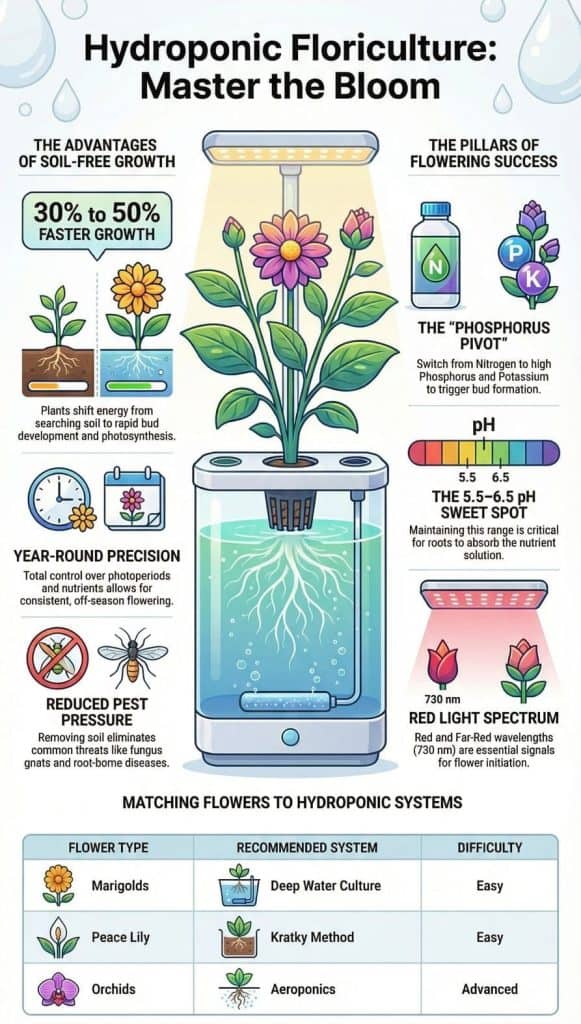
Flowering plants require a bloom nutrient formula higher in phosphorus and potassium, with stable pH between 5.5 and 6.5. Misaligned ratios cause bud failure even when foliage looks healthy, according to General Hydroponics feeding guidelines.
During the vegetative stage, nitrogen drives leaf growth. When plants reach size, you must reduce nitrogen and increase phosphorus to trigger flower initiation. Potassium then supports bud formation, water movement, and stem strength.
A complete nutrient solution includes:
- Primary macronutrients like nitrogen, phosphorus, potassium
- Secondary macronutrients like calcium, magnesium, sulfur
- Trace minerals including iron, zinc, manganese, and boron
Water quality affects uptake. Many growers use reverse osmosis or distilled water to avoid mineral interference. pH balance determines whether roots can absorb nutrients.
As noted by Texas A&M AgriLife Extension, maintaining specific nutrient availability is critical because “nutrients are most available to plants when the pH is between 5.5 and 7.0,” a range that must be strictly managed in a soil-free environment
pH drift is common during bloom. Heavy potassium uptake can cause the so-called acid slide, where pH drops rapidly and calcium uptake becomes restricted. Daily monitoring prevents this failure.
Nutrients feed flowers. pH allows flowers to eat. Both must align for blooms to appear.
Lighting Control and Flower Initiation in Hydroponic Systems
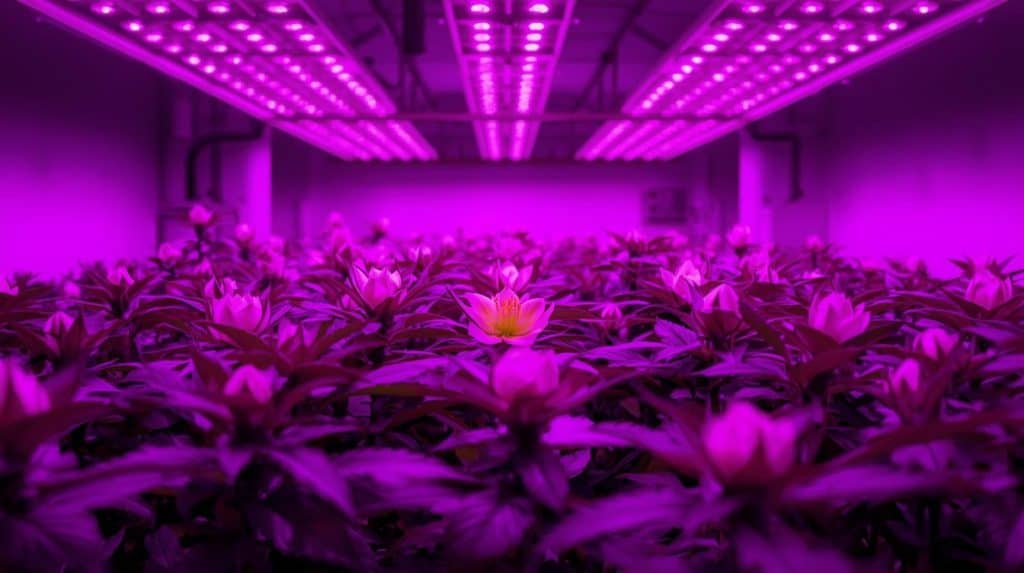
Flower initiation depends on light spectrum, intensity, and photoperiod. While hydroponic flowers do not rely on outdoor conditions, understanding how direct sunlight compares to controlled LED output helps growers avoid underpowered lighting setups.
Full spectrum lighting that includes red and 730 nm far-red wavelengths triggers flowering responses through phytochrome signaling when paired with a consistent 12 hours on, 12 hours off cycle, a method referenced in NASA controlled plant growth research.
Blue light promotes leaf growth. Red light drives flowering signals. Far red light influences phytochrome responses that tell plants when to bloom. Without far red, many ornamentals remain stuck in vegetative growth.
Full spectrum LED fixtures dominate modern setups because they deliver precise wavelengths with less heat than high intensity discharge lighting. Older systems used high pressure sodium for bloom and metal halide for vegetative growth, but LEDs now replace both.
Light intensity matters. Weak lights produce leggy plants with few flowers. Excessive light causes stress and blossom drop. Position fixtures to maintain consistent coverage across the canopy.
Lighting errors account for most cases of healthy plants that never flower. Spectrum mistakes, not nutrients, usually explain all leaves and no buds.
Flower Varieties That Grow Easily in Hydroponics
Several flowers perform reliably in hydroponic systems, especially for beginners. Marigolds, petunias, zinnias, and peace lily commonly show high success rates in home systems like the AeroGarden Harvest, based on user-reported outcomes.
As noted by Atkinson Environmental Products, modern automated gardens grow “all kinds of flowers, vegetables, fruits and herbs for just pennies a day” and can even be “used for starting plants, cloning, or growing seedlings.”
These plants share traits. They tolerate minor pH swings, adapt to lightweight growing media, and respond clearly to bloom nutrients. Their root systems stay compact and manageable.
Edible flowers also succeed. Marigolds and petunias adapt well to NFT and DWC systems and add visual value to indoor gardens. More advanced flowers include gerbera daisies, carnations, and orchids. These demand tighter control of electrical conductivity, humidity, and airflow.
More advanced flowers include gerbera daisies, carnations, and orchids. These demand tighter control of electrical conductivity, humidity, and airflow.
Beginners should avoid heavy feeders like dahlias until they understand nutrient transitions and structural support. Starting with forgiving varieties builds confidence and skill.
Common Causes of Bloom Failure in Hydroponic Flowers
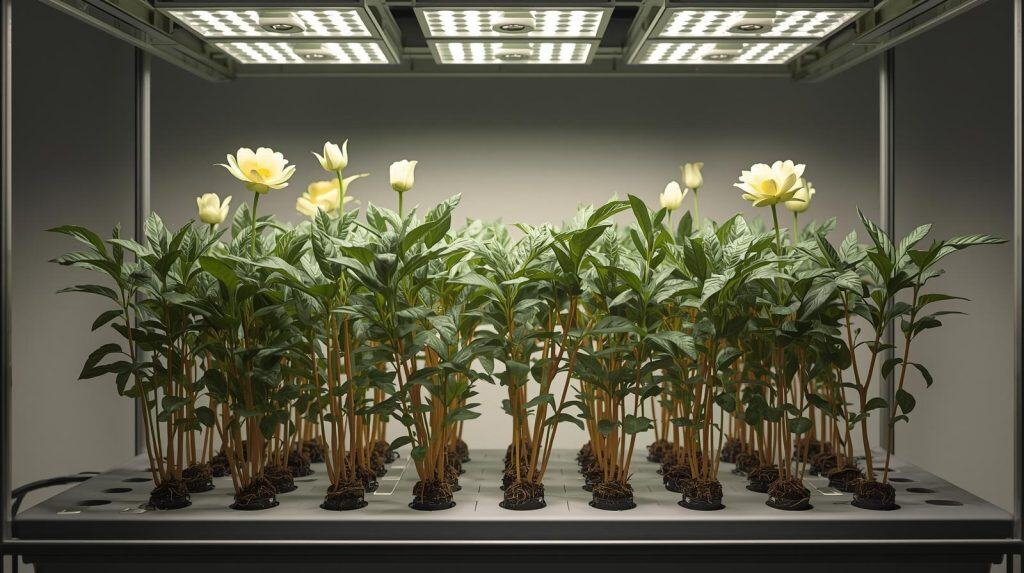
Most bloom failures come from light spectrum errors, EC spikes, and biofilm buildup. Grower reports and forums suggest a large share of failures stem from pH crashes and nutrient lockout, often monitored with Bluelab meters.
One failure is the aesthetic trap. Clear containers expose roots to light, encouraging algae and cyanobacteria. This creates root slime that suffocates roots and blocks nutrient uptake.
Another issue is the phosphorus pivot. Growers forget to switch from grow nutrients to bloom formulas. Plants stay green and tall but never form buds.
Structural weakness also matters. Without soil resistance, stems develop less lignin. Flowers like zinnias become top heavy and collapse without support.
Indoor environments introduce pests. Dry air invites spider mites, which damage buds and cause flower drop.
These failures look different but share a root cause. Controlled systems demand active management, not set and forget habits.
Preventing Root Rot, Biofilm, and Structural Plant Collapse
You prevent these issues by controlling water temperature, oxygen, and mechanical support. These fundamentals are especially critical before starting hydroponics, since early system mistakes often lead to root disease and weak stem development.
Maintaining nutrient solution between 18 and 22 degrees Celsius reduces root rot risk by up to 50 percent, according to data cited by the University of Arizona CEA Center.
Start with oxygenation. Use an air stone to keep dissolved oxygen high. Roots need oxygen as much as nutrients.
Control biofilm. Either introduce beneficial bacteria like Bacillus species or periodically clean reservoirs. Some growers use diluted hydrogen peroxide carefully, but biological balance is safer long term.
Support structure matters. Use trellises, net clips, or plant yoyos for tall flowers. Lightweight media cannot anchor heavy blooms alone.
Add silica supplement. Potassium silicate strengthens cell walls and improves stem rigidity. Many professionals consider it mandatory for hydroponic flowers.
Monitor daily. Check pH, EC, water temperature, and plant posture. Flowers signal stress early if you pay attention.
Prevention turns hydroponic floriculture from frustration into repeatable success.
Example of Content They Can Create

Credits: Grow Stunning Flowers at Home: Hydroponic Magic! – Kebun Firdaus
A beginner-friendly how-to gardening video that teaches you how to grow gorgeous flowers at home using hydroponic systems instead of soil.
It walks through setting up simple home hydroponics, including choosing the right system (like Kratky or deep water culture), managing light, nutrients, and water levels, and picking easy flower varieties that thrive without dirt.
The video explains core hydroponic principles how plants absorb nutrients from water and why growing without soil can speed growth and reduce mess and highlights common pitfalls to avoid so your blooms flourish.
It also shares practical tips for indoor flower care (light, food, water balance) that help beginners get vibrant flowers on balconies or in small spaces.
Hashtags suggest it’s ideal for home gardening, indoor flower farming, and anyone curious about soil-free flower growing techniques.
FAQs
Which hydroponic method is easiest for beginners growing flowering plants?
For beginners, the Kratky Method and Deep Water Culture are the simplest options. Both use soilless cultivation with a basic reservoir, net cups, and a stable nutrient solution. These systems provide good root zone oxygenation with minimal setup. They work well for marigolds, petunias, and zinnias when water temperature, pH balance, and aeration are kept stable.
What growing medium works best for flowers in hydroponic systems?
Most flowers grow best in inert growing media like rockwool, perlite, clay pebbles, coconut coir, or vermiculite. These materials support roots without affecting nutrient solution chemistry. The right growing medium improves oxygen flow, water retention, and transplanting success. Media choice should match system type, root structure, and how often irrigation or flooding occurs.
How do nutrients change between vegetative and flowering stages in hydroponics?
During the vegetative stage, nitrogen supports chlorophyll production and photosynthesis. In the flowering stage, the NPK ratio shifts toward higher phosphorus and potassium to drive flower initiation and bud formation. A bloom formula must also include secondary macronutrients like calcium, magnesium, sulfur, plus trace minerals. Electrical conductivity helps track nutrient strength accurately.
What water quality factors matter most for hydroponic flower growth?
Water quality directly affects nutrient uptake and root health. Many growers use distilled water or reverse osmosis to avoid mineral interference. Stable pH balance, measured as potential hydrogen, allows roots to absorb nutrients properly. Monitoring total dissolved solids, water temperature, and oxygenation prevents root rot, biofilm buildup, and nutrient lockout in the reservoir.
How can growers prevent blossom drop and root problems in hydroponic flowers?
Prevent blossom drop by maintaining steady photoperiods, proper grow lights, and balanced relative humidity. Full spectrum lighting supports flower initiation, while temperature control reduces stress. Root issues are avoided with aeration, air stones, and clean reservoirs.
Beneficial bacteria, algae management, and silica supplements like potassium silicate improve root strength and stem stability.
Mastering the Hydroponic Bloom: Final Verdict
Hydroponics is not just suitable for flowers. It is one of the most effective ways to grow ornamental blooms when precision replaces guesswork.
With the right system, bloom nutrients, far red light, and disciplined pH management, hydroponic flowers outperform soil in speed, color, and consistency.
You avoid pests, control seasons, and produce professional grade results at home. The difference between leaves and flowers is not luck. It is controlled.
References:
- https://pmc.ncbi.nlm.nih.gov/articles/PMC10909207/
- https://clearcomfort.com/reverse-osmosis-hydroponics-water/
Related articles:
- https://tophydroponicgarden.com/does-hydroponics-require-direct-sunlight/
- https://tophydroponicgarden.com/how-to-explain-hydroponics-to-a-child/
- https://tophydroponicgarden.com/what-to-know-before-starting-hydroponics/
Was this helpful?
