

You absolutely can start seeds directly in your hydroponic system. It’s a cleaner, often faster method than traditional soil starting, giving you complete control from day one. The process hinges on using an inert growing medium like rockwool or coco coir to anchor the seeds, providing a perfect balance of moisture and oxygen.
You’ll need to manage temperature, humidity, and light carefully, but the reward is robust seedlings ready for your main hydroponic setup without the mess of soil. This guide walks you through the entire process, from choosing the right seeds to troubleshooting common issues. Keep reading to turn your hydroponic system into a seed-sprouting powerhouse.
Key Takeaways
- Use an inert medium like rockwool cubes to support seeds and manage moisture.
- Maintain a warm, humid environment around 70-80°F for successful germination.
- Introduce a mild nutrient solution only after the first true leaves appear.
What is Hydroponic Seed Starting?

It’s the process of germinating seeds without any soil. Instead, you use a sterile, inert material to hold the seed. This medium acts as a temporary anchor, a place for the first tiny roots to grip.
The seeds get everything they need from the environment you create. They rely on the moisture in the medium and, later, a gentle nutrient solution. This direct approach can lead to quicker germination and stronger initial growth. It’s a fundamental skill for any serious hydroponic gardener [1].
Choosing Your Seeds and Medium
CNot all seeds are created equal for this method. Beginners should stick with reliable performers. Leafy greens like lettuce and spinach are practically foolproof. Herbs such as basil and mint also adapt well. These plants germinate quickly and don’t require complex conditions.
The growing medium is your seed’s first home. You have a few excellent options. Rockwool cubes are a popular choice. They retain water well and provide great aeration for roots, which is crucial as different types of hydroponic systems rely on varied growing media to optimize plant hydration and oxygen availability. Coco coir plugs, made from coconut husks, are a sustainable alternative. Peat pellets are easy to use and expand when soaked. Your choice depends on personal preference and what’s readily available. The key is that the medium must be sterile and able to hold moisture without becoming soggy.
A Step-by-Step Guide to Direct Seeding
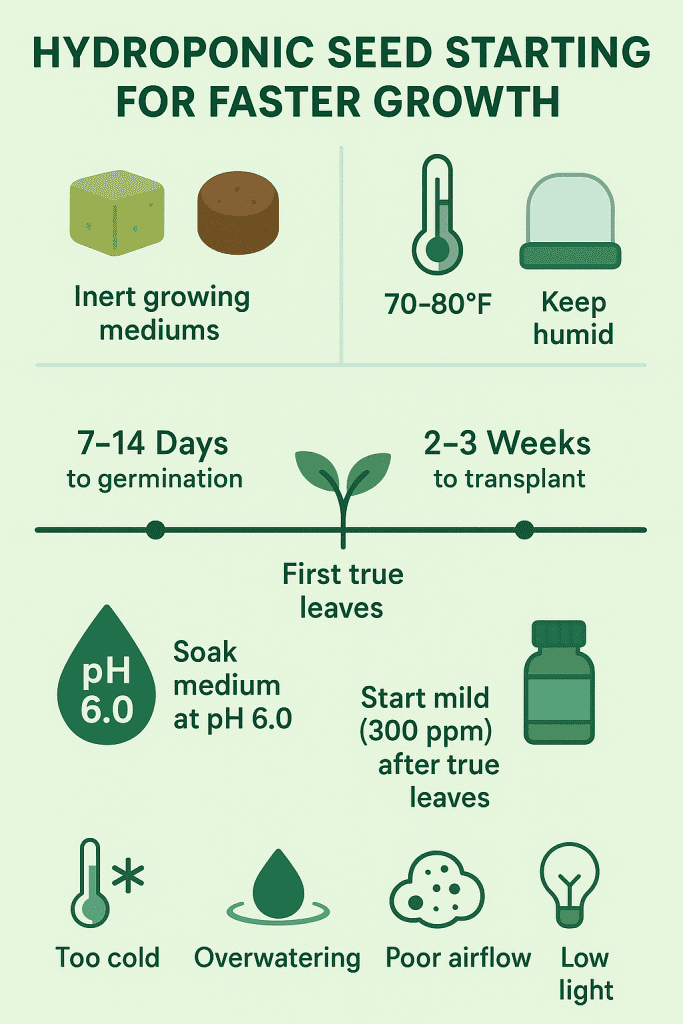
First, prepare your growing medium. If you’re using rockwool cubes, soak them in water with a pH of around 6.0 for about thirty minutes. This step is vital. Rockwool can be slightly alkaline straight out of the package, so soaking in pH-adjusted water creates a neutral starting point for your seeds. Let the cubes drain so they’re moist, not dripping wet.
Next, sow the seeds. Place one or two seeds into the pre-formed hole in the top of each rockwool cube or coco coir plug. You don’t need to bury them deep. A light covering with a bit of the medium to block out light is usually sufficient. If you’re using a peat and perlite mix, a planting depth of about a quarter-inch is perfect.
Now, create the ideal environment. Place the seeded cubes on a tray. Using a humidity dome or even a loose piece of plastic wrap can work wonders. It traps moisture, creating a mini-greenhouse effect that encourages germination. Keep the setup in a warm spot. A seedling heat mat can provide consistent bottom warmth, which many seeds love [2].
Maintaining Optimal Germination Conditions

Source : New Agrarian
This is the waiting game, but it requires attention. Check the cubes daily. They should feel consistently damp to the touch. If they start to dry out, mist them lightly with that same pH-adjusted water. You can also add a small amount of water to the tray and let the cubes wick it up from the bottom. Just be sure to pour off any excess after an hour to prevent waterlogging.
Lighting needs vary. Some seeds, like lettuce, need light to germinate. Others, like tomatoes, prefer darkness. Your best bet is to research the specific seeds you’re growing. Once they sprout, all seedlings need a good light source immediately to prevent them from becoming “leggy” and weak.
Place grow lights just a few inches above the seedlings. This approach supports faster growth, as seen in hydroponic plants growing faster, by providing consistent and optimal lighting conditions critical for seedling vigor.
Patience is key. Most seeds will germinate within 7 to 14 days. You’ll see the first sign of life as a small sprout breaking the surface. The real excitement comes a few days later when the first “true leaves” appear. These leaves look different from the initial seed leaves and signal that the plant is ready for more.
Transitioning to the Main Hydroponic System
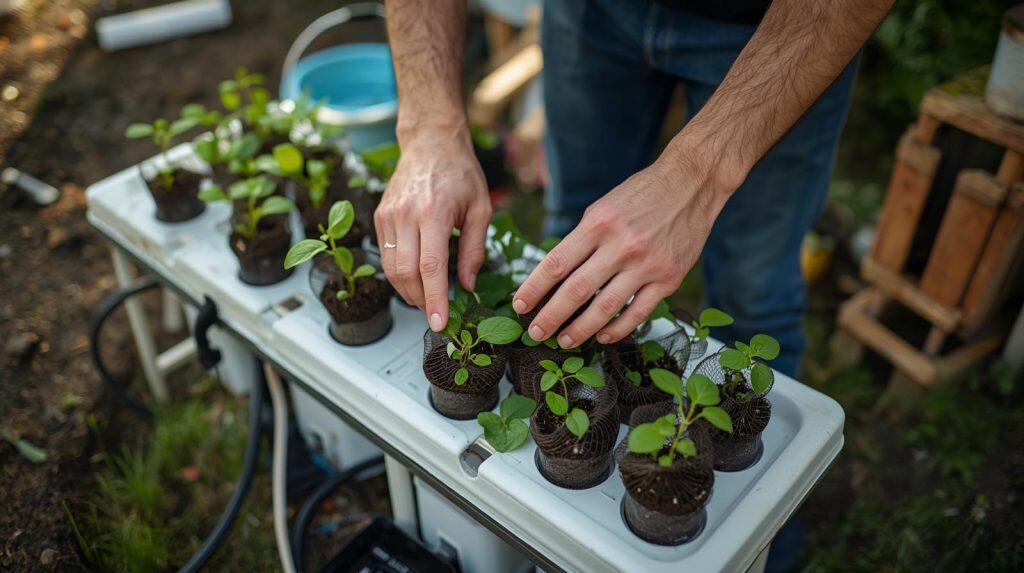
Transplanting is a critical step. Wait until the seedlings have developed a few sets of true leaves and you can see roots starting to poke out of the bottom of the cube. This usually happens 2-3 weeks after germination. The seedling is now strong enough to handle the move.
To minimize transplant shock, gently place the entire rockwool cube or plug directly into the net pot of your hydroponic system. The cube fits snugly, and the roots will quickly grow through it and into the nutrient solution below. At this stage, you can introduce a very mild nutrient solution.
Start with a strength of about 300 ppm (parts per million) to avoid overwhelming the young plants. Managing nutrient delivery carefully is essential, especially as you advance from seedling to full system, as highlighted in what to know before starting hydroponics.
Troubleshooting Your Hydroponic Seeds
Sometimes, things don’t go as planned. If your seeds aren’t sprouting, the temperature might be too cold. Check that you’re within the 70-80°F range. Overwatering is another common culprit. The medium should be moist, not sitting in a puddle. In rare cases, the seed quality itself might be the issue.
Mold or fungus on the surface of the medium points to too much moisture and not enough air flow. Try removing the humidity dome for a few hours each day to allow fresh air to circulate. This often solves the problem. If seedlings are stretching tall and thin, they are desperate for more light. Move your grow lights closer.
FAQ
Can you use a hydroponic seed starter if you want faster sprouting?
You can use a hydroponic seed starter when you want quicker sprouting because it gives steady moisture and air. You control pH for seed germination and the seed germination temperature range. You can place seeds in hydroponic seed plugs or rockwool seed starting cubes. You watch hydroponic seed sprouting rates and adjust the hydroponic germination setup with simple tools.
How do you manage seed hydration hydroponics so the seeds do not rot?
You manage seed hydration hydroponics by keeping the seed starting medium damp, not soaked. You can use coco coir seed starter or peat pellet germination trays. You can watch hydroponic seed moisture control and seed rot prevention hydroponics. You keep a seedling humidity dome slightly open so air moves and the hydroponic seed sprouting environment stays balanced.
What grow lights for seedlings work best when you start seeds without soil?
You choose grow lights for seedlings that give even coverage. You match them with seedling light requirements and the hydroponic seed sprouting timeline. You set them close enough to avoid seedling leggy prevention. You keep the hydroponic seedling warmth steady with a seed germination heat mat. You pair the lighting with a simple hydroponic nutrient solution for seeds.
How deep should you place seeds when you use direct seed planting hydroponics?
You place seeds at the hydroponic seed depth shown on the packet. You push them just far enough into the hydroponic growing medium so they stay moist. You check seed soaking hydroponics steps when needed. You use hydroponic seed trays with a clear dome for seedling dome humidity control and steady airflow from seedling air circulation hydroponics.
What should you watch when you move young plants to a bigger hydroponic system?
You watch seedling transplant hydroponics steps so the roots stay safe. You keep the seedling root development hydroponics strong with gentle light and mild nutrient strength. You reduce hydroponic seedling transplant shock by moving them when roots fill the hydroponic seed starter trays. You adjust the hydroponic seedling aeration and keep the seedling disease in hydroponics under control.
Conclusion
You’ve seen how simple it is to bypass soil and start seeds directly in your system. The control you gain from day one leads to stronger, faster-growing plants. It’s a clean, efficient process that turns your hydroponic setup into a complete life-cycle machine. Don’t let a failed batch discourage you. Each attempt sharpens your skills. Now, take that first step. Grab some rockwool cubes and lettuce seeds, and witness that first sprout emerge. Your garden is waiting.
References
- https://www.mdpi.com/2311-7524/5/2/27
- https://www.sciencedirect.com/science/article/abs/pii/S0304423823005101
Related Articles
- https://tophydroponicgarden.com/what-to-know-before-starting-hydroponics/
- https://tophydroponicgarden.com/do-hydroponic-plants-really-grow-faster/
- https://tophydroponicgarden.com/what-are-the-six-types-of-hydroponic-systems/
Was this helpful?

I’m Barrie L., a passionate hydroponic gardening enthusiast dedicated to cultivating thriving, soil-less gardens. With a focus on all things hydroponic, I share my expertise on innovative growing techniques and sustainable practices through my blog, tophydroponicgarden.com. As a seasoned hydroponics specialist, my goal is to inspire and guide fellow gardeners in harnessing the power of water-based cultivation for bountiful and eco-friendly harvests. I’m also an author of the book “Hydroponics For Absolute Beginners: Your Step By Step Guide For How To Create An Hydroponics System At Home Without Soil, For Growing Vegetable, Fruit And Herbs.” which is sold on Amazon. Join me on a journey of redefining the way we cultivate plants, one nutrient-rich solution at a time. Happy growing!