

You can absolutely run an indoor hydroponic farm at home, and no, it doesn’t need a warehouse or a lab coat.
Hydroponics is just gardening with water doing the job that soil usually does. The roots sit in nutrient-rich water, so plants grow faster and you can pack more into small spaces like a shelf, a closet, or even under your desk.
Lighting and water cycles can be controlled, which means fresh greens any time of year, even during winter. If that sounds like something you want, keep reading to see how to set up your own system step by step.
Key Takeaways
- Start with a simple system like a Drip or Ebb and Flow setup to learn the basics.
- Consistent monitoring of nutrient and pH levels is more critical than any fancy equipment.
- Leafy greens and herbs are the most forgiving and rewarding crops for beginners.
The Simple Truth About Growing Without Soil

I remember staring at a blank wall in my apartment, the one that got a sliver of afternoon light. I wanted more than a sad pothos vine. I wanted food.
The idea of an indoor farm seemed like something for a tech billionaire, not someone with a journalism degree and a cat.
But the principle is ancient, really. The Hanging Gardens of Babylon were probably a form of hydroponics. You’re just cutting out the middleman, the soil, and talking directly to the roots.
What is Indoor Hydroponics and Why Does It Matter?
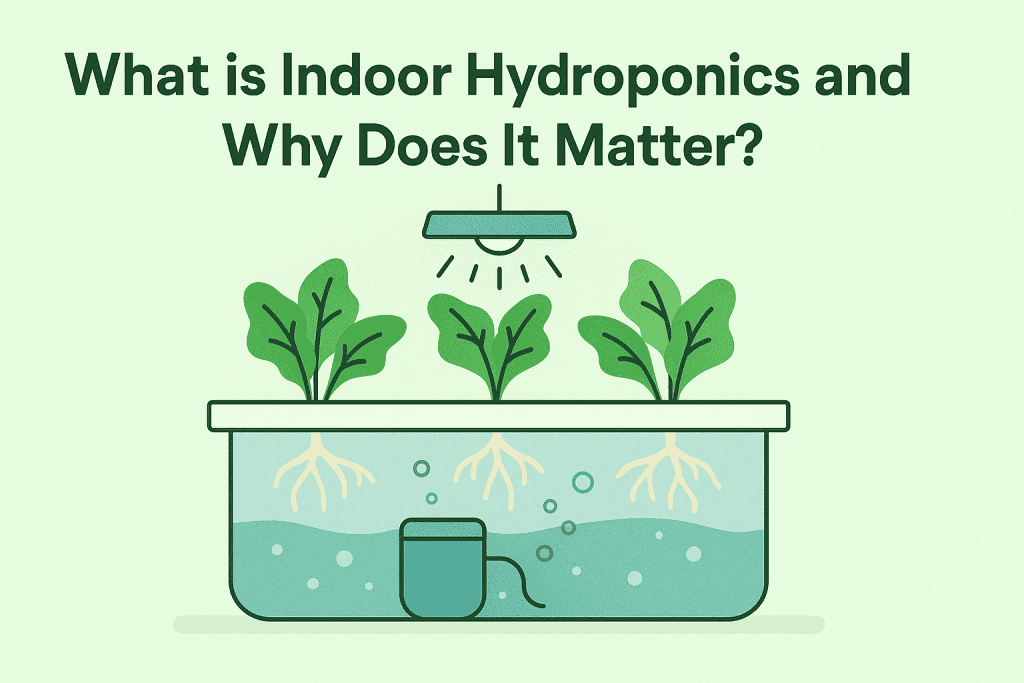
Hydroponics is growing plants in a nutrient solution without soil. The roots are supported by an inert medium like clay pebbles or rockwool. This method matters because it gives you complete control [1].
You decide the light, the food, the water. You’re not waiting for spring or fighting off slugs. It’s a way to make a little pocket of perfect growing conditions, right inside your home. For city dwellers with no yard, it’s a revolution in a bucket.
Step 1: Choosing the Right System

Don’t get overwhelmed by the options. For a beginner, two systems stand out for their simplicity. The Drip System is straightforward.
A pump feeds nutrient-rich water through small tubes that drip onto the base of each plant. It’s easy to see what’s happening. The Ebb and Flow system, also called Flood and Drain, is another great choice [2].
It periodically floods the plant roots with nutrients and then drains away. This cycle gives the roots plenty of oxygen, which plants love.
Your choice boils down to a few things. How much space do you have? A deep water culture system, where roots dangle directly into water, can be very compact. DWC uses an air pump for oxygenation to prevent drowning.
Basic DIY under $100, scaling with size And what do you want to grow? Leafy greens have different needs than tomato plants. Start small and simple. You can always expand later.
Step 2: Gathering Your Supplies
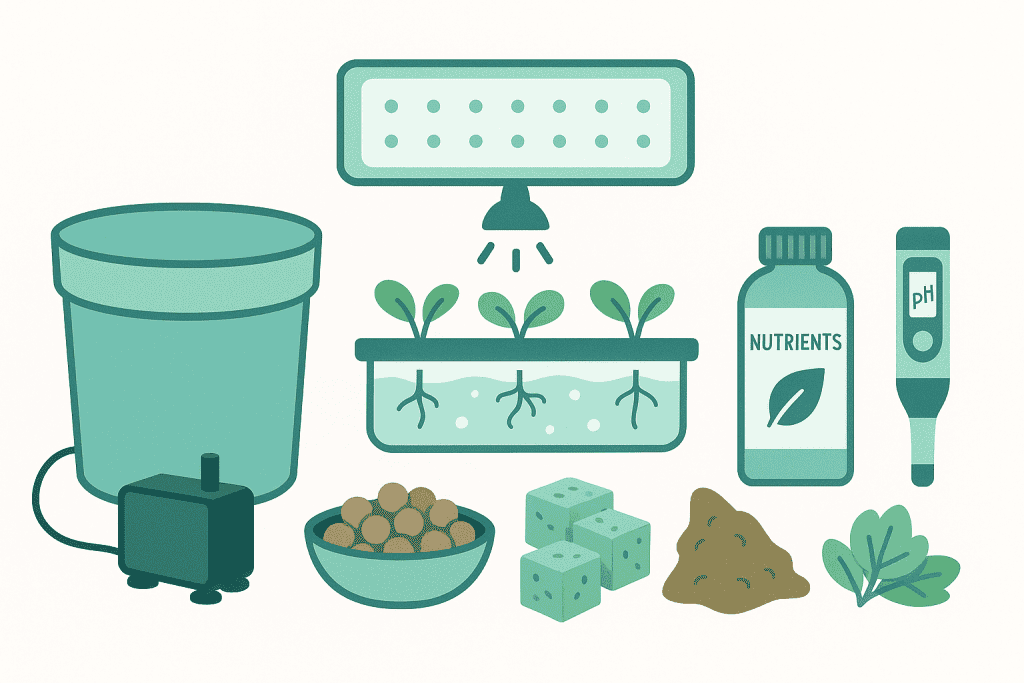
You don’t need a lab to get started. The essentials are fairly basic. You’ll need a container to hold the nutrient solution, a reservoir.
A five-gallon bucket from a hardware store works perfectly. A small water pump to circulate the solution is next. You can find these for aquariums.
For light, LED grow lights are the way to go. They’re energy-efficient and don’t get too hot. The growing medium is key. It’s not soil, it’s just something for the roots to anchor into.
- Clay pebbles are lightweight and reusable.
- Rockwool cubes are great for starting seeds.
- Coco coir, made from coconut husks, holds moisture well.
You’ll also need hydroponic nutrients and a pH testing kit. This isn’t optional. Maintaining good water quality and a balanced nutrient system is crucial for healthy plant growth indoors.
Step 3: Setting Up Your System
Let’s walk through a basic drip system setup. First, place your reservoir bucket where you want your farm to live. Drill a hole near the bottom for the pump’s power cord. Place the water pump inside the bucket.
Run your main irrigation tube from the pump up to your grow tray, which holds the plants. Then, connect smaller drip lines to each plant site.
Use timers based on plants; e.g., 15-30 min flood 4-6x/day for ebb/flow, adjust per environment. It feels like magic when you plug it in and see the water flowing.
Step 4: The Art of Monitoring and Maintenance
This is where you become a plant doctor. You need to check two things regularly: nutrient strength and pH.
Nutrient strength is measured in EC or PPM. A simple meter is a good investment. If the number is too high, add water. Too low, add nutrients. pH is a measure of acidity. Most plants like a slightly acidic environment, around 5.5 to 6.5.
A pH that’s off will lock your plants out from their food, no matter how many nutrients are in the water. Check the water temperature. Too warm, and you risk root disease.
Keep an eye out for algae growth, a sign of too much light hitting the water. And always look at your plants. Are the leaves green and perky? Yellowing can signal a nutrient problem or overfeeding issues.
Wilting might mean the roots need more oxygen. It’s a conversation. The plants will tell you what they need.
Step 5: Choosing the Right Plants

Credits: Gardener Scott
Your first crops should be fast and forgiving. You want success to build confidence.
- Lettuce is the champion of hydroponics. It grows quickly and doesn’t need intense light.
- Herbs like basil, mint, and cilantro thrive. You’ll have more pesto than you know what to do with.
- Kale and Swiss chard are hardy and productive.
Avoid fruiting plants like tomatoes or peppers for your first run. They require more light, more nutrients, and often hand-pollination. Stick with plants that you harvest for their leaves. They’re the low-hanging fruit, so to speak.
This method also supports environmentally friendly, sustainable food production by reducing soil use and water waste.
Troubleshooting Your Indoor Farm
Things will go wrong. It’s part of the process. If you see yellow leaves, check your pH first. It’s usually the culprit. Slimy roots mean root rot, often from not enough oxygen in the water. Make sure your air pump is working.
Tiny bugs like fungus gnats can appear. Sticky yellow traps are a simple, chemical-free solution. Algae in your reservoir? Block the light from getting to the water. Paint the reservoir black or cover it. Most problems have a simple fix. Don’t panic.
Your Next Harvest
An indoor hydroponic farm isn’t about recreating a field indoors. It’s about creating something new, something more direct and controlled.
It turns gardening from a seasonal hobby into a constant, quiet presence in your home. There’s a particular satisfaction in eating a salad you grew in a closet in January. Start with a single lettuce plant. See how it goes. That blank wall in your apartment is waiting.
FAQ
How much space do I need for indoor hydroponic farming at home?
You need only a small area to begin indoor hydroponic farming. A small indoor hydroponic system or compact hydroponic units can fit on a shelf or counter. Apartment hydroponics also works well when space is tight.
A home hydroponic garden grows successfully as long as your indoor hydroponics setup has steady light, dependable water flow, and good airflow.
What kind of lighting works best for indoor food production?
Most people use indoor grow lights hydroponics setups with LED grow lights for hydroponics because they stay cool, use less power, and provide strong light. This lighting helps hydroponic vegetables indoors grow evenly.
If you plan to run indoor herb hydroponics or an indoor lettuce growing system, choose lights with an indoor gardening LED spectrum that supports healthy, steady plant growth.
Is DIY indoor hydroponics difficult for beginners?
DIY indoor hydroponics is manageable for beginners when the setup stays simple. A beginner indoor hydroponics project often starts with a basic indoor gardening system that uses a hydroponic nutrient solution indoor and a small indoor plant nutrient system.
Many newcomers begin indoor farming at home with countertop hydroponic kits or a compact hydroponic grow box because they keep the process easy to follow.
How do I keep plants healthy in soil-free indoor gardening?
Plants stay healthy in soil-free indoor gardening when you maintain good hydroponic water quality indoor and follow a steady indoor plant lighting schedule.
You should watch indoor humidity control hydroponics and keep indoor CO2 levels plants within a normal range. A balanced hydroponic nutrient balance indoor system, along with hydroponic pest control indoor and indoor farm air filtration, supports dependable growth.
What can I grow in an apartment-friendly gardening system?
You can grow many crops in an apartment-friendly gardening system. An indoor leafy greens system works well because greens grow quickly. Indoor strawberry hydroponics and indoor tomato hydroponics thrive if you provide stronger light.
Indoor microgreens hydroponics produce steady harvests. A hydroponic tower garden indoor or hydroponic racks indoor help you save space and improve indoor hydroponic yields.
Conclusion
Starting an indoor hydroponic farm isn’t complicated. With a small space, a simple system, and regular checks, you can grow steady, fresh food right at home.
The process teaches you how plants respond to light, water, and nutrients, and the results show up fast. Begin with a few leafy greens, watch them thrive, and expand when you’re ready. A productive corner of your home is closer than you think, one plant at a time.
References
- https://extension.unr.edu/publication.aspx?PubID=2756
- https://pmc.ncbi.nlm.nih.gov/articles/PMC10625363/
Related Articles
- https://tophydroponicgarden.com/can-all-plants-be-grown-hydroponically/
- https://tophydroponicgarden.com/is-hydroponics-expensive-for-a-beginner/
- https://tophydroponicgarden.com/how-is-hydroponics-good-for-the-environment/
Was this helpful?

I’m Barrie L., a passionate hydroponic gardening enthusiast dedicated to cultivating thriving, soil-less gardens. With a focus on all things hydroponic, I share my expertise on innovative growing techniques and sustainable practices through my blog, tophydroponicgarden.com. As a seasoned hydroponics specialist, my goal is to inspire and guide fellow gardeners in harnessing the power of water-based cultivation for bountiful and eco-friendly harvests. I’m also an author of the book “Hydroponics For Absolute Beginners: Your Step By Step Guide For How To Create An Hydroponics System At Home Without Soil, For Growing Vegetable, Fruit And Herbs.” which is sold on Amazon. Join me on a journey of redefining the way we cultivate plants, one nutrient-rich solution at a time. Happy growing!