

Yes, many medicinal herbs grow well in hydroponic systems, often producing faster growth, cleaner harvests, and reliable year-round yields compared to soil cultivation. Herbs such as basil, peppermint, chamomile, and lemon balm adapt readily to controlled environments where light, nutrients, pH, and airflow are carefully managed.
While hydroponics can improve consistency and efficiency, results depend more on proper growing conditions than the system itself. Keep reading to discover the best medicinal herbs for hydroponics, common mistakes to avoid, and how to build a thriving hydroponic herb garden.
Quick Answers About Growing Medicinal Herbs Hydroponically
Hydroponic gardening can be an effective way to grow medicinal herbs, providing controlled conditions that support healthy, reliable harvests throughout the year.
- Many medicinal herbs thrive in hydroponic systems when they receive consistent light, nutrients, and airflow.
- Most medicinal herbs grow best with 14–16 hours of full-spectrum light daily and a nutrient solution maintained between pH 5.8 and 6.4.
- Popular hydroponic methods such as NFT, DWC, Ebb & Flow, and Aeroponics can all produce healthy herbs, with basil and mint being especially beginner-friendly choices.
Can You Really Grow Medicinal Herbs Hydroponically, or Is It Just Hype?
Yes, you can grow medicinal herbs hydroponically. The results are real. The hype usually starts when people claim it is effortless.
Hydroponics replaces soil with a nutrient-rich water solution. Plant roots get direct access to water, oxygen, and nutrients, which can help herbs grow quickly and stay productive.
Many herbs that people use for teas, tinctures, and home remedies adapt surprisingly well to hydroponic systems. Basil, peppermint, lemon balm, parsley, and chamomile are common examples.
Another reason growers like hydroponics is control. Heavy rain, poor soil, and seasonal weather become much less of a problem when plants grow indoors or in a controlled greenhouse.
Some of the biggest advantages include:
- Cleaner harvests
- Less exposure to soil-borne diseases
- Better control over nutrients
- Year-round growing
- Efficient use of water
Still, hydroponics is not a shortcut.
Plants do not stop needing care because they are growing in water. Reservoirs need cleaning. pH levels drift. Nutrients need adjusting. Lights need to be positioned correctly.
Think of hydroponics as a different way to garden, not an easier way.
Why Hydroponics Works Well for Medicinal Plants

Medicinal herbs often respond well to stable growing conditions. In a traditional garden, plants deal with changing temperatures, heavy rain, dry spells, and uneven soil. Some years are great. Some are frustrating. Hydroponic systems remove many of those variables.
In hydroponic systems, consistent water, nutrients, and lighting create more stable growing conditions. Herbs such as peppermint benefit from this stability because reduced environmental stress allows plants to focus more energy on healthy growth and producing natural aromatic compounds.
For example, peppermint grown under stable conditions often produces fuller growth than plants struggling through periods of drought or poor soil. The goal is not to force plants to grow unnaturally. The goal is to give them consistent conditions so they can perform at their best.
As noted by Narisepalli et al.
“Hydroponics offers precise control of environmental factors, such as nutrients, pH, electrical conductivity, light, temperature, phytohormones, and microorganisms. Controlling these factors allows enhanced plant growth and metabolite production. pH is a crucial factor for nutrient availability, and variations in pH can result in the precipitation of salts in nutrient solutions, affecting nutrient absorption by plants.”– Planta
Where Marketing Gets It Wrong
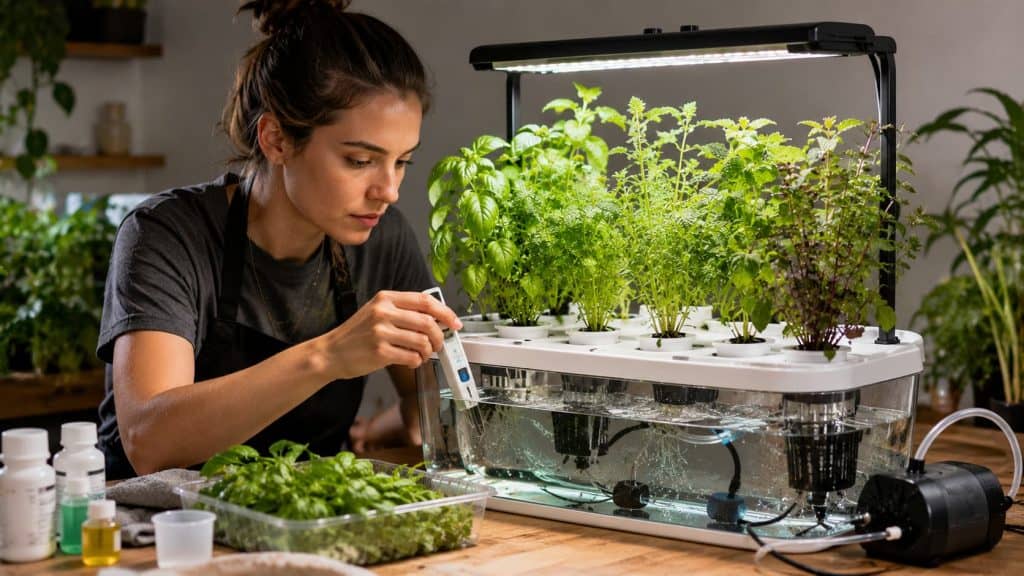
Scroll through social media long enough and you may see people claiming that hydroponic systems practically run themselves. The reality is different.
A successful hydroponic garden depends on consistent maintenance. Growers need to monitor water levels, pH, EC, nutrient balance, and root health regularly.
A simple routine can prevent most problems:
- Check pH and nutrient levels frequently
- Clean the reservoir to prevent algae and root issues
- Inspect roots for signs of stress
- Trim plants to improve airflow
- Adjust lighting as plants grow
Hydroponics does not require constant attention, but it rewards growers who build good habits. A basic system that is maintained properly can often outperform an expensive setup that is ignored.
What New Growers Usually Want to Know
Most people asking about medicinal herbs and hydroponics have similar concerns.
Can a small system produce enough herbs for personal use?
Which herbs are easiest to grow?
Do countertop gardens work?
Which hydroponic system should a beginner choose?
Can herbs grown in water be as useful as herbs grown in soil?
These are fair questions, especially if someone is considering their first setup.
The good news is that many medicinal herbs are easier to grow than people expect.
Which Medicinal Herbs Are Easiest to Start With?
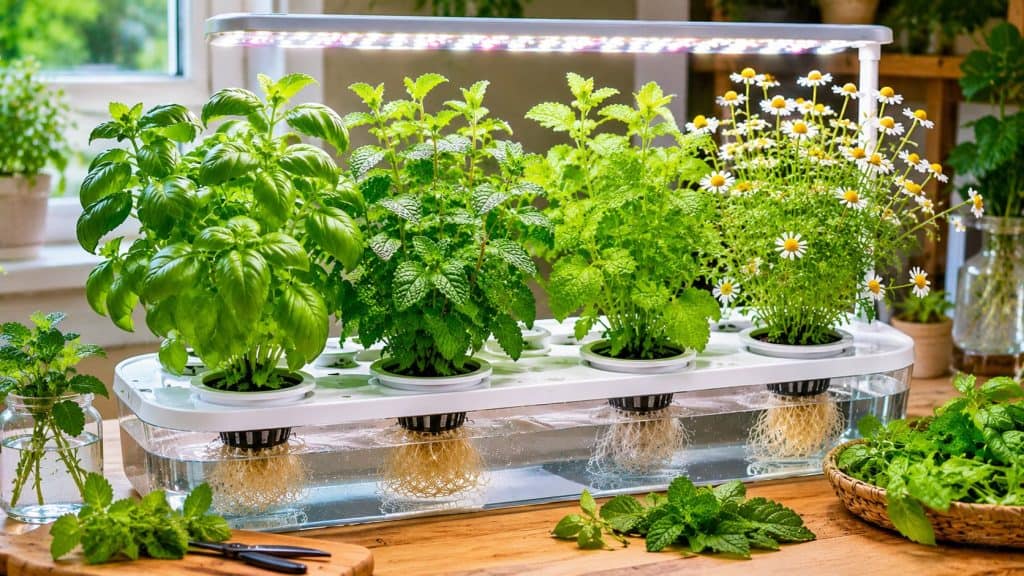
If you are new to hydroponics, start with herbs that grow quickly and recover well from mistakes.
The most beginner-friendly herbs include:
- Basil
- Mint
- Lemon balm
- Parsley
- Oregano
These herbs grow quickly, handle regular trimming well, and are more forgiving for new growers. Mint is often the easiest choice because it grows aggressively and recovers quickly after harvesting. Many beginners also find success growing mint in deep water culture systems because the roots have constant access to water and nutrients.
Basil is another favorite because regular trimming encourages even more growth. Starting with these herbs helps beginners build confidence before moving on to more demanding plants.
Are Countertop Systems Worth Buying?
For many beginners, yes.
Countertop hydroponic gardens provide an easy entry point. They are compact, simple to set up, and require little space. Some experienced growers eventually explore aeroponic growing systems, although countertop units are usually easier for beginners to manage.
Lighting quality often matters more than the size of the countertop system. Full-spectrum LED grow lights are now a popular choice because they provide efficient lighting, produce less heat, and work well in small indoor spaces.
A full-spectrum light around 6500K can support healthy leaf growth and help herbs maintain compact, productive growth. For small hydroponic herb gardens, full-spectrum LEDs are often a practical choice because they support consistent growth while keeping operating costs lower.
That said, expectations matter. Most countertop gardens are designed for convenience. They can provide fresh herbs for tea, cooking, and occasional medicinal use, but they are not built for large harvests.
How Much Can You Harvest From a Small Setup?
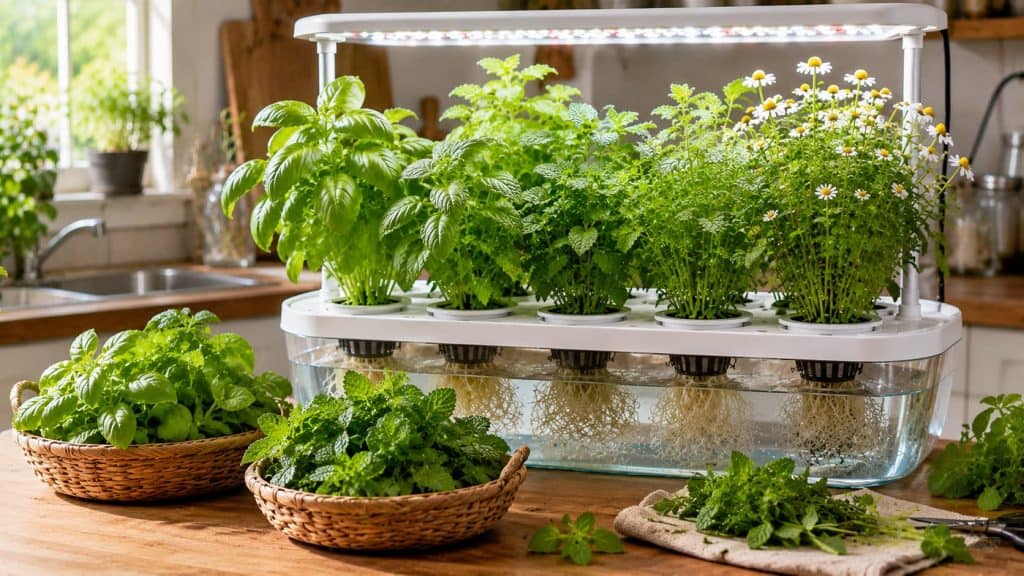
Small hydroponic systems can produce more than many people expect. The harvests are usually steady rather than massive. Instead of collecting a large crop once or twice a year, growers often trim herbs every 2–3 weeks for steady supply.
This approach works well for:
- Herbal teas
- Fresh culinary herbs
- Homemade tinctures
- Aromatic herbs
A small system can easily keep a household supplied with fresh herbs when managed properly. Regular harvesting also helps prevent overcrowding in hydroponic gardens, improving airflow and encouraging healthier new growth.
Which Medicinal Herbs Grow Best in Hydroponics?
Some herbs seem almost made for hydroponics. Leafy herbs with fast growth rates usually adapt quickly and produce dependable harvests.
| Herb Type | Examples | Difficulty | Recommended System |
| Beginner-Friendly | Basil, Mint, Lemon Balm | Esy | NFT,DWC |
| Moderate | Chamomile, Lavender | Medium | NFT,Ebb & Flow |
| Advanced | Rosemary, Sage, Thyme | Challenging | Drip Systems |
| Specialized | Aloe vera, Artemisia absinthium (need extra root care) | Advanced | Ebb & Flow |
Some specialized herbs require extra root care because they naturally grow in drier environments. Aloe vera, rosemary, and similar plants can struggle when their roots stay wet for too long.
To improve root health, growers often use porous media such as clay pebbles and adjust watering cycles to give roots enough oxygen between feedings. This helps reduce moisture buildup and creates conditions closer to what these plants naturally prefer.
Most medicinal herbs perform best when nutrient solution pH stays between 5.5 and 6.5.Besides pH, growers should also monitor Electrical Conductivity (EC), which measures the strength of the nutrient solution.
Most herbs prefer a low-to-medium EC range of around 1.2–1.8 mS/cm. Keeping EC within the right range helps prevent nutrient deficiencies or excesses and supports healthy root and leaf development.
Research from Kanika et al. (2025) shows
“Hydroponic cultivation of P. kurroa improved morphology, growth, and secondary metabolite production, making it a promising approach for commercial herbal formulations. UPLC quantification revealed that PI (1.08%) was found in 3 month hydroponic leaf tissue, whereas PII (2.16%) accumulated in 6 month hydroponic root tissue, suggesting enhanced metabolite production over time.” – Plant Biotechnology Reports
Basil, mint, lemon balm, and oregano are often the easiest success stories. They grow quickly, recover well after harvesting, and adapt to several hydroponic systems.
Not every herb behaves the same way, though.
How to Grow Fresh Herbs Without a Garden

Credits: Golden Seniors Living
The video explains how to grow fresh herbs using a hydroponic system without needing a backyard or large growing space. It highlights several herbs that are suitable for indoor hydroponic gardening and shows that anyone can grow plants in small areas.
The video also discusses the benefits of growing your own herbs, the simplicity of hydroponic care, and how this method provides a convenient way to enjoy fresh herbs at home.
FAQ
Can a home hydroponic medicinal garden produce enough herbs year-round?
Yes, a small hydroponic herb garden can provide a steady supply of fresh herbs throughout the year. With enough light, stable temperatures, and proper nutrient management, plants like mint, basil, lemon balm, and chamomile can continue producing new growth after harvesting. This makes indoor growing a practical option for gardeners who want fresh herbs outside the normal growing season.
Which herbs are considered the best medicinal herbs hydroponics growers choose?
Many growers consider peppermint, lemon balm, chamomile, basil, and thyme among the best medicinal herbs hydroponics systems can support. Hydroponic peppermint cultivation is popular because peppermint grows quickly and produces abundant leaves. Hydroponic lemon balm growing and hydroponic thyme cultivation are also common because these herbs tolerate controlled environments well and can be harvested multiple times during the growing season.
How important are pH and nutrients for hydroponic system medicinal herbs?
pH and nutrient levels play an important role in hydroponic herb growth. Most herbs absorb nutrients best when the solution stays within a suitable pH range. Growers should check pH regularly and adjust nutrient levels when needed. Monitoring EC also helps maintain the right nutrient strength and prevents problems caused by weak or overly concentrated solutions.
Is a medicinal herb hydroponic setup suitable for small indoor spaces?
Yes, a hydroponic herb setup can work well in small indoor spaces such as kitchens, apartments, or spare rooms. Many growers use shelves or vertical arrangements to save space and grow more plants in a smaller area. With proper lighting and maintenance, indoor systems can provide a steady supply of fresh herbs without needing a traditional garden.
Does hydroponic cultivation medicinal plants affect beneficial plant compounds?
Hydroponic cultivation medicinal plants can influence the levels of naturally occurring compounds produced by herbs. Light intensity, nutrient balance, and water quality affect how herbs develop their flavors, aromas, and natural compounds. Stable growing conditions help plants stay healthy and produce more consistent harvests. When growers maintain these factors properly, herbs can develop stronger growth and better overall quality.
Growing Rosemary, Sage, and Thyme Successfully in Hydroponics
If you’ve tried growing rosemary, sage, or thyme in hydroponics, you may notice they don’t respond as easily as leafy herbs. Their roots naturally prefer drier conditions with plenty of airflow. That’s why the wrong setup can lead to slower growth or weaker roots. It’s a common issue.
The good news is that these herbs can still do very well in hydroponics when the system matches their needs. Using options like drip systems or Ebb & Flow with coco coir or clay pebbles helps improve root oxygen levels. That simple change often leads to healthier plants and stronger root development over time.
References
- https://pmc.ncbi.nlm.nih.gov/articles/PMC11782463/
- https://link.springer.com/article/10.1007/s11816-025-01016-5
Related Articles
- https://tophydroponicgarden.com/is-deep-water-culture-the-best/
- https://tophydroponicgarden.com/aeroponics/
- https://tophydroponicgarden.com/how-to-avoid-overcrowding-in-hydroponics/
Was this helpful?
I’m Barrie L., a passionate hydroponic gardening enthusiast dedicated to cultivating thriving, soil-less gardens. With a focus on all things hydroponic, I share my expertise on innovative growing techniques and sustainable practices through my blog, tophydroponicgarden.com. As a seasoned hydroponics specialist, my goal is to inspire and guide fellow gardeners in harnessing the power of water-based cultivation for bountiful and eco-friendly harvests. I’m also an author of the book “Hydroponics For Absolute Beginners: Your Step By Step Guide For How To Create An Hydroponics System At Home Without Soil, For Growing Vegetable, Fruit And Herbs.” which is sold on Amazon. Join me on a journey of redefining the way we cultivate plants, one nutrient-rich solution at a time. Happy growing!