

Yes, both beans and peas can grow well in hydroponics. But they don’t behave the same way. Bush beans are usually the easier choice for indoor systems because they’re compact, productive, and need less day-to-day attention.
Peas can do very well too, though they often need stronger support, cooler conditions, and a bit more care with pollination and nutrients. Hydroponic beans and peas can be productive crops when environmental conditions are well managed. Yields vary significantly depending on the growing system, variety, nutrient management, and environmental control.
So which crop should you grow? The answer depends on your setup, experience level, and goals. Keep reading to see how beans and peas compare, what beginners often get wrong, and how to avoid the most common hydroponic growing mistakes.
Bean & Pea Growing Highlights
Here’s a quick summary of the most important points from this guide. These three takeaways cover the key differences, setup requirements, and common challenges when growing beans and peas hydroponically.
- Hydroponic beans are usually easier to grow than hydroponic peas. Bush beans are more forgiving, require less support, and generally perform well across a wider temperature range.
- The right system and growing conditions make a big difference. Proper nutrient levels, pH, root oxygenation, and support structures help both crops produce healthy flowers and pods.
- Most growing problems come from germination, pollination, or temperature issues. Paying attention to these factors can prevent poor growth, flower drop, and reduced yields.
Beans and Peas Adapt Well to Hydroponic Growing

Beans and peas adapt well to hydroponics because they have moderate nutrient demands and respond quickly to controlled growing environments.
Many growers focus on lettuce and herbs, yet hydroponic vegetable beans and hydroponic vegetable peas offer surprisingly strong production. Their roots respond efficiently to oxygen-rich nutrient solutions, while indoor environments reduce competition from weeds and many soil-borne diseases.
Legumes Have Several Advantages in Hydroponic Systems
Several characteristics make legumes excellent candidates for hydroponic production:
- Fast hydroponic bean germination and hydroponic pea germination
- Vigorous root development
- Efficient nutrient uptake
- Strong response to environmental control
This makes them suitable as plants for beginners in hydroponics due to their predictable growth response in controlled environments.
As highlighted by University of Helsinki Research Portal
“A study from the University of Helsinki and the Lithuanian Research Centre for Agriculture and Forestry noted that legume growth in hydroponics involves significant variations in growth patterns and nitrogen dynamics. Among the species evaluated, sugar peas developed the fastest, while soybeans had the longest growth cycle” – University of Helsinki Research Portal
Studies show that hydroponic legumes can perform well in controlled environments, although results vary depending on the variety, growing system, and management practices.
From our experience, growers transitioning from lettuce often underestimate how productive a small hydroponic bean setup can become after flowering begins.
Hydroponics Provides Better Control Over Plant Growth
Controlled-environment agriculture research has explored dwarf pea varieties for soil-free systems for future food production systems, demonstrating how adaptable peas can be in soil-free environments.
Pro Tip: Start with hydroponic bush beans before attempting large climbing varieties.
Beans Are Usually Easier Than Peas for Beginners
Bush beans are generally easier and more forgiving than peas.
Many first-time growers succeed with growing beans hydroponically because the plants remain compact and require less intervention. Peas reward careful growers but are less tolerant of environmental fluctuations.
| Factor | Bush Beans | Peas |
| Space needs | Low | Moderate |
| Trellising | Optional | Usually required |
| Head tolerance | Better | Lower |
| Pollination | Easier | May require assistance |
| Beginner friendliness | High | Medium |
Bush Beans Offer Beginner-Friendly Benefits
Bush beans offer several advantages:
- Compact growth habit
- Self-pollinating flowers
- Lower support requirements
- Easier indoor management
Many hydroponic green beans can be produced heavily without extensive infrastructure.
Peas Perform Best Under Cooler Conditions
Peas perform particularly well when growers have:
- Cooler grow rooms
- Vertical systems
- Reliable support structures
- Consistent airflow
Hydroponic systems can support strong plant growth and may produce more biomass than soil-based growing methods, depending on the crop, setup, and growing conditions.
Several Hydroponic Systems Can Support Beans and Peas
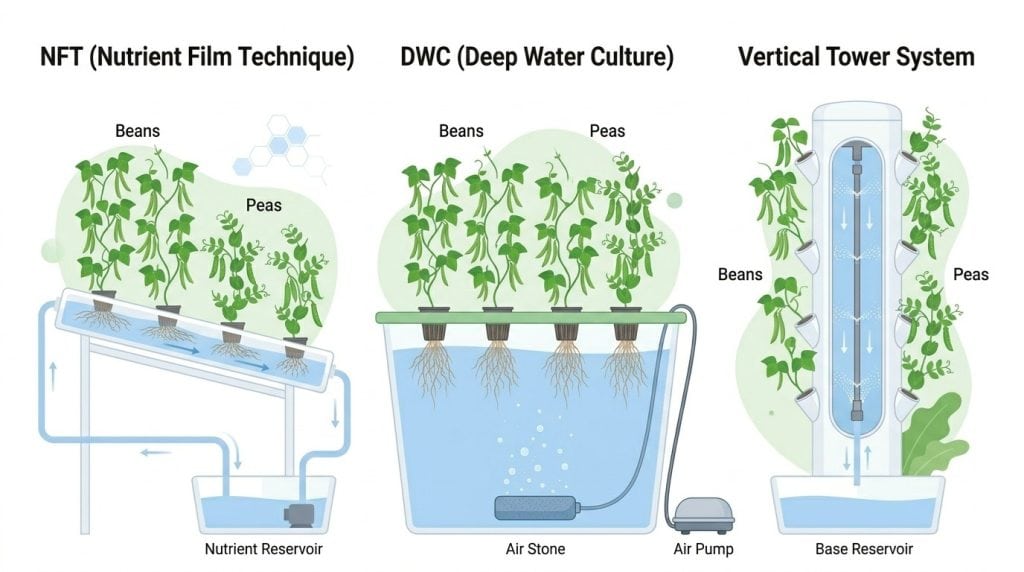
Kratky, DWC, and ebb-and-flow systems all work well.
System selection matters, but variety selection often matters more. Growers setting up an indoor hydroponic garden DIY often start with simple containers or small recirculating systems before scaling up.
Is Kratky a good beginner option?
Yes.
Many growers begin with:
- Kratky buckets
- Coffee-can reservoirs
- Small container systems
DWC hydroponic beans and DWC hydroponic peas are popular because roots receive consistent moisture and oxygen.
Ebb-and-Flow Systems Improve Root Oxygen and Control
Experienced commercial growers prefer ebb-and-flow tables because the scheduled tidal cycles force stale air out of the root zone and draw fresh oxygen in during the drain phase.
This periodic dry down gives you total control over moisture levels, which prevents root suffocation and allows you to adjust your macro-nutrients dynamically as the crop shifts from vegetative growth to pod development.
As noted by EurekAlert
“NFT resulted in more pods and seeds, leading to yields that surpassed those achieved in the field. This demonstrated that it is not only possible to cultivate edamame indoors, but also to achieve higher productivity than conventional farming” – EurekAlert!
The Missouri Botanical Garden has noted that cultivar selection frequently influences success more than system choice. Recommended planting densities vary depending on the bean or pea variety, hydroponic system, available space, and growing conditions.
Germination Problems Often Come From Excess Moisture
Excess moisture is the most common cause of failure.
Common grower experiences suggest that large seeds may struggle when they are kept continuously wet during germination.
Does direct planting always work?
No.
Some growers report excellent results with direct sowing. Others encounter:
- Mold Seed rot
- Slow emergence
- Weak seedlings
That difference explains why advice often appears contradictory.
Pre-Germination Gives Growers More Control
Many growers prefer pre-germination because it offers greater control
| Method | Potential Benefit |
| Wet paper towel | Visible root development |
| Overnight soaking | Faster hydration |
| Direct sowing | Fewer transplant steps |
Pea seedlings can develop quickly under favorable hydroponic conditions, with early growth stages appearing within the first few days after germination.
Of course, direct sowing can still succeed. Some growers soak hydroponic bean seeds and hydroponic pea seeds overnight and plant directly into media without issues.
Pro Tip: Move seedlings once the first root appears rather than waiting for extensive root growth.
Hydroponic Legumes Still Need Balanced Nutrients
Usually no. Most hydroponic growers provide nitrogen through the nutrient solution.
A common misconception is that legumes automatically create all the nitrogen they need.
Can legumes create their own nitrogen?
Not directly.
Nitrogen fixation depends on:
- Symbiotic bacteria
- Root nodules
- Proper inoculation
- Suitable root conditions
Without those elements, plants rely on supplied nutrients.
Complete Nutrient Solutions Support Consistent Growth
Normal nutrient solutions provide predictable growth.
Benefits include:
- Reduced deficiency risk
- Easier nutrient balancing
- Faster growth monitoring
For most hydroponic growers, complete nutrient solutions are often preferred because they provide plants with a reliable supply of essential nutrients and support more consistent growth.
For most growers using hydroponic bean nutrients and hydroponic pea nutrients, standard hydroponic feeding programs remain the practical option.
Beans and Peas Require Different Light Schedules
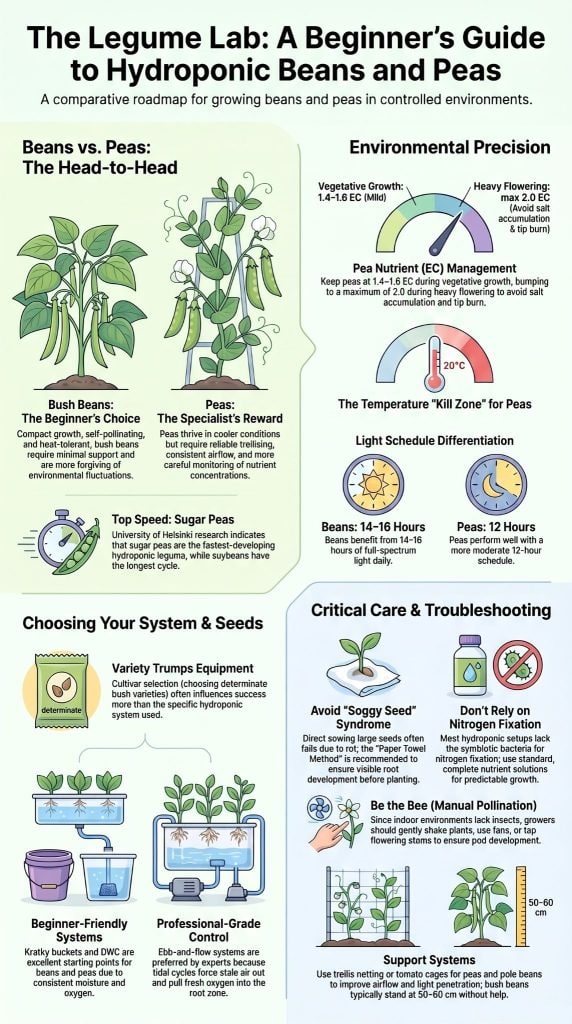
Beans benefit from longer lighting schedules, while peas perform well under moderate durations.
Light intensity influences flowering, pod development, and overall yield.
What lighting schedule works for beans?
Recommended ranges include:
- 14–16 hours daily
- Full-spectrum LED fixtures
- Consistent intensity
Strong lighting supports healthy hydroponic bean yield development.
What lighting schedule works for peas?
Most growers use:
- Approximately 12 hours daily
- Moderate intensity
- Cooler temperatures
Under optimal growing conditions, bean plants can produce many flowers, which can lead to better pod development when pollination is successful.
More flowers usually translate into greater pod production when pollination succeeds.
Peas Are More Sensitive to Environmental Stress
Peas are more sensitive to environmental stress.
This is often where growing peas hydroponically becomes challenging for beginners.
Does heat cause pea decline?
Yes.
Common symptoms include:
- Yellow leaves
- Bottom-up drying
- Flower loss
- Reduced production
Many grower reports point to elevated temperatures as a primary trigger.
Can nutrient concentration become a problem?
Peas are notoriously sensitive to salt accumulation; screaming past a target EC of 1.8 is a fast track to tip burn and stunted root development.
We recommend maintaining your reservoir at a mild 1.4 to 1.6 EC during vegetative growth, bumping to 2.0 max only when heavy flowering demands it.
Keep your water temperatures strictly below 20°C (68°F) to prevent the root rot that frequently plagues these cool-weather crops. Research suggests that plants often develop healthier roots when they receive balanced nutrients compared with plain reverse-osmosis water.
Support Structures Improve Plant Growth and Airflow
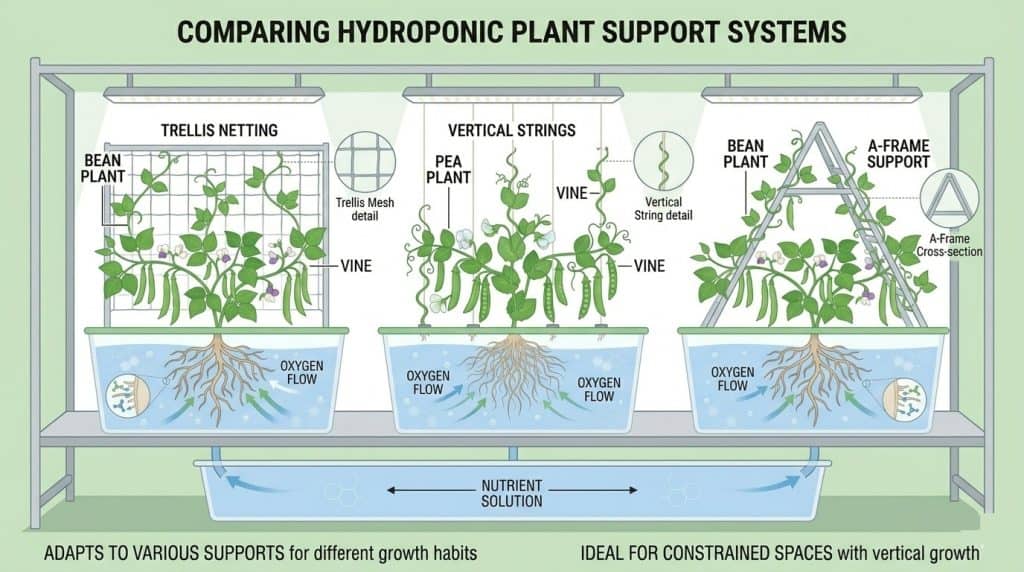
Most peas require support, while bush beans often do not.
Support systems influence airflow, light penetration, and harvest efficiency.
What support works best for peas?
Popular choices include:
- Trellis netting
- Vertical strings
- Inverted tomato cages
Many growers consider inexpensive tomato cages one of the most practical support solutions for a hydroponic climbing peas setup.
Can beans grow without support?
Bush beans often can.
However, hydroponic pole beans usually need:
- Stakes
- Trellises
- Hanging strings
Under good growing conditions, many bean varieties can reach around 50–60 cm in height, making them suitable for compact hydroponic setups.
Indoor Pollination Helps Improve Pod Production
Indoor growers often replace insects with simple manual techniques.
Without natural pollinators, pod production can decline.
Are beans self-pollinating?
Yes.
Simple actions include:
- Gently shaking plants.
- Running a fan nearby.
- Tapping flowering stems.
These techniques often improve hydroponic bean pollination rates.
Do peas need more assistance?
Sometimes.
Helpful practices include:
- Hand pollination
- Air circulation
- Daily flower inspection
Garden Guides notes that indoor hydroponic environments frequently lack natural pollinator activity, making manual intervention useful for fruiting crops. Healthy bean plants can develop strong foliage and flowering growth when they receive enough light, nutrients, and proper care.
Compact Varieties Work Best for Small Hydroponic Systems
Compact varieties outperform large climbing types in most home systems.
Selecting the right cultivar often delivers greater benefits than purchasing more equipment.
Even compared with leafy greens hydroponic growth setups, compact bean and pea varieties can still deliver strong productivity in limited space systems.
Which bean varieties work best?
Recommended options include:
- Mascotte bush beans
- Dwarf bush cultivars
- Compact container varieties
These are among the best beans for hydroponics for beginners.
Which pea varieties fit indoor gardens?
Popular choices include:
- Sugar Daddy peas
- Dwarf snow peas
- Compact bush peas
Many growers consider these among the best peas for hydroponics because they fit limited spaces while remaining productive.
Hydroponic legumes can produce strong harvests, and some studies suggest they may perform better than soil-grown plants under controlled growing conditions.
How Indoor Hydroponic Systems Help Plants Grow Successfully
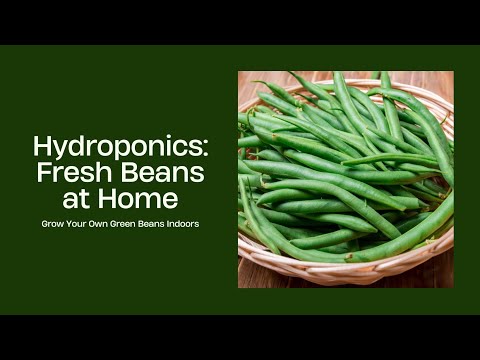
Credits: Adrienne Akinsete – Indoor Hydroponics
This video explains the basics of indoor hydroponic gardening and shows how plants can be grown successfully without traditional soil. It covers the importance of choosing the right hydroponic setup, providing proper nutrients, and maintaining suitable growing conditions.
The video also highlights how indoor systems help growers control factors such as water, lighting, and plant care, making hydroponics a practical option for growing fresh plants in limited spaces.
FAQ
Are bush or pole varieties better for hydroponic beans?
Most beginners find hydroponic bush beans easier to grow because the plants stay compact, mature quickly, and require minimal support. Hydroponic pole beans can produce beans over a longer period, but they need a strong hydroponic bean trellis or other hydroponic bean support system. If you have limited space, bush beans are usually the more practical choice for hydroponics.
Which varieties are the best beans and peas for hydroponics?
The best beans for hydroponics are typically bush varieties because they fit easily into compact systems and require less maintenance. The best peas for hydroponics include hydroponic snap peas, hydroponic snow peas, and hydroponic sugar peas, which grow well in controlled environments. Choosing varieties that match your available space and growing conditions can improve productivity and simplify plant care.
Can beans and peas grow in vertical hydroponic systems?
Yes, both crops can grow successfully in vertical systems when they receive enough light and support. Vertical hydroponic beans and vertical hydroponic peas allow growers to produce more food in a smaller footprint. Climbing varieties require trellises or strings to support their growth, while compact varieties can grow with minimal assistance. Good airflow also helps reduce disease problems.
What causes poor yields in a hydroponic bean or pea garden?
Poor harvests often result from improper nutrient levels, weak pollination, insufficient lighting, or unsuitable temperatures. A hydroponic bean garden may produce fewer pods if hydroponic bean nutrients are unbalanced or if flowering plants are not pollinated effectively. A hydroponic pea garden can also experience reduced yields when plants become stressed by excessive heat, overcrowding, or inconsistent watering conditions.
How do I choose seeds for growing beans and peas hydroponically?
When selecting your seeds, ignore the massive, indeterminate vining varieties unless you have an open greenhouse setup with high vertical trellising. For tight indoor spaces or automated countertops, stick strictly to determinate bush cultivars. They cap their own height naturally, transition into flowering simultaneously, and won’t choke your grow lights.
Hydroponic Beans and Peas Can Be Worth Growing
If you’re hoping for an easy harvest, beans and peas can be frustrating when conditions aren’t right. Poor germination, excess heat, weak support, or nutrient issues often lead to disappointing results. That’s the reality.
The good news is that these problems are usually easy to fix, and they don’t reflect any limitation of hydroponic growing itself. For most growers, bush beans are the simplest place to start, while peas need a bit more attention to temperature and support.
Once you understand how these plants grow, hydroponics can deliver steady harvests in a relatively small space. Start with compact varieties, learn from each growing cycle, and expand only when you’re ready.
References
- https://researchportal.helsinki.fi/en/publications/potential-for-cultivating-various-legume-species-in-controlled-en/
- https://www.eurekalert.org/news-releases/1105486
Related Articles
- https://tophydroponicgarden.com/best-leafy-greens-for-hydroponic-growth/
- https://tophydroponicgarden.com/indoor-hydroponic-garden-diy/
- https://tophydroponicgarden.com/best-plants-for-beginners-in-hydroponics/
Was this helpful?
I’m Barrie L., a passionate hydroponic gardening enthusiast dedicated to cultivating thriving, soil-less gardens. With a focus on all things hydroponic, I share my expertise on innovative growing techniques and sustainable practices through my blog, tophydroponicgarden.com. As a seasoned hydroponics specialist, my goal is to inspire and guide fellow gardeners in harnessing the power of water-based cultivation for bountiful and eco-friendly harvests. I’m also an author of the book “Hydroponics For Absolute Beginners: Your Step By Step Guide For How To Create An Hydroponics System At Home Without Soil, For Growing Vegetable, Fruit And Herbs.” which is sold on Amazon. Join me on a journey of redefining the way we cultivate plants, one nutrient-rich solution at a time. Happy growing!