

You can combine hydroponics and soil into one system that uses the strengths of both. In this setup, the soil gives the roots support, microbes, and a buffer for pH and nutrients. The hydroponic part gives the plant steady food and water.
This mix often gives stronger, steadier growth and is more forgiving than pure hydroponics. Keep reading to see practical ways to build a hybrid system, why it works, and how to start step-by-step.
Key Takeaways
- Hybrid systems use soil for root stability and hydroponics for nutrient control.
- This combination can be more forgiving for beginners than pure hydroponics.
- Proper media mix and irrigation are crucial to avoid over-saturation.
The Foundation of a Hybrid System

Many people think a hybrid system means pouring hydro food onto soil, but it is more planned than that.
A hybrid hydroponic-soil system is a planned setup where each part has a clear role, and understanding the hydroponics introduction helps explain why mixing these methods creates a balanced root environment.
The soil (or a soil-like medium) gives the roots structure and a stable home. It also helps steady pH and nutrient levels, which shift faster in a water-only system.
That buffer makes the whole setup more forgiving if your nutrient mix or watering is not perfect.
The hydroponic side shows up in how you feed the plants. Instead of counting on the soil to supply nutrients, you deliver a complete hydroponic solution right to the root zone, often through a drip line or a wicking system.
The plant gets nutrients quickly, without waiting for organic matter to break down.
When it works well, the soil supports microbes and roots, and the hydro solution gives exact feeding.
This setup can grow plants faster than soil and more stable than pure hydro, which helps new growers.
Effective Methods for Integration
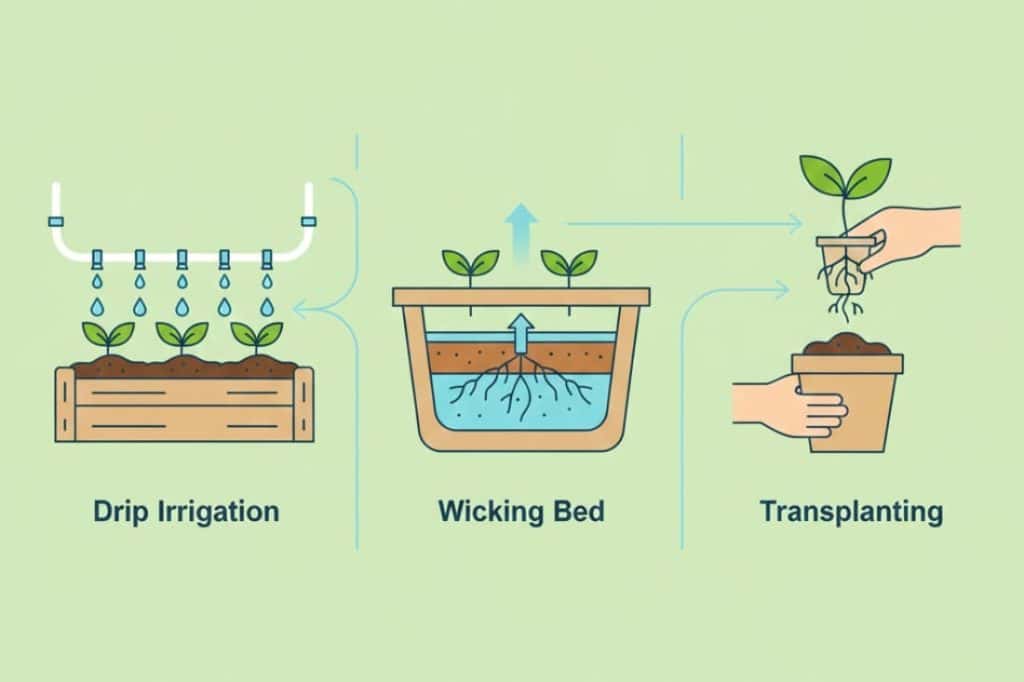
Some hybrid methods happen by accident, but these three are planned and repeatable.
Wicking beds (1)
- A container holds the soil mix and sits above a tank with hydro food solution, which is especially helpful if you’re still learning what matters before starting hydro so you avoid early watering or nutrient mistakes.
- A wick (fabric strip, rope, or capillary matting) pulls the solution up into the soil from below.
- The soil stays evenly moist, not soaked, and roots draw up nutrient-rich water as needed.
Soil-like inert media
- A common blend is 60% coco coir, 30% perlite, 10% compost.
- Coco coir holds moisture and mimics soil structure.
- Perlite improves drainage and aeration.
- A small amount of compost introduces beneficial microbes.
- This medium gets hydro food through a drip line, so it acts like soil but feeds like hydro.
Drip‑irrigated soil
- Plants grow in containers or raised beds filled with a normal or lightly amended soil mix.
- A drip irrigation system delivers diluted hydroponic nutrient solution directly to the base of each plant.
- You keep the dosing control of hydroponics, while the soil provides root support and a microbial buffer.
The Clear Advantages of a Hybrid Approach
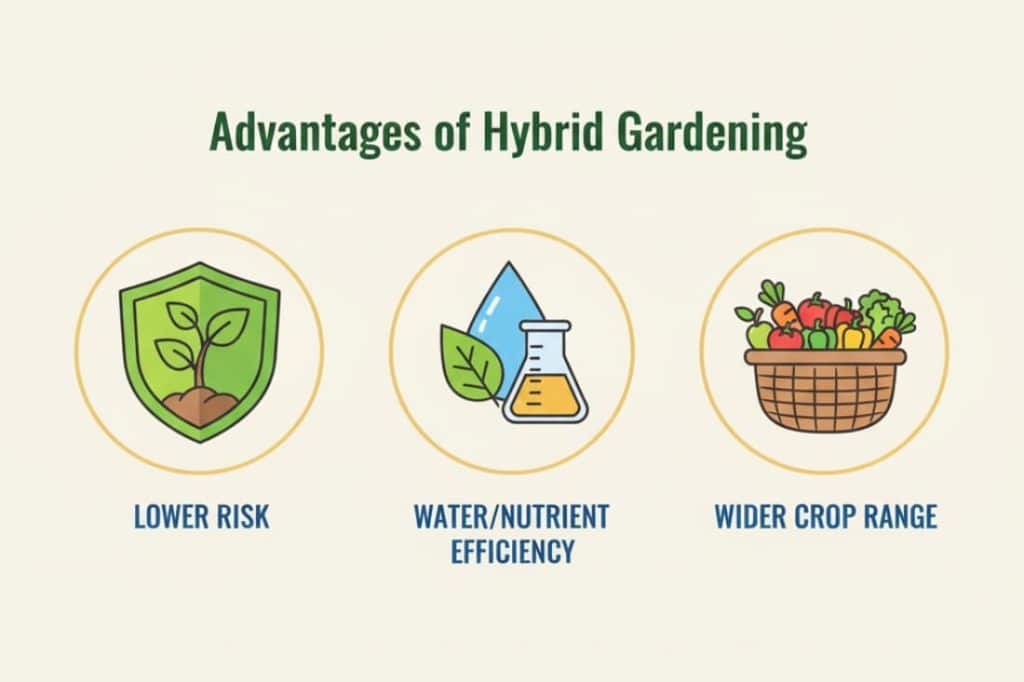
There is a kind of calm built into hybrid systems that you just do not get with pure hydroponics.
The main advantage is lower risk. In pure hydro, plants can fail fast if the pump stops, the pH shifts, or the mix is wrong.
In a hybrid system, the soil mix holds extra water and food, so plants do not suffer right away if the hydro part fails.
Hybrid systems also use water and nutrients well, offering some of the same efficiency reasons many growers cite when explaining why they choose hydroponics for controlled feeding and minimal waste.
Instead of soaking a whole bed and letting water and fertilizer drift beyond the root zone, you send a targeted nutrient solution right where roots can use it.
Less leaching, less waste, which is especially helpful in dry climates or for growers trying to lower their environmental footprint.
There is also a bonus for crop choice. Many large, fruiting crops; tomatoes, peppers, cucumbers, like strong root support from a solid medium.
A hybrid system gives strong root support and steady hydro food. You are not locked into just leafy greens and herbs; you can handle a much wider range of crops with good results.
Key Considerations and Potential Challenges
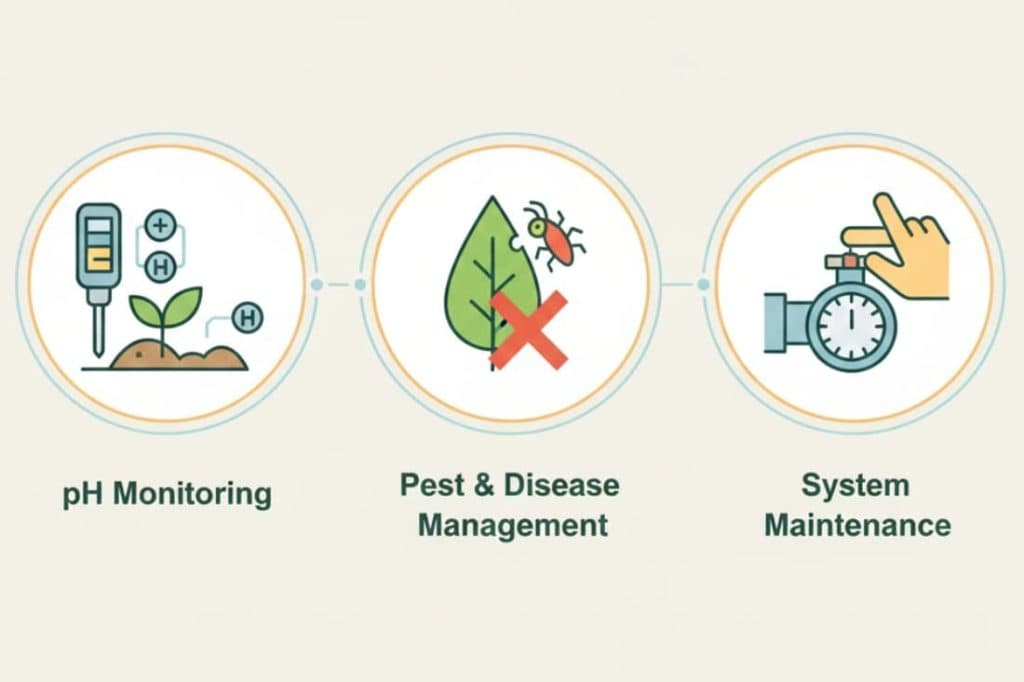
The hard part is not the pipes or pumps, but the root mix. The growing medium has to drain very well. If it holds too much water, roots can suffocate and diseases like root rot show up fast.
This is why a light, airy mix with a lot of perlite, vermiculite, or coarse sand is essential. Heavy, clay-based garden soil is a poor choice here; it compacts, stays wet too long, and almost always causes problems.
You also have to keep an eye on the electrical conductivity (EC) (2) and pH of your nutrient solution. The soil mix can buffer small mistakes, but salts from hydro food still build up.
Flushing the system with plain, pH-balanced water helps wash out salts and prevents burn. Organic matter needs a careful touch.
A small amount of well-finished compost can support microbial life and overall plant health. Too much, though, can break down, compact the medium, and release extra nutrients that clash with your carefully mixed solution.
Keeping compost to a small, stable percentage is usually the safest approach.
Getting Started with Your First Hybrid System

Credit: Plant4Table
Starting small with a hybrid system is an easy way to test how it works.
Begin with a simple wicking pot
- Take a large pot and thread a wick (a strip of absorbent fabric or nylon rope) through the drainage hole so part of it hangs out the bottom.
- Add a layer of perlite in the bottom of the pot for drainage.
- Fill the rest with a light mix, such as 70% coco coir, 20% perlite, 10% compost.
- Set the pot in a shallow tray that will serve as your nutrient reservoir.
- Plant your seedling in the pot, then fill the tray with a diluted hydroponic nutrient solution.
- The wick pulls nutrient solution up into the mix, keeping it evenly moist without waterlogging. This gives you a simple, safe way to see how the system works and adjust food strength.
Scale up with a drip‑irrigated raised bed
- Build a raised bed and fill it with a well-draining soilless mix (plenty of perlite or similar for air and drainage).
- Install a drip irrigation system tied to a timer and a nutrient reservoir.
- Mix your hydroponic nutrients in the reservoir and let the drip lines deliver solutions right to the base of each plant.
This larger setup uses the same ideas, stable mix and exact feeding, on a bigger scale, letting you grow a serious amount of food with the efficiency of hydroponics and the built-in resilience of a soil-like system.
FAQ
How can beginners try hybrid hydroponic soil gardening at home without feeling overwhelmed?
Many beginners start small by combining hydroponics and soil in a simple hydro-soil mixed planting setup.
A soil-plus-hydroponics system works well when you use a semi-hydroponic soil mix and hydroponic nutrients in soil at low strength.
This soil-based hydroponic hybrid helps you learn the soil and water culture mix while keeping the soil hydroponic garden method easy to manage.
What should I watch for when using hydroponic irrigation for soil beds or pots?
You can use hydroponic irrigation for soil beds when soil is amended with hydro nutrients and you understand hydroponic feeding on soil plants.
Transitioning hydroponics to soil in a soil-hydroponic greenhouse often requires integrated hydro-soil farming practices.
Many gardeners try dual media gardening hydroponic soil or mixing coco coir soil hydro system for better balance.
How do I manage nutrients in a soil substrate with nutrient solution without hurting plant roots?
You can apply hydroponic fertilization in potted soil when soil water retention + hydro nutrients are balanced.
Combined soil-water nutrient gardening works in a hydro-soil raised bed garden or when combining NFT or DWC with soil pots.
Use hydroponic nutrient dilution for soil and watch soil pH adjustment with hydro nutrients to prevent soil salinity risk using hydro nutrients.
How do I protect soil microbial health when using hydro mixes in my garden?
You can protect soil microbial health with hydro nutrient use by buffering soil when using hydro mixes and monitoring EC when mixing hydro and soil.
Many gardeners track the pros and cons of hydro-soil hybrid to understand yield comparison soil vs hydro-soil.
This helps water efficiency soil-hydro system planning and supports root oxygenation soil hydro mixture as plants grow.
Which plants grow well in a soil drainage plus hydro water culture hybrid setup?
Soil-hydroponic container gardening supports mixed media for urban gardening hydroponic soil, especially herbs.
Soil-hydroponic crop rotation helps diversify a hydro-soil herb garden or a hydro-soil urban balcony garden.
A hybrid soil/hydro for leafy greens works well when nutrient management in hydro-soil mix is steady and you avoid nutrient burn in soil with hydro nutrients through careful feeding.
Blending the Best of Both Gardening Worlds
Hybrid growing, mixing soil and hydroponics, gives you a system that is both sturdy and efficient.
The soil (or soilless mix) provides structure and biology, while the hydroponic side delivers precise nutrition and steady hydration.
Success mainly depends on two pieces: a well‑draining medium and a reliable irrigation setup.
From there, you can start small with a single container and scale up as you gain confidence. This method can boost plant growth in small or large spaces.
References
- https://www.echocommunity.org/en/resources/f59cd054-3680-4650-ae6a-ada153421a5b
- https://extension.okstate.edu/fact-sheets/electrical-conductivity-and-ph-guide-for-hydroponics.html
Related Articles
- https://tophydroponicgarden.com/hydroponics-introduction/
- https://tophydroponicgarden.com/why-choose-hydroponics-over-soil/
- https://tophydroponicgarden.com/what-to-know-before-starting-hydroponics/
Was this helpful?

I’m Barrie L., a passionate hydroponic gardening enthusiast dedicated to cultivating thriving, soil-less gardens. With a focus on all things hydroponic, I share my expertise on innovative growing techniques and sustainable practices through my blog, tophydroponicgarden.com. As a seasoned hydroponics specialist, my goal is to inspire and guide fellow gardeners in harnessing the power of water-based cultivation for bountiful and eco-friendly harvests. I’m also an author of the book “Hydroponics For Absolute Beginners: Your Step By Step Guide For How To Create An Hydroponics System At Home Without Soil, For Growing Vegetable, Fruit And Herbs.” which is sold on Amazon. Join me on a journey of redefining the way we cultivate plants, one nutrient-rich solution at a time. Happy growing!