
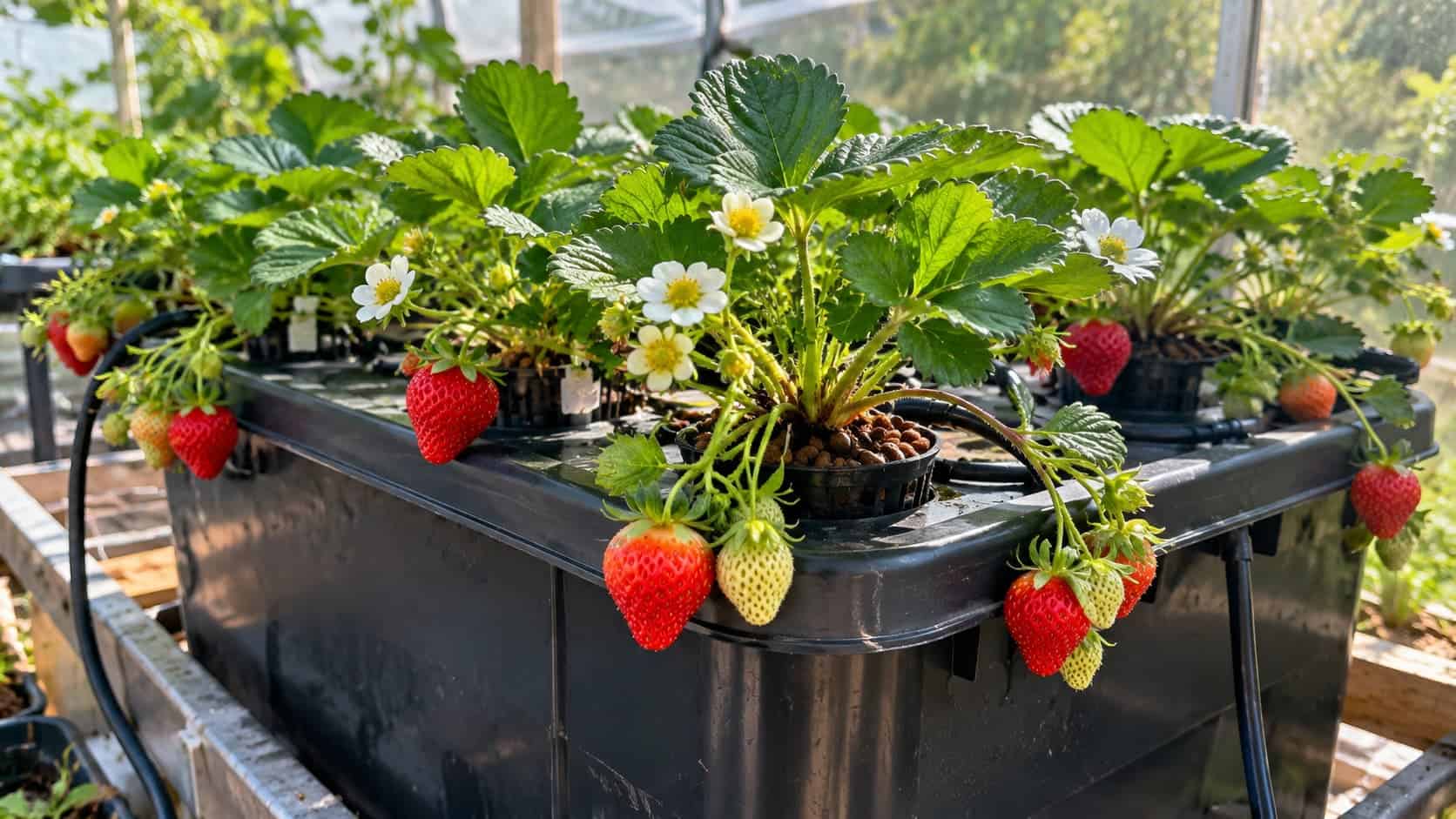
Yes, you can grow strawberries in a Deep Water Culture (DWC) system, and plants can thrive from initial flowering all the way to a full harvest, provided their roots receive continuous, high aeration
However, growing berries in water presents a much steeper learning curve than standard leafy greens. Strawberries demand bone-dry crowns, robust root oxygenation, and precise nutrient control; a single oversight can quickly lead to root rot and jeopardize weeks of growth. Here is how to fine-tune a DWC setup to harvest sweet, healthy strawberries.
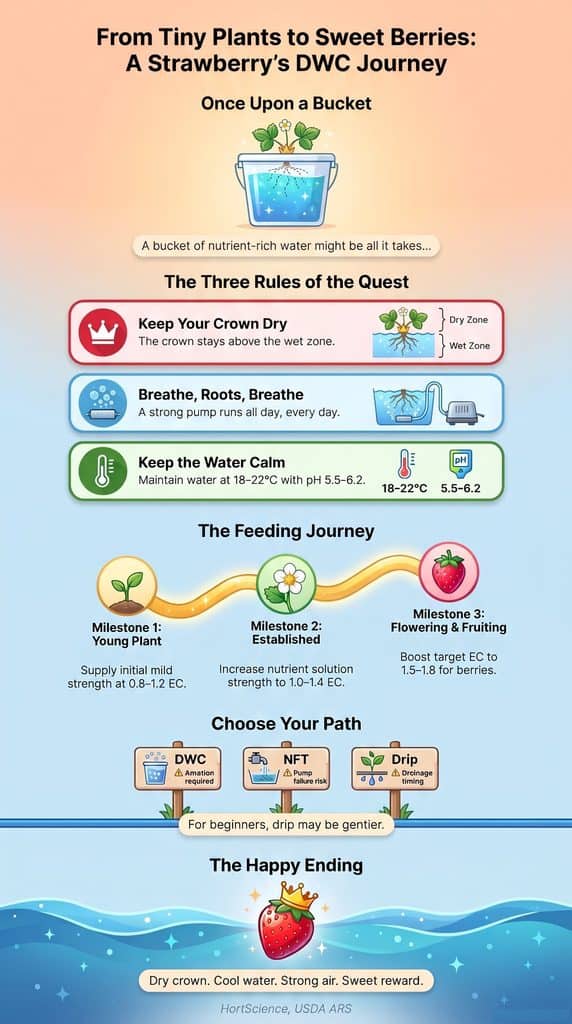
Strawberry DWC Essentials: Three Secrets to a Sweeter Harvest
- Keep the crown dry: Let the roots reach the nutrient solution, but keep the crown above the wet zone.
- Supply constant oxygen: Use a strong air pump and air stones to protect submerged roots.
- Control the nutrient solution: Monitor pH, EC, and water temperature throughout the plant’s growth.
Why Is DWC a High Risk System for Strawberries?
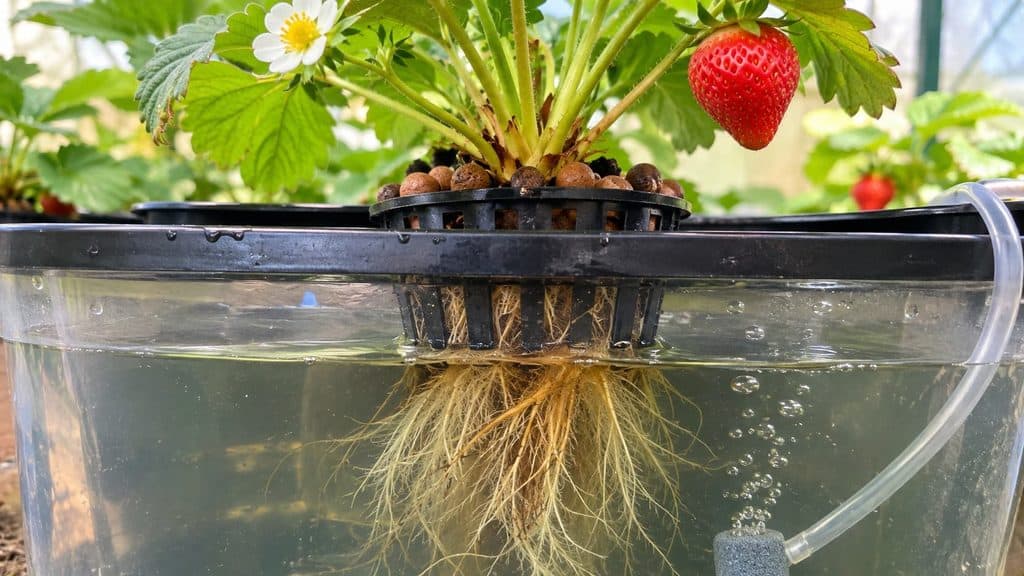
Strawberries can grow in DWC, but this system leaves little room for mistakes. Unlike lettuce, strawberry plants have crowns that are sensitive to excess moisture.
As reported by Sakamoto et al. in the Journal of Agricultural Science;
“The high root-zone temperature treatment (30 °C) decreased oxygen consumption and cell viability of the roots, resulting in withering of most of the plants after 2 months of treatment.” – Sakamoto et al., Journal of Agricultural Science (2016)
But there is a catch. A 2025 hydroponic comparison found that DWC had weaker results than other tested systems. Poor root aeration and nutrient dilution were possible causes.
So, DWC works, but it is not always the best choice. Strawberries are not the only plants that require extra attention in this system.
Other crops may struggle with constant root exposure to water, limited root space, or poor aeration. Learn more about what plants are not suitable for DWC growing before choosing crops for your setup.
How Do You Build a Strawberry DWC System?
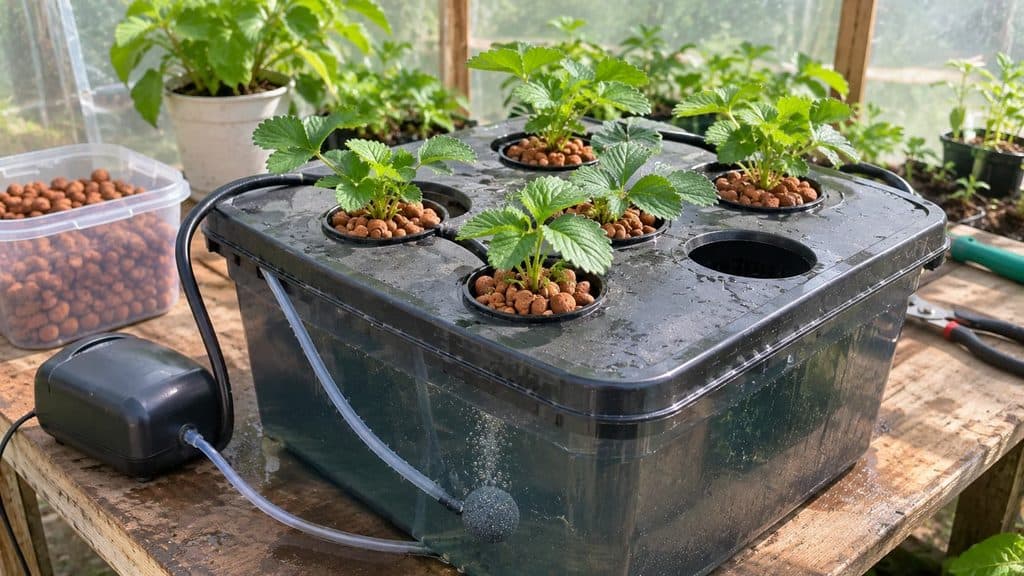
A good strawberry DWC setup needs an opaque reservoir, stable plant support, and reliable aeration. You do not need a huge farm to begin. A small test system is often a smarter first step.
If you are planning a home growing project, follow this guide on how to grow hydroponic strawberries at home for more growing tips and setup ideas.
Here is the basic equipment list:
- An opaque DWC reservoir with a secure lid.
- Net pots and clean clay pebbles.
- An air pump with multiple air stones.
- A pH meter and EC meter.
- A thermometer for the nutrient solution.
- Plant supports for flowers and fruit.
The crown needs special attention. Keep it above the growing media and away from direct contact with the nutrient solution. Aim for a 2 to 3 inch air gap between the net pot base and water surface, then adjust the level as roots develop.
Cornell’s 2019 strawberry project used tubs measuring 3 feet by 6 feet and about 10 inches deep. The design included floating supports for plants and fruit trusses.
That detail matters. Strawberry plants need support as their berries grow heavier.
How Do You Plant Strawberry Seedlings in a DWC System?
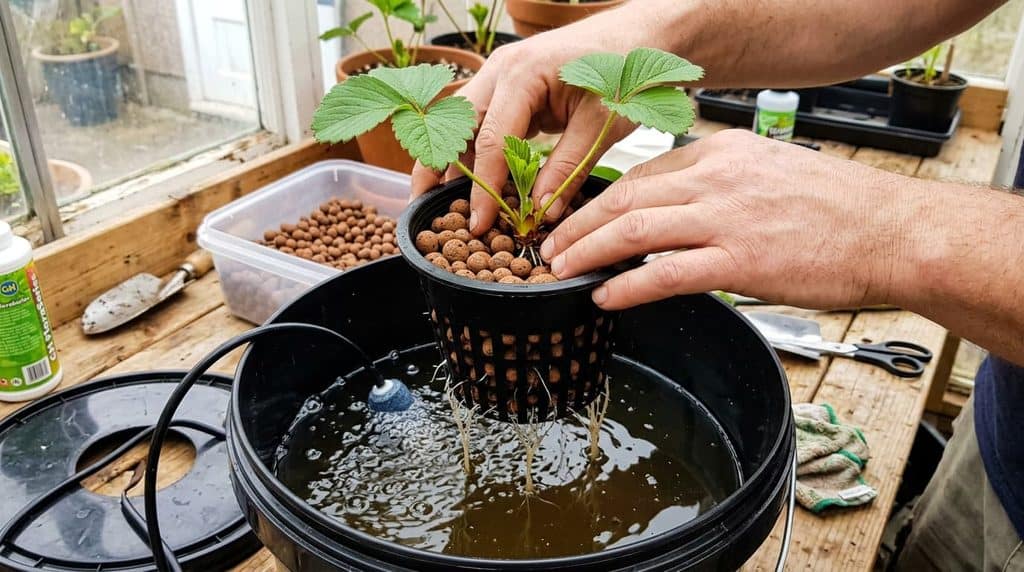
Strawberry roots need plenty of oxygen because they remain close to the nutrient solution all day. Without enough air, roots become weak and may develop root rot.
Cornell’s strawberry propagation guide warns that “the constant wetness could lead to crown rot and poor root formation.” This is why crown position matters so much.
To protect your plants, follow these steps:
- Run the air pump continuously.
- Place several air stones across the reservoir.
- Keep the reservoir away from direct sunlight.
- Cover empty net pot holes to block light and algae.
- Remove dead roots and plant debris.
- Check roots often for brown, soft, or slimy areas.
Water temperature matters, too. Aim for approximately 18 to 22°C and avoid sudden changes. Research on strawberry root health shows that high root zone temperatures can reduce root function.
If you grow strawberries in a warm climate, consider reservoir insulation or a water chiller. A small fan above the plants can also reduce stagnant air and moisture around the crowns.
What Nutrients and pH Levels Do Strawberries Need?
Strawberries need balanced nutrients to grow strong leaves, produce flowers, and develop sweet fruit. Too much fertilizer can harm roots just as easily as too little.
A useful starting point for DWC hydroponic nutrients is:
| Growth stage | Suggested EC |
| Young plants | 0.8 to 1.2 mS/cm |
| Established plants | 1.0 to 1.4 mS/cm |
| Flowering and fruiting | 1.5 to 1.8 mS/cm |
These are starting ranges, not fixed rules. Cultivar, water quality, and nutrient formula can change the ideal concentration.
For pH, aim for 5.5 to 6.2. Check it often and avoid sudden changes.
A 2024 study by Erin Yafuso and Jennifer Boldt, published in HortScience, tested different nutrient buffers for hydroponic strawberries.
As reported by Yafuso and Boldt in HortScience;
“Strawberry plants can successfully be grown hydroponically in DWC, provided that nutrient solution pH is adequately managed.” – Yafuso and Boldt, HortScience (2024)
You should also watch these nutrients:
- Nitrogen: Supports healthy leaf growth.
- Potassium: Helps fruit development and quality.
- Calcium: Supports growing leaves and fruit tissue.
- Magnesium: Helps leaves produce energy through photosynthesis.
Do not increase fertilizer every time growth slows. Check pH, roots, and temperature first.
Which Strawberry Varieties and Growing Methods Work Best?
Day neutral strawberries are useful for indoor hydroponic gardens because they can flower repeatedly under suitable conditions.
Two varieties worth considering are Albion and Cabrillo. Both appear in Cornell University’s DWC propagation research.
Cornell found that Cabrillo produced approximately 50% more runners than Albion during the reported study period. Cabrillo also developed longer roots.
That does not mean Albion is a poor choice. It remains interesting for growers who prefer its sweet fruit.
Start with healthy runners or established bare root plants rather than seeds. Before transplanting, wash away all soil from the roots with clean water. Remove damaged tissue and inspect the crown.
Once the plants settle, give them suitable light and airflow. Indoor strawberries also need pollination.
When flowers open, use a small, clean, soft brush to move pollen between the flower centers. Repeat this gently across open flowers.
And be patient. Flowering does not guarantee good fruit. Successful pollination and stable growing conditions help berries develop evenly.
Is DWC Better Than NFT or Drip Hydroponics?

Credits: Hoocho
DWC is not always the easiest system for strawberries. NFT and drip systems offer different ways to manage root moisture and oxygen.
However, hydroponic growing can offer several advantages for strawberry production, including better control over growing conditions and more efficient use of space. Explore the benefits of hydroponic strawberries to understand why growers choose this method.
Here is a simple comparison:
DWC
- Roots sit in oxygenated nutrient solution.
- Reservoir conditions are easy to monitor.
- Poor aeration can quickly damage roots.
NFT
- Nutrient solution flows through shallow channels.
- Roots receive access to both moisture and air.
- Pump failure can interrupt nutrient delivery.
Drip hydroponics
- Nutrient solution reaches roots through small emitters.
- Growing media helps control moisture.
- Drainage and irrigation timing need attention.
A 2025 study published in Frontiers in Plant Science compared substrate culture with NFT, vertical water culture, and aeroponics. The substrate system produced higher yields in the tested cultivars.
However, the study did not test DWC directly. Its findings should not be treated as proof that DWC always produces less fruit.
For beginners, drip systems may be easier to manage. DWC suits growers who can monitor water quality and aeration closely.
FAQ
How long do strawberries take to grow in DWC?
Timing depends on the plant’s age, variety, and growing conditions. Established plants can flower sooner than seed grown plants. Allow time for root establishment before expecting fruit.
Can strawberries grow indoors in DWC?
Yes. Use suitable LED grow lights, good airflow, and stable nutrient conditions. You may also need to hand pollinate flowers.
Can strawberry crowns touch the water?
No. Keep the crown above the nutrient solution. Only the roots should reach the water.
Why are my strawberry roots turning brown?
Possible causes include poor oxygen levels, warm water, and root disease. Check aeration and water temperature, then inspect the roots.
Can I use clay pebbles in a strawberry DWC system?
Yes. Clean clay pebbles provide support while allowing air to reach the crown. Avoid packing them tightly around the crown.
Is Growing Strawberries in DWC Worth It?
Yes, growing strawberries in DWC is possible, but it takes more care than growing leafy greens. Strong aeration, dry crowns, stable pH, balanced nutrients, and cool water all matter. Start with healthy Albion or Cabrillo plants, monitor their roots, and pollinate indoor flowers by hand. If your reservoir becomes difficult to manage, drip hydroponics may be a better option.
Ready to start your own strawberry garden? Let Tophydroponicgarden.com help you take the next step with practical hydroponic solutions.
References
- https://doi.org/10.5539/jas.v8n5p122
- https://doi.org/10.21273/HORTSCI17523-23
Related Articles
https://tophydroponicgarden.com/what-are-the-benefits-of-hydroponic-strawberries/
https://tophydroponicgarden.com/how-to-grow-hydroponic-strawberries-at-home/
https://tophydroponicgarden.com/what-plants-are-not-suitable-for-dwc-growing/
Was this helpful?

I’m Barrie L., a passionate hydroponic gardening enthusiast dedicated to cultivating thriving, soil-less gardens. With a focus on all things hydroponic, I share my expertise on innovative growing techniques and sustainable practices through my blog, tophydroponicgarden.com. As a seasoned hydroponics specialist, my goal is to inspire and guide fellow gardeners in harnessing the power of water-based cultivation for bountiful and eco-friendly harvests. I’m also an author of the book “Hydroponics For Absolute Beginners: Your Step By Step Guide For How To Create An Hydroponics System At Home Without Soil, For Growing Vegetable, Fruit And Herbs.” which is sold on Amazon. Join me on a journey of redefining the way we cultivate plants, one nutrient-rich solution at a time. Happy growing!