

You look at that lush basil plant growing in a simple jar of water and wonder, can I grow everything this way? The direct answer is no, not all plants can be grown hydroponically. While many crops thrive in soilless systems, fundamental biological needs prevent others from adapting.
Plants like lettuce and tomatoes absorb nutrients efficiently from water, growing faster than they would in soil. But species that depend on soil structure for root development or specific microbial partnerships often fail in hydroponic environments.
Your dream of a soil-free garden is entirely possible, you just need to match the right plants to the right system. Keep reading to understand which crops will reward your efforts and which ones will frustrate you.
Key Takeaways
- Leafy greens and herbs adapt best to hydroponics due to shallow roots and high water needs.
- Large trees, root vegetables, and soil-dependent plants usually fail in hydroponic systems.
- Success relies on managing oxygen levels, pH balance, and tailored nutrient solutions
Why Soil Matters More Than You Think

Soil isn’t just dirt. It’s a living ecosystem that provides physical support, moisture buffering, and a community of beneficial microbes, showing why understanding hydroponics at home setups matters for beginners.
Plants like carrots and potatoes depend on soil’s resistance to form their edible parts. Try growing a carrot hydroponically, and you’ll likely get a tangled mess of roots with no substantial taproot. The soil’s pressure is essential for its shape.
Many plants form symbiotic relationships with fungi called mycorrhizae. These fungi extend the root system’s reach, helping plants absorb phosphorus and other nutrients. In a sterile hydroponic tank, these partnerships are absent.
Blueberries, which rely on acidic soil conditions and specific microbes, often show nutrient deficiencies in hydroponic systems despite perfect pH-adjusted solutions. They’re missing their underground allies.
Some plants are just too big or too slow. A massive oak tree isn’t impractical because of nutrition, you could theoretically pump enough nutrient solution, but because of physics. The support structure needed to hold a full-grown tree without soil would be immense.
Woody plants like shrubs and trees also undergo complex developmental processes anchored in soil chemistry that are difficult to replicate in a reservoir.
The Hydroponic All-Stars
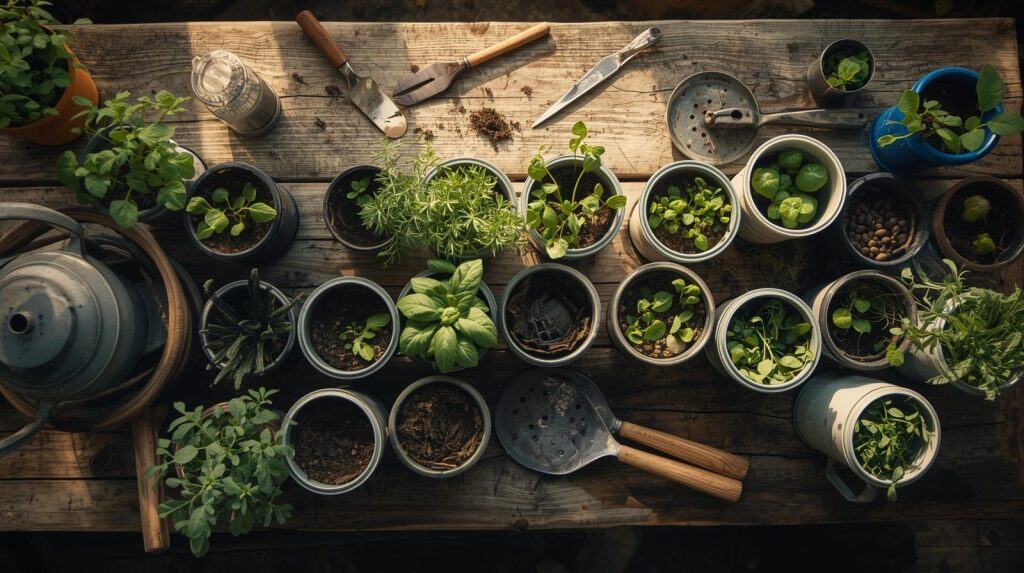
Now for the good news. A huge range of plants not only survive without soil, they often outperform their soil-grown cousins.
Leafy greens are the undeniable champions of hydroponics. Lettuce, spinach, kale, and Swiss chard grow with astonishing speed. Their shallow root systems quickly absorb nutrients from the water, and their high water content means they relish the constant moisture. You can harvest lettuce in about 30 days, a fraction of the time it takes in soil.
Herbs are another great success story. Basil, mint, cilantro, and parsley flourish in systems like the Kratky method or Deep Water Culture. They provide continuous harvests from a single plant. You’ll notice the aroma is more potent, too, because the plants aren’t stressed for nutrients.
Fruiting vegetables like tomatoes, peppers, cucumbers, and strawberries are a bit more demanding but highly rewarding. They require more attention to nutrient strength (especially during the flowering stage) and often need support structures like trellises. The payoff is a higher yield of cleaner, unblemished fruit since there’s no soil to splash onto the plants [1].
Systems Dictate Possibilities
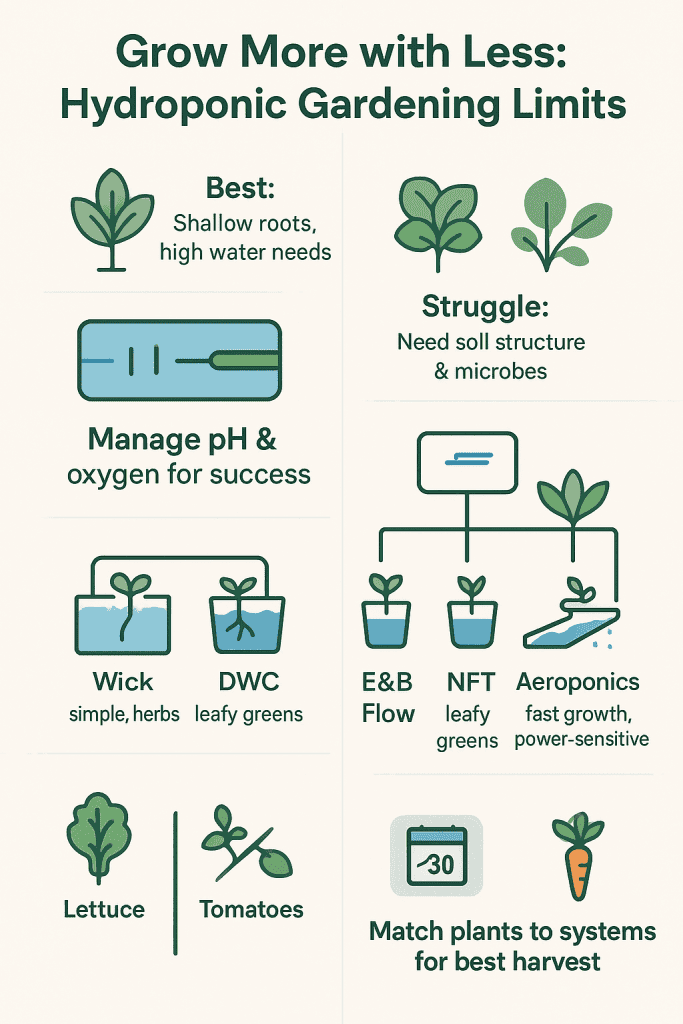
The type of hydroponic system you choose expands or limits your plant options. It’s a hierarchy of complexity and control. Understanding the basics of a simple hydroponic setup can help beginners select the right system that matches their plant’s needs and experience level.
For the absolute beginner, the Wick System is the simplest. It uses no pumps, just a wick to draw nutrient solution up to the plant’s roots. It’s passive and low-maintenance. But it’s best suited for small, non-thirsty plants like herbs and lettuce. You wouldn’t grow a tomato in a wick system.
Deep Water Culture (DWC) is where many hobbyists start. Plant roots dangle directly into an aerated nutrient solution. It’s fantastic for leafy greens and herbs. The constant access to water and oxygen supercharges growth. The limitation is that large, heavy plants can be difficult to support.
The Ebb and Flow (Flood and Drain) system offers more versatility. A pump periodically floods a grow bed filled with a medium like clay pebbles, then drains away. This cycle hydrates the roots and then exposes them to air, preventing rot. This system can handle larger plants like tomatoes and peppers because the grow medium provides physical support [2].
For commercial production of leafy greens, the Nutrient Film Technique (NFT) is iconic. A thin film of nutrient solution flows through sloped channels, bathing the roots. It’s incredibly water-efficient. But it’s poorly suited for large, slow-growing plants whose roots could clog the narrow channels.
At the advanced end, Aeroponics mists roots suspended in air. It provides maximum oxygen exposure, leading to the fastest growth rates. NASA has researched it for space missions. It can grow a wide variety of plants but is sensitive to power outages, if the mist stops, roots dry out quickly.
Your Practical Starting Point

Source : New Agrarian
Your journey into hydroponics should start with a match: your goals to a plant’s needs. If you want quick, easy success, begin with lettuce in a Deep Water Culture system. A five-gallon bucket, an air pump, and a net pot are all you need. You’ll see results in weeks.
If you want to dive deeper into getting started with hydroponics at home, exploring tailored nutrient solutions and pH balancing is essential for success. If you dream of indoor tomatoes, invest in an Ebb and Flow system or a robust DWC setup with strong support for the plant.
Be prepared to monitor nutrients closely, switching from a vegetative to a flowering formula as the plant matures.
Avoid the frustration of trying to grow root crops or large shrubs at the beginning. The science isn’t impossible, but it’s far from the straightforward process that makes hydroponics so appealing for other crops.
FAQ
Can all plants thrive in hydroponics systems
Not every plant adapts well to hydroponics. Leafy greens, herbs, and small fruiting plants grow easily, while large root crops or woody plants may struggle. System choice, nutrient solution, and grow medium affect success. Understanding your plant’s root zone needs, vegetative stage, and flowering stage helps you decide which plants suit soilless gardening.
Which hydroponic system is best for beginners
Beginner hydroponics often use passive hydroponics, wick system, or Kratky method. These systems require minimal maintenance, no complex pumps, and fewer grow lights. Deep water culture (DWC) and NFT can be trickier but offer faster growth and higher yield.
System selection depends on available space, water efficiency, and your comfort with nutrient mixing and pH adjustment.
How do grow mediums affect plant growth
Grow medium supports roots, retains moisture, and delivers nutrients. Options like rockwool, coco coir, clay pebbles, and perlite each impact aeration, oxygenation, and root pruning.
Some mediums hold water better, aiding leafy greens and herbs hydroponics, while others suit tomatoes or peppers hydroponics. Choosing the right medium influences nutrient absorption, root zone health, and system maintenance.
Can hydroponics handle pest and disease issues
Hydroponics reduces soil-borne pests and weeds but doesn’t eliminate problems. Beneficial bacteria, mycorrhizae alternative, EM1 effective microorganisms, and neem oil help control root aphids, powdery mildew, or spider mites.
Monitoring ORP levels, dissolved oxygen, and maintaining proper ventilation and temperature control prevents root rot and algae growth while keeping plants healthy throughout vegetative stage and flowering stage.
Are fruiting plants like tomatoes or strawberries suitable
Tomatoes hydroponics, peppers hydroponics, cucumbers hydroponics, and strawberries hydroponics grow well in recirculating systems with nutrient film technique (NFT), drip system, or aeroponics. Full spectrum lighting and LED grow lamps support photosynthesis.
Pollination hydroponics, support cages, and pruning techniques ensure high yield. Determinate or indeterminate varieties and hybrid seeds respond differently in indoor gardening and vertical farming setups.
Conclusion
Hydroponics reveals a simple truth about plants. Some are aquatic at heart, thriving when their roots are bathed in a nutrient-rich bath. Others are terrestrial pilgrims, needing the complex journey through soil to reach their full potential.
Your success lies in choosing plants that belong to the first group. Start with a lettuce or basil. Learn the rhythms of mixing nutrients and checking pH. You’ll find that growing more with less isn’t just a promise, it’s a harvest you can achieve.
References
- https://pmc.ncbi.nlm.nih.gov/articles/PMC4483736
- https://www.researchgate.net/figure/Modeled-annual-yield-in-kilograms-per-square-meter-of-lettuce-grown-in-southwestern_fig1_278790732
Related Articles
- https://tophydroponicgarden.com/how-does-hydroponics-work-simply/
- https://tophydroponicgarden.com/getting-started-with-hydroponics-at-home/
- https://tophydroponicgarden.com/how-to-build-a-simple-hydroponic-setup/
Was this helpful?

I’m Barrie L., a passionate hydroponic gardening enthusiast dedicated to cultivating thriving, soil-less gardens. With a focus on all things hydroponic, I share my expertise on innovative growing techniques and sustainable practices through my blog, tophydroponicgarden.com. As a seasoned hydroponics specialist, my goal is to inspire and guide fellow gardeners in harnessing the power of water-based cultivation for bountiful and eco-friendly harvests. I’m also an author of the book “Hydroponics For Absolute Beginners: Your Step By Step Guide For How To Create An Hydroponics System At Home Without Soil, For Growing Vegetable, Fruit And Herbs.” which is sold on Amazon. Join me on a journey of redefining the way we cultivate plants, one nutrient-rich solution at a time. Happy growing!