

Small hydroponic systems work best with plants that stay small, grow fast, and aren’t fussy.
Think lettuce, basil, and sprouts. This isn’t just about space. Systems like DWC or the Kratky method have shallow water and tight quarters for roots. Plants have to finish growing before they run out of room or nutrients.
The payoff is real. Hydroponics can reduce water use by up to 90% per NASA-inspired research. But that efficiency demands the right plants, ones that handle close quarters and don’t mind if your pH drifts a little.
Stick with fast growers. Leafy greens, common herbs, and microgreens are the reliable choices. They do well in rockwool cubes, manage with basic nutrients under LEDs, and bounce back if you make a minor error. The rule is straightforward: pick crops that fit your system’s limits. Keep reading to see the specific varieties that really deliver.
Fast Wins for Small Hydroponic Plant Choices
- Harvest windows between 7-42 days
- Minimal root crowding in small reservoirs
- High yield through repeated cutting cycles
- Strong compatibility with NFT, DWC, and Kratky systems
These plants reduce risk by growing quickly, responding well to basic care, and producing visible results early. This early success builds confidence and helps stabilize the learning process in small hydroponic systems.
Leafy Greens Dominate Small Hydroponic Systems
Leafy greens tend to outperform most other crops in small hydroponic setups. They grow compact, they do not need much nutrient input, and they can be harvested more than once. That combination matters. Especially in tight spaces.
Research from University of Minnesota Extension indicates:
“If you choose to grow these heat-loving plants hydroponically, look for terms like “grows well in pots” or “container variety” when selecting a variety. Leafy greens such as arugula, butterhead lettuce, collard greens, herbs, kale, mustard greens, microgreens, spinach, and swiss chard are suitable crops for [small-scale] hydroponics.” – University of Minnesota Extension
Buttercrunch lettuce, Bibb lettuce, and loose leaf types grow fast and stay manageable. Most are ready in about 21 to 30 days. Quick cycles. Easy resets. It keeps production moving without much downtime.
Their root systems stay relatively small too, which helps more than people expect. In small reservoirs, oxygen levels can shift a bit. Not always stable. But leafy greens handle that well. Leafy greens handle variable oxygen in small reservoirs, as researched by the University of Arizona CEAC.
Some varieties stand out for consistency. Little Gem Romaine, Salad Bowl lettuce, mesclun mixes. They adapt across different systems, whether it is NFT channels, Kratky jars, or DWC buckets. And they do not stress easily. Or at least, not enough to bolt too quickly.
There is also the harvesting flexibility. And this is where things get interesting.
Loose leaf varieties can be picked gradually, just take what you need. Butterhead types form small, compact heads that fit tight systems nicely. Mini romaine grows more structured, a bit more defined. Different styles, same advantage.
More yield. Same space. That’s the real win.
Compact Growth Maximizes Limited Space
Shallow roots, small canopies, dense planting. It works. Every inch counts in a small hydroponic setup, especially when working with the easiest hydroponic plants that stay compact and predictable.
Plants like Little Gem Romaine grow upright, not outward. That upright habit means you can pack more in without crowding.
Roots stay tidy, oxygen flows better, nutrients get absorbed evenly. NFT systems, Kratky jars, they all thrive on this controlled growth. The plants don’t fight each other. They just grow.
Continuous Harvest Increases Output Efficiency
Some greens let you harvest again and again. Cut-and-come-again. Salad Bowl lettuce is a star here, especially for growers who start plants in hydroponics and want steady, repeatable harvest cycles.
You can get three to six harvests from a single plant. Each snip tells the plant to regrow. Productivity stretches without ever restarting from seed.
Downtime shrinks. Nutrient cycles stay steady, which matters a lot in small systems. A sudden swing in nutrients can stress the plants, but regular harvests keep everything balanced. Efficient. Reliable. Steady.
Herbs Deliver High Flavor in Small Spaces

Herbs are small but mighty. They regrow fast, stay compact, and keep producing with little fuss. That makes them perfect for tiny hydroponic setups.
Genovese basil, chives, parsley, and mint do well on a windowsill, in vertical systems, even in counter-top kits. They like moderate light and respond beautifully to regular pruning. Trim them, and they bounce back in five to seven days. Penn State Extension notes that pruning actually boosts leaf density and overall yield.
Herbs fit into many setups. Net pot systems, vertical towers, countertop hydro kits, they all work. Mint and basil grow aggressively, taking the lead. Chives and parsley stay controlled, easy to manage. Mix them together, and your small reservoir can handle a flavorful variety without chaos.
Pruning Controls Growth and Boosts Yield
Regular trimming encourages bushier growth and keeps herbs from taking over small hydroponic systems.
Mint, for example, can spread fast if left unchecked. A quick prune improves airflow, lets light reach lower leaves, and channels energy into fresh growth.
With this simple habit, even tiny plants become high-output producers. No extra space needed. Just a little attention, and the system thrives.
Microgreens Offer the Fastest Returns in Small Systems
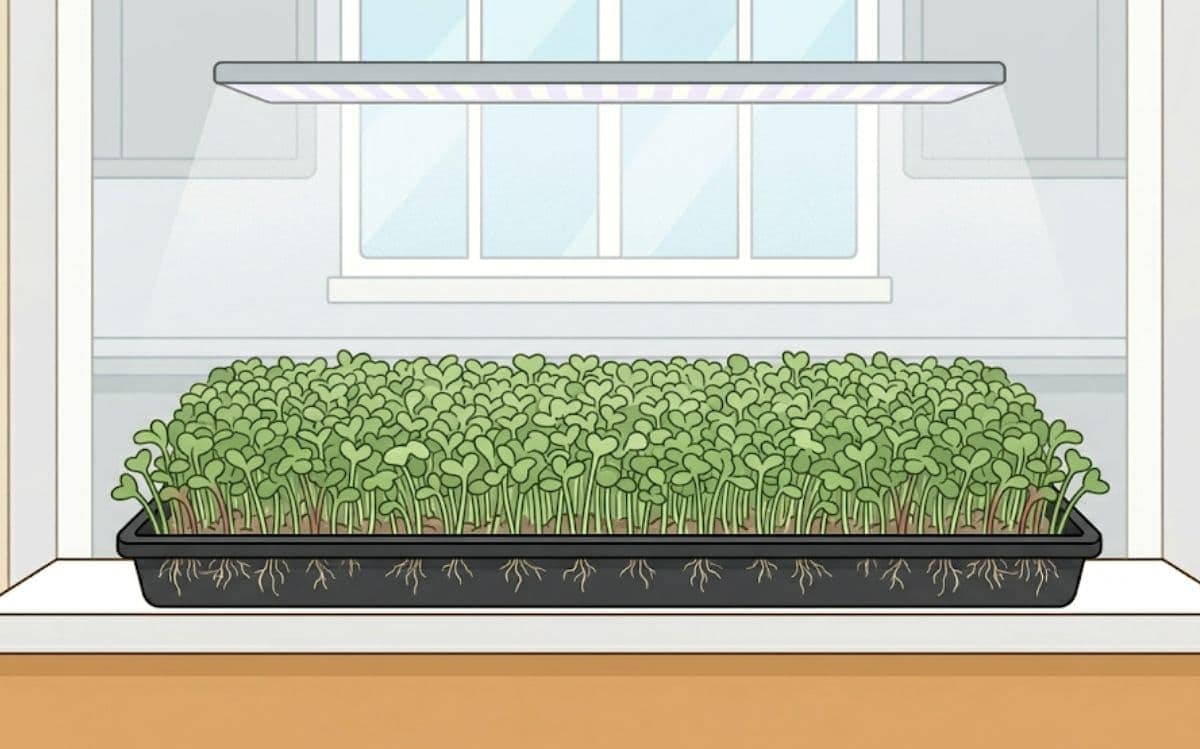
Microgreens are tiny powerhouses for small hydroponic setups. They grow fast, pack a nutrient punch, and need barely any space.
Arugula, radish, Waldmann’s Green lettuce, they all fit in trays under one square foot. No deep reservoirs, no tricky nutrient juggling. Just simple, steady growth.
You can harvest in seven to fourteen days. Fast. That makes microgreens the quickest hydroponic crops around. Harvard Health notes they contain more concentrated nutrients than their mature counterparts.
They work in shallow trays, ebb and flow systems, even stacked vertical units. Easy to grow, low risk, maximum output. Small, simple, and surprisingly powerful.
High Density Growing Maximizes Output
Microgreens thrive when packed close together, turning every inch of space into productive growth.
Radish microgreens, for instance, can be sown densely, yielding more without needing extra room. It’s not about how big the plants get, but how often you can harvest them.
Short cycles, repeated harvests. That’s how tiny systems deliver surprisingly high output, even when some assume plants grow slower in hydroponics under less controlled conditions.
Fruiting Plants Require Advanced Control in Small Systems
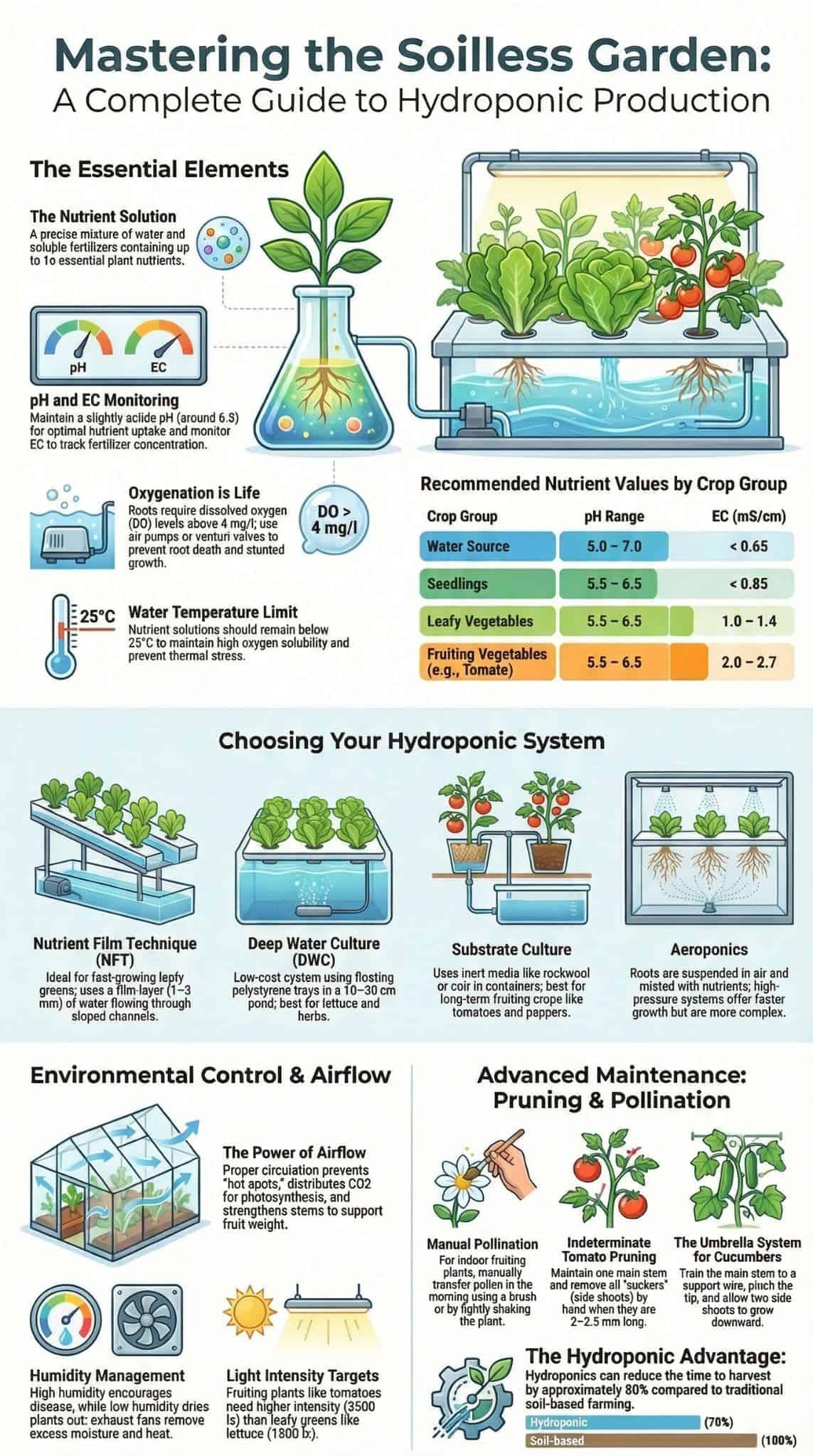
Dwarf fruiting plants can fit into small hydroponic systems, but they come with strings attached. They need more light, more nutrients, and a bit more care than greens or herbs.
As highlighted by UT Hort,
“Very compact tomatoes can even be grown indoors under lights… Very Compact/container- [varieties include] Red Robin, Cocoa, Microtom.” – University of Tennessee Extension
Totem tomatoes, balcony tomatoes, dwarf peppers, they can thrive in compact setups, but only if conditions stay steady. Growth takes longer, usually fifty to fifty-five days, much slower than leafy greens.
They also require extra attention. Structural support keeps them upright, pruning guides growth, and consistent airflow prevents stress. All these demands make them trickier for beginners. Not impossible, but definitely more work.
Higher Demands Limit Beginner Success
Fruiting plants come with bigger roots and higher nutrient needs, which can make them tricky in small hydroponic setups.
Peppers, for example, can outgrow tiny reservoirs fast. That can throw nutrients off balance and reduce oxygen, stressing the plants.
If you don’t keep a close eye, yields drop. Plants suffer. That’s why most beginners stick with greens first. Easier, faster, and forgiving.
Best Plant Varieties Comparison for Small Hydroponic Systems
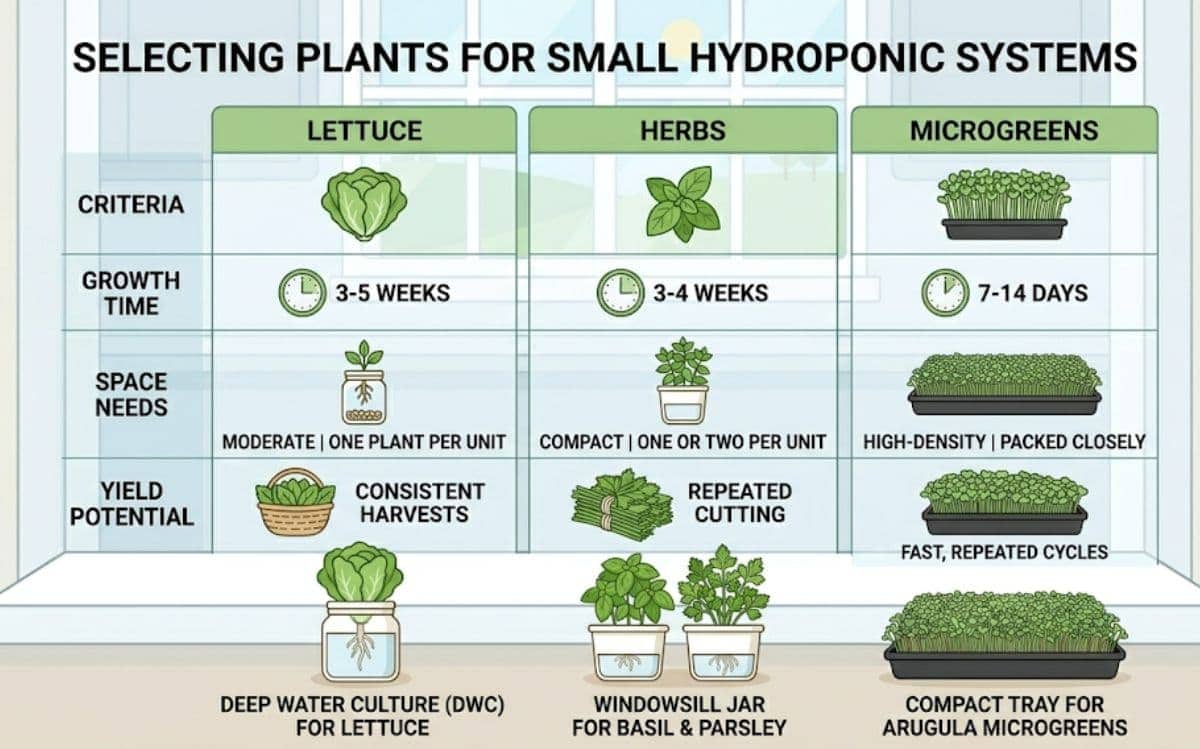
The most effective small-system plants combine fast growth, compact size, and repeat harvest potential across greens, herbs, and microgreens.
These varieties consistently perform across systems like DWC, NFT, and Kratky. The fastest crops reach harvest in just 7-14 days, making them ideal for rapid production cycles.
Optimized Conditions Drive Small System Performance

Source: Green Living Off Grid
Stable nutrients, good lighting, and steady oxygen keep plants healthy in small hydroponic setups. Small systems are sensitive. Even tiny imbalances can stress plants fast.
Temperature matters, aim for 18 to 24°C. Keep EC between 1.0 and 1.8 mS per centimeter. Light for 12 to 16 hours each day helps maintain steady growth.
Beneficial microbes like Bacillus amyloliquefaciens boost root health and lower disease risk. The USDA notes that beneficial microbes like B. amyloliquefaciens boost resilience.
Air stones and proper oxygenation are essential, especially in DWC systems where water volume is limited. Without them, roots can rot quickly. Simple steps, but they make all the difference.
Preventing Common Small-System Failures
Keeping pH balanced, aeration steady, and the system clean prevents root rot and nutrient problems.
Aim for a pH between 5.5 and 6.5 and make cleaning a routine. Hydroguard and similar products can help stabilize roots and cut down on harmful bacteria.
Regular monitoring makes a big difference. Plants stay healthy, failure rates drop, and productivity holds up across multiple harvests.
FAQs
What are the best compact hydroponic plants for small space hydroponics setups?
The best compact hydroponic plants for small space hydroponics include leafy greens and herbs that grow quickly and remain small. Examples include loose leaf lettuce hydro, compact basil varieties, and chives small hydroponics.
These plants fit limited spaces, adapt well to shallow root hydro plants, and perform consistently in countertop hydro kit plants or a windowsill hydroponic garden.
Which best hydroponic lettuce varieties grow fastest in small systems?
Some of the best hydroponic lettuce varieties for fast growth include bibb lettuce hydroponics, buttercrunch lettuce small setup, and salad bowl lettuce compact. These indoor hydroponic lettuce types grow quickly, often within a few weeks.
They are bolt resistant lettuce hydro options that tolerate small reservoirs and support cut and come again greens for repeated harvesting.
How do microgreens small systems improve yield in limited space?
Microgreens small systems improve yield by focusing on short growth cycles and dense planting. Crops such as arugula microgreens hydro and radish greens small system grow rapidly and require minimal space.
Harvest time microgreens hydro can be as short as one to two weeks, which allows more growing cycles and increases total output in shallow reservoir hydro crops setups.
Which dwarf herb varieties hydroponics work best for indoor setups?
Dwarf herb varieties hydroponics such as compact basil varieties, parsley hydroponic small space, and mint hydroponic container work well in indoor environments. These kitchen hydroponic herbs remain manageable and regrow quickly after trimming.
They are suitable for vertical hydroponic herbs systems and net pot hydroponic herbs setups, making them ideal for apartment hydroponic crops.
Can fruiting crops grow well in small hydroponic systems at home?
Fruiting crops such as totem tomato compact hydro, balcony tomato hydroponic, and dwarf tomato hydroponics can grow in small systems, but they require careful management. These plants need stable nutrient solution mini systems, proper ppfd requirements small hydro, and consistent root oxygenation small dwc.
Beginners often start with low maintenance hydro greens before transitioning to these high yield small hydro plants.
Keep It Simple, Grow It Better
You can feel it when a system isn’t working, slow growth, wasted space, constant tweaking. It gets frustrating fast. Small hydro setups don’t forgive poor crop choices, and trying to force the wrong plants just leads to more work with less return. That’s the reality.
Stick with what actually performs and build around it. Run a few reliable crops, keep your cycles tight, and adjust as you go. It doesn’t need to be complicated. Focus on consistency, and your system will start giving back without the constant hassle.
References
- https://www.ars.usda.gov/research/project/
- https://pmc.ncbi.nlm.nih.gov/articles/PMC4483736/
Related Articles
- https://tophydroponicgarden.com/easiest-hydroponic-plants/
- https://tophydroponicgarden.com/start-plants-in-hydroponics/
- https://tophydroponicgarden.com/plants-grow-slower-in-hydroponics-2/
Was this helpful?

I’m Barrie L., a passionate hydroponic gardening enthusiast dedicated to cultivating thriving, soil-less gardens. With a focus on all things hydroponic, I share my expertise on innovative growing techniques and sustainable practices through my blog, tophydroponicgarden.com. As a seasoned hydroponics specialist, my goal is to inspire and guide fellow gardeners in harnessing the power of water-based cultivation for bountiful and eco-friendly harvests. I’m also an author of the book “Hydroponics For Absolute Beginners: Your Step By Step Guide For How To Create An Hydroponics System At Home Without Soil, For Growing Vegetable, Fruit And Herbs.” which is sold on Amazon. Join me on a journey of redefining the way we cultivate plants, one nutrient-rich solution at a time. Happy growing!