
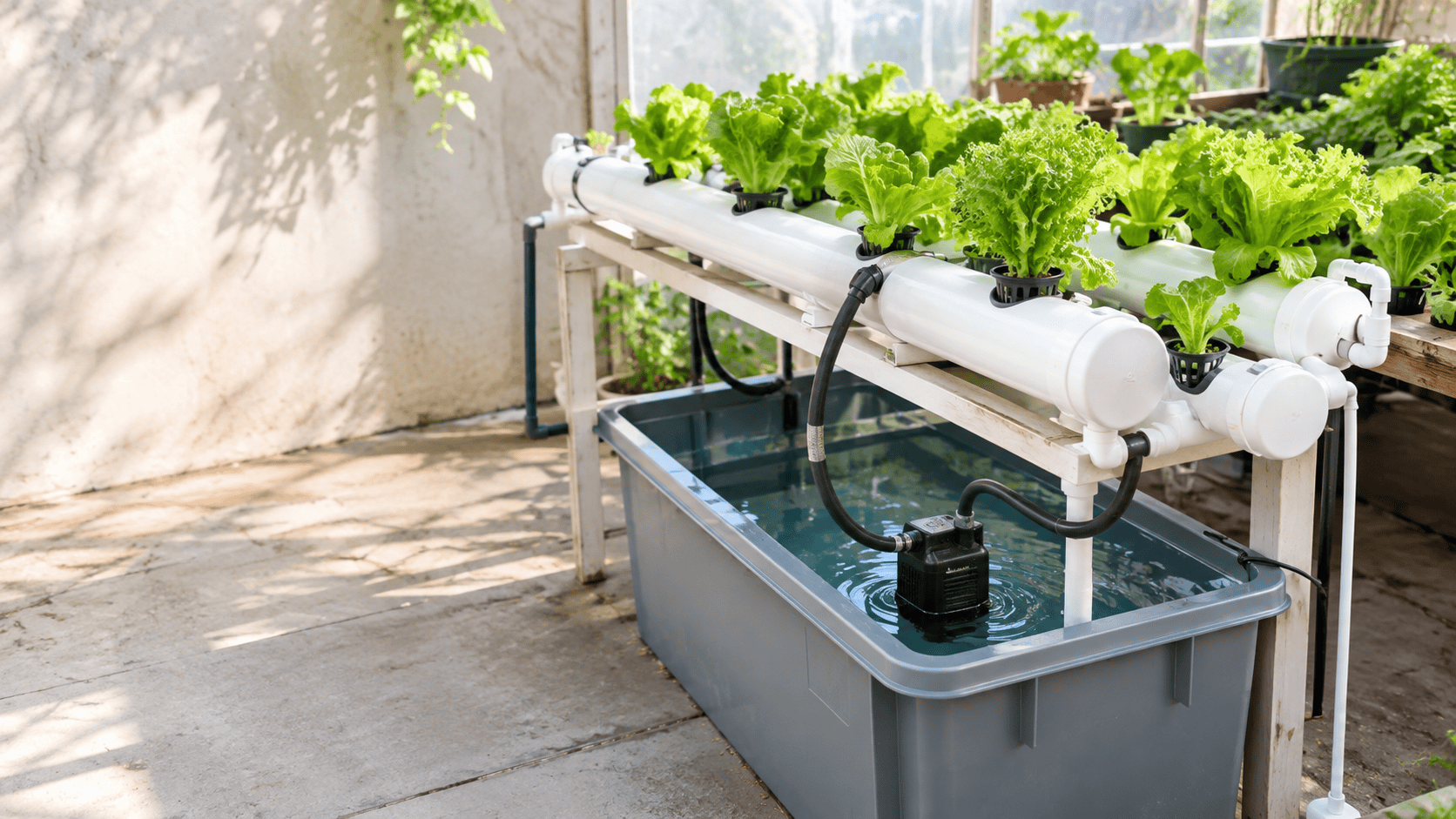
A good hydroponic pump keeps water moving to your plants. But the right pump depends on your setup. A small herb garden may need a basic submersible pump. A tall tower or drip system may need more pressure.
So, which setup should you choose? This guide covers common pump designs, how to size a pump, and ways to avoid common problems. You don’t need a complex system to get started.
Hydroponic Pump Setup: 3 Quick Wins
- Match the pump to your growing system.
- Check flow rate and lift height.
- Use a timer for flood-and-drain systems.
What are the best hydroponic water pump setups?
Each hydroponic system moves water in a different way. NFT systems need a steady flow. Flood-and-drain systems use timed cycles. Drip systems send water through small outlets to plant roots.
Most setups use a pump to move nutrient water from a reservoir to the plants. The water then returns to the tank, often by gravity.
Here are six common setups and what each one needs.
| Hydroponic system | Pump setup | What matters most |
| NFT channels | Submersible pump and tubing | Steady water flow |
| Flood and drain | Submersible pump and timer | Filling and draining the tray |
| Drip irrigation | Pump, manifold, and emitters | Enough pressure at each outlet |
| Vertical tower | Pump and top feed line | Enough lift to reach the top |
| Deep water culture (DWC) | Air pump and air stones | Oxygen for plant roots |
| Solar hydroponics | DC pump and solar power supply | Reliable power and water flow |
DWC is a little different. An air pump adds oxygen to the water. A water pump may help mix nutrients, but it doesn’t replace the need for enough oxygen.
For a first project, keep the plumbing short and easy to check. A larger pump isn’t always better.
How do you choose the right pump size?
Pick a pump based on two things: flow rate and head height. Flow rate tells you how much water the pump can move. Head height tells you how high it can push that water. For help comparing pump options for your setup, read this guide to selecting a hydroponic water pump
Pump flow is often listed in gallons per hour (GPH). But the number on the box may show flow with no lift. Once water moves up through tubing, the flow often drops.
As noted by Virginia Cooperative Extension;
“Regardless of the pump type, it should be rated for continuous duty and be sized with enough head pressure to overcome delivery height and friction loss to deliver solution to the plant channels. The flow rate from the pump should be 3 to 5 gallons per hour into each channel.” – Virginia Cooperative Extension
For example, four channels at 5 GPH each need 20 GPH at the outlets. Your pump must deliver that flow at the height of the channels, not at ground level.
Use these steps to size your pump:
- Add the flow needed for all channels or outlets.
- Measure the height from the reservoir water level to the highest outlet.
- Check the pump’s flow chart at that height.
- Allow for losses from tubing, bends, and fittings.
Don’t choose a pump by its maximum GPH alone. A pump rated at 400 GPH may deliver far less when it has to push water upward.
How do you install a hydroponic pump?
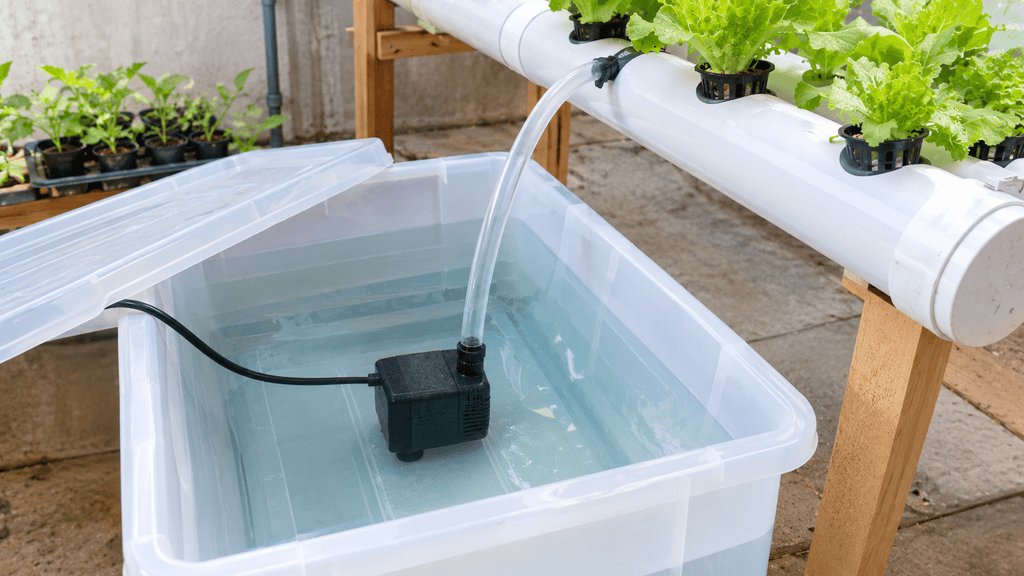
A good setup starts with a stable reservoir and secure tubing. The water also needs a clear path back to the tank.
Place the reservoir below the grow channels if your system uses a gravity return. Fit the pump as directed by the maker. Keep its intake clear of roots and debris.
Follow these steps for a basic DIY setup:
- Place the pump in the reservoir if it’s designed for submersion.
- Connect the tubing and secure the fittings.
- Fill the system with plain water.
- Check the flow at every outlet.
- Make sure the water returns to the tank.
- Fix leaks before adding nutrients.
Keep plugs and power connections away from water. Use equipment rated for your setup, and follow the safety instructions from the maker.
How do NFT, drip, and flood-and-drain pumps differ?
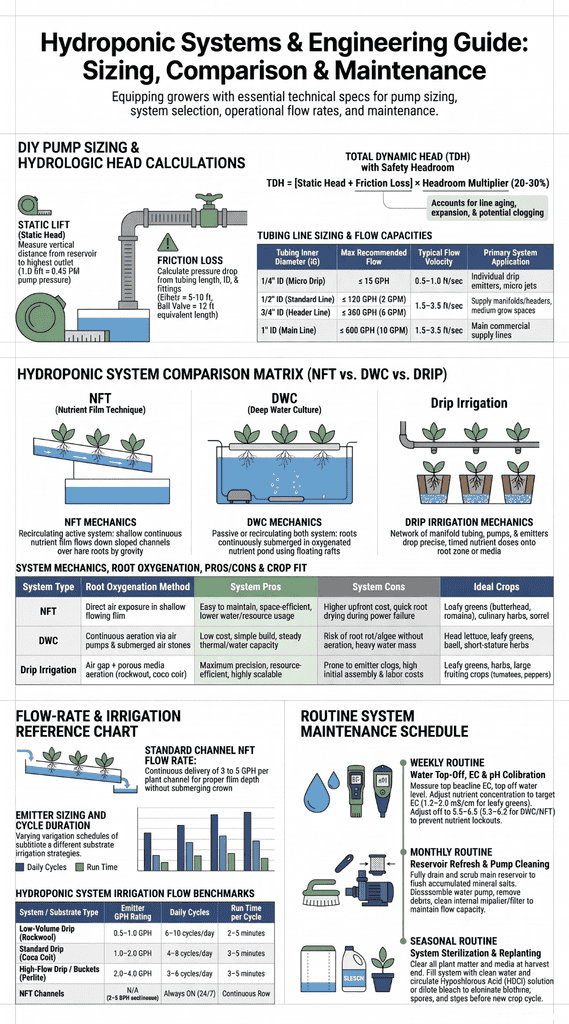
These systems don’t need the same pump settings. Each one delivers water to the roots in a different way.
NFT setup
An NFT pump sends a thin stream of nutrient water through sloped channels. The water flows back into the reservoir.
Use a pump built for steady operation. A starting point is about 3 to 5 GPH per channel, but check your channel design and plant needs.
Drip setup
A drip pump sends water through a main line and into small emitters near each plant.
Check that every emitter gets enough water. Clogged outlets can leave some plants dry, even when the pump is running.
Flood-and-drain setup
A pump fills the grow tray at set times. The water then drains back into the reservoir.
Use a timer to control the cycle. Test it with plain water first, and check how fast the tray fills and drains.
There isn’t one timer setting for every crop. The right schedule depends on the growing medium and how fast it drains.
What pump features should you look for?

Credits: DIY With Sam
Choose a pump that can deliver enough water at the required height. It should also suit the way your system runs.
A continuous-duty pump suits systems that need steady flow. A timer-controlled pump suits systems that flood or water plants at set times.
A small 12V DC pump may suit a compact setup. It can also be useful when you have a compatible low-voltage power supply.
Check these features before buying:
- Flow control: Adjust the water output.
- Easy cleaning: Look for a removable cover.
- Head height: Check the flow at your required lift.
- Low power use: Avoid buying more pump than you need.
- Backup plan: Keep a spare pump for systems that need steady flow.
To compare options that prioritize lower electricity use, explore these energy-saving water pumps for hydroponics
Clean the intake often. Algae, roots, and mineral deposits can block water flow. A blocked intake may also cause the pump to overheat, depending on its design.
You can also use a controller to run pumps on a schedule. Some setups use sensors or a PLC to control water delivery.
But automation isn’t a fix for every problem. A flow sensor or low-water alert can help you spot trouble.
As noted in Research on a solar-powered NFT hydroponic system by Sidibé et al;
“Reducing the operation time of the pump and valve enabled the overall system to save 66% of the total energy consumed by the conventional NFT.” – Sidibé et al., Universal Journal of Agricultural Research fore plants lose their water supply.
How can you prevent common pump problems?
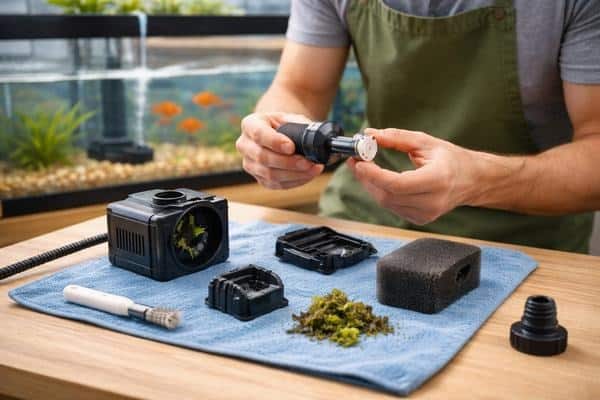
Most pump problems start with blocked parts, low water levels, or poor connections. Regular checks can help you catch them early. Following a routine for maintaining your hydroponic water pump can help you keep the equipment clean and identify problems before they interrupt water delivery.
If water flow drops, check the intake first. Then look for blocked tubing, trapped air, or a worn impeller.
A noisy pump may be loose or vibrating against the reservoir. Check its position before replacing it.
Use this care routine:
- Check the water level each day.
- Look for leaks and blocked tubing.
- Clean the pump as directed.
- Test timers and controls.
- Keep a spare pump if needed.
Also, check the pump’s power use. A large pump can waste electricity if your system needs only a small flow rate.
Choose the smallest pump that meets your flow and head needs. That can save power without leaving your plants short of water.
DWC needs special care. An air pump sends air through air stones to help oxygen reach plant roots. A water pump may help mix the nutrient solution, but it doesn’t replace proper aeration.
FAQ
What size water pump do I need for a DIY hydroponic garden?
Choose a pump based on the required flow rate and vertical lift. For small NFT systems, a starting point is 3 to 5 gallons per hour (GPH) per channel. Check the pump’s flow chart to ensure it can deliver enough water at your system’s height.
Can I use a submersible pump for all hydroponic systems?
Submersible pumps work well for many NFT, drip, and flood-and-drain systems. However, the pump must meet the system’s flow and pressure requirements. Deep water culture (DWC) also needs an air pump and air stones to supply oxygen to plant roots.
How long should a hydroponic water pump run each day?
It depends on the hydroponic system. NFT systems typically need continuous water flow, while flood-and-drain systems use timed cycles. Drip systems may operate intermittently, depending on the plants and growing medium. Test your setup to establish a suitable schedule.
Why is my hydroponic water pump losing flow?
Common causes include a clogged intake, blocked tubing, trapped air, low reservoir water levels, or a worn impeller. Check these parts first, then inspect the tubing connections and pump position. Regular cleaning and maintenance can help prevent recurring flow problems.
How can I reduce electricity use in a hydroponic water pump setup?
Choose a pump that meets your system’s actual flow and head requirements instead of buying an oversized model. Clean the intake regularly, fix leaks, and use timers where appropriate. For systems that support intermittent operation, a suitable schedule can reduce unnecessary energy use without compromising plant health.
Build a hydroponic water pump setup that fits your garden
.The right pump depends on how you grow your plants. NFT needs steady flow, drip systems need enough pressure, and flood and drain systems need timed cycles.
Check the pump size before you buy it. Test the plumbing with water before planting. Then clean the pump and check the flow regularly.
Planning a DIY garden? Visit Tophydroponicgarden for hydroponic equipment and setup ideas. Choose a system that fits your space, budget, and plants, then explore the right pump to get your garden growing today!
References
- https://ext.vt.edu/content/pubs_ext_vt_edu/en/SPES/spes-463/spes-463.html
- https://doi.org/10.13189/ujar.2023.110316
Related Articles
- https://tophydroponicgarden.com/selecting-a-hydroponic-water-pump/
- https://tophydroponicgarden.com/maintaining-your-hydroponic-water-pump/
- https://tophydroponicgarden.com/energy-saving-w
Was this helpful?

I’m Barrie L., a passionate hydroponic gardening enthusiast dedicated to cultivating thriving, soil-less gardens. With a focus on all things hydroponic, I share my expertise on innovative growing techniques and sustainable practices through my blog, tophydroponicgarden.com. As a seasoned hydroponics specialist, my goal is to inspire and guide fellow gardeners in harnessing the power of water-based cultivation for bountiful and eco-friendly harvests. I’m also an author of the book “Hydroponics For Absolute Beginners: Your Step By Step Guide For How To Create An Hydroponics System At Home Without Soil, For Growing Vegetable, Fruit And Herbs.” which is sold on Amazon. Join me on a journey of redefining the way we cultivate plants, one nutrient-rich solution at a time. Happy growing!