

The best herbs to grow in a hydroponic garden are those that adapt quickly to indoor conditions.
After years of experimenting with various setups, I have found that choosing the right varieties transforms your kitchen into a productive indoor oasis.
Hydroponic herb gardening offers fast, reliable results without needing a large outdoor space, allowing you to harvest fresh basil, mint, and parsley year-round.
The Practical Guide to Hydroponic Herbs
- Easiest Herbs: Basil, mint, and chives are the most reliable choices for beginners due to their fast growth and resilience.
- Lighting: Herbs thrive best with 12–16 hours of dedicated light to maintain strong flavor and prevent leggy growth.
- Maintenance: Regular, light pruning is essential; it encourages bushy growth and delays flowering (bolting).
The goal is not to grow every herb at once. The goal is to choose a few reliable plants, learn how they respond to your light and nutrient solution, then expand once your system stays stable.
Why Herbs Work So Well in Hydroponic Gardens
Herbs are a strong match for hydroponics because most of them are harvested for leaves, not heavy fruit. Leafy growth is easier to support in a small indoor system than tomatoes, peppers, or cucumbers. A herb plant does not need to hold large fruit, so it usually requires less structural support and less space.
Hydroponics also gives herbs direct access to water and dissolved nutrients. Instead of searching through soil, roots sit in or near a controlled nutrient solution. This can help herbs grow steadily when the system has enough light, oxygen, and the right nutrient balance.
Indoor herb growing guidance notes:
“You can choose from basil, oregano, thyme, parsley, and many other herbs.” – UF/IFAS Gardening Solutions
Many beginner systems are designed around herbs because they stay useful even when plants are small. A few basil leaves can improve pasta, a handful of mint can flavor tea, and fresh chives can finish soups or eggs. You do not need to wait for a long fruiting cycle before the garden feels productive.
Still, herbs are not maintenance-free. They need enough light to produce strong flavor, enough airflow to avoid weak stems, and regular harvesting to stop them from becoming tall and tired. If you treat every herb like the same plant, some will stretch, bolt, or crowd the system faster than expected.
Best Herbs to Grow in a Hydroponic Garden
The best herbs for a hydroponic garden are usually the ones that stay compact, grow leaves quickly, and tolerate regular trimming.
When you are deciding on the best herbs to grow in a hydroponic garden, remember that consistency is more important than variety. Starting with 2–3 compatible plants allows you to master your system’s lighting and nutrient balance before expanding to more demanding species.
Basil is the classic beginner choice because it grows fast and responds well to pruning. Mint is vigorous and forgiving, but it needs control. Chives are compact and easy to harvest in small amounts.
Parsley and cilantro are also useful, but they require more patience. Parsley can germinate slowly, while cilantro tends to bolt when conditions get too warm. Dill, oregano, and thyme can work well too, but they need more attention to spacing and airflow.
| Herb | Beginner Level | Why It Works | Care Note |
| Basil | Easy | Fast growth and frequent harvests | Needs strong light and regular pruning |
| Mint | Easy | Vigorous growth and quick recovery | Keep trimmed so it does not crowd the system |
| Chives | Easy | Compact, useful, and forgiving | Cut from the outside and let new shoots regrow |
| Parsley | Medium | Productive once established | Germination and early growth can be slower |
| Cilantro | Medium | Great for quick fresh harvests | Bolts easily in warm conditions |
| Dill | Medium | Useful for fresh leaves and garnish | Needs spacing and steady light |
| Oregano | Medium | Compact once established | Avoid overcrowding and poor airflow |
| Thyme | Medium to hard | Flavorful woody herb | Slower growth and needs good airflow |
If this is your first indoor system, choose two or three herbs instead of filling every pod. A crowded hydroponic herb garden looks exciting at first, but it quickly becomes harder to prune, inspect, and keep evenly lit.
Basil, Mint, and Chives Are the Best Beginner Picks

Basil, mint, and chives are the easiest starting point for most home growers. They are useful in the kitchen, respond well to trimming, and make it easy to see whether your hydroponic system is working.
Basil is usually the most rewarding herb for beginners because it grows quickly under strong light. Once the plant has several sets of leaves, regular pinching encourages side branches.
This keeps the plant bushy instead of tall and weak. If basil stretches with long gaps between leaves, the light is probably too weak or too far away.
Mint is even more vigorous, but that strength can become a problem in small systems. It can shade slower herbs and take over shared space if you do not trim it. The best way to manage hydroponic mint is to harvest often, keep the canopy open, and avoid planting it next to very slow growers.
Chives are compact and practical. They do not demand as much space as large basil or mint plants, and you can cut small amounts as needed. A few snips are enough for eggs, potatoes, soups, and salads. For a beginner who wants a low-drama plant, chives are one of the safest choices.
If you are still building confidence with indoor systems, the guide on getting started with hydroponics at home can help connect basic equipment choices with beginner-friendly crops.
Herbs That Need More Attention Indoors
Some herbs grow well hydroponically but need more careful handling. Cilantro is a good example. It can produce fresh leaves quickly, but warm conditions and long delays between harvests can push it toward flowering. Once cilantro bolts, the leaf flavor and texture change, so it is better to grow it as a quick harvest crop.
Parsley is useful but slower. Many beginners think parsley has failed because it does not grow as dramatically as basil. In reality, it often needs more time to establish. Once it has a healthy root system and steady light, it can become a reliable kitchen herb.
Dill needs space. Its fine leaves and taller growth habit can look delicate, but the plant can quickly outgrow compact countertop systems. If you grow dill hydroponically, give it room, keep air moving, and harvest before it becomes too tall for the light.
Oregano and thyme behave differently from soft leafy herbs. They can grow in hydroponic systems, but they are slower and more woody. These herbs usually prefer strong light, good airflow, and a less crowded environment. They are worth growing, but they are not always the easiest first choice.
Hydroponic Herb Garden Setup for Beginners
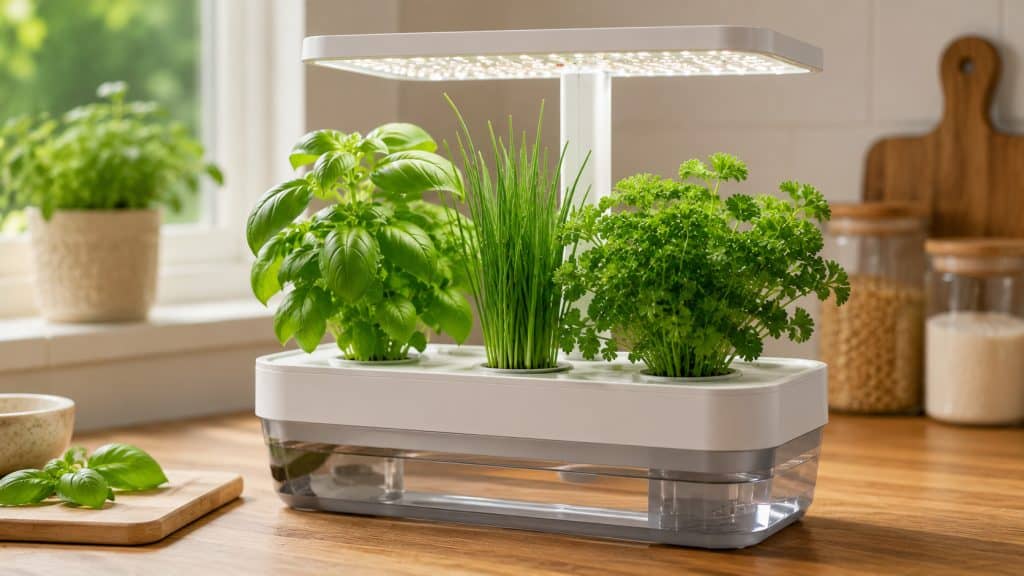
A simple hydroponic herb garden does not need to be complicated. Most beginners do better with a small countertop kit, deep water culture bucket, or simple indoor unit than a large multi-plant system. The easier the system is to inspect, the faster you learn.
Start with clean water, hydroponic nutrients, a bright grow light, and enough room between plants. Herbs need light on the top growth, not just around the container. If the light is too weak, basil and cilantro may stretch, mint may become thin, and parsley may grow slowly.
A hydroponic herb garden kit can be useful because it bundles basic parts into one setup. Many kits include a reservoir, grow deck, pump or wick system, grow light, and starter pods. If you are comparing options, Top Hydroponic Garden’s guide to hydroponic herb garden kits can help you decide whether a ready-made unit or DIY setup is a better fit.
Keep the first setup boring and manageable. Two basil plants and one chive plant can teach you more than a crowded 12-pod system full of herbs with different growth speeds. Once you understand how quickly the water level drops, how often leaves need trimming, and how plants respond to light, scaling up becomes much easier.
Watch a Simple Indoor Herb Garden Setup

Credits: Sher
A visual setup can help beginners understand how simple indoor herb growing can be. The key lesson is not to copy every container exactly, but to understand the basics: roots need moisture, nutrients, oxygen access, and enough light for steady leaf growth.
If you use a passive method, water level matters because roots need an air zone. If you use an active hydroponic system, pump function and oxygen movement matter more. Either way, herbs should not sit in a neglected container with weak light and no monitoring.
Use the video as a setup reference, then adjust based on your own system size, herb choice, and indoor light conditions.
Water, Nutrients, and Light for Healthy Herbs
Hydroponic herbs depend on balance. Water alone is not enough because herbs need dissolved nutrients. Nutrients alone are not enough because weak light prevents plants from using them well. Strong light is not enough if the reservoir is dirty, the pH drifts too far, or roots become oxygen-starved.
Oklahoma State University Extension explains
“The pH of a nutrient solution influences the availability of nutrients, so it should be maintained in the optimum range.” – Oklahoma State University Extension
This matters because herbs cannot rely on soil to buffer every mistake. In a hydroponic garden, the nutrient solution is the root environment. If the pH is too far outside the useful range, herbs may show yellowing, slow growth, or weak leaves even when nutrients are present.
Basil and mint usually respond well to strong light and steady feeding, but seedlings should not be overfed immediately. Young herbs have small root systems.
A mild nutrient solution is safer until they show active growth. Once the plants are established, you can increase strength gradually based on leaf color, growth speed, and system instructions.
Light is just as important as nutrients. Most culinary herbs need bright conditions to grow flavorful leaves. A weak window may keep a plant alive, but it may not produce a strong harvest. If herbs are pale, leggy, or leaning hard toward the light, move the system closer to a bright window or use a proper grow light.
Harvesting Herbs Without Weakening the Plant
Harvesting is part of herb care, not just the reward at the end. Many herbs grow better when trimmed correctly. Pruning tells the plant to branch, keeps the canopy open, and prevents tall weak stems from taking over the system.
For basil, pinch above a node once the plant has several sets of leaves. This encourages two new side shoots instead of one tall stem. Avoid stripping all large leaves at once because the plant still needs leaves to photosynthesize.
For mint, harvest often enough to keep it from shading other herbs. Mint can recover quickly, but it can also dominate a small hydroponic garden if ignored. Cut stems above nodes and remove any weak, crowded growth.
For chives, cut outer leaves near the base while leaving the center to regrow. For parsley and cilantro, harvest outer stems first. This keeps the center growing and extends the useful harvest window. With cilantro, harvest earlier and more often because heat and stress can push it toward bolting.
Never harvest more than the plant can recover from. A good rule for beginners is to take small amounts regularly instead of cutting the whole plant back hard. Steady harvesting gives you fresh herbs while keeping the system productive.
Common Mistakes When Growing Hydroponic Herbs
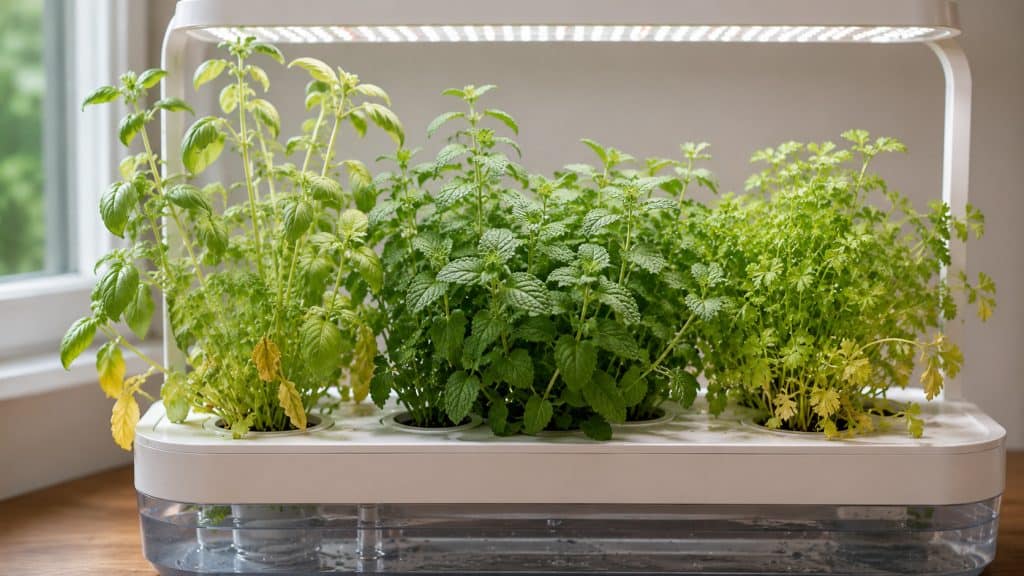
The most common mistake is planting too many herbs in one small system. Different herbs grow at different speeds. Mint and basil can quickly shade slower parsley or thyme. Once leaves overlap, airflow drops and pruning becomes harder.
The second mistake is using weak light. Herbs grown for flavor need energy. If a plant receives too little light, it may stay alive but produce thin stems, small leaves, and weak aroma. A bright grow light is often more reliable than a dim kitchen corner.
Another mistake is treating hydroponic herbs like soil plants. Soil can hide mistakes for a while. Hydroponic systems show problems faster. If pH, nutrients, water level, or pump function drifts, herbs can respond quickly with yellowing, curling, or stalled growth.
Overfeeding is also common. More nutrients do not automatically mean stronger herbs. If the light is weak, extra nutrients can build up and stress roots. Start mild, observe the plant, and adjust slowly.
Finally, many beginners forget to prune. Herbs such as basil and mint become better plants when harvested. If you let them grow tall without trimming, they may become leggy, shade nearby herbs, or flower sooner than expected.
Choosing a Hydroponic System for Herbs
The best hydroponic system for herbs is the one you can maintain consistently. A countertop kit is easy for beginners because it keeps everything close together. A deep water culture bucket can grow larger herbs, but it needs attention to oxygen and water quality. A Kratky jar can work for small herbs, but water level and root air space must be managed carefully.
Small herbs such as chives, parsley, and basil fit many indoor systems. Larger herbs or fast spreaders need more space. Mint should be watched carefully because it grows aggressively. Dill needs height. Woody herbs like thyme and oregano need airflow and patience.
If you are still collecting supplies, the article on items needed for a hydroponic system can help you plan the basics before buying too many accessories. Focus first on the essentials: light, container, nutrient solution, growing medium, water testing tools, and enough space for the herbs you choose.
A beginner herb system should be easy to clean. Avoid setups with hidden corners, tangled roots from too many plants, or containers that let light reach the nutrient solution. A clean system reduces algae, odor, and root stress.
FAQ
What are the best herbs to grow in a hydroponic garden?
Basil, mint, chives, parsley, cilantro, dill, oregano, and thyme can all grow in hydroponic gardens. For beginners, basil, mint, and chives are usually the easiest because they grow quickly and respond well to regular harvesting.
Is basil good for hydroponics?
Yes, basil is one of the best herbs for hydroponics because it grows fast, branches well after pruning, and produces frequent harvests under strong light. It does best when trimmed regularly before it becomes tall or begins flowering.
Can mint grow in a hydroponic system?
Yes, mint grows very well hydroponically, but it can become aggressive in small systems. Keep it trimmed and give it enough space so it does not shade slower herbs like parsley, thyme, or oregano.
Which herbs are hardest to grow hydroponically?
Woody or slower herbs such as thyme, oregano, rosemary, and sage can be harder than basil or mint. They often need stronger light, better airflow, more patience, and careful spacing to avoid weak growth.
Do hydroponic herbs need to grow lights?
Most indoor hydroponic herbs grow better with a bright grow light, especially if the kitchen or window area is dim. Weak light can cause leggy stems, small leaves, slow growth, and weaker flavor.
Hydroponic Herbs Make Indoor Growing Feel Useful
The best herbs to grow in a hydroponic garden are the ones that give you quick, useful harvests without making the system hard to manage. Basil, mint, and chives are the safest beginner choices, while parsley, cilantro, dill, oregano, and thyme can be added once you understand your light and nutrient routine.
A good herb garden does not need to be huge. It needs steady light, clean water, balanced nutrients, and enough spacing for each plant to grow. When you harvest often and watch how each herb responds, the system becomes easier to control.
For Top Hydroponic Garden readers, the smartest first step is simple. Start with a small indoor setup, choose two or three forgiving herbs, and learn their growth habits before expanding. Once those basics feel natural, a hydroponic herb garden can keep fresh flavor within reach all year.
References
- https://gardeningsolutions.ifas.ufl.edu/plants/edibles/vegetables/herbs/
- https://extension.okstate.edu/fact-sheets/electrical-conductivity-and-ph-guide-for-hydroponics
Related Articles
- https://tophydroponicgarden.com/getting-started-with-hydroponics-at-home/
- https://tophydroponicgarden.com/items-needed-for-hydroponic-system/
- https://tophydroponicgarden.com/best-hydroponic-herb-garden-kits/
Was this helpful?

I’m Barrie L., a passionate hydroponic gardening enthusiast dedicated to cultivating thriving, soil-less gardens. With a focus on all things hydroponic, I share my expertise on innovative growing techniques and sustainable practices through my blog, tophydroponicgarden.com. As a seasoned hydroponics specialist, my goal is to inspire and guide fellow gardeners in harnessing the power of water-based cultivation for bountiful and eco-friendly harvests. I’m also an author of the book “Hydroponics For Absolute Beginners: Your Step By Step Guide For How To Create An Hydroponics System At Home Without Soil, For Growing Vegetable, Fruit And Herbs.” which is sold on Amazon. Join me on a journey of redefining the way we cultivate plants, one nutrient-rich solution at a time. Happy growing!